
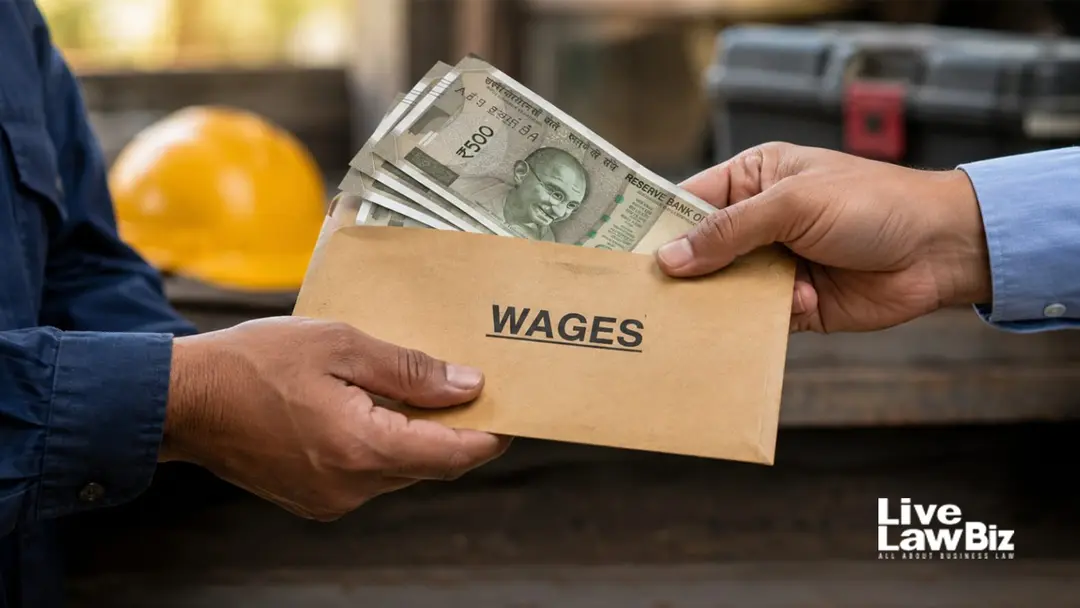
Karnataka HC sends minimum wage challenge to Division Bench
The Karnataka High Court has directed that petitions challenging the State Government's May 22, 2026 notification revising minimum wages for 81 scheduled employments be clubbed with Writ Appeals 1684/2026 and 1685/2026, which concern Section 69 of the Code on Wages, 2019. Justice HT Narendra Prasad declined interim protection to the Karnataka Employers' Association and others, who alleged an increase of up to 60 percent. A Division Bench of Justices D.K. Singh and Shanthi Bhushan will hear the matters.
Source
Live Law (courts) · read the original report ↗
Desk check · compared with the source
What the desk checked (5)
- Justice HT Narendra Prasad directed the Registry to club the petitions with Writ Appeals 1684/2026 and 1685/2026. — Attributed to the named judge, with case numbers and a direct quote from the order in the source.
- The petitions challenge the Karnataka government's May 22, 2026 notification revising minimum wages for 81 scheduled employments. — Date and figure appear in the source; attributed to the petitions filed by the Karnataka Employers' Association and others.
- The revision amounts to an increase of up to 60 percent and is unaffordable. — Stated in the source as an allegation by the petitioners, not an established finding.
- The Court declined interim protection to employers. — Stated in the source as the Court's action; consistent with the rest of the order description.
- On September 18 the Court stayed two circulars dated July 29 and August 10, 2026 halting implementation of revised wages. — Dates appear in the source; described as a connected matter raised by the All India Trade Union Congress and others.
Analysts’ view opinion
This looks like a procedural legal order, but the real question underneath it is economic: who absorbs a revised wage bill across 81 scheduled employments. Because no interim protection was granted, employers remain exposed to implementation while the Division Bench takes up the matter — so the immediate cash-flow burden sits with establishments. On the other side, with unions stating that one month's revised salary had already been paid, any freeze creates income uncertainty for workers.
- The "up to 60 percent" increase is the employers' characterisation, not a court finding — but a rise of that order would materially reshape cost structures in labour-intensive sectors.
- With no interim relief, the cost burden stays with employers for as long as litigation runs, which typically bites hardest at smaller and contract-dependent establishments.
- From the worker side, higher minimum wages support purchasing power and cost-of-living adjustment, and clawing back salary already paid is practically difficult.
- The legal uncertainty — whether "scheduled employments" survives the repeal of the 1948 Act under the Code on Wages — clouds tendering, contract pricing and budgeting decisions.
- Because circulars from the audit and municipal administration departments were stayed, part of the wage cost may ultimately flow through public contracts to the state exchequer.
What to watch — Watch whether the Division Bench grants any interim order and, if so, what conditions it attaches to payment of the revised wages or arrears.
The order does not decide the validity of the May 22 notification, and the story offers no independent verification of the size of the increase or of its actual effect on jobs or prices.
Deep dive
Research brief · 8 facts · 5 dates · exam-readyThe brief
Context
The Karnataka government issued a notification on May 22, 2026 revising minimum wages for 81 scheduled employments. Employers, led by the Karnataka Employers' Association, moved the Karnataka High Court arguing the notification was issued under the Minimum Wages Act, 1948, which they say stood repealed once the Code on Wages, 2019 came into force, and that the revision amounts to an increase of up to 60 percent. Justice HT Narendra Prasad has now directed that these petitions be clubbed with Writ Appeals 1684/2026 and 1685/2026, pending before a Division Bench, which concern the interpretation of Section 69 of the Code on Wages (its savings provision). Trade unions, on the other side, have challenged departmental circulars that halted implementation of the revised wages.
Key facts
- The challenged notification, dated May 22, 2026, revises minimum wages for 81 scheduled employments in Karnataka.
- Justice HT Narendra Prasad directed the Registry to club the petitions with Writ Appeals Nos. 1684/2026 and 1685/2026.
- The writ appeals concern the interpretation of Section 69 of the Code on Wages, 2019, a savings provision for actions under repealed enactments.
- Petitioners allege the revision amounts to an increase of up to 60 percent and is unaffordable and 'astronomical'.
- Employers question the State's invocation of Sections 3(1)(b) and 5(1)(b) of the Minimum Wages Act, 1948, which they say stood repealed.
- The Court declined interim protection to the employers against precipitative action.
- On September 18, the Court stayed two circulars of the Karnataka State Audit and Accounts Department and the Directorate of Municipal Administration dated July 29 and August 10, 2026, which had halted implementation.
- The Division Bench of Justice D.K. Singh and Justice Shanthi Bhushan will hear the matters; Case No: WP 16145/2026 and connected matters.
Timeline
- May 22, 2026Karnataka Government notification revises minimum wages for 81 scheduled employments.
- July 29, 2026Circular issued halting implementation of the revised minimum wages.
- August 10, 2026Second circular issued halting implementation of the revised wages.
- September 18High Court stays operation of the July 29 and August 10, 2026 circulars until the next hearing date.
- Present order (date not stated in the source)Justice HT Narendra Prasad clubs employers' petitions with WA 1684/2026 and WA 1685/2026; no interim protection granted.
Who has a stake
- Karnataka Employers' Association and other petitioner entities — Face a wage revision they call an up to 60 percent, unaffordable increase across thousands of establishments.
- State of Karnataka — Must defend the legal basis of its May 22, 2026 notification issued under the 1948 Act provisions.
- All India Trade Union Congress and others — Challenged circulars halting implementation; want revised wages paid to workers.
- Employees/workmen in 81 scheduled employments — Had received one month's salary at revised rates before circulars halted implementation.
- Karnataka State Audit and Accounts Department and Directorate of Municipal Administration — Their circulars halting implementation stand stayed by the Court.
- Karnataka High Court Division Bench (Justices D.K. Singh and Shanthi Bhushan) — Will decide the Section 69 interpretation and the fate of the notification.
Why it matters
The dispute goes to a core transition question: whether state actions taken under the old Minimum Wages Act, 1948 survive after the Code on Wages, 2019 came into force, and whether the concept of 'scheduled employments' still holds. The outcome will affect wage bills across thousands of Karnataka establishments and the take-home pay of workers in 81 employments, and could guide similar challenges elsewhere.
UPSC angle
Prelims pointers
- Code on Wages, 2019 subsumes and repeals earlier wage laws including the Minimum Wages Act, 1948.
- Section 69 of the Code on Wages, 2019 is a savings provision for actions taken under repealed enactments, subject to consistency with the Code.
- Sections 3(1)(b) and 5(1)(b) of the Minimum Wages Act, 1948 relate to fixing/revising minimum wages and are the provisions invoked by Karnataka.
- Karnataka's May 22, 2026 notification covers 81 scheduled employments; alleged increase up to 60 percent.
- Case: Karnataka Employers' Association & Anr. v. State of Karnataka & Ors., WP 16145/2026 and connected matters.
- Writ Appeals 1684/2026 and 1685/2026 before a Division Bench concern Section 69 interpretation.
Mains framing
The Karnataka minimum wage litigation illustrates the legal uncertainty created by a partially operationalised labour code regime. The State revised minimum wages for 81 scheduled employments through a May 22, 2026 notification relying on Sections 3(1)(b) and 5(1)(b) of the Minimum Wages Act, 1948; employers contend that statute stood repealed on implementation of the Code on Wages, 2019, and that the Code abandons the very concept of 'scheduled employments', making the notification legally unsustainable. They also attack the quantum, alleging an increase of up to 60 percent that could trigger industrial unrest across thousands of establishments. Workers' representatives, including the All India Trade Union Congress, counter that revised wages were actually implemented and one month's salary paid before departmental circulars halted them — circulars the Court stayed on September 18. Section 69's savings clause, which preserves prior actions unless contrary to the Code, is the pivot, and the Single Judge has rightly sent the matter to the Division Bench already seized of that question. The way forward lies in judicial clarity on the savings provision and in governments ensuring notifications rest on the operative statutory source, so that wage revisions are neither legally vulnerable nor implemented and withdrawn midway to workers' detriment.
Key terms
- Code on Wages, 2019
- Consolidated wage legislation that replaced earlier wage laws, including the Minimum Wages Act, 1948.
- Section 69, Code on Wages
- Savings provision preserving actions taken under repealed enactments, provided they are not contrary to the Code.
- Scheduled employments
- Categories of employment listed under the Minimum Wages Act, 1948 for which minimum wages were fixed; employers say the Code drops this concept.
- Writ Appeal
- Appeal before a Division Bench against a Single Judge's decision in a writ petition.
- Interim protection
- Temporary court relief shielding a party from coercive action pending final decision; denied here to employers.
- Karnataka Employers' Association
- Lead petitioner body of employers challenging the May 22, 2026 wage revision notification.
Practice questions
- Discuss how the Code on Wages, 2019 alters the framework for fixing minimum wages, with reference to the dispute over the survival of notifications issued under the Minimum Wages Act, 1948.
- Savings provisions in repealing statutes often generate litigation during legal transitions. Examine this with reference to Section 69 of the Code on Wages, 2019.
- Balancing employer viability with workers' wage security is a recurring policy challenge. Analyse in the context of the Karnataka minimum wage revision dispute.
Grounded only in the source report — figures and dates are the source's, not inferred.