
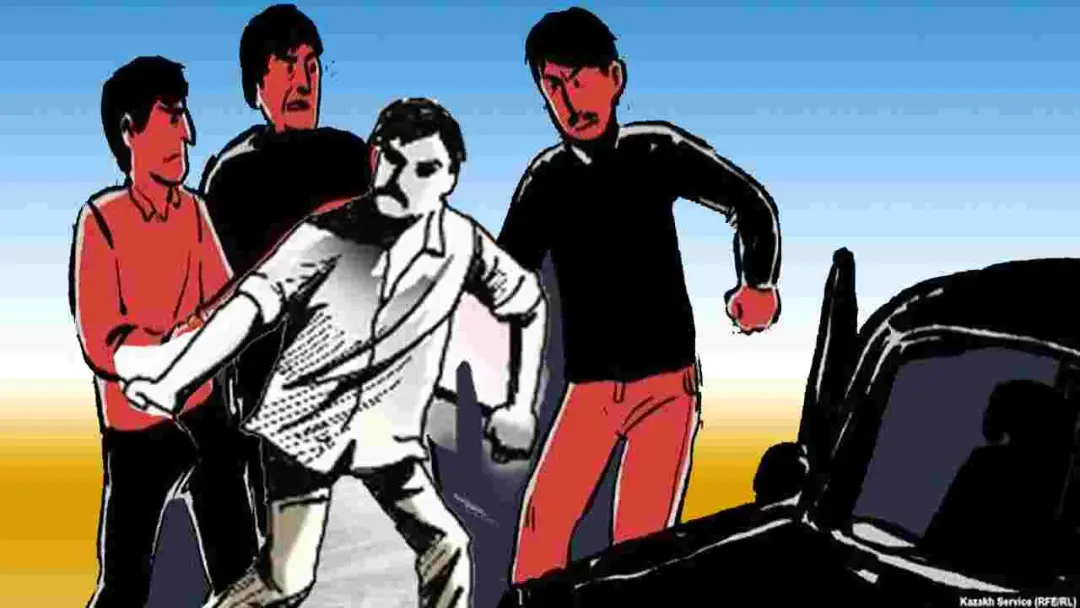
Trader kidnapped in Tenali; police suspect he was killed
Police in Guntur district say wood polish trader Koti Lingaiah was kidnapped on August 29 near Somasundarapalem by unidentified men in a car without a number plate. The case surfaced after Deepthi, who was in a live-in relationship with him, reported him missing. Investigators suspect his brother-in-law Rajesh hired four men from Oleru to frighten him amid family disputes, and that Lingaiah died of injuries after being beaten in the car. The body has not been found; Rajesh is in custody.
Source
Tenali — స్థానికం · read the original report ↗
Desk check · some claims need care
What the desk checked (5)
- Wood polish trader Koti Lingaiah was kidnapped on August 29 near Somasundarapalem by unidentified men in a car without a number plate. — Attributed to police identification in the source; eyewitnesses reportedly informed police.
- The case came to light after Deepthi, who was in a live-in relationship with Lingaiah, reported him missing. — Stated in source without a named police official; consistent within the report.
- His brother-in-law Rajesh allegedly hired four men from Oleru in Bhattiprolu mandal to frighten Lingaiah amid family disputes. — Presented as suspicion arising in the police investigation and partly as 'information' (unnamed sources).
- Lingaiah is suspected to have died of injuries after being beaten in the car; the body has not been recovered. — Explicitly framed as police suspicion; source confirms body not yet found, so death is unverified.
- Rajesh has been taken into custody and is being questioned; special teams are searching for the body. — Attributed to police in the source; no official named.
Analysts’ view opinion
In legal terms this remains an abduction case for now — whether it becomes a murder case depends on evidence, not on police suspicion. The missing body is the single biggest investigative hurdle, though Indian jurisprudence has long accepted that murder can be established on strong circumstantial evidence even without a recovered body. If the alleged contract-killing angle holds up, the person who set it in motion could face liability on par with those who carried it out, under conspiracy and abetment provisions.
- The story does not specify which sections have actually been invoked; typically homicide charges are added only once a body and a cause of death are established.
- Even if the intent was only to intimidate, a death occurring in the course of that act raises the classic question of whether it amounts to murder or to culpable homicide not amounting to murder.
- The story says Rajesh is 'in custody' but not whether he has been formally arrested — if arrested, being informed of the grounds and produced before a magistrate within 24 hours are constitutional safeguards.
- The reported presence of eyewitnesses strengthens the prosecution, but the unnumbered vehicle means the case will lean heavily on vehicle tracing, call records and forensic material.
- With the complainant being the live-in partner and a family dispute in the background, witness protection and risk of evidence tampering are factors a court would weigh at the bail stage.
What to watch — Recovery of the body, the post-mortem findings, arrests of the remaining suspects, and the sections finally listed in the charge sheet will define the shape of this case.
Everything here is at the level of police suspicion; the story does not establish that a death occurred or that Rajesh was involved — guilt is for a court alone to determine.
Deep dive
Research brief · 8 facts · 4 dates · exam-readyThe brief
Context
A wood-polish trader, Koti Lingaiah, was abducted on August 29 near Somasundarapalem in Tenali, Guntur district, Andhra Pradesh, by unidentified men in a car with no number plate. The abduction came to light when Deepthi, who was in a live-in relationship with him, complained to the police that he was missing; eyewitnesses to the abduction also alerted police. Police now suspect what began as a "supari" (contract) deal to intimidate him, allegedly arranged by his brother-in-law Rajesh amid family disputes, ended in his death from beating inside the car. The body has not been recovered and Rajesh is in police custody.
Key facts
- Koti Lingaiah, a wood polish (chekkapolish) trader of Tenali in Guntur district, was kidnapped on August 29.
- He was picked up near Somasundarapalem by unidentified persons who came in a car without a number plate.
- The case surfaced after Deepthi, who was in a live-in relationship with him, complained to police that he was missing.
- Some eyewitnesses saw the kidnapping and passed information to the police.
- Police suspect his brother-in-law Rajesh gave a supari (contract) to frighten him, against the backdrop of family disputes.
- Rajesh is suspected to have engaged four men from Oleru in Bhattiprolu mandal for the job.
- Police suspect Lingaiah died of injuries after being severely beaten inside the car.
- The body has not yet been found; special teams are searching for it, and Rajesh is in custody being questioned.
Timeline
- Before August 29 (date not stated in the source)Lingaiah's live-in relationship with Deepthi became known at home, leading to frequent quarrels with his wife.
- August 29A gang arriving in a number-plate-less car forcibly took Lingaiah into the vehicle near Somasundarapalem; he was allegedly beaten severely inside.
- After the abduction (exact date not stated in the source)Deepthi filed a missing complaint with police; eyewitness accounts confirmed the kidnapping.
- September 2, 2026Police say they suspect murder, have taken brother-in-law Rajesh into custody and deployed special teams to search for the body.
Who has a stake
- Koti Lingaiah (victim) — Wood polish trader kidnapped on August 29; police suspect he died of injuries, but his body is yet to be found.
- Deepthi — In a live-in relationship with Lingaiah; her missing complaint brought the case to light.
- Rajesh (brother-in-law) — Prime suspect accused of giving the supari to frighten Lingaiah; in police custody and under questioning.
- Four men from Oleru, Bhattiprolu mandal — Suspected contract gang identified by police as having carried out the abduction.
- Lingaiah's wife and family — Family disputes over the live-in relationship are the suspected motive behind the conspiracy.
- Guntur district police — Must establish the motive, the number of people involved, where the trader was taken, and recover the body.
Why it matters
The case shows how a private family dispute allegedly escalated into a contract kidnapping that police suspect ended in death, underlining the criminalisation of domestic conflicts. It also highlights investigative challenges: a vehicle without a number plate, a missing body, and reliance on eyewitness accounts and custodial questioning to reconstruct the crime.
UPSC angle
Prelims pointers
- Location: Tenali, Guntur district, Andhra Pradesh; abduction site near Somasundarapalem.
- Victim: Koti Lingaiah, wood polish trader; date of kidnapping: August 29.
- Complainant: Deepthi, in a live-in relationship with the victim.
- Suspect: brother-in-law Rajesh, alleged to have hired four men from Oleru, Bhattiprolu mandal.
- Body not recovered; special police teams deployed for the search.
- Report dated September 2, 2026 (ABN).
Mains framing
The Tenali case illustrates how unresolved domestic conflict can translate into organised criminal action: police suspect that frequent quarrels arising from the trader's live-in relationship led his brother-in-law to pay a gang merely to intimidate him, and that the intimidation ended in fatal injuries inside a moving car. Three features stand out for analysis. First, the use of "supari" gangs from a nearby mandal shows the local availability of hired muscle for private disputes, blurring the line between intimidation and culpable homicide. Second, deliberate evasion measures such as a car without a number plate, and the non-recovery of the body, complicate proof, forcing police to depend on eyewitness testimony, call and conspiracy trails, and interrogation of the arrested suspect. Third, the case surfaced only because a partner in a live-in relationship filed a missing complaint, pointing to the importance of prompt registration and follow-up of missing-person reports. The way forward, as reflected in the source, lies in completing the investigation to establish motive, the number of persons involved and the destination of the victim, alongside intensified search operations for the body; wider lessons concern faster action on missing-person complaints and enforcement against unregistered or plate-less vehicles.
Key terms
- Supari
- Colloquial term for a paid contract given to hired men to threaten, assault or kill someone.
- Live-in relationship
- Cohabitation of a couple without formal marriage; here, Deepthi's relationship with the victim triggered family quarrels.
- Bhattiprolu mandal / Oleru
- Administrative block and village in the Guntur region from where the four suspected contract men reportedly come.
- Custody and questioning
- Police detention of a suspect, here Rajesh, for interrogation as part of an ongoing investigation.
- Special teams (search)
- Dedicated police units formed to trace the missing body and reconstruct the movement of the vehicle.
Practice questions
- Examine how domestic and family disputes escalate into contract crimes, using the Tenali kidnapping case as an illustration.
- What investigative challenges arise when a suspected homicide victim's body is not recovered? Discuss with reference to evidence available in this case.
- Discuss the significance of prompt registration and investigation of missing-person complaints in preventing and detecting serious crime.
Grounded only in the source report — figures and dates are the source's, not inferred.