
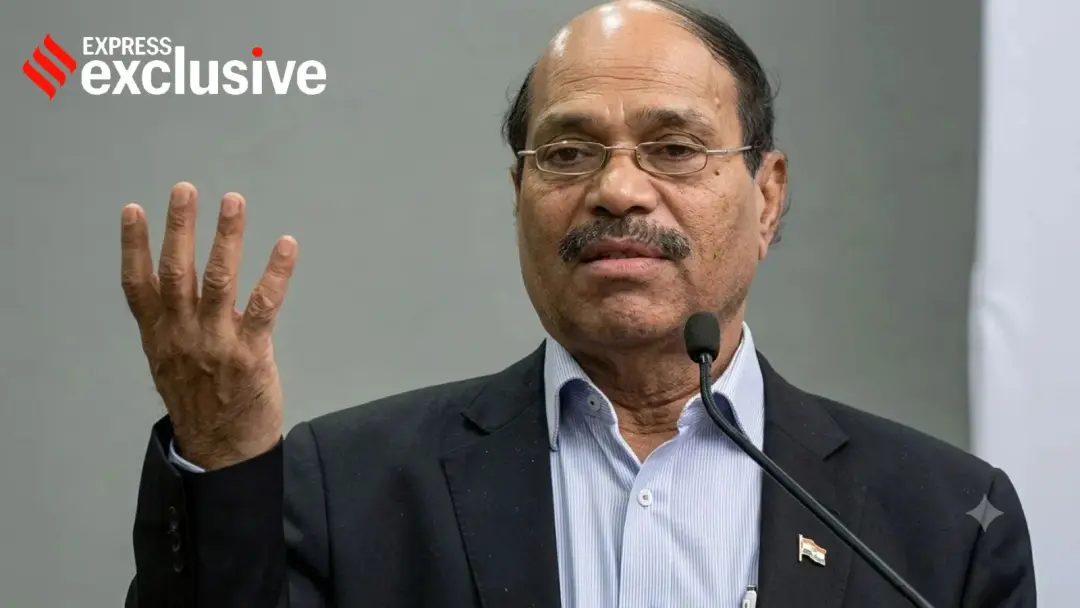
Report details why police dropped Veeramani POCSO case in February
Chennai Police's Anti-Vice Squad classified the POCSO case against granite businessman R Veeramani as "Further Action Dropped" on February 18, its closure report says. Investigators could not trace the stranger who delivered a pen drive with the alleged video, found no evidence in a house search, could not retrieve the original recording from a DVR, and could not identify the girl. The Special POCSO Court rejected the report and ordered further investigation. Veeramani, Shanthi and Mahendra Simhan were arrested on August 29.
Source
Indian Express — India · read the original report ↗
Desk check · some claims need care
What the desk checked (5)
- Chennai Police's Anti-Vice Squad classified the POCSO case against R Veeramani as 'Further Action Dropped' on February 18 this year. — Attributed in source to a copy of the closure report submitted to the Special POCSO Court, seen by The Indian Express.
- The case began when an unidentified man handed a child rights worker an envelope with a note and pen drive on October 6, 2025; a case was registered under POCSO Sections 7 and 8 on October 7. — Figures and dates appear in source, based on the complainant's account and the police report.
- The Special POCSO Court refused the closure report and ordered further investigation, leading to the August 29 arrests of Veeramani, Shanthi and Mahendra Simhan. — Attributed to earlier Indian Express reporting; internally consistent, though the November 2025 High Court order cited in a February report is chronologically unclear in the source.
- Ganesan, a former Gem Granites employee, was arrested for allegedly failing to report a video and is lodged in Puzhal Central Prison. — Attributed to Central Crime Branch claims in the source; allegation not independently verified.
- Chief Minister C Joseph Vijay discussed the case with the Police Commissioner and sought action against those who suppressed or delayed the probe. — Attributed only to unnamed police sources in the source text.
Analysts’ view opinion
The Special POCSO Court's refusal to accept the February 18 "Further Action Dropped" report — followed by the tracing of the girl and three arrests — is a textbook illustration of why judicial scrutiny of closure reports exists as a safeguard. On paper the police cited dead ends: an untraceable messenger, a barren search, an unrecoverable DVR, an unidentified victim whose age could not be fixed. Yet the report's own endorsement to "pursue the matter with due diligence" hinted the file was not truly exhausted. At this stage these remain allegations under investigation, not proven guilt.
- A court is not obliged to rubber-stamp a closure report; the power to reject it and direct further investigation is precisely what changed the trajectory here.
- In a case registered under Sections 7 and 8 of the POCSO Act, establishing the victim's minority is central — and police's inability to fix her age was one of the stated grounds for closure.
- The girl's statement recorded before a Judicial Magistrate carries significant evidentiary weight, though it must still withstand testing at trial.
- Invoking the SC/ST (Prevention of Atrocities) Act can affect bail considerations, the rank of investigating officers and the special-court process.
- Ganesan's arrest for allegedly not reporting a video he possessed foregrounds POCSO's mandatory-reporting duty, whose scope and intent element will have to be tested in court.
What to watch — Watch what the IGP-level examination of the earlier investigation concludes, and whether it leads to departmental or criminal proceedings against any official.
The story establishes allegations and procedural developments only — it does not establish the guilt of any accused, nor that the February closure resulted from bad faith or money changing hands.
Deep dive
Research brief · 8 facts · 10 dates · exam-readyThe brief
Context
In October 2025, a child rights worker in Chennai received an envelope from an unidentified man containing a note and a pen drive with a video purportedly showing the sexual assault of a minor girl by granite businessman R Veeramani in a bedroom of a house belonging to his associate Shanthi. A POCSO case was registered on October 7, 2025, and handed to the Anti-Vice Squad of the Central Crime Branch. On February 18 the squad classified the case as "Further Action Dropped", citing dead ends on every investigative front. The Special POCSO Court refused to accept the closure report and ordered further investigation, which led to arrests, the tracing of the girl and the identification of other alleged victims.
Key facts
- On October 6, 2025, an unidentified man handed a 42-year-old child rights worker an envelope containing a white sheet of paper and a pen drive; she approached the Anti-Vice Squad the same day.
- The case was registered at 1 pm on October 7 under Sections 7 and 8 of the POCSO Act; two days later it was entrusted to the Assistant Commissioner of Police, Anti-Vice Squad.
- The footage indicated the alleged incident occurred in 2019; a cyber expert found nothing recoverable from the DVR at the property as six years had passed.
- Shanthi named four former domestic workers but said she did not know their whereabouts; the closure report says they could not be examined.
- A CCTNS search found no previous criminal cases against Veeramani or Shanthi.
- The complainant was served notice on February 18 that the case was treated as "Further Action Dropped"; the final report went to the Special POCSO Court.
- The closure report cited a November 2025 Madras High Court order, saying action would be taken if evidence or witnesses emerged; the endorsement directed the IO to "pursue the matter with due diligence".
- Veeramani, Shanthi and her husband Mahendra Simhan were arrested on August 29; provisions of the SC/ST (Prevention of Atrocities) Act were later invoked.
Timeline
- 2019The alleged sexual assault shown in the video is indicated to have occurred.
- October 6, 2025A stranger delivers an envelope with a note and pen drive to a child rights worker, who complains to the Anti-Vice Squad.
- October 7, 2025, 1 pmCase registered under Sections 7 and 8 of the POCSO Act after the complaint reaches the Central Crime Branch.
- Two days laterInvestigation entrusted to the Assistant Commissioner of Police, Anti-Vice Squad.
- November 2025A Madras High Court order, later cited in the closure report as allowing future action if evidence emerges.
- February 18Anti-Vice Squad classifies the case "Further Action Dropped"; complainant served notice and final report filed in Special POCSO Court.
- After FebruarySpecial POCSO Court refuses to accept the closure report and orders further investigation.
- August 29Veeramani, Shanthi and Mahendra Simhan arrested; girl in the 2019 video later traced and her statement recorded before a Judicial Magistrate.
- Latest developmentCentral Crime Branch arrests Ganesan; other alleged victims identified, some believed to have been minors.
- MondayCM C Joseph Vijay discusses the case with Commissioner A Amalraj; IGP Narenthiran Nayar assigned to examine possible police links.
Who has a stake
- The minor girl in the 2019 video and other alleged victims — Justice depends on being traced and identified; police initially could not establish her identity or age.
- R Veeramani, granite businessman — Denied being the man in the video; arrested on August 29, faces POCSO and SC/ST Act provisions.
- Shanthi and Mahendra Simhan — Shanthi said the recording showed her house but denied knowing the girl; both arrested on August 29.
- Chennai Police Anti-Vice Squad / Central Crime Branch — Its February closure is now under scrutiny, including allegations of suppression and financial transactions involving police personnel.
- Special POCSO Court — Rejected the closure report and ordered further investigation, which reversed the course of the case.
- The 42-year-old child rights worker complainant — Filed the complaint on the basis of the pen drive; was served the "Further Action Dropped" notice on February 18.
- Ganesan, former Gem Granites employee — Arrested for allegedly failing to report a video found on his phone; remanded in judicial custody.
- Chief Minister C Joseph Vijay and Commissioner A Amalraj — CM sought stringent action against anyone who suppressed or delayed the investigation.
Why it matters
The case shows how a child sexual abuse investigation built on digital evidence can collapse when the victim cannot be traced, the original recording is lost and witnesses close ranks — and how judicial oversight of a closure report can revive it. The reversal within seven months, plus the inquiry into possible links between the accused and police personnel, raises questions about investigative diligence and accountability in POCSO cases. It also underlines the value of the court's power to reject a final report and order further investigation.
UPSC angle
Prelims pointers
- POCSO Act Sections 7 and 8 deal with sexual assault on a child and its punishment; the case was registered under these sections.
- CCTNS (Crime and Criminal Tracking Network and Systems) was used to check for prior criminal cases against the accused; none were found.
- "Further Action Dropped" is the classification the Anti-Vice Squad used on February 18 to close the case.
- The Special POCSO Court refused to accept the closure report and ordered further investigation.
- The SC/ST (Prevention of Atrocities) Act was invoked against the accused after the girl's statement before a Judicial Magistrate.
- The complainant's statement was recorded before the IV Metropolitan Magistrate Court, Saidapet.
Mains framing
The Veeramani POCSO case illustrates the structural weaknesses of investigations that rest on anonymous digital evidence. The closure report cited six converging dead ends: the messenger who delivered the pen drive could not be traced because area CCTV cameras were not functioning; a search of the house yielded nothing; the DVR could not yield the original recording as six years had elapsed since the 2019 footage; the girl could neither be identified nor her age established; the accused denied the allegation; and a CCTNS check showed no prior cases. Yet nearly every one of these gaps proved surmountable once the Special POCSO Court rejected the report and ordered further investigation — the girl was traced and identified herself and Veeramani before a Judicial Magistrate, other alleged victims surfaced, three accused were arrested on August 29, and a former Gem Granites employee was arrested for allegedly not reporting a similar video. The contrast raises questions about whether "every possible effort" was in fact made, especially as four named former domestic workers were left unexamined and the report records no further tracing attempts. The CM's direction for stringent action against those who suppressed or delayed the probe, and the assignment of an IGP to examine alleged links and financial transactions involving police personnel, point to the way forward: victim-centric investigation protocols, time-bound preservation of digital evidence, independent supervision of POCSO closures, and accountability where influence is established.
Key terms
- POCSO Act
- Protection of Children from Sexual Offences Act; the case was registered under its Sections 7 and 8 relating to sexual assault on a child.
- "Further Action Dropped"
- Police classification used to close a case when investigators find no basis to proceed; applied here on February 18.
- CCTNS
- Crime and Criminal Tracking Network and Systems, the national police database searched for prior cases against Veeramani and Shanthi.
- Anti-Vice Squad
- Chennai Police unit under the Central Crime Branch that investigated the case, headed in this matter by an Assistant Commissioner of Police.
- Special POCSO Court
- Designated court for POCSO offences; it refused the closure report and ordered further investigation.
- DVR
- Digital video recorder at the property, examined by an authorised cyber expert; nothing could be recovered after six years.
Practice questions
- Examine how the rejection of a police closure report by a designated court can alter the course of a criminal investigation, with reference to POCSO cases.
- What institutional safeguards are needed to ensure diligence in investigating child sexual abuse cases where the victim is unidentified and the evidence is digital?
- Discuss the challenges of preserving and authenticating digital evidence in offences reported years after they allegedly occurred.
Grounded only in the source report — figures and dates are the source's, not inferred.