
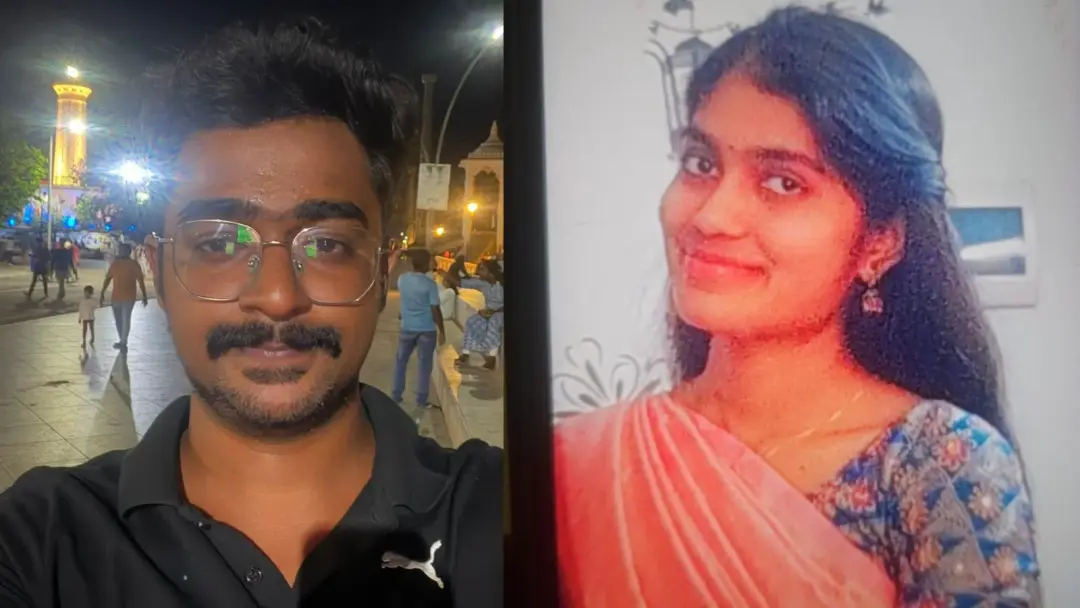
2,085-page chargesheet filed in Bengaluru triple murder case
Bengaluru police said Tuesday they have filed a 2,085-page chargesheet against Shwetha, 25, and her live-in partner J Kenneth, 25, in the K R Puram triple murder case. The charges include murder, joint criminal liability, conspiracy and evidence tampering. Somasundar, 54, Muthulakshmi, 48, and Supriya, 20, were allegedly stabbed on June 22. Shwetha was arrested in Puducherry on June 24 and Kenneth two days later. A supplementary chargesheet will follow, police said.
Source
Indian Express — Cities · read the original report ↗
Desk check · some claims need care
What the desk checked (5)
- A 2,085-page chargesheet was filed against Shwetha, 25, and J Kenneth, 25, in the K R Puram triple murder case. — Attributed to Bengaluru police; page count and ages appear in source.
- Somasundar, 54, Muthulakshmi, 48, and Supriya, 20, were stabbed at their apartment on June 22. — Figures and date appear in source, attributed to police; described as alleged.
- Charges include murder, joint criminal liability, conspiracy and evidence tampering. — Confirmed by police in source.
- Kenneth used an AI chatbot to seek information on killing methods, removing bloodstains and disposing of bodies. — Attributed to earlier police statements; not independently verified and untested in court.
- Shwetha sought approver status and the court said it would consider the request. — Stated in source without named court official; treat as reported procedure.
Analysts’ view opinion
Filing a 2,085-page chargesheet within roughly 90 days suggests the priority was to close the window for default bail and move the case toward trial. The combination of murder, joint criminal liability, conspiracy and evidence tampering is a structure that lets the prosecution hold both accused equally liable if shared intention is established, rather than having to allocate each blow. The real legal pivot is Shwetha's plea for approver status — how the court rules on it could reshape the entire evidentiary architecture.
- The joint criminal liability charge means the prosecution's strength rests on proving common intention, not on separating exactly who did what.
- Approver status is a matter of judicial discretion; if granted, Shwetha's statement becomes evidence, but the general principle that an accomplice's testimony needs independent corroboration would still apply.
- Statements made to police carry limited evidentiary value, which is precisely why the procedure of a judicial statement recorded before a magistrate matters here.
- What Somasundar reportedly told police before dying could be examined as a dying declaration, with its weight turning on the circumstances of recording and its reliability.
- Admissibility of the digital and physical material — the AI chat history and the iron furnace — will depend on electronic-evidence authentication rules, and the promised supplementary chargesheet signals the investigation is not closed.
What to watch — Watch the court's ruling on the approver plea, whether a statement is actually recorded before a magistrate, and how the digital material holds up at the charge-framing stage.
A chargesheet is only the police's set of allegations, not proof of guilt; this story does not establish motive, the precise role of each accused, or whether approver status will be granted, and both remain presumed innocent until a court decides.
Deep dive
Research brief · 8 facts · 6 dates · exam-readyThe brief
Context
On June 22, Somasundar, 54, his wife Muthulakshmi, 48, and their younger daughter Supriya, 20, were allegedly stabbed at their apartment in K R Puram, Bengaluru. Police arrested the couple's elder daughter Shwetha, 25, in Puducherry on June 24 and her live-in partner J Kenneth, also 25, two days later. Nearly 90 days after the arrests, Bengaluru police filed a 2,085-page chargesheet against the pair for murder, joint criminal liability, conspiracy and evidence tampering. Investigators allege Kenneth planned the killings over months and used an AI chatbot to research methods of killing, removing bloodstains and disposing of bodies.
Key facts
- Bengaluru police filed a 2,085-page chargesheet on Tuesday in the K R Puram triple murder case, nearly 90 days after the arrests.
- The accused are Shwetha, 25, and her live-in partner J Kenneth, also 25.
- The victims were Somasundar, 54, his wife Muthulakshmi, 48, and their younger daughter Supriya, 20, allegedly stabbed at their apartment on June 22.
- Charges include murder, joint criminal liability, conspiracy and evidence tampering; a supplementary chargesheet will follow.
- Shwetha was arrested in Puducherry on June 24; Kenneth was arrested within the next two days.
- Police allege Kenneth planned the killings over several months and used an AI chatbot for information on killing methods, removing bloodstains and disposing of bodies.
- Investigators examined an iron furnace Kenneth had allegedly built and sought access to his AI chat history.
- Police say Somasundar, seriously injured, reached the apartment staircase, alerted neighbours and named Shwetha and Kenneth as his attackers before dying of his injuries.
Timeline
- Several months before the killingsKenneth allegedly planned the murders, using an AI chatbot to research killing methods, bloodstain removal and body disposal, according to police.
- June 22Somasundar, Muthulakshmi and Supriya allegedly stabbed at their K R Puram apartment; Somasundar alerted neighbours, named the accused, and later died.
- June 24Shwetha, 25, arrested in Puducherry.
- Within two days of June 24J Kenneth, 25, arrested.
- During investigationShwetha initially claimed sole responsibility and denied Kenneth's involvement; she later sought approver status and offered a judicial confession.
- Tuesday (nearly 90 days after arrests)Police file the 2,085-page chargesheet; further investigation and a supplementary chargesheet announced.
Who has a stake
- Bengaluru police / K R Puram police station — Registered and investigated the case; must sustain the chargesheet's allegations of murder, conspiracy and evidence tampering at trial.
- Shwetha, 25 (accused) — Faces murder and conspiracy charges; has sought approver status and offered a judicial confession to distance herself from direct participation.
- J Kenneth, 25 (accused) — Named by police as playing the principal role in planning and executing the killings; his AI chat history and alleged iron furnace are under scrutiny.
- The victims' family and neighbours — Three family members died; a neighbour-alerted dying declaration by Somasundar forms part of the prosecution case.
- The trial court — Will decide on Shwetha's approver plea during proceedings and try the charges filed in the chargesheet.
Why it matters
A 2,085-page chargesheet against two 25-year-olds for the killing of three family members marks one of Bengaluru's most closely watched crime cases, and its reliance on an alleged AI chatbot trail signals how digital forensics is expanding into generative-AI records. The case also turns on two classic criminal law questions: the weight of a dying declaration and whether one co-accused can be made an approver against the other.
UPSC angle
Prelims pointers
- K R Puram triple murder case: 2,085-page chargesheet filed by Bengaluru police against Shwetha and J Kenneth, both 25.
- Victims: Somasundar (54), Muthulakshmi (48), Supriya (20); allegedly stabbed on June 22; case registered at KR Puram police station.
- Charges listed: murder, joint criminal liability, conspiracy and evidence tampering.
- Arrests: Shwetha in Puducherry on June 24; Kenneth within the next two days.
- An approver is an accomplice who is granted pardon to testify; the court said it would consider Shwetha's plea during proceedings.
- A judicial confession, per the reported procedure, must be recorded before a magistrate.
Mains framing
The K R Puram triple murder chargesheet illustrates how an ordinary domestic crime can raise complex questions of evidence and criminal procedure. Police allege months of premeditation, with Kenneth as the principal planner using an AI chatbot for guidance on killing, removing bloodstains and disposing of bodies, and an iron furnace allegedly built for the purpose; Shwetha is alleged to have assisted, with financial and family disputes examined as motives. Three strands will decide the case: the dying declaration of Somasundar, who reportedly named both accused before succumbing; the digital trail, where investigators sought access to AI chat history, testing the legal reach of forensic examination over generative-AI records; and the shifting stands of a co-accused, who first claimed sole responsibility and later sought approver status and a judicial confession before a magistrate. The way forward lies in careful corroboration of the dying declaration and digital material, expeditious completion of the promised supplementary chargesheet, and a reasoned judicial decision on the approver plea, so that the pardon route does not dilute accountability where joint criminal liability and conspiracy are alleged.
Key terms
- Chargesheet
- The final police report filed in court at the end of investigation, setting out the charges and evidence against the accused.
- Supplementary chargesheet
- An additional report filed when investigation continues after the main chargesheet, adding fresh evidence or accused.
- Joint criminal liability
- Legal principle holding each participant in a crime committed in furtherance of a common intention liable for the whole offence.
- Approver
- An accomplice who, on being granted pardon, testifies against co-accused; here the court said it would consider Shwetha's plea during proceedings.
- Judicial confession
- A confession recorded before a magistrate, as against a statement made to police; Shwetha expressed willingness to make one.
- Dying declaration
- A statement by a person about the cause of their death; Somasundar reportedly named both accused before dying of his injuries.
Practice questions
- Discuss the evidentiary value of a dying declaration in Indian criminal trials, with reference to the K R Puram triple murder case.
- What is an approver, and what safeguards should courts apply before granting pardon to a co-accused who offers to testify?
- How does the alleged use of an AI chatbot to plan a crime complicate police investigation and digital evidence collection? Examine.
Grounded only in the source report — figures and dates are the source's, not inferred.