
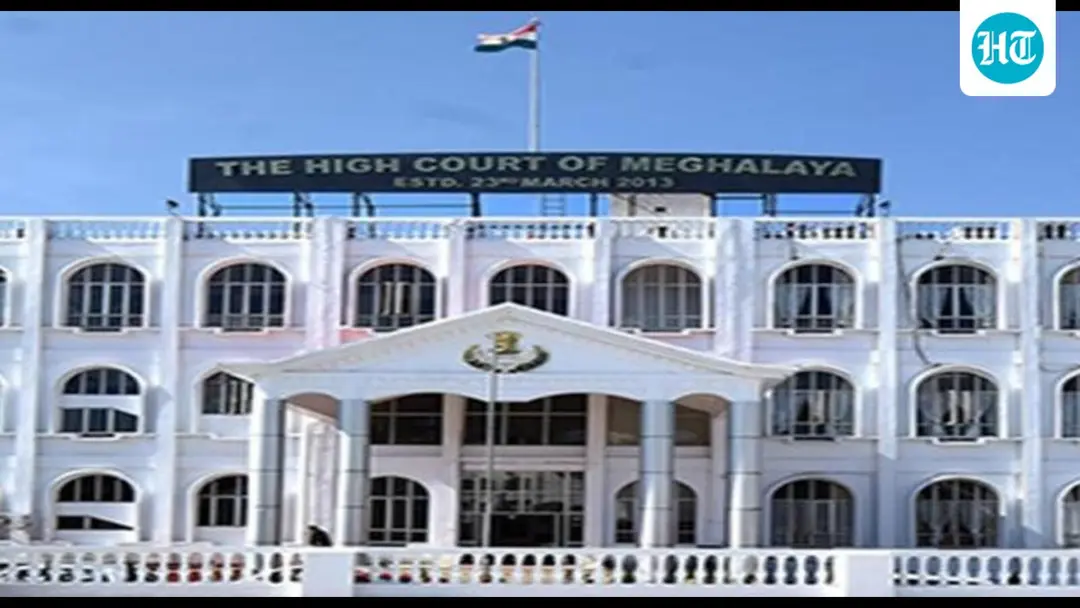
Meghalaya HC orders shifting of 30 foreign nationals to detention centre
The Meghalaya High Court has directed the state government to shift about 30 foreign nationals, who remain in custody despite completing their prison sentences, to a temporary detention centre in Shillong by September 28. The bench of Chief Justice Revati Mohite Dere and Justice W Diengdoh issued the order in a suo motu matter. The MBOSE Hostel at Laitumkhrah was notified as the temporary centre on September 17. The court was told deportation orders were issued in four cases.
Source
Hindustan Times — India · read the original report ↗
Desk check · compared with the source
What the desk checked (4)
- Meghalaya High Court ordered around 30 foreign nationals who completed prison sentences to be shifted to a temporary detention centre in Shillong — Attributed to a division bench of Chief Justice Revati Mohite Dere and Justice W Diengdoh; figure appears in source
- Deadline for the transfer — Source text is internally inconsistent — narrative says September 28 while the quoted order reads 28.09.2026; reproduced as in source
- MBOSE Hostel at Laitumkhrah, Shillong was notified as a temporary detention centre on September 17, with six dormitories and capacity for about 60 inmates — Attributed to a status report placed before the court
- Deportation orders issued in four cases; five foreign nationals in custody over five years, including two from Myanmar, two Nigerians and one Bangladeshi — Attributed to FRRO Kolkata Nidhi Rani and to submissions before the court
Analysts’ view opinion
This reads as a judicial order, but its political message is unmistakable: by taking up the matter suo motu, the Meghalaya High Court has itself flagged an administrative failure in which foreign nationals stayed in jail after their sentences ended. That leaves the state machinery reacting to court deadlines rather than setting the agenda — an uncomfortable political position. The government can, however, point to the notified facility, staffing and medical arrangements as evidence of compliance.
- A suo motu proceeding means the court moved without a petitioner, so credit for exposing the lapse accrues to the judiciary rather than to the opposition or the government.
- Continued detention past sentence completion — including five people held for over five years — gives critics a concrete line of attack on the state home apparatus.
- Because responsibility is shared between the state government and the centrally-controlled FRRO, blame is hard to pin on a single address, which offers the state some political cover.
- The direction to place compensation modalities on record could push this beyond administrative correction into fiscal and accountability territory.
- Detention centres and questions around foreign nationals are politically sensitive in the Northeast, so the Shillong facility could draw mixed local reactions.
What to watch — Watch the September 28 hearing for whether the transfer is actually completed and what the state and FRRO submit on compensation; a missed deadline would sharpen political criticism.
The story records the orders and the arrangements only — it does not establish any party's reaction, fix responsibility on any official, or explain why the delays occurred.
Deep dive
Research brief · 8 facts · 6 dates · exam-readyThe brief
Context
The Meghalaya High Court is hearing a suo motu matter on foreign nationals who have completed their prison sentences but continue to be held in jails while awaiting deportation or repatriation. Such prisoners are ordinarily to be moved out of prisons into detention centres pending removal from India, and the court has been scrutinising why their details were not placed before it earlier. On Monday, a division bench of Chief Justice Revati Mohite Dere and Justice W Diengdoh ordered that around 30 such foreign nationals be shifted to a newly notified temporary detention centre in Shillong. The state had notified the MBOSE Hostel at Laitumkhrah, Shillong, as the temporary centre on September 17 after an earlier proposal for a building at Nongstoin was not accepted.
Key facts
- Around 30 foreign nationals in Meghalaya have completed their prison sentences but remain incarcerated pending deportation or repatriation.
- The bench of Chief Justice Revati Mohite Dere and Justice W Diengdoh ordered their transfer to the temporary detention centre at MBOSE Hostel 'at the earliest and in any event, by 28.09.2026' (as quoted in the order).
- The MBOSE Hostel at Laitumkhrah, Shillong, was notified as a temporary detention centre on September 17; an earlier proposal to use a building at Nongstoin was not accepted.
- The G+2 hostel has six dormitories and capacity for around 60 inmates; photographs of the facility were placed before the court.
- Proposed arrangements: 26 administrative and guarding personnel, eight security personnel, one platoon at the entrance gate and watchtowers, a medical officer and three medical staff, 26 CCTV cameras and fire-safety equipment.
- FRRO Kolkata Nidhi Rani, IPS, appearing by video conferencing, told the bench deportation orders had been issued in four cases.
- Five foreign nationals have been in custody for more than five years: two from Myanmar, two Nigerians and one Bangladeshi.
- The court directed the state government and FRRO to place on record modalities for compensation to foreign nationals held beyond completion of their sentences; the matter is posted for further hearing on September 28.
Timeline
- Earlier proceedings (date not stated in the source)High Court questioned why details of foreign nationals still in jail after completing sentences had not been placed before it earlier.
- Before September 17Proposal to use a building at Nongstoin as a detention centre was not accepted.
- September 17State government notified MBOSE Hostel, Laitumkhrah, Shillong, as a temporary detention centre.
- Monday (date of hearing as reported)Division bench ordered transfer of about 30 foreign nationals to the MBOSE Hostel centre; FRRO Kolkata reported deportation orders in four cases; compensation modalities sought.
- After the orderInspector General of Prisons and Correctional Services instructed district jail authorities to initiate transfers to the Shillong facility.
- September 28Deadline for shifting the foreign nationals; matter posted for further hearing with officials to appear in person or by video conferencing.
Who has a stake
- Around 30 foreign nationals in Meghalaya jails — Continued detention after completing sentences; their transfer to a detention centre, deportation/repatriation and possible compensation.
- Meghalaya High Court division bench (CJ Revati Mohite Dere, Justice W Diengdoh) — Monitoring post-sentence detention through a suo motu matter and enforcing timelines.
- Government of Meghalaya (Home Political department, IG Prisons) — Must notify and run the temporary detention centre, staff it and execute transfers by September 28.
- Foreigners Regional Registration Office, Kolkata / FRO Shillong — Issuing deportation orders and carrying out repatriation; must file compensation modalities before the court.
- Meghalaya State Legal Services Authority — Directed to assist such prisoners with deportation or repatriation, including approaching the Foreigners Registration Office.
- Five long-term detainees (two Myanmar, two Nigerian, one Bangladeshi nationals) — Have been in custody over five years; await resolution of their repatriation.
Why it matters
Detaining people after their sentences have ended raises direct questions of personal liberty and the state's duty to act with speed once a prison term is over. The court's push for a functioning detention centre, legal aid and even compensation shows how judicial monitoring can convert an administrative bottleneck into an enforceable timeline. It also highlights the coordination problem between state prison authorities and central immigration machinery such as the FRRO.
UPSC angle
Prelims pointers
- Meghalaya High Court bench in the suo motu matter: Chief Justice Revati Mohite Dere and Justice W Diengdoh.
- MBOSE Hostel, Laitumkhrah, Shillong notified as temporary detention centre on September 17; capacity around 60 inmates, six dormitories, G+2 building.
- Earlier proposed site at Nongstoin was not accepted.
- FRRO (Foreigners Regional Registration Office), Kolkata told the court deportation orders were issued in four cases.
- Five foreign nationals in custody over five years: two Myanmar, two Nigerian, one Bangladeshi.
- Meghalaya State Legal Services Authority directed to assist prisoners with deportation/repatriation; next hearing September 28.
Mains framing
The Meghalaya case illustrates a recurring governance failure: foreign nationals who have served their sentences remain in prison because deportation or repatriation machinery moves slower than the criminal process. The causes visible in the source are institutional rather than legal — absence of a notified detention facility (an earlier Nongstoin proposal was rejected before the MBOSE Hostel was notified on September 17), lack of information before the court on how many such persons were in jail, and dependence on a separate central authority, the FRRO at Kolkata, for deportation orders, which had been issued in only four cases. The implications are serious: five persons, from Myanmar, Nigeria and Bangladesh, have been held for over five years, which is why the bench asked the state and the FRRO to record the modalities of compensation for detention beyond sentence. The way forward, as reflected in the court's directions, lies in ready detention infrastructure with defined staffing, medical cover and surveillance; a firm transfer deadline (September 28); legal aid through the State Legal Services Authority to help detainees approach the Foreigners Registration Office; and continued judicial supervision with officials answerable at each hearing.
Key terms
- Suo motu matter
- A case the court takes up on its own initiative, without a petitioner, here on foreign nationals held after completing sentences.
- FRRO (Foreigners Regional Registration Office)
- Immigration authority dealing with registration, visas, deportation and repatriation of foreign nationals; here the Kolkata FRRO appeared before the court.
- Temporary detention centre
- Facility to hold foreign nationals awaiting deportation, outside regular prisons; MBOSE Hostel, Laitumkhrah, was notified for this purpose.
- Repatriation/deportation
- Sending a foreign national back to their home country, either voluntarily assisted or under an official removal order.
- Meghalaya State Legal Services Authority
- State legal aid body directed to assist post-sentence foreign detainees, including approaching the Foreigners Registration Office.
- Inspector General of Prisons and Correctional Services
- Head of the state prison administration; instructed district jails to begin transferring such prisoners to the Shillong facility.
Practice questions
- Post-sentence detention of foreign nationals awaiting deportation raises questions of personal liberty and administrative delay. Examine with reference to the Meghalaya High Court's directions.
- Discuss the role of judicial monitoring, including suo motu proceedings, in compelling administrative action on prison and detention infrastructure.
- How does the division of responsibility between state prison authorities and central immigration bodies such as the FRRO affect timely deportation of foreign nationals? Suggest measures for better coordination.
Grounded only in the source report — figures and dates are the source's, not inferred.