
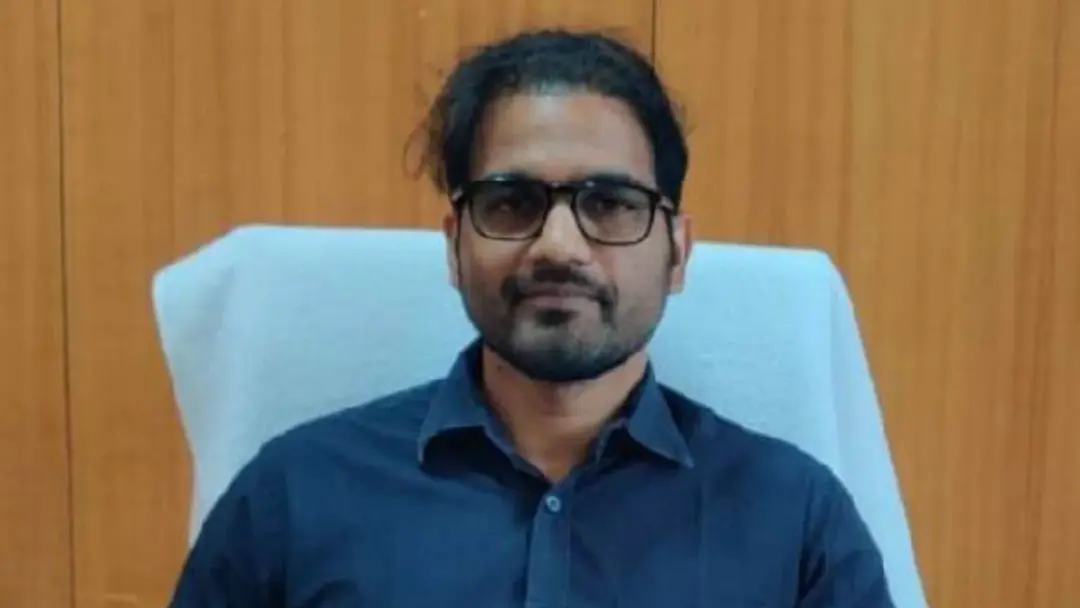
ED says middleman paid Rs 1.3 crore to IAS officer in KPSC scam
The Enforcement Directorate told a special PMLA court Monday that middleman Basavaraj Kannale, arrested over alleged irregularities in Karnataka Public Service Commission recruitment of veterinarians, paid Rs 1.3 crore in cash to former controller of exams and IAS officer Gyanendra Kumar Gangwar and funded jewellery purchases. ED said Gangwar handed the question paper with answers on a pen drive on January 7. Of 1,400 candidates who wrote the January exam for 400 posts, 329 were selected.
Source
Indian Express — Cities · read the original report ↗
Desk check · some claims need care
What the desk checked (5)
- Middleman Basavaraj Kannale paid Rs 1.3 crore in cash to IAS officer Gyanendra Kumar Gangwar. — Attributed to ED, citing Kannale's statements during questioning; not independently verified.
- Gangwar bought a diamond necklace worth Rs 23 lakh with funds funnelled by Kannale; CID said he also bought a gold necklace worth over Rs 28 lakh. — Two separate figures attributed to ED and CID respectively; source notes CID made claim at bail hearing.
- Gangwar gave the question paper with answers to Kannale on a pen drive on January 7, ahead of the January 9 exam. — Attributed to ED's probe findings; appears in source.
- ED is examining proceeds of crime from other KPSC exams during Gangwar's 2024 to March 2026 tenure. — Attributed to unnamed sources familiar with the PMLA probe — unnamed sourcing.
- 1,400 candidates wrote the January exam for 400 veterinary doctor posts and 329 were selected; an FIR alleged 29 aspirants with poor records scored above 450 of 600. — Figures appear in source; FIR attributed to unsuccessful candidate Dr S Manjunath, dated July 24, 2026.
Analysts’ view opinion
This is now a two-track prosecution: a state CID case on the alleged recruitment fraud and a parallel ED case on the money trail under the PMLA, 2002. The ED's submission rests substantially on a co-accused middleman's statement made in custody — legally admissible for investigative purposes such as seeking custody, but historically treated with caution by courts as proof at trial unless corroborated by documents, recoveries and transfers. The reported jewellery recovery and traced bank transfers matter more than the confession, because PMLA turns on establishing 'proceeds of crime' linked to a scheduled predicate offence.
- Because PMLA is a derivative offence, the ED's case stands or falls with the strength of the underlying CID case on the alleged paper leak and bribery.
- Statements of a co-accused recorded during questioning are a well-recognised investigative lead, but courts generally require independent corroboration before treating them as substantive evidence of guilt.
- The discrepancy on the record — ED citing a Rs 23 lakh diamond necklace, CID a gold necklace of over Rs 28 lakh — is the kind of inconsistency defence counsel will press at bail and trial stages.
- The procedural wrinkle that Kannale was not produced on September 19 while in CID custody, and the use of body warrants thereafter, shows the custody-sharing friction that typically arises when state and central agencies probe the same facts.
- A widened inquiry into other exams during the officer's tenure, and into the KPSC chairman and members, would remain at the scrutiny stage; naming in a probe is not an accusation proved, and the presumption of innocence applies to all named persons.
What to watch — Watch the bail and remand orders in both the CID and PMLA courts, whether the ED files a prosecution complaint within statutory timelines, and whether any separate administrative or court process is initiated on the validity of the January exam results.
Nothing here is proven: these are investigating agencies' submissions in court, the accused have not been convicted, their responses are not recorded in this story, and the story does not establish that the wider suspicions about other exams or KPSC office-bearers have moved beyond examination.
Deep dive
Research brief · 8 facts · 8 dates · exam-readyThe brief
Context
The Karnataka Public Service Commission (KPSC) recruitment of veterinary officers has become the centre of a major exam-leak and bribery investigation. The Karnataka CID and the Enforcement Directorate (ED) allege that the then controller of exams, IAS officer Gyanendra Kumar Gangwar, leaked the question paper with answers to a middleman, Basavaraj Kannale, who collected bribes from candidates. The ED is probing the money trail under the Prevention of Money Laundering Act (PMLA), 2002, while the CID handles the predicate criminal case. The matter surfaced after an unsuccessful candidate filed an FIR alleging that academically weak aspirants scored unusually high marks.
Key facts
- ED told a special PMLA court in Bengaluru on Monday that middleman Basavaraj Kannale paid Rs 1.30 crore in cash to former KPSC controller of exams and IAS officer Gyanendra Kumar Gangwar.
- ED said Gangwar bought a diamond necklace worth Rs 23 lakh from a Bengaluru jewellery showroom using funds funnelled by Kannale.
- Karnataka CID told a bail hearing that Gangwar also bought a gold necklace worth over Rs 28 lakh through Kannale; CID said it recovered jewellery from a friend of Gangwar.
- ED says Gangwar handed Kannale the entrance exam question paper with answers on a pen drive on January 7, at the officer's house; the main exam was held on January 9.
- Kannale allegedly collected around Rs 1.5 crore in advance bribes from candidates, with about Rs 80 lakh traced to bank transfers; he received Rs 30-40 lakh for providing access to exam questions.
- 1,400 candidates wrote the KPSC entrance exam in January for 400 posts of veterinary doctors; 329 candidates were selected.
- Dr S Manjunath, an unsuccessful candidate, filed an FIR on July 24, 2026, alleging 29 aspirants with poor academic records scored above 450 out of 600 and were selected.
- ED is examining whether proceeds of crime were generated in other KPSC exams during Gangwar's tenure as controller of exams from 2024 to March 2026; funds were allegedly transferred to him even in 2025.
Timeline
- 2024 to March 2026Gangwar's tenure as KPSC controller of exams, the period ED is now examining for generation of proceeds of crime.
- January 7Gangwar allegedly gave Kannale the question paper with answers on a pen drive at his house, as per ED.
- January 9Main KPSC veterinary officers exam held; aspirants who allegedly paid and stayed at Airbnb villas were given papers in advance.
- July 24, 2026Dr S Manjunath, an unsuccessful candidate, files FIR alleging 29 weak candidates scored above 450/600 and were selected.
- August 29Karnataka CID arrests IAS officer Gyanendra Kumar Gangwar.
- September 19Karnataka CID takes Kannale into further custody for two days; he is therefore not produced before the PMLA court.
- Last weekED arrests Gangwar and Kannale and obtains body warrants from a CID court to produce Kannale before the special PMLA judge.
- MondayED cites Kannale's statements in the special PMLA court and takes Gangwar into six-day custody.
Who has a stake
- Enforcement Directorate (ED) — Investigating the money-laundering angle under PMLA, 2002; obtained six-day custody of Gangwar and is tracing proceeds of crime.
- Karnataka CID — Runs the predicate criminal case; arrested Gangwar on August 29, recovered jewellery and holds Kannale in custody.
- Gyanendra Kumar Gangwar, IAS — Former KPSC controller of exams accused of leaking the paper and receiving Rs 1.3 crore in cash plus jewellery; in ED custody.
- Basavaraj Kannale — Alleged middleman accused of collecting about Rs 1.5 crore from candidates and funnelling payments to Gangwar.
- KPSC chairman Sahukar Shivashankarappa and members — Their role in alleged laundering of funds obtained through fraudulent practices at KPSC is under scrutiny.
- Candidates and Dr S Manjunath — 1,400 aspirants competed for 400 veterinary officer posts; the unsuccessful candidate's FIR triggered the probe into 329 selections.
Why it matters
A state public service commission is the gatekeeper of merit-based recruitment, and the allegation that its controller of exams sold question papers strikes at the credibility of the entire selection process. With 329 of 1,400 candidates selected in the tainted January exam and the ED now probing other exams held during a two-year tenure, the fate of many appointments and the trust of lakhs of aspirants are at stake. It also shows how the PMLA money trail is being used to trace bribes converted into cash and jewellery.
UPSC angle
Prelims pointers
- Prevention of Money Laundering Act (PMLA), 2002 is the law under which ED is probing the KPSC recruitment case.
- Karnataka Public Service Commission (KPSC) conducted the January exam: 1,400 candidates, 400 veterinary doctor posts, 329 selected.
- Gyanendra Kumar Gangwar, IAS, was KPSC controller of exams from 2024 to March 2026; arrested by CID on August 29.
- ED alleges Rs 1.30 crore cash paid by middleman Basavaraj Kannale, plus a Rs 23 lakh diamond necklace and a gold necklace worth over Rs 28 lakh.
- FIR by Dr S Manjunath, filed July 24, 2026, alleged 29 candidates with poor records scored above 450 out of 600.
- A 'body warrant' is used to produce an accused already in another agency's custody before a court - here, from a CID court to the special PMLA court.
Mains framing
The KPSC veterinary recruitment case illustrates how institutionalised corruption can capture the machinery of public recruitment itself: the ED alleges that the controller of exams, an IAS officer, handed a question paper with answers on a pen drive to a middleman two days before the January 9 exam, while the middleman collected around Rs 1.5 crore in advance bribes from candidates and routed Rs 1.30 crore in cash plus high-value jewellery to the officer. The enabling conditions are concentration of custody of question papers in a single functionary, weak internal audit of examination processes, cash-based bribery that evades banking trails (only about Rs 80 lakh was traced to bank transfers), and the use of intermediaries and short-stay villas to deliver leaked papers. The implications extend beyond one exam: 329 selections from 1,400 candidates are now suspect, the ED is examining other exams across a two-year tenure, and the role of the KPSC chairman and members is under scrutiny, raising questions about appointments to constitutional recruitment bodies. The way forward suggested by the facts of the case lies in tighter chain-of-custody and randomisation in paper setting, parallel oversight of the controller of exams, forensic audit of results showing statistical outliers (as the FIR alleging 29 high scorers did), and swift use of money-trail investigation to attach proceeds of crime so that the profit motive is neutralised.
Key terms
- KPSC
- Karnataka Public Service Commission, the state body that conducted the veterinary officers recruitment exam under scrutiny.
- PMLA, 2002
- Prevention of Money Laundering Act, under which the ED is probing the money angle and seeking custody of the accused.
- Proceeds of crime
- Property or money derived from a criminal offence; ED is examining whether other KPSC exams also generated such proceeds.
- Body warrant
- A court order to produce a person already in one agency's custody before another court, used here to bring Kannale before the PMLA judge.
- Controller of exams
- KPSC official responsible for conducting examinations; the post held by Gangwar, accused of leaking the question paper.
- CID
- Criminal Investigation Department of Karnataka Police, investigating the underlying recruitment fraud case.
Practice questions
- Examine how exam-leak scandals in state public service commissions undermine the constitutional promise of equality of opportunity in public employment, using the KPSC veterinary recruitment case as an illustration.
- The PMLA money-trail probe has become central to corruption investigations in India. Discuss its utility and limits with reference to the ED's findings in the KPSC case.
- What institutional safeguards can prevent leakage of question papers by officials entrusted with their custody? Suggest reforms in the conduct of state recruitment examinations.
Grounded only in the source report — figures and dates are the source's, not inferred.