
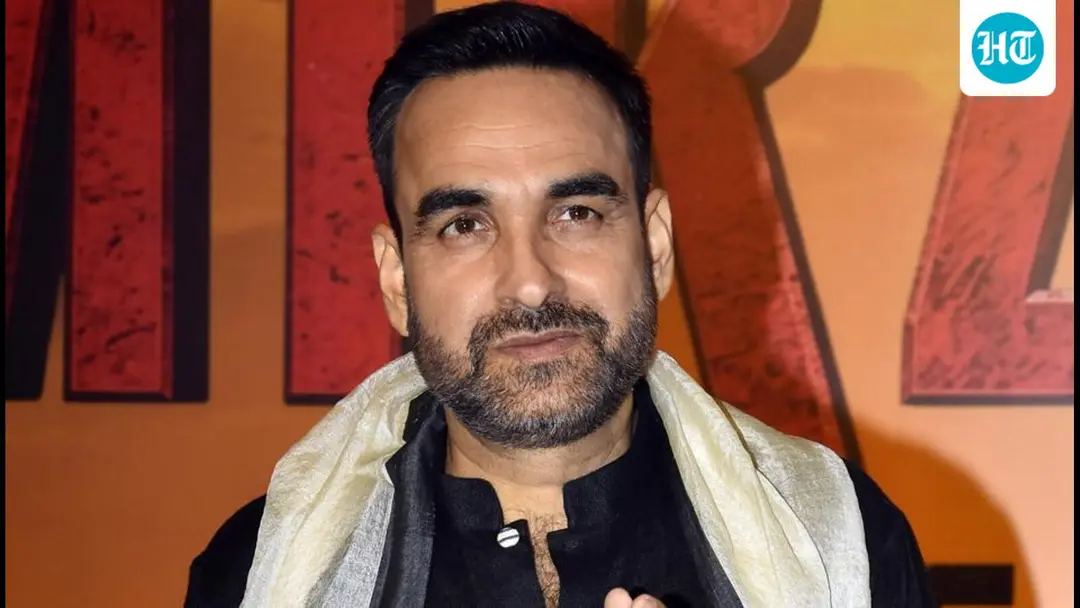
Government reconstitutes CBFC after nine years, names 18 members
The government on Wednesday appointed 18 members to the Central Board of Film Certification, reconstituting it for the first time in nine years. An Information and Broadcasting Ministry statement named Suniel Shetty, Preity Zinta, Pankaj Tripathi, Prosenjit Chatterjee, filmmaker Priyadarshan, musician Ricky Kej, Roopali Ganguly and poet Yatindra Mishra. The term is three years. Under the Cinematograph Act 1952, the board must have 12 to 25 members excluding the chairperson. Shashi Shekhar Vempati was named chairperson in May.
Source
Hindustan Times — India · read the original report ↗
Desk check · compared with the source
What the desk checked (5)
- The government appointed 18 members to the CBFC on Wednesday, reconstituting the body after nine years. — Attributed to a statement issued by the Ministry of Information and Broadcasting; figure appears in source.
- New members include Suniel Shetty, Preity Zinta, Pankaj Tripathi, Prosenjit Chatterjee, Priyadarshan, Ricky Kej, Roopali Ganguly and Yatindra Mishra. — Names listed in the ministry statement as reported in the source.
- Under the Cinematograph Act 1952, CBFC must have 12 to 25 members excluding the chairperson. — Stated in source as a legal provision; no external verification performed.
- Shashi Shekhar Vempati was appointed CBFC chairperson in May, succeeding Prasoon Joshi. — Reported in source without direct attribution to a document.
- Only a few of the 10 remaining members were active, making reconstitution necessary; new board is 'full-fledged'. — Attributed to an unnamed government official speaking to HT.
Analysts’ view opinion
Reconstituting the CBFC with 18 members after nine years looks administrative, but it lands squarely on the industry's bottom line — certification delays and cuts now dictate release dates, marketing spends and OTT deals. The presence of Suniel Shetty, Preity Zinta, Pankaj Tripathi, Prosenjit Chatterjee and Priyadarshan, spanning Hindi, Bengali and southern cinema plus television, music and literature, signals that working creative voices are back at the table. Debate over any such list is inevitable; the real test will not be the names but whether certification becomes faster and more predictable.
- A government official's note that only 10 members remained and few were actively involved is an implicit acknowledgement of the delays producers have complained about.
- From a box-office view, certification is no longer a formality — cuts and rating calls shape release calendars, marketing outlay and access to family audiences.
- The mix of actors, a filmmaker, a musician and a television artiste raises the industry's hope that creative intent gets a more sympathetic hearing.
- Prosenjit Chatterjee and Priyadarshan on the board suggest a composition that isn't purely Hindi-centric, which matters when regional context drives certification calls.
- Board appointments always invite scrutiny; credibility will ultimately rest on consistency and transparency of decisions rather than the star value of the list.
What to watch — Watch how quickly and with how few cuts the next set of contentious or big-budget releases clears certification — that is the real measure of this rejig.
The story does not establish any change in certification norms or process; beyond the appointments and the three-year term, how the board will actually function remains unconfirmed.
Deep dive
Research brief · 8 facts · 5 dates · exam-readyThe brief
Context
The Central Board of Film Certification (CBFC), the statutory body that certifies films for public exhibition in India under the Cinematograph Act, 1952, had not been reconstituted since August 2017. On Wednesday, the Ministry of Information and Broadcasting announced the appointment of 18 members for a three-year term, filling out what a government official called a "full-fledged board". The move follows the appointment of Shashi Shekhar Vempati as CBFC chairperson in May, after Prasoon Joshi moved to Prasar Bharati as its chairperson.
Key facts
- The government appointed 18 members to the CBFC on Wednesday, reconstituting the body for the first time in nine years.
- The Ministry of Information and Broadcasting statement named actors Suniel Shetty, Preity Zinta, Pankaj Tripathi and Prosenjit Chatterjee, filmmaker Priyadarshan, musician Ricky Kej and television actor Roopali Ganguly.
- Poet and author Yatindra Mishra, scion of Ayodhya's erstwhile royal family, is part of the new board; his late father Bimlendra Mohan Pratap Mishra was a trustee of the Shri Ram Janmabhoomi Teerth Kshetra Trust.
- Some members of the previous board, including Waman Kendre and Ramesh Patange, have been retained.
- Under the Cinematograph Act 1952, the CBFC must have between 12 and 25 members, excluding the chairperson.
- Shashi Shekhar Vempati was appointed CBFC chairperson in May, succeeding Prasoon Joshi, who became Prasar Bharati chairperson.
- The board was last reconstituted in August 2017 with Prasoon Joshi as chairperson and 12 other members for three years.
- Two of those 12 members died - Narendra Kohli in 2021 and Neil Herbert Nongkynrih in 2022 - leaving 10 surviving members, and the government did not appoint replacements.
Timeline
- August 2017CBFC last reconstituted, with Prasoon Joshi as chairperson and 12 other members for a three-year term.
- 2021Board member Narendra Kohli died; vacancy not filled.
- 2022Board member Neil Herbert Nongkynrih died, leaving 10 surviving members; vacancy not filled.
- May (this year)Shashi Shekhar Vempati appointed CBFC chairperson, succeeding Prasoon Joshi, who became Prasar Bharati chairperson.
- Wednesday (announcement date)Ministry of Information and Broadcasting names 18 CBFC members for a three-year term.
Who has a stake
- Ministry of Information and Broadcasting — The appointing authority; responsible for constituting the CBFC and issuing the government order on the 18 members' three-year term.
- CBFC and its chairperson Shashi Shekhar Vempati — Gains a full-strength board of 18 members after years of running with 10, only a few of whom were actively involved.
- Newly appointed members (Suniel Shetty, Preity Zinta, Pankaj Tripathi, Prosenjit Chatterjee, Priyadarshan, Ricky Kej, Roopali Ganguly, Yatindra Mishra and others) — Will serve three-year terms deciding film certification matters.
- Retained members Waman Kendre and Ramesh Patange — Continue on the board from the previous 2017 composition.
- Film industry and filmmakers — Depend on a functioning certification board for clearance of films for public exhibition.
- Prasoon Joshi — Former CBFC chairperson, now chairperson of Prasar Bharati.
Why it matters
Film certification is a statutory gatekeeping function, and for years the CBFC operated with a depleted board of 10 members, only a few of them actively involved, with deaths in 2021 and 2022 left unreplaced. A full 18-member board, within the 12-25 range mandated by the Cinematograph Act 1952, restores institutional capacity to a body whose decisions shape what Indian audiences can watch.
UPSC angle
Prelims pointers
- CBFC is constituted under the Cinematograph Act, 1952, and functions under the Ministry of Information and Broadcasting.
- The Act requires the CBFC to have between 12 and 25 members, excluding the chairperson.
- CBFC members appointed in the latest order will serve a three-year term.
- Shashi Shekhar Vempati is CBFC chairperson, appointed in May, succeeding Prasoon Joshi.
- Prasoon Joshi, former CBFC chairperson, was appointed chairperson of Prasar Bharati.
- The CBFC was previously reconstituted in August 2017 with a chairperson and 12 members.
Mains framing
The reconstitution of the CBFC after nine years illustrates a wider problem of administrative drift in statutory bodies: the board last reconstituted in August 2017 was never replenished after two members died in 2021 and 2022, and a government official conceded that of the 10 surviving members only a few were actively involved in its functioning. Because the Cinematograph Act, 1952 fixes the board's strength between 12 and 25 members excluding the chairperson, prolonged under-strength functioning weakens the deliberative and representative character of a body that decides what films may be publicly exhibited. The new 18-member composition, drawn from acting, filmmaking, music, television and literature and combining fresh appointees with retained members such as Waman Kendre and Ramesh Patange, is intended to make it a "full-fledged board" for a three-year term. The lesson for governance is the need for timely filling of vacancies as they arise rather than episodic wholesale rejigs, and for clarity on member participation so that certification decisions rest on a genuinely functioning collegial body rather than a handful of active members.
Key terms
- Central Board of Film Certification (CBFC)
- The statutory film certification body under the Ministry of Information and Broadcasting, now reconstituted with 18 members for three years.
- Cinematograph Act, 1952
- The law governing film certification in India; it requires the CBFC to have 12 to 25 members excluding the chairperson.
- Ministry of Information and Broadcasting
- The Union ministry that issued the statement and government order naming the 18 CBFC members.
- Prasar Bharati
- India's public broadcaster, whose chairpersonship Prasoon Joshi took up after leaving the CBFC.
- Shri Ram Janmabhoomi Teerth Kshetra Trust
- Trust of which the late Bimlendra Mohan Pratap Mishra, father of new CBFC member Yatindra Mishra, was a trustee.
Practice questions
- Discuss the implications of prolonged vacancies and under-strength functioning in statutory bodies such as the CBFC, with reference to the Cinematograph Act, 1952.
- The CBFC was reconstituted after nine years with 18 members. Examine how the composition and functioning of the film certification board affect creative freedom and regulatory credibility.
- What is the statutory basis and composition of the Central Board of Film Certification? Outline the ministry under which it functions and the tenure of its members.
Grounded only in the source report — figures and dates are the source's, not inferred.