
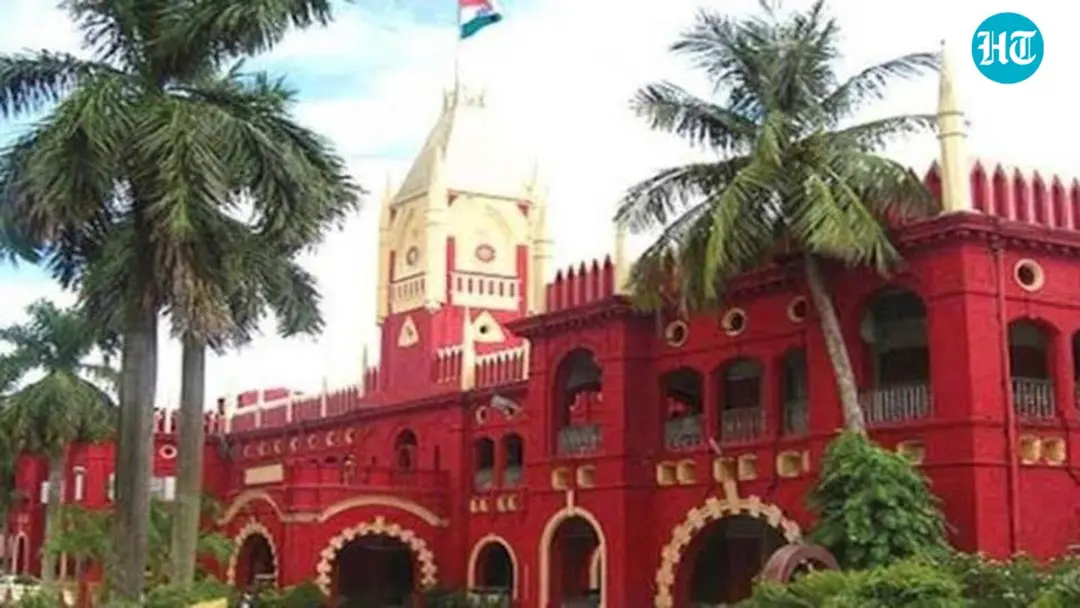
Orissa HC orders reinstatement of judge who resigned over son's care
The Orissa High Court has ordered the immediate reinstatement of judicial officer Ipsita Mohanty, who resigned after her requests for a Bhubaneswar posting to care for her autistic son went unheeded. A bench of Justice Manash Ranjan Pathak and Justice Sibo Sankar Mishra held her November 29, 2022 resignation was not voluntary but made under duress, and quashed the January 2, 2023 relieving notification. She gets continuity of service from January 3, 2023, but no back wages.
Source
Hindustan Times — India · read the original report ↗
Desk check · compared with the source
What the desk checked (5)
- Orissa High Court quashed the January 2, 2023 law department notification relieving Ipsita Mohanty and ordered her reinstatement. — Attributed to the division bench of Justice Manash Ranjan Pathak and Justice Sibo Sankar Mishra; dates appear in source.
- Her resignation of November 29, 2022 was not voluntary but made under duress. — Direct finding quoted from the bench in the source.
- She was transferred to Hindol in Dhenkanal district in July 2022, where specialised therapy for her 15-year-old son with severe autism was unavailable. — Stated in source as the court's basis; no independent medical documentation cited.
- High Court Registry failed to communicate her December 21, 2022 withdrawal to the Governor or Law Department before approval on December 31, 2022. — Described in source as findings of the bench on administrative lapses.
- Reinstatement effective January 3, 2023 with continuity of service but no back wages. — Figure and condition appear in source; source says she undertook to forgo financial claims.
Analysts’ view opinion
Though this is a court ruling, its political message is unmistakable: the bench found that the system — both the state law department and the High Court Registry — failed to convey an officer's withdrawal of resignation to the Governor before it was accepted. The optics are politically potent: a woman judicial officer, a son with severe autism, and a resignation the court has now declared involuntary. Yet the government retains some cover, because the court framed the failure as administrative lapse rather than a political decision.
- The judgment faults process rather than politics — the Governor approved the resignation without knowing of the withdrawal, so blame does not rest on the political leadership alone.
- Disability care and transfer policy for women officers are emotionally resonant issues, and the opposition could cast this as a lack of humane governance.
- A silver lining for the state is the court's ruling that no back wages are payable, which limits both the fiscal and the political cost.
- Questions about judicial transfers and Registry functioning also implicate the High Court's own administration, so this is not a clean government-versus-judiciary story.
- Cases like this often generate political demands for clearer transfer norms grounded in special medical or caregiving needs.
What to watch — Watch whether the state implements the reinstatement promptly or explores an appeal, and whether any policy statement follows on transfers linked to disability or medical care.
The story establishes no involvement by any politician or party and no deliberate discrimination, and it does not record the government's response or whether an appeal is contemplated.
Deep dive
Research brief · 8 facts · 10 dates · exam-readyThe brief
Context
Ipsita Mohanty, a judicial officer of the Odisha Judicial Service, sought a Bhubaneswar posting so her teenage son with severe autism spectrum disorder could continue specialised therapy. After being transferred to Hindol in Dhenkanal district, where such treatment was unavailable, and getting no decision on her plea, she resigned in November 2022. Her withdrawal of the resignation was never conveyed to the Governor or Law Department, and she was relieved from service on January 2, 2023. A division bench of the Orissa High Court has now held the resignation involuntary and ordered her immediate reinstatement.
Key facts
- A division bench of Justice Manash Ranjan Pathak and Justice Sibo Sankar Mishra quashed the Odisha law department notification of January 2, 2023 relieving Ipsita Mohanty from service.
- The court declared her resignation of November 29, 2022 could not be construed as voluntary and the relieving notification was 'bad in law'.
- Mohanty joined the Odisha Judicial Service in February 2015 and had earlier served in Bhubaneswar, where her son received specialised medical care.
- Her son, aged 15, has severe autism spectrum disorder and neurological ailments; specialised therapy was unavailable at Hindol in Dhenkanal district.
- She is to be restored as additional civil judge (junior division)-cum-SDJM with continuity of service from January 3, 2023.
- The court denied back wages for the out-of-service period as she had undertaken to forgo financial claims, but granted full continuity of service and consequential benefits.
- The court relied on Rule 34(4) of the Odisha Civil Services (Pension) Rules, 1992, allowing withdrawal of a resignation made for compelling reasons before effective acceptance.
- The bench noted her unblemished service record with no pending vigilance inquiry, disciplinary proceeding or financial liability.
Timeline
- February 2015Ipsita Mohanty joins the Odisha Judicial Service; later serves in Bhubaneswar where her son receives specialised care.
- July 2022She is transferred to Hindol in Dhenkanal district, where specialised therapy for her son is unavailable.
- September 5, 2022She petitions the High Court seeking a Bhubaneswar posting for two-and-a-half years for her son's treatment.
- October 20, 2022The High Court's Standing Committee defers her request without communicating a final decision.
- November 29, 2022She submits her resignation citing her son's worsening condition and lack of medical facilities at Hindol.
- December 21, 2022She formally withdraws the resignation after medical advice that long-term care and her continued service were essential.
- December 22, 2022The then Chief Justice directs that the withdrawal application be placed before the full court; the Registry fails to inform the Governor or Law Department.
- December 31, 2022The Governor, unaware of the withdrawal, approves the resignation proposal.
- January 2, 2023Law Department issues the relieving notification; the Registry's withdrawal application is dropped as the notification was already issued.
- Order date (not stated in the source)Orissa High Court quashes the notification and orders reinstatement with effect from January 3, 2023, without back wages.
Who has a stake
- Ipsita Mohanty, judicial officer — Restoration of her post as additional civil judge (junior division)-cum-SDJM with continuity of service, but without back wages.
- Her 15-year-old son — Continued access to specialised therapy for severe autism spectrum disorder and neurological ailments, dependent on his mother's posting.
- Orissa High Court division bench — Adjudicating whether administrative lapses can defeat an employee's right to withdraw a resignation before it takes effect.
- Orissa High Court Registry and Standing Committee — Held responsible for deferring her transfer request and failing to communicate her withdrawal application.
- Odisha Law Department and Governor — Approved and notified the resignation without knowledge of the withdrawal; notification now quashed.
- Judicial officers and government servants generally — Clarity on resignation withdrawal rights under Rule 34(4) of the Odisha Civil Services (Pension) Rules, 1992, and on caregiving-based posting requests.
Why it matters
The order affirms that a resignation forced by caregiving compulsions is not truly voluntary, and that administrative lapses cannot extinguish an employee's legal right to withdraw a resignation before it takes effect. It also spotlights how rigid transfer postings can push women officers with dependent children with disabilities out of public service.
UPSC angle
Prelims pointers
- Rule 34(4), Odisha Civil Services (Pension) Rules, 1992: permits withdrawal of a resignation made for compelling reasons before its effective acceptance, subject to conditions.
- Case: reinstatement of judicial officer Ipsita Mohanty, ordered by an Orissa High Court division bench of Justices Manash Ranjan Pathak and Sibo Sankar Mishra.
- Post involved: additional civil judge (junior division)-cum-SDJM (Sub-Divisional Judicial Magistrate) in the Odisha Judicial Service.
- Key dates: resignation November 29, 2022; withdrawal December 21, 2022; Governor's approval December 31, 2022; relieving notification January 2, 2023; reinstatement from January 3, 2023.
- The High Court's Standing Committee deferred her transfer request on October 20, 2022 without a final decision.
- Reinstatement granted with continuity of service and consequential benefits but no back wages, as she had undertaken to forgo financial claims.
Mains framing
The case illustrates how procedural lapses within judicial and executive establishments can convert a caregiver's distress into permanent loss of livelihood. Denied a Bhubaneswar posting where her son with severe autism spectrum disorder was receiving specialised care, and left without a decision after the High Court's Standing Committee deferred her plea on October 20, 2022, the officer resigned on November 29, 2022 — a step the court held was made under duress and thus not voluntary. Her withdrawal on December 21, 2022 was never communicated by the Registry to the Governor or the Law Department, so the resignation was approved on December 31 and notified on January 2, 2023. Reading Rule 34(4) of the Odisha Civil Services (Pension) Rules, 1992, the bench held that a resignation for compelling reasons may be withdrawn before effective acceptance and that administrative failure cannot defeat that right, quashing the notification as bad in law. The implications extend to accommodating caregiving needs in transfer policy, ensuring time-bound communication of decisions on representations, and building institutional accountability for registry lapses; the balanced remedy — full continuity of service but no back wages, in line with her own undertaking — shows relief calibrated to equity rather than windfall.
Key terms
- Resignation under duress
- A resignation submitted under compelling circumstances rather than free will; the court held it cannot be treated as voluntary.
- Rule 34(4), Odisha Civil Services (Pension) Rules, 1992
- Provision allowing a government employee who resigned for compelling reasons to withdraw the resignation before its effective acceptance, subject to conditions.
- SDJM
- Sub-Divisional Judicial Magistrate; the post here was additional civil judge (junior division)-cum-SDJM.
- High Court Standing Committee
- The High Court committee that considered and deferred Mohanty's request for a Bhubaneswar posting on October 20, 2022.
- Continuity of service
- Treating the period out of service as unbroken for service benefits; granted here from January 3, 2023 without back wages.
- Autism spectrum disorder
- A neurodevelopmental condition; the officer's 15-year-old son has a severe form along with neurological ailments requiring specialised therapy.
Practice questions
- Examine whether administrative lapses in processing a withdrawal application can defeat a government servant's right to retract a resignation before it takes effect, with reference to the Orissa High Court's reasoning.
- Should transfer and posting policies for judicial officers and civil servants make statutory allowance for caregiving responsibilities towards dependents with disabilities? Discuss.
- Discuss the distinction between voluntary resignation and resignation under duress, and the remedies courts may grant when the latter is established.
Grounded only in the source report — figures and dates are the source's, not inferred.