
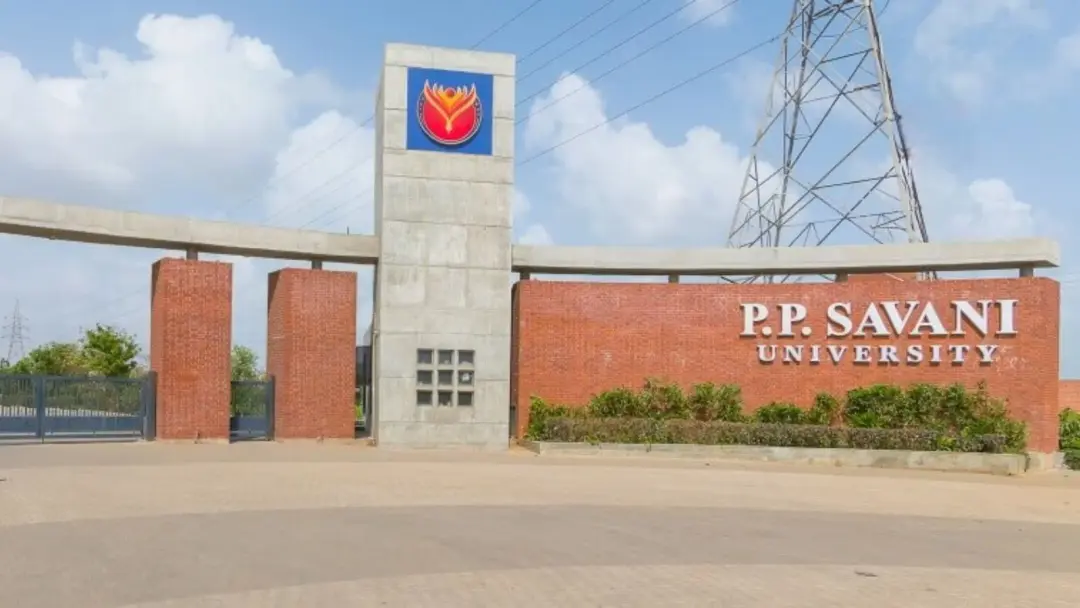
Surat civic body fines P P Savani Institute Rs 1 lakh over food poisoning
The Surat Municipal Corporation on Wednesday issued a Rs 1 lakh penalty notice to P P Savani Institute for allegedly not informing its health department about a food poisoning incident on the hostel campus on Saturday. Students of P P Savani School at Abrahma village fell ill after dinner at the canteen and recovered after treatment. Health officer Dr Pradeep Umrigar said water and other samples were sent for testing and the report is awaited. A two-day state drive covered over 350 institutions, with notices to nearly 100.
Source
Indian Express — Cities · read the original report ↗
Desk check · compared with the source
What the desk checked (5)
- SMC issued a Rs 1 lakh penalty notice to P P Savani Institute on Wednesday for not informing the civic health department. — Attributed in the source to SMC Medical Officer of Health Dr Pradeep Umrigar, who is quoted directly.
- Several students of P P Savani School at Abrahma village fell ill after dinner at the hostel canteen on Saturday evening and later recovered. — Stated as reported fact in the source without a named source; treatment at P P Savani Hospital is described.
- State Health Minister Praful Pansheriya directed the Food and Drug Control Department to examine the incident and ordered surprise checks. — Attributed to the minister with a partial direct quote in the source.
- Officials inspected over 350 institutions in a two-day drive and issued notices to nearly 100 found unhygienic. — Figures appear in the source but are attributed only to unnamed officials.
- Water and other canteen samples were sent for testing and the report is awaited. — Attributed to Dr Umrigar; outcome unverified as tests are pending.
Analysts’ view opinion
The penalty here was not levied for proven food contamination — it was levied for failing to report. That tells you the civic machinery is using reporting compliance as its main policy lever, because it is the only action available before lab results arrive. The fact that officials reached the canteen only after media reports, by which time the leftover food had been disposed of, exposes a structural weakness rather than a one-off lapse.
- The stated basis of the Rs 1 lakh fine is non-intimation to the health department, not established contamination — this is enforcement on a procedural breach.
- Authorities learnt of the incident through media reports rather than from the institution, which points to a gap in the institutional reporting chain and the limits of self-disclosure-based regulation.
- Inspection happened after the leftover food had been discarded, making causation harder to establish and underlining the need for a clear evidence-preservation protocol.
- Over 350 institutions checked in two days with notices to nearly 100 fits the familiar post-incident drive pattern; whether it converts into routine surveillance is the real test.
- Pairing the fine with a letter to the District Education Officer signals an attempt at health-education department coordination, but ambiguity over who owns hostel and canteen oversight remains the underlying problem.
What to watch — Watch what the water and food sample lab report concludes, what follow-up action is taken against the roughly 100 institutions that received notices, and whether these checks harden into a standing inspection system.
With the sample report still awaited, the story does not establish what actually caused the illness, and it carries no response or explanation from the institution on the fine.
Deep dive
Research brief · 8 facts · 4 dates · exam-readyThe brief
Context
Several students of P P Savani School at Abrahma village in Surat fell ill after eating dinner at their hostel canteen on Saturday evening. They were taken in school buses to P P Savani Hospital, treated and recovered. The Surat Municipal Corporation has since fined the institute Rs 1 lakh for allegedly failing to report the food poisoning incident to the civic health department, and the state government ordered surprise checks of canteens and hostels across Gujarat.
Key facts
- The Surat Municipal Corporation issued a penalty notice of Rs 1 lakh to P P Savani Institute on Wednesday for allegedly not informing the civic health department about the food poisoning incident.
- The incident occurred on Saturday evening at the hostel canteen of P P Savani School, Abrahma village, Surat city.
- Affected students complained to the warden, were taken to P P Savani Hospital in school buses, treated and subsequently recovered.
- State Health Minister Praful Pansheriya, a day after the incident, directed Food and Drug Control Department officials to look into it and said such negligence by institute authorities 'will not be tolerated'.
- Officials inspected over 350 canteens and hostels in a two-day special drive across the state and issued notices to nearly 100 institutions found 'unhygienic'.
- SMC Medical Officer of Health Dr Pradeep Umrigar said teams found the leftover food students had consumed had already been disposed of when they reached the canteen.
- Water samples and other samples were collected from the canteen and sent for tests; the report is awaited.
- SMC said it will write to the Surat District Education Officer to check P P Savani and other institutions for compliance with health and hygiene procedures.
Timeline
- Saturday eveningSeveral students of P P Savani School, Abrahma village, Surat, fall ill after dinner at the hostel canteen; taken to P P Savani Hospital and treated.
- Sunday (the next day)State Health Minister Praful Pansheriya directs Food and Drug Control Department officials to probe the incident and orders surprise checks of canteens and hostels statewide.
- Two-day special drive (following the minister's order)Officials inspect over 350 institutions and issue notices to nearly 100 for unhygienic premises.
- WednesdaySMC issues a Rs 1 lakh penalty notice to P P Savani Institute; Dr Pradeep Umrigar confirms samples sent for testing, report awaited.
Who has a stake
- Students of P P Savani School hostel — Their health and safety; they fell ill after canteen dinner and recovered after treatment.
- P P Savani Institute / P P Savani Group — Faces a Rs 1 lakh penalty for not reporting the incident and further inspection of its premises.
- Surat Municipal Corporation health department — Responsible for investigating food poisoning, sample testing and enforcement; says strict action taken 'to set an example'.
- Gujarat Food and Drug Control Department — Directed by the Health Minister to look into the incident and conduct surprise checks.
- State Health Minister Praful Pansheriya — Political accountability for institutional food safety; ordered statewide inspections.
- Surat District Education Officer — Will be asked by SMC to verify health and hygiene compliance at educational institutions.
Why it matters
Hostel and school canteens feed large numbers of children daily, so a single lapse in hygiene or in reporting can affect hundreds. The case shows that mandatory notification to civic health authorities is as important as treatment itself, since disposal of leftover food destroyed evidence needed to trace the cause. The statewide drive that flagged nearly 100 of over 350 inspected institutions suggests the problem is systemic rather than isolated.
UPSC angle
Prelims pointers
- Surat Municipal Corporation (SMC) fined P P Savani Institute Rs 1 lakh for not reporting a hostel food poisoning incident.
- Gujarat's Food and Drug Control Department was directed to probe the incident by State Health Minister Praful Pansheriya.
- Two-day statewide drive: over 350 canteens and hostels inspected, notices to nearly 100 institutions.
- Incident site: P P Savani School hostel canteen, Abrahma village, Surat city.
- SMC Medical Officer of Health in the case: Dr Pradeep Umrigar; water and other canteen samples sent for testing.
- SMC to write to the Surat District Education Officer for hygiene compliance checks in educational institutions.
Mains framing
The Surat episode illustrates how food safety in residential educational institutions depends on three links: hygienic preparation, prompt medical response, and mandatory reporting to public health authorities. Here the medical response worked — students were treated at P P Savani Hospital and recovered — but the reporting link failed, and by the time civic teams arrived the leftover food had been disposed of, leaving investigators dependent on water and other secondary samples whose report is still awaited. The state's response was two-pronged: a punitive fine of Rs 1 lakh described by the SMC as action taken 'to set an example', and a preventive two-day surprise inspection drive in which nearly 100 of over 350 institutions inspected were found to need improvements after premises were seen as unhygienic. The way forward suggested by the story's own facts lies in institutionalising immediate notification of suspected food poisoning to the municipal health department, mandatory preservation of food samples for testing, and coordination between the civic health wing, the Food and Drug Control Department and the District Education Officer so that hygiene audits of school and hostel canteens are routine rather than triggered by media reports.
Key terms
- Surat Municipal Corporation (SMC)
- The civic body for Surat city; its health department investigates food poisoning cases and issued the Rs 1 lakh penalty notice.
- Food and Drug Control Department
- Gujarat state department directed by the Health Minister to look into the incident and conduct surprise canteen and hostel checks.
- Medical Officer of Health
- The senior civic health official, here Dr Pradeep Umrigar of SMC, who oversees sampling, testing and enforcement action.
- Food poisoning
- Illness caused by consuming contaminated food or water; here suspected after students ate dinner at the hostel canteen.
- District Education Officer
- District-level education administrator whom SMC will ask to check school premises for health and hygiene compliance.
Practice questions
- Food safety in school and hostel canteens is largely a matter of enforcement rather than absence of rules. Discuss with reference to the Surat food poisoning incident.
- What role do urban local bodies play in public health surveillance, and how does mandatory reporting of disease or poisoning outbreaks strengthen that role?
- Punitive fines versus preventive inspections: which is a more effective tool for ensuring hygiene in institutional kitchens? Argue with examples from the Gujarat drive.
Grounded only in the source report — figures and dates are the source's, not inferred.