
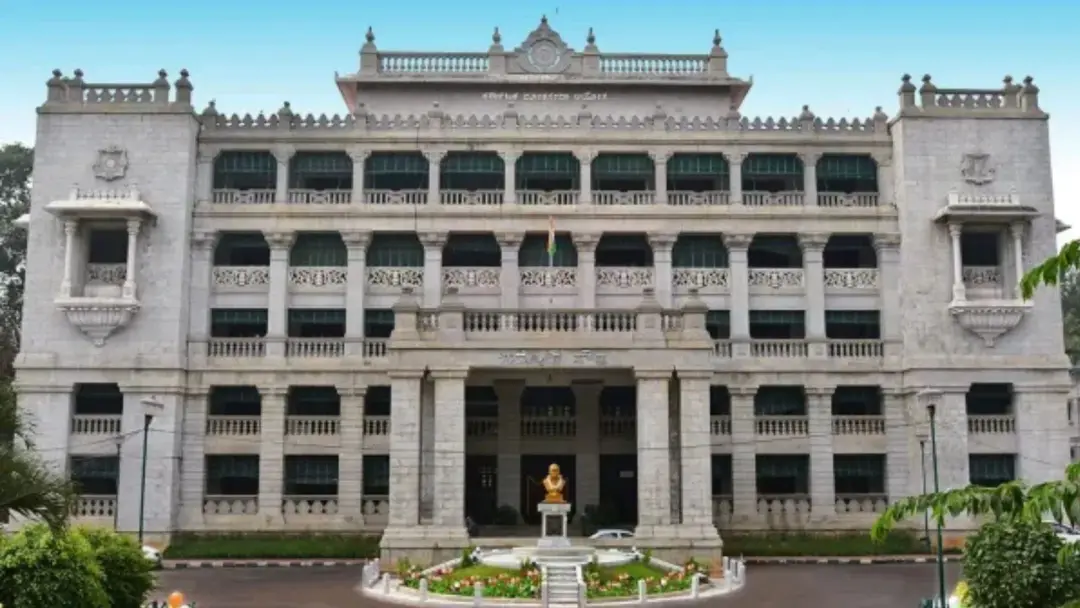
Four villas, 20 aspirants: new details in KPSC recruitment probe
CID and ED investigations into alleged irregularities in the selection of veterinary doctors in Karnataka have revealed fresh details. Middleman Basavaraj Kannale allegedly booked four villas in Devanahalli on January 8 for around Rs 80,000 and provided leaked question papers to 20 aspirants. Of 1,400 candidates who appeared for 400 posts, 329 were selected. KPSC exam controller and IAS officer Gyanendra Kumar Gangwar and Kannale have been arrested by both CID and ED.
Source
Indian Express — Cities · read the original report ↗
Desk check · some claims need care
What the desk checked (5)
- Middleman Basavaraj Kannale booked four villas in Devanahalli on January 8 for about Rs 80,000, housing 20 aspirants. — Attributed in source to an Airbnb caretaker's statement to investigators; figures appear in source.
- 1,400 aspirants appeared for 400 veterinary doctor posts and 329 were selected. — Figures appear in source without a named attributing authority.
- KPSC exam controller and IAS officer Gyanendra Kumar Gangwar gave the question paper with answers on a pen drive on January 7; both he and Kannale have been arrested by CID and ED. — Presented as a probe finding; arrests stated as fact in source, leak claim rests on investigation findings and Kannale's statements.
- Kannale claims he paid Gangwar Rs 1.3 crore of Rs 1.5 crore collected, and that some candidates were referred by KPSC chairman Sahukar Shivashankarappa. — Self-incriminating claim by the accused during questioning; unverified and denied status not stated.
- CM D K Shivakumar said the state should have been given freedom to appoint investigators and welcomed the HC's SIT direction. — Directly quoted and attributed to a named official.
Analysts’ view opinion
This is not a single case but two parallel legal tracks running at once: a criminal conspiracy and corruption probe by the CID, and a money-laundering angle pursued by the ED. The High Court's direction to hand the CID probe to an SIT shows a constitutional court exercising its supervisory power over investigations — while the Chief Minister's point about the executive's freedom to appoint investigators is itself a legitimate legal question. Everything disclosed so far remains allegation and investigative material; no offence has been proved in court.
- Alleged paper leaks and bribes fall squarely within criminal conspiracy and anti-corruption provisions, while the cash transfers, property use and jewellery purchases give the ED its 'proceeds of crime' hook.
- Freezing of bank accounts and seizure of cash are provisional, investigation-stage measures that the accused have a right to challenge before the special court and appellate forums.
- Rejection of bail is not a finding of guilt — it is an interim order, typically on grounds such as stage of probe or risk of interference, and is open to review by higher courts.
- Statements made by an accused during questioning, including claims implicating the KPSC chairman, carry limited evidentiary weight unless corroborated by independent material.
- The rights of genuinely meritorious candidates among the 329 selected are a live issue — whether to annul the whole selection or act case by case is something natural justice requires be decided only after inquiry.
What to watch — Watch the scope of the SIT order, how the special court rules on successive CID and ED custody applications, and whether any court or the KPSC moves on the validity of the appointments themselves.
The details here rest on investigative sources and statements attributed to the accused; the story does not establish anyone's guilt, how many appointments were tainted, or any final finding on the roles of the IAS officer and the KPSC chairman.
Deep dive
Research brief · 8 facts · 7 dates · exam-readyThe brief
Context
The Karnataka Public Service Commission (KPSC) is under investigation over alleged irregularities in the recruitment of veterinary doctors for 400 state government posts, with the main exam held on January 9 in Bengaluru. Parallel probes by the Criminal Investigation Department (CID) and the Enforcement Directorate (ED) allege that question papers were leaked through KPSC's exam controller, IAS officer Gyanendra Kumar Gangwar, and distributed by middleman Basavaraj Kannale for bribes. Fresh details show Kannale booked four villas in a gated community in Devanahalli on the outskirts of Bengaluru on January 8, where 20 aspirants were accommodated. The Karnataka High Court has ordered the CID probe to be handed to a Special Investigation Team (SIT).
Key facts
- Middleman Basavaraj Kannale allegedly booked four villas in a gated community in Devanahalli on January 8 at a cost of around Rs 80,000 to give leaked question papers to aspirants.
- A caretaker of the Airbnb facility told investigators that 20 people were accommodated in the villas; Kannale paid Rs 37,000 in advance by bank transfer and the rest in cash.
- 1,400 aspirants appeared for the 400 veterinary doctor posts and 329 were selected; several top scorers with over 80 per cent have been linked to exam fraud.
- Kannale claims he gave leaked papers to only nine aspirants for bribes of Rs 20 lakh to Rs 40 lakh, but CID and ED say more aspirants were involved.
- CID has so far identified 11 candidates who paid Rs 80 lakh through bank transfers to accounts given by Kannale.
- KPSC exam controller and IAS officer Gyanendra Kumar Gangwar allegedly gave Kannale the question paper with answers on a pen drive at his house on January 7; both have been arrested by CID and ED.
- Kannale claims he paid Gangwar Rs 1.3 crore out of Rs 1.5 crore collected as advance, and sponsored Rs 52 lakh worth of jewellery bought by the IAS officer for a friend.
- Agencies froze Rs 64 lakh in Om Lakshmi Souharda Sahakari Bank, Rs 5.20 lakh in a Kotak Mahindra Bank account and Rs 71.18 lakh in accounts of Kannale and his wife; Rs 5.76 lakh cash was seized.
Timeline
- 2019Kannale and Gangwar allegedly build an association in Bidar, where the IAS officer served as district chief executive officer; Kannale allegedly managed his illegal finances.
- January 7Gangwar allegedly hands Kannale the veterinary officers' entrance exam question paper with answers on a pen drive at his house.
- January 8Kannale books four villas in Devanahalli, where 20 aspirants are accommodated.
- January 9Main KPSC exam for selection of veterinary doctors held in Bengaluru.
- Sunday (as stated in source)A fresh two-day custody period for Kannale with CID begins.
- Tuesday (as stated in source)Kannale's bail plea rejected by a special court; ED takes Gangwar's custody; CM D K Shivakumar comments on the probes.
- Not dated in the sourceCID probe set to be handed to a Special Investigation Team on the basis of a Karnataka High Court order.
Who has a stake
- Karnataka Public Service Commission (KPSC) — Its credibility as a recruiting body is in question, with its exam controller arrested and chairman under investigation.
- Gyanendra Kumar Gangwar, IAS, KPSC exam controller — Arrested by CID and ED; accused of leaking the question paper with answers on a pen drive.
- Basavaraj Kannale, middleman — Arrested by CID and ED, bail rejected; accused of collecting bribes and distributing leaked papers.
- Sahukar Shivashankarappa, KPSC chairman — Under investigation; Kannale alleges some candidates were referred by him; his daughter's selection via an alleged fake income certificate is also under scrutiny.
- 1,400 aspirants / 329 selected candidates — Legitimacy of the selection is clouded; several high scorers are under suspicion after academic record analysis.
- CID, ED and the proposed SIT — Running parallel probes; CID's case is to be transferred to an SIT on Karnataka High Court orders.
- Karnataka government / CM D K Shivakumar — Says the state should have had freedom to appoint investigators; will seek legal experts' opinion on the HC direction.
Why it matters
Public service commission exams are the main gateway to state government jobs, and an alleged leak routed through the exam controller himself strikes at the integrity of merit-based recruitment. With 329 selections from 1,400 candidates now under a cloud, the careers of honest aspirants and public trust in the KPSC are at stake. The case also raises a federal question about who investigates: the High Court has ordered an SIT while the state says it should have been free to pick investigators.
UPSC angle
Prelims pointers
- KPSC recruitment scam relates to selection for 400 veterinary doctor posts; 1,400 appeared and 329 were selected.
- Main veterinary doctors' exam was held on January 9 in Bengaluru; paper allegedly handed over on a pen drive on January 7.
- CID (state police) and ED (central agency, money laundering) are running parallel probes; both arrested Kannale and Gangwar.
- Karnataka High Court has ordered the CID probe to be handed over to a Special Investigation Team (SIT).
- Frozen/seized: Rs 64 lakh (Om Lakshmi Souharda Sahakari Bank), Rs 5.20 lakh (Kotak Mahindra), Rs 71.18 lakh (Kannale and wife), Rs 5.76 lakh cash.
- Karnataka CM D K Shivakumar welcomed the SIT but said the state should have had freedom to appoint investigators.
Mains framing
The alleged KPSC veterinary doctors' recruitment scam illustrates how examination fraud in India is rarely the work of a lone cheat but of a chain running from insiders to middlemen to paying candidates. Here the leak is alleged to have originated with the exam controller, an IAS officer, who handed the paper and answers on a pen drive a day before the January 9 exam; a middleman then housed 20 aspirants in four Devanahalli villas, with bribes reportedly ranging from Rs 20 lakh to Rs 40 lakh and Rs 80 lakh traced from 11 candidates alone. The enabling conditions are visible in the source: custody of question papers concentrated in a single official, long-standing personal financial links between the officer and the middleman dating to 2019 in Bidar, alleged referrals by the KPSC chairman, and money moving through cooperative and private bank accounts. The implications go beyond one exam: 329 selections and several 80-per-cent-plus scorers are now suspect, damaging the credibility of merit recruitment and of the constitutional public service commission itself. The way forward suggested by the developments is forensic follow-the-money work by CID and ED, completion of the Karnataka High Court-mandated SIT process, identification of all beneficiary candidates, and institutional reform of paper custody and oversight within KPSC; the CM's demand for state freedom to appoint investigators also poses the question of who can credibly probe a scam involving senior state functionaries.
Key terms
- KPSC
- Karnataka Public Service Commission, the body that conducts recruitment exams for Karnataka state government posts, including the 400 veterinary doctor posts.
- CID
- Criminal Investigation Department, the Karnataka police wing investigating the alleged recruitment scam; its probe is to be handed to an SIT.
- ED
- Enforcement Directorate, the central agency probing the money trail; it arrested both Kannale and Gangwar and took Gangwar's custody.
- SIT
- Special Investigation Team, to be formed on Karnataka High Court direction to take over the CID's investigation.
- Exam controller
- KPSC official responsible for the examination process; here IAS officer Gyanendra Kumar Gangwar, accused of leaking the paper.
- Middleman
- Intermediary such as Basavaraj Kannale who allegedly found paying candidates, collected bribes and distributed leaked question papers.
Practice questions
- Recruitment scams in state public service commissions point to institutional failure rather than individual corruption. Examine with reference to the alleged KPSC veterinary doctors' recruitment case.
- Discuss the merits and limitations of court-monitored Special Investigation Teams in cases involving senior state officials, in the light of the Karnataka government's demand for freedom to appoint investigators.
- What safeguards in question-paper setting, custody and transmission could prevent leaks of the kind alleged in the KPSC case? Suggest administrative and technological measures.
Grounded only in the source report — figures and dates are the source's, not inferred.