
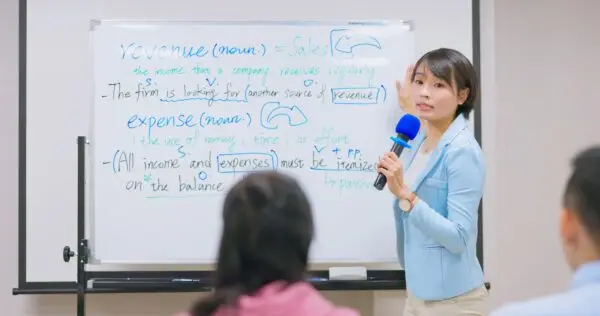
Debate in China over English as compulsory school subject
A public debate is under way in China over downgrading English in schools and colleges, where it has been compulsory from third grade for about 50 years. Mathematics professor Tang Jiafeng called for ending English's core status. A widely cited figure holds that 12 years of study takes 3,000-5,000 hours and at least 100,000 yuan. Scholar Xiang Ligang said 95 percent of learners cannot communicate fluently. Chinese, English and mathematics each carry 150 of the gaokao's 750 points. Former Global Times editor Hu Xijin defended English.
Source
The Diplomat (Asia) · read the original report ↗
Desk check · some claims need care
What the desk checked (5)
- English has been a compulsory school subject in China for about 50 years, required from third grade. — Stated in source as background without citation to an official document.
- 12 years of English learning requires 3,000-5,000 hours and at least 100,000 yuan. — Source describes it as a 'widely held figure'; no official source given.
- '95 percent of people who studied English cannot communicate fluently and 90 percent will never use it.' — Directly attributed to scholar Xiang Ligang's WeChat commentary; unverified estimate.
- Chinese, English and mathematics each count 150 of 750 points in the gaokao. — Figure appears in source as factual description of exam structure.
- Unitree Robotics CEO Wang Xingxing nearly failed to enter university due to poor English and attended second-tier universities. — Attributed to article authors Liu Qing and Liu Yun.
Analysts’ view opinion
This looks like an education-policy debate, but at its core it is a strategic question: how closely should China stay wired into the outside world. The case for downgrading English blends nationalist, utilitarian and practical strands — and the most potent one, that English exam filters are screening out STEM talent, ties directly to the drive for technological self-reliance. On the other side, figures such as Hu Xijin argue English remains key to modernization and global competitiveness, and warn that framing it as a patriotism test would backfire. As the story stands, this is public argument, not settled state policy.
- Which language a state teaches its young is a long-horizon strategic choice, shaping scientific collaboration, talent flows and soft-power channels.
- Because Chinese, English and mathematics each carry 150 of 750 gaokao points, cutting English's weight would mean re-engineering the national talent-selection machine itself.
- The argument that English filters cost China engineering talent — illustrated by Unitree Robotics founder Wang Xingxing — gains force precisely because breaking technological bottlenecks is a stated national priority.
- Critics cite post-war Germany, France and Japan as economies that industrialized without mass English fluency; Hu's counter is that the shift of the scientific and economic centre of gravity toward Chinese will be a long process.
- The rise of AI-enabled translation feeds a genuinely new question — whether language capability can be partly outsourced to machines — that other countries' education strategists face too.
What to watch — Watch whether provinces actually trim English's weight in the zhongkao or gaokao, and whether any central-level response emerges — that is what would turn commentary into policy direction.
The story establishes no change in official policy and no state endorsement of downgrading English; figures like the 95 percent claim, 3,000-5,000 hours and 100,000 yuan are estimates circulating in the debate rather than verified official data.
Deep dive
Research brief · 8 facts · 6 dates · exam-readyThe brief
Context
For roughly 50 years English has been a compulsory subject in Chinese schools from third grade, carrying the same exam weight as Chinese and mathematics. A public debate has now erupted over whether that status should be downgraded, triggered by mathematics professor and online celebrity Tang Jiafeng's call to "end English's core status" during discussions on zhongkao reforms. Nationalist and leftist intellectuals, plus many parents and students, argue the cost and burden are not justified; others, including former Global Times editor Hu Xijin, defend English as essential for modernization. Critics use the idiom 刻舟求剑 (notching the boat to find a sword) to argue that policy has not adapted to changed circumstances.
Key facts
- English has been compulsory in Chinese schools from third grade for about 50 years, a decision made 50 years ago to strengthen education and learn science and technology from abroad.
- A widely held figure holds that 12 years of English learning requires 3,000 to 5,000 hours of study and at least 100,000 yuan.
- Chinese, English and mathematics (CEM) are the three main gaokao subjects, each counting 150 points out of a total of 750.
- Scholar Xiang Ligang claimed on WeChat that 95 percent of those who studied English in school and university cannot communicate fluently, and 90 percent will never use it except for exams.
- Tang Jiafeng, a mathematics professor who teaches postgraduate entrance exam candidates, said "the history of Chinese people worshiping foreign things and fawning on foreign countries should end".
- Tang's call came as an angry reaction to Chinese history being removed as a scoring subject in exams in several provinces.
- Hu Xijin, former Global Times editor, said "only an extreme and narrow-minded group regarded learning English as xenocentric" and warned against turning the issue into one of patriotism.
- Liu Qing and Liu Yun cited Unitree Robotics founder Wang Xingxing, who despite outstanding science scores was pushed to second-tier universities in Hangzhou and Shanghai because of poor English.
Timeline
- 475 BC to 221 BC (Warring States period)Origin of the fable 刻舟求剑, about a man from the State of Chu who notched his boat where his sword fell, now cited by critics of English teaching.
- About 50 years agoEnglish made a mandatory part of the Chinese school curriculum, to strengthen education and learn foreign science and technology.
- February 2025Wang Xingxing spoke at the Beijing Symposium for private enterprises in the presence of Xi Jinping, alongside Ren Zhengfei, Lin Jun, Wang Chuanfu, Liu Yonghao and Yu Renrong.
- Two months before the storyWang Xingxing appeared on the cover of Time magazine with his manned mecha robot GD0 for the story "The Age of Robots is Coming".
- RecentlyTang Jiafeng calls to "end English's core status" while commenting on zhongkao reforms, drawing support from nationalist intellectuals.
- Last week (relative to the story)Liu Qing and Liu Yun publish an article appealing to authorities to break the "English shackles" in talent selection.
Who has a stake
- Chinese students and parents — Bear the study burden of 3,000-5,000 hours and at least 100,000 yuan; English is hard as Chinese does not use an alphabetic script.
- Tang Jiafeng and nationalist/"conservative" intellectuals — Want English downgraded in the zhongkao and other exams; frame compulsory English as foreign-worship.
- Hu Xijin and defenders of CEM — Argue English remains the key to modernization and global competitiveness and warn of ideological dispute.
- Leftist scholars in leading universities — Claim English classes have stymied STEM growth and cite post-war Germany, France and Japan as counter-examples.
- Chinese education authorities — Face pressure over exam weighting after removing Chinese history as a scoring subject in several provinces.
- STEM talent such as Wang Xingxing of Unitree Robotics — Careers can be diverted or ended by poor English scores in college and postgraduate entrance examinations.
Why it matters
How China treats English signals whether it sees itself as still learning from the West or as a rising centre of science, technology and innovation in its own language. The debate also touches on exam-driven talent selection: if a language test filters out gifted science and engineering students, it affects national technological capacity. With AI translation spreading, other countries with heavy foreign-language exam requirements will watch the outcome closely.
UPSC angle
Prelims pointers
- Gaokao: China's college entrance examination; Chinese, English and mathematics each carry 150 of 750 points.
- Zhongkao: the locally administered senior high school entrance examination in China.
- English is compulsory in Chinese schools from third grade, a policy about 50 years old.
- 刻舟求剑 (ke zhou qiu jian), "notching the boat to find a sword", is a Warring States period (475-221 BC) fable about ignoring changed circumstances.
- Xiang Ligang claimed 95 percent of Chinese English learners cannot communicate fluently; 90 percent never use it outside exams.
- Wang Xingxing is founder and CEO of Unitree Robotics; he featured on a Time magazine cover with the manned mecha robot GD0.
Mains framing
China's debate over compulsory English illustrates how education policy set for one developmental stage can outlive its rationale. The 50-year-old mandate was designed to import science and technology and raise population quality; critics now argue that the costs - 3,000 to 5,000 hours and at least 100,000 yuan over 12 years - buy little proficiency, with Xiang Ligang claiming 95 percent of learners cannot converse fluently and 90 percent never use English beyond exams. Three distinct threads converge: nationalist objection to compelled foreign-language learning, sharpened by Tang Jiafeng's remarks and by anger at Chinese history losing scoring status in several provinces; utilitarian doubt about rote learning, reinforced by AI-enabled translation; and a practical worry that English filters in the gaokao and postgraduate exams eliminate STEM talent, illustrated by Wang Xingxing of Unitree Robotics. Against this, Hu Xijin argues English remains the language of modernization and that the shift of scientific gravity towards Chinese will be a long process, cautioning that framing the issue as patriotism is counter-productive. A calibrated way forward, as suggested by the arguments in the debate, would separate the question of exam weighting and talent selection from the question of whether English continues to be taught at all.
Key terms
- Gaokao
- China's national college and university entrance examination, totalling 750 points, with Chinese, English and mathematics each worth 150.
- Zhongkao
- Locally administered senior high school entrance examination in China; its reform triggered the current English controversy.
- CEM
- Chinese, English and mathematics - the three most heavily weighted gaokao subjects.
- 刻舟求剑 (ke zhou qiu jian)
- "Notching the boat to find a sword" - an idiom for solving problems without accounting for changed circumstances.
- STEM
- Science, technology, engineering and mathematics; critics say English exams filter out such talent in China.
- Unitree Robotics
- Chinese robotics firm founded and led by Wang Xingxing, who nearly failed to enter university because of poor English.
Practice questions
- Examine the arguments for and against retaining English as a compulsory school subject in China. What do they reveal about the relationship between language policy and national development?
- "Standardised language testing in high-stakes entrance examinations can filter out scientific talent." Discuss with reference to the ongoing Chinese debate.
- How does the idiom 刻舟求剑 capture the problem of policy inertia in education? Illustrate with examples from the Chinese English-education debate.
Grounded only in the source report — figures and dates are the source's, not inferred.