
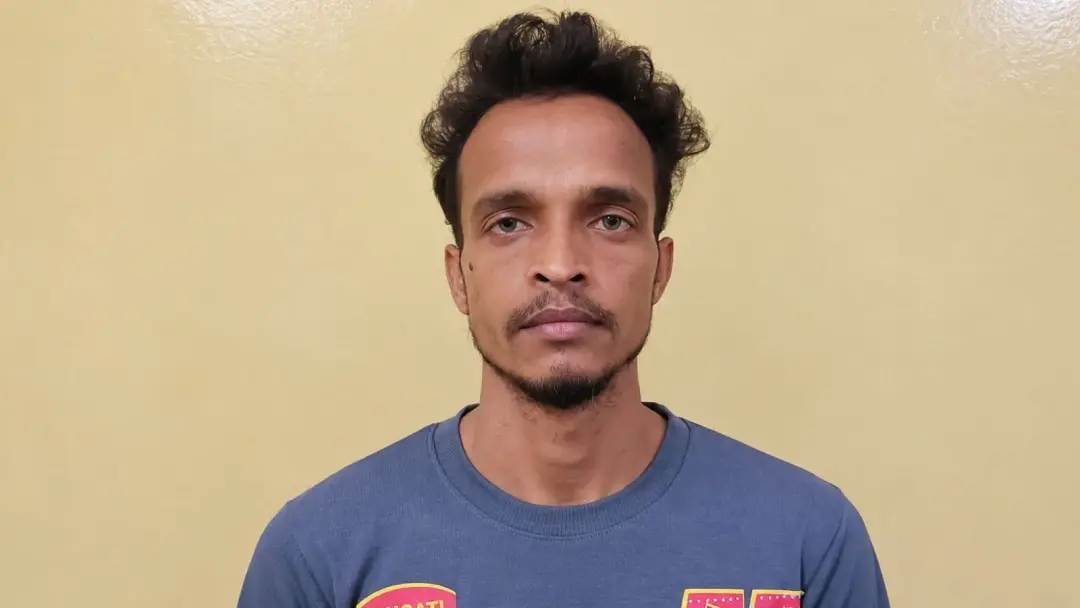
Assam man arrested for allegedly murdering partner in Bengaluru
Police have arrested Munnadas, 28, of Lakhipur in Assam's Cachar district, over the murder of Champoodas, 21, in Naganathapura, Bengaluru. The house owner found her body wrapped in a saree on August 30. A post-mortem report received on September 15 cited asphyxia and said violent asphyxia due to smothering could not be ruled out. Police said he confessed to strangling her during an argument after she asked him to marry her. He was traced from Tamil Nadu and arrested on September 16.
Source
Indian Express — Cities · read the original report ↗
Desk check · compared with the source
What the desk checked (5)
- Munnadas, 28, of Lakhipur in Assam's Cachar district, was arrested for allegedly murdering Champoodas, 21. — Attributed to police in the source; names, ages and hometown appear as given.
- The body was found wrapped in a saree in a rented house in Naganathapura on August 30 by the house owner. — Attributed to police; date and detail appear in source.
- The post-mortem report received on September 15 cited asphyxia and said violent asphyxia due to smothering could not be ruled out. — Quoted from the post-mortem report as described by police; figure and date appear in source.
- Munnadas confessed during interrogation and was arrested on September 16 after returning from Tamil Nadu. — Attributed to police; a confession in custody is not evidence of guilt and is untested in court.
- Champoodas' family had filed a missing person and kidnapping complaint in Assam. — Attributed to police; no further detail or independent confirmation in source.
Analysts’ view opinion
The trajectory here — an Unnatural Death Report converted into a murder case once the autopsy came in — shows how decisively medical evidence can redirect an investigation. But a confession made to police carries little independent weight under Indian evidence principles; what will matter in court is the forensic report, any material facts discovered through that statement, and an unbroken chain of circumstantial evidence. Note too that the post-mortem is phrased in probabilistic terms — smothering "could not be ruled out" — which is strong investigative ground but remains open to expert cross-examination at trial.
- Reclassifying a UDR as murder on the strength of an autopsy is routine procedure, though a report arriving weeks later can raise questions about scene preservation in the interim.
- A confession in police custody is generally not by itself the basis for conviction; only facts discovered as a consequence of it have limited admissibility.
- If the alleged attempt to stage the death as suicide — including the body found wrapped in a saree — is established, additional charges relating to destruction or fabrication of evidence could follow.
- Because the family's missing-person and kidnapping complaint was filed in Assam, questions of inter-state coordination and jurisdiction are likely to arise.
- Production before a court and remand to judicial custody is the correct procedural step; next come the chargesheet deadline, any bail application, and the accused's right to legal representation.
What to watch — Watch how much medical, forensic and circumstantial material the police can assemble in the chargesheet — and whether the Assam kidnapping complaint is formally linked to this case.
Everything at this stage is a police allegation: no guilt has been established in court, and the story does not set out the accused's own account or defence.
Deep dive
Research brief · 8 facts · 5 dates · exam-readyThe brief
Context
A 21-year-old woman from Assam, Champoodas, was found dead in a rented house in Naganathapura, Bengaluru, on August 30, with her body wrapped in a saree. The police initially treated it as an unnatural death, but the post-mortem report received on September 15 pointed to asphyxia and possible smothering, prompting conversion of the case into a murder investigation. Her partner, 28-year-old Munnadas of Lakhipur in Assam's Cachar district, who had fled to Tamil Nadu, was traced and arrested on September 16 and has allegedly confessed to strangling her during an argument over marriage. Her family in Assam had separately filed a missing person and kidnapping complaint over her being brought to Bengaluru.
Key facts
- Munnadas, 28, a resident of Lakhipur in Assam's Cachar district, was arrested for allegedly murdering his partner in Bengaluru.
- The deceased, Champoodas, 21, was also from Assam; the two had started living together in a rented house in Naganathapura, Bengaluru.
- On August 30, the house owner approached the police after finding Champoodas's body wrapped in a saree inside the house.
- Police initially registered an Unnatural Death Report (UDR) and sent the body for post-mortem examination.
- The post-mortem report, received on September 15, cited asphyxia as the cause of death and said 'violent asphyxia due to smothering could not be ruled out'.
- Police said the accused had escaped to Tamil Nadu and was traced and arrested on September 16 when he returned to Bengaluru.
- During interrogation Munnadas allegedly confessed to strangling Champoodas during an argument after she asked him to marry her.
- Champoodas's family had filed a missing person and kidnapping complaint in Assam in connection with her being brought to Bengaluru.
Timeline
- Last month (as stated in the source)Munnadas allegedly came to Bengaluru; he and Champoodas began living together in a rented house in Naganathapura.
- August 30The house owner found Champoodas's body wrapped in a saree and informed the police; an Unnatural Death Report was registered.
- September 15Post-mortem report received, citing asphyxia and stating violent asphyxia due to smothering could not be ruled out; case converted to murder.
- September 16Munnadas, who had fled to Tamil Nadu, was traced and arrested on returning to Bengaluru; he allegedly confessed during interrogation.
- After arrest (date not stated in the source)Accused produced before a court and remanded in judicial custody.
Who has a stake
- Champoodas, the deceased (21, from Assam) — Lost her life; her family's earlier missing person and kidnapping complaint now feeds into the murder probe.
- Munnadas, the accused (28, Lakhipur, Cachar district) — Faces a murder investigation, has allegedly confessed, and is in judicial custody.
- Bengaluru police — Converted a UDR into a murder case on forensic evidence and must build a case beyond the alleged confession.
- Champoodas's family in Assam — Filed a missing person and kidnapping complaint over her being brought to Bengaluru; seeking justice.
- The house owner in Naganathapura — Discovered the body and first alerted the police; a key witness in the investigation.
- Assam and Tamil Nadu police jurisdictions — Inter-state dimension: a complaint in Assam and the accused's flight to Tamil Nadu required tracing across states.
Why it matters
The case shows how a death initially logged as unnatural was reclassified as murder only after the post-mortem report, underlining the role of forensic medicine in preventing crimes from being passed off as suicide. It also highlights the vulnerability of young migrant women in metropolitan cities, and the inter-state coordination needed when the victim's family files a complaint in one state and the accused flees to another.
UPSC angle
Prelims pointers
- Unnatural Death Report (UDR): the entry police register when the cause of death is not immediately known, before a criminal case is made out.
- Asphyxia means death from lack of oxygen; smothering and strangulation are forms of mechanical asphyxia noted in autopsy findings.
- Naganathapura, Bengaluru, was the crime scene; the accused hailed from Lakhipur in Assam's Cachar district.
- Body found on August 30; post-mortem report received September 15; arrest made September 16.
- Judicial custody means the accused is held in prison under a magistrate's order, as distinct from police custody.
- A confession to police alone is not conclusive proof; investigators must corroborate it with forensic and circumstantial evidence.
Mains framing
The Bengaluru case illustrates three recurring weaknesses in the criminal justice chain. First, initial classification: the death was registered as an Unnatural Death Report and might have been recorded as a suicide had the post-mortem not indicated asphyxia and possible smothering, showing that timely, quality forensic examination is the difference between a closed file and a murder investigation. Second, the migrant dimension: a young woman from Assam living in a rented house in a metropolitan city, with her family lodging a missing person and kidnapping complaint back home, points to gaps in tracking inter-state movement of vulnerable persons and in coordination between the police of the source and destination states, aggravated when the accused flees to a third state. Third, evidentiary rigour: the case currently rests substantially on an alleged confession during interrogation, which must be corroborated by autopsy findings, the house owner's testimony and call or movement records if it is to survive trial. The way forward, on the facts available, lies in faster forensic turnaround, systematic linkage of missing person complaints with unnatural death records across states, and investigation built on independent corroboration rather than confession alone.
Key terms
- Unnatural Death Report (UDR)
- A police record of a death whose cause is unclear, used before a criminal case is registered; converted here into a murder case.
- Asphyxia
- Death caused by deprivation of oxygen; cited as the cause of death in Champoodas's post-mortem report.
- Smothering
- Blocking the nose and mouth to cut off breathing; the autopsy said violent asphyxia due to smothering could not be ruled out.
- Post-mortem examination
- Medico-legal autopsy to determine the cause of death; its findings on September 15 triggered the murder probe.
- Judicial custody
- Detention of an accused in jail under a magistrate's order after production in court, as ordered for Munnadas.
- Missing person and kidnapping complaint
- Complaint filed by Champoodas's family in Assam in connection with her being brought to Bengaluru.
Practice questions
- Discuss the role of forensic and medico-legal examination in preventing homicides from being closed as unnatural deaths or suicides, using recent instances.
- What institutional mechanisms are needed for inter-state police coordination when a missing person complaint in one state ends in a death investigation in another?
- Examine the vulnerabilities faced by young inter-state migrant women in Indian cities and the safeguards available to them.
Grounded only in the source report — figures and dates are the source's, not inferred.