
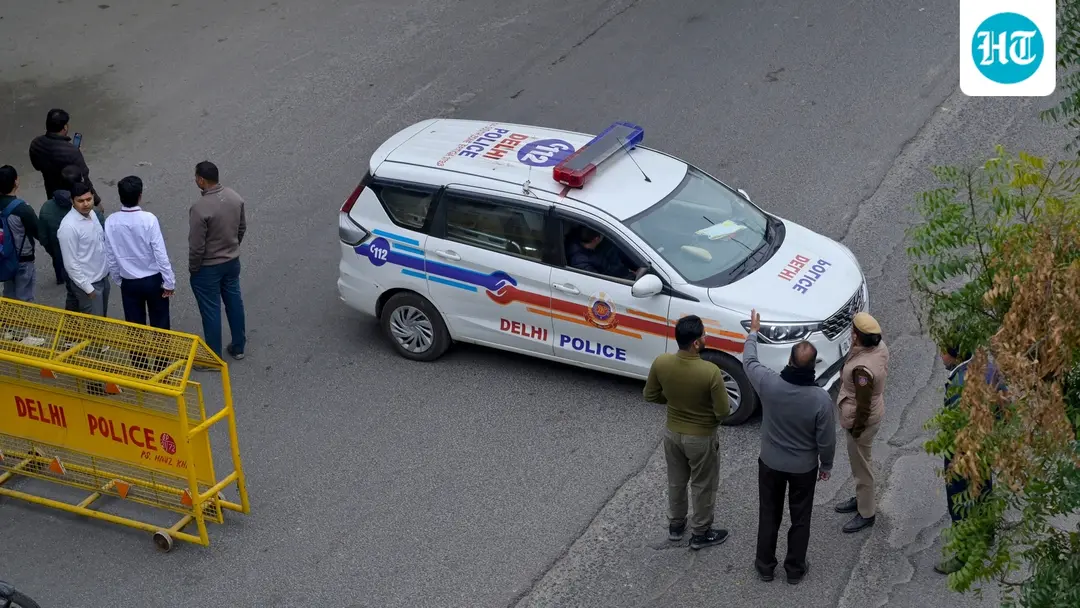
Man arrested in Maharashtra for killing friend, hiding body in Delhi
Delhi police have arrested Rakesh, 20, for allegedly killing his 26-year-old friend Sunny and concealing the body in a trunk inside a jhuggi in New Delhi's Pandara Park. The body was found on Sunanda Bhandari Marg on Wednesday after police received information about a foul smell. Police said the victim was hit on the head with a blunt object, and an old dispute is understood to be the motive. Acting on CCTV leads, they arrested the accused in Maharashtra's Chhatrapati Sambhajinagar on Thursday.
Source
Hindustan Times — India · read the original report ↗
Desk check · compared with the source
What the desk checked (5)
- A 20-year-old man, Rakesh, allegedly killed his 26-year-old friend Sunny and hid the body in a trunk in a jhuggi at Pandara Park. — Attributed to Delhi police in the source; presented as allegation.
- The body was found on Wednesday on Sunanda Bhandari Marg after police received information about a foul smell. — Attributed to police; figure and date appear in source.
- The accused was arrested on Thursday in Maharashtra's Chhatrapati Sambhajinagar and is being brought to Delhi on transit remand. — Attributed to police in the source.
- A murder case was registered under Section 103(1) of the Bharatiya Nyaya Samhita and CCTV footage helped trace the accused. — Attributed to police; source spells the law as 'Baratiya Nyaya Samhita', a typo for Bharatiya Nyaya Samhita.
- The motive was an old dispute between the two. — Stated as police understanding, not confirmed; unverified.
Analysts’ view opinion
This is a case at its earliest stage — there is an allegation and an arrest, not a finding of guilt. The police have registered a murder case under Section 103(1) of the Bharatiya Nyaya Samhita, the provision that corresponds to the old IPC Section 302. The reference to bringing the accused to Delhi on transit remand points to the routine process by which a person held in one state is moved to the investigating state with a court's permission.
- The word "allegedly" is doing real legal work here — an FIR records an investigating agency's version, not a judicial conclusion.
- With the accused stated to be 20, he would face the ordinary adult criminal process; no juvenile-law question arises on these facts.
- CCTV footage, the reported stopping of phone use and the moving of the victim's motorcycle are circumstantial material, and settled principle requires such a chain to be complete and unbroken to sustain a conviction.
- The recovery of the body, the post-mortem findings and recovery of the blunt object will largely determine how strong the prosecution case is.
- Police mention "associates", so if their role is established, questions of shared or common liability provisions could arise.
What to watch — Watch whether the Delhi court grants police custody or sends the accused to judicial custody once he is produced, what the post-mortem report says, and when the chargesheet is filed within the statutory period.
The story does not set out the accused's version, his legal representation, the post-mortem findings or the role of any other person, so this reads only the investigation's stated case.
Deep dive
Research brief · 8 facts · 4 dates · exam-readyThe brief
Context
Delhi police recovered the body of a 26-year-old man, Sunny, stuffed inside a trunk in a jhuggi on Sunanda Bhandari Marg in New Delhi's Pandara Park on Wednesday, after residents reported a foul smell from the premises. Investigators say his 20-year-old friend Rakesh, a Pandara Park resident who was unemployed, allegedly struck him on the head with a blunt object over an old dispute. A murder case was registered under Section 103(1) of the Bharatiya Nyaya Sanhita, and CCTV footage from around the crime scene led police to Maharashtra's Chhatrapati Sambhajinagar, where the accused was arrested on Thursday. The report also notes a separate Delhi road accident case in RK Puram involving a 73-year-old driver.
Key facts
- The victim, Sunny, 26, was found dead inside a trunk at a jhuggi on Sunanda Bhandari Marg, Pandara Park, New Delhi, on Wednesday.
- Police were alerted by information about a foul smell emanating from the premises.
- The accused, Rakesh, 20, was a friend of the deceased, a resident of Pandara Park, unemployed and had studied till Class 9.
- Police said the victim was hit on the head with a blunt object, causing his death; the motive is understood to be an old dispute.
- The victim did various jobs including part-time sweeping and gig work, according to the PTI report.
- A murder case was registered under Section 103(1) of the Bharatiya Nyaya Sanhita (BNS).
- Rakesh was arrested in Chhatrapati Sambhajinagar, Maharashtra, on Thursday, within a day of the body being found, and is being brought to Delhi on transit remand.
- The accused and his associates were allegedly seen taking the deceased's motorcycle elsewhere and had stopped using their own mobile phones.
Timeline
- September 17, around 10 pm (separate case)A blue Honda Amaze allegedly driven by Venu Gopal hit a motorcycle parked on Africa Avenue Road, RK Puram, on which Tanish Tokas, 21, was sitting.
- WednesdaySunny's body found in a trunk at a jhuggi on Sunanda Bhandari Marg, Pandara Park, after a foul smell was reported.
- After body's recoveryPolice registered a murder case under BNS Section 103(1) and analysed CCTV footage near the crime scene and adjoining routes.
- ThursdayMain accused Rakesh apprehended in Chhatrapati Sambhajinagar, Maharashtra, after sustained investigation and raids.
Who has a stake
- Delhi Police — Solved the case within a day of the body's recovery using CCTV leads and inter-state raids; must complete interrogation and further investigation.
- Sunny (victim), 26 — A gig and part-time sweeping worker allegedly killed by a blunt-object head injury and concealed in a trunk.
- Rakesh (accused), 20 — Faces a murder charge under BNS Section 103(1); being brought to Delhi on transit remand.
- Associates of the accused — Allegedly seen removing the victim's motorcycle and stopped using their mobile phones; under investigation.
- Pandara Park jhuggi residents — Reported the foul smell that led to the discovery of the body; live at the crime scene locality.
- Tanish Tokas and Venu Gopal (separate RK Puram case) — Tokas, 21, fell from his parked motorcycle but had no serious injuries; Gopal, 73, faces a case under BNS Sections 281 and 125(a).
Why it matters
The case shows how routine CCTV surveillance networks and call-detail patterns now drive quick inter-state arrests in urban homicides, with the accused traced to Maharashtra within a day. It also underlines the vulnerability of informal-sector workers living in jhuggis in central Delhi, where a death went unnoticed until a smell was reported. For readers, it is an early example of murder and rash-driving cases being prosecuted under the new Bharatiya Nyaya Sanhita rather than the IPC.
UPSC angle
Prelims pointers
- BNS Section 103(1) is the provision under which the Delhi murder case was registered.
- BNS Sections 281 and 125(a) were invoked in the separate RK Puram road accident case.
- Crime scene: jhuggi on Sunanda Bhandari Marg, Pandara Park, New Delhi.
- Accused arrested in Chhatrapati Sambhajinagar, Maharashtra, and brought to Delhi on transit remand.
- Transit remand allows police to move an accused arrested outside their jurisdiction to the place of investigation.
- The RK Puram incident occurred around 10 pm on September 17 on Africa Avenue Road, Bhikaji Cama Place to RK Puram Metro Station stretch.
Mains framing
The Pandara Park murder illustrates three features of contemporary urban crime investigation in India. First, motive and opportunity are often rooted in close personal ties and economic precarity: the accused, a 20-year-old Class 9 dropout who was unemployed, allegedly killed a friend who survived on part-time sweeping and gig work, over an old dispute. Second, detection increasingly depends on technology and behavioural signals rather than eyewitnesses: the body was found only after a foul smell was reported, but CCTV footage from the crime scene and adjoining routes generated the leads, while the accused and his associates allegedly moved the victim's motorcycle and stopped using their own phones to evade digital tracing. Third, the case tests the new criminal-law framework, with murder charged under Section 103(1) of the Bharatiya Nyaya Sanhita and the accused brought from Maharashtra to Delhi on transit remand, showing the need for smooth inter-state police coordination. The way forward, on the evidence in the source, lies in sustaining CCTV and forensic-led investigation, faster response to local complaints in dense settlements, and completing interrogation to establish the role of the associates; broader claims beyond this are not stated in the source.
Key terms
- Bharatiya Nyaya Sanhita (BNS)
- India's new penal code under which the cases were registered; Section 103(1) was invoked for the murder.
- BNS Sections 281 and 125(a)
- Provisions registered at RK Puram Police Station in the separate car-hits-motorcycle case.
- Transit remand
- Court permission allowing police to escort an accused arrested in another state to the investigating jurisdiction, here Maharashtra to Delhi.
- Jhuggi
- A slum dwelling or shanty; the victim's body was found in a trunk inside one at Pandara Park.
- Gig work
- Informal, task-based employment; the victim did gig work along with part-time sweeping, per the PTI report.
Practice questions
- Discuss how CCTV surveillance and digital footprints have reshaped criminal investigation in Indian cities, using recent cases as illustration.
- The Bharatiya Nyaya Sanhita has replaced the IPC in registering offences such as murder and rash driving. Examine the implications for police and prosecution practice.
- Informal-sector and gig workers in metropolitan slums face heightened vulnerability to violence and neglect. Critically analyse.
Grounded only in the source report — figures and dates are the source's, not inferred.