
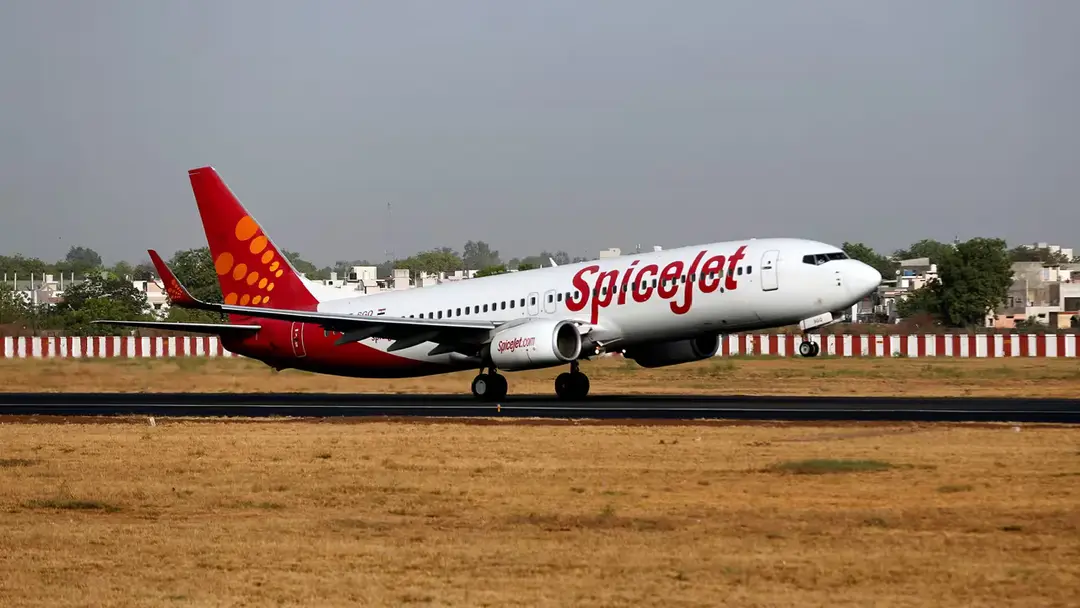
Centre places SpiceJet under operational, financial scrutiny
India's aviation ministry has placed SpiceJet under operational and financial scrutiny following long-running cash flow troubles worsened by the ongoing Middle East conflict, a government official said on Tuesday. Civil Aviation Minister Ram Mohan Naidu said the government was monitoring the carrier's operations and finances through the aviation regulator to ensure safety is not compromised. He noted limits to intervening in private businesses, adding SpiceJet has received 1.5 billion rupees ($15.67 million) under the ELGS scheme.
Source
Civil Aviation — Ram Mohan Naidu · read the original report ↗
Desk check · compared with the source
What the desk checked (5)
- India's aviation ministry has placed SpiceJet under operational and financial scrutiny — Attributed to an unnamed government official speaking on Tuesday, as reported by Reuters.
- Civil Aviation Minister Ram Mohan Naidu said the government is monitoring SpiceJet's operations and finances through the regulator to ensure safety is not compromised — Directly attributed to the minister at a press conference in the source.
- SpiceJet has received 1.5 billion rupees ($15.67 million) under the Emergency Credit Line Guarantee Scheme (ELGS) — Figure appears in source, attributed to the minister; source spells the scheme acronym as ELGS.
- SpiceJet delayed salary payments to pilots this year and was pursuing government funding — Attributed in source to earlier Reuters reporting, not independently restated.
- SpiceJet's cash flow troubles were worsened by the ongoing Middle East conflict — Stated in source without specific attribution or supporting data.
Analysts’ view opinion
SpiceJet's problem has moved from being one airline's cash crunch to a market-structure question. The 1.5 billion rupee ELGS support is not the scale of money that fixes structural pressures like fuel costs, thinning market share and brutal competition — it buys time. The minister's explicit point about the limits of intervening in private businesses signals the state's posture is safety oversight, not a bailout.
- Financial stress typically shows up in maintenance spending, spares procurement and staff pay, which is precisely why a safety-focused regulatory watch has an economic logic behind it.
- At 1.5 billion rupees (about $15.67 million), the support is small against aviation's capital intensity — breathing room rather than a turnaround.
- SpiceJet was among India's largest domestic carriers by share in 2019, and the capacity it has ceded has gone to rivals; less competition can mean firmer fares on some routes.
- The Middle East conflict raises fuel and routing costs across the sector, but the hit lands hardest on carriers with already weak balance sheets.
- The question of who absorbs the loss matters: employees who saw delayed salaries, lenders, shareholders, and ultimately the state, which carries some risk through a credit guarantee scheme.
What to watch — Watch for fresh fundraising attempts, the trajectory of fuel prices, and whether regulatory scrutiny translates into any curbs on the airline's flying schedule.
The story does not establish the airline's current cash position or debt load, whether any safety lapses have actually been found, or whether further government support is under consideration.
Deep dive
Research brief · 8 facts · 3 dates · exam-readyThe brief
Context
SpiceJet, once India's second-largest domestic airline by market share in 2019, has been battling prolonged cash flow stress, shrinking market share, rising fuel costs and intense competition. The Civil Aviation Ministry has now placed the carrier under operational and financial scrutiny, monitoring it through the aviation regulator to ensure that financial stress does not compromise flight safety. The move comes amid heightened attention on aviation safety in India after recent industry disruptions, and with the airline's troubles worsened by the ongoing Middle East conflict.
Key facts
- India's aviation ministry has placed SpiceJet under operational and financial scrutiny, a government official said on Tuesday.
- Civil Aviation Minister Ram Mohan Naidu said the government is closely monitoring SpiceJet's operations and finances through the aviation regulatory body so that safety is not compromised.
- SpiceJet has received 1.5 billion rupees ($15.67 million) in support under the Emergency Credit Line Guarantee Scheme (ELGS), which authorities extended.
- Naidu said there are limits to how far the government can intervene in privately run businesses.
- SpiceJet's long-running cash flow troubles have been worsened by the ongoing Middle East conflict.
- Reuters earlier reported that SpiceJet was actively pursuing government funding after delaying salary payments to its pilots this year.
- SpiceJet was one of India's second-largest domestic carriers by market share in 2019.
- The airline has struggled with thinning market share, rising fuel costs and intense competition.
Timeline
- 2019SpiceJet ranked as one of India's second-largest domestic carriers by market share.
- Earlier this yearSpiceJet delayed salary payments to its pilots; Reuters reported the company was actively pursuing government funding.
- September 22, 2026 (Tuesday)A government official said the aviation ministry has placed SpiceJet under operational and financial scrutiny; Minister Ram Mohan Naidu detailed the monitoring at a press conference.
Who has a stake
- SpiceJet — Faces regulatory scrutiny of its operations and finances amid cash flow stress, thinning market share, rising fuel costs and competition.
- Ministry of Civil Aviation / Minister Ram Mohan Naidu — Must ensure the carrier's financial stress does not affect operations or passenger safety, while respecting limits on intervening in private business.
- Aviation regulatory body — Is the channel through which the government monitors SpiceJet's operations and finances.
- SpiceJet pilots and employees — Salary payments were delayed this year, making the airline's funding search directly material to them.
- Passengers — Safety and continuity of operations at a financially stressed carrier.
- Government as ELGS guarantor — Public support of 1.5 billion rupees ($15.67 million) already extended to the airline under the credit guarantee scheme.
Why it matters
A financially stressed airline can cut corners on maintenance, staffing and operations, so the regulator's financial surveillance is effectively a safety measure, not just a commercial one. The case also tests how far the state can or should go in supporting a private carrier, after SpiceJet has already drawn 1.5 billion rupees under the ELGS. With aviation safety already under heightened public scrutiny in India, the outcome will shape both passenger confidence and competition in the domestic market.
UPSC angle
Prelims pointers
- Union Civil Aviation Minister named in the story: Ram Mohan Naidu.
- SpiceJet received Rs 1.5 billion (about $15.67 million) under the Emergency Credit Line Guarantee Scheme (ELGS).
- SpiceJet was one of India's second-largest domestic carriers by market share in 2019.
- The Ministry of Civil Aviation is monitoring SpiceJet's operations and finances through the aviation regulatory body.
- Stated reasons for SpiceJet's stress: cash flow troubles, the ongoing Middle East conflict, thinning market share, rising fuel costs, intense competition.
Mains framing
The SpiceJet episode illustrates how financial distress in a private airline becomes a public regulatory concern. Long-running cash flow problems, aggravated by the ongoing Middle East conflict, rising fuel costs, thinning market share and intense competition, led to delayed pilot salaries and a search for government funding, prompting the Civil Aviation Ministry to place the carrier under operational and financial scrutiny through the aviation regulator. The implicit logic is that financial stress can translate into compromised operations and passenger safety, an anxiety sharpened by recent industry disruptions and heightened attention to aviation safety in India. Yet, as the minister acknowledged, the state's room to intervene in privately run businesses is limited; its support so far has taken the indirect route of credit guarantees, with SpiceJet drawing Rs 1.5 billion under the extended ELGS. The way forward, on the evidence in the source, lies in continuous regulatory surveillance that links financial health indicators to safety oversight, transparency on the airline's funding plans and obligations to employees, and a competitive market structure in which no single carrier's distress becomes a systemic risk for passengers.
Key terms
- SpiceJet
- Indian private low-cost carrier, one of the country's second-largest domestic airlines by market share in 2019, now under government scrutiny.
- ELGS (Emergency Credit Line Guarantee Scheme)
- Government-backed credit support scheme, extended by authorities, under which SpiceJet received Rs 1.5 billion ($15.67 million).
- Ministry of Civil Aviation
- Union ministry that has placed SpiceJet under operational and financial scrutiny; headed by Minister Ram Mohan Naidu.
- Aviation regulatory body
- The regulator through which the government is monitoring SpiceJet's operations and finances to safeguard safety.
- Operational and financial scrutiny
- Close government monitoring of an airline's flight operations and its books to ensure financial stress does not hit safety.
Practice questions
- Why does the financial health of a private airline become a matter of public regulatory oversight? Discuss with reference to the government's scrutiny of SpiceJet.
- Examine the scope and limits of government intervention in privately run airlines in India, using the Emergency Credit Line Guarantee Scheme support to SpiceJet as an example.
- What structural pressures — fuel costs, competition and external shocks — explain the decline of a once second-largest domestic carrier, and what should the policy response be?
Grounded only in the source report — figures and dates are the source's, not inferred.