
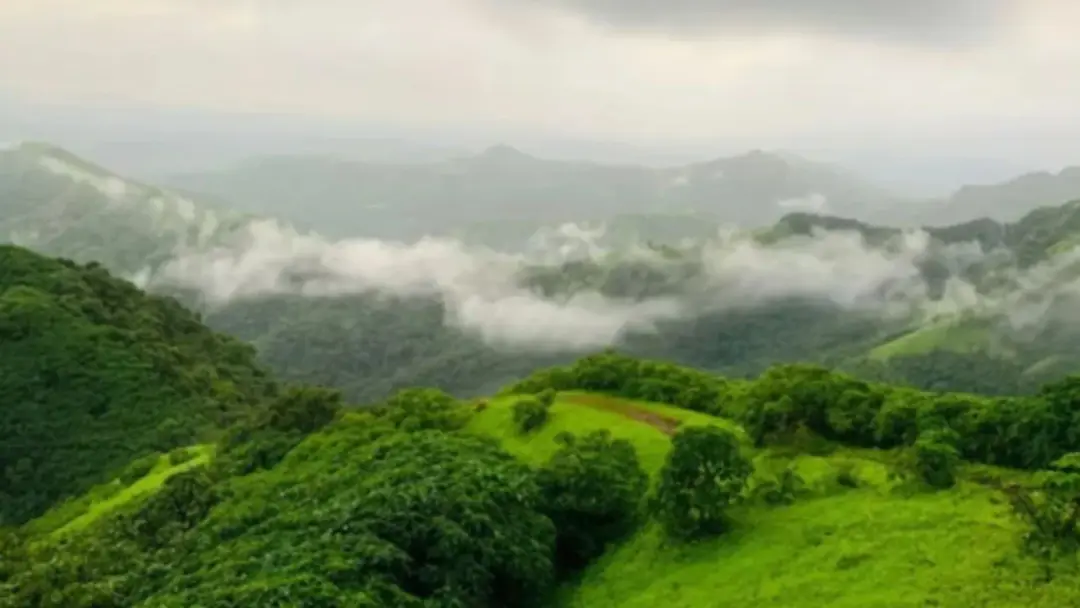
Karnataka Assembly seeks review of Kasturirangan report
The Karnataka Assembly on Tuesday unanimously adopted a resolution seeking a review and modifications to the Kasturirangan report on ecologically sensitive areas in the Western Ghats. The union environment ministry's seventh draft notification, issued in July 2026 on National Green Tribunal directions, proposed designating 20,668 sq km across 10 Karnataka districts as eco-sensitive. Chief Minister D K Shivakumar said legislators called the report satellite-data based and unscientific. The state will seek a year for a physical survey, monitored by a committee headed by a retired Supreme Court judge.
Source
Indian Express — Cities · read the original report ↗
Desk check · compared with the source
What the desk checked (5)
- Karnataka Assembly unanimously adopted a resolution seeking review and modification of the Kasturirangan report. — Stated in source as a proceeding of the Assembly on Tuesday; no dissent reported.
- The union environment ministry's seventh draft notification proposed designating 20,668 sq km in 10 Karnataka districts as ecologically sensitive areas. — Figure and district count appear in the source; attributed to the ministry notification.
- The notification was issued in July 2026 following National Green Tribunal directions. — Date appears in source as written; a future-looking date an editor should confirm against the original notification.
- Legislators called the report 'unscientific' as it was based merely on satellite data. — Attributed by CM Shivakumar to several legislators; paraphrased quote in source.
- A retired Supreme Court judge will head a high-level committee, with gram panchayat-level committees also to be formed. — Attributed directly to Chief Minister D K Shivakumar; no name given.
Analysts’ view opinion
A unanimous resolution is the clearest political tell in this story: on the Western Ghats question, Karnataka's parties have decided there is no electoral upside in being on the other side of hill-district farmers. By framing the fight as "unscientific" satellite mapping versus a physical, gram-panchayat-level survey, Chief Minister D K Shivakumar shifts the argument from environment-versus-development to a more defensible procedural claim — and buys a year. The all-party delegation to the prime minister and environment minister also transfers the burden of saying no to the Centre, which is politically convenient for a state government facing the Union ministry's draft notification.
- Unanimity across party lines removes the issue from partisan combat and signals that legislators from the 10 affected districts see farmer, tribal and settler sentiment as the dominant local vote consideration.
- Shivakumar's "we are not anti-environment, but farmers should not be affected" framing is a classic attempt to hold both a green constituency and an agrarian one without conceding either.
- The demand for a one-year physical survey, plus a high-level committee headed by a retired Supreme Court judge, is as much about buying political time and legal cover as about data, given the notification flows from National Green Tribunal directions.
- Sending an all-party delegation to the PM and the environment minister shifts responsibility to the Centre — if the notification stands, the state can say it tried; if it is modified, the state claims credit.
- Explicitly taking a cue from Kerala shows states converging on a common playbook of resisting the eco-sensitive area notification, which raises the political cost for the Union ministry of holding firm.
What to watch — Watch whether the Centre concedes the extra year and accepts state-led physical surveys, and how the National Green Tribunal's timelines interact with that delay — plus who is named to head the committee.
The story does not establish the Centre's response, whether the survey demand is legally sustainable against the tribunal's directions, or any independent assessment of whether the report's satellite-based mapping is in fact flawed.
Deep dive
Research brief · 8 facts · 4 dates · exam-readyThe brief
Context
The Western Ghats, a biodiversity-rich mountain range running along India's western coast, has been the subject of successive central attempts to notify parts of it as Ecologically Sensitive Areas (ESA). A high-level working group led by former ISRO chief K Kasturirangan recommended such demarcation, and the union environment and forests ministry has since issued repeated draft notifications to implement it. The seventh draft notification, issued in July 2026 on the directions of the National Green Tribunal, proposes 20,668 sq km across 10 Karnataka districts as ecologically sensitive. On Tuesday, the Karnataka Assembly unanimously adopted a resolution seeking a review and modifications to the report.
Key facts
- The Karnataka Assembly on Tuesday unanimously adopted a resolution seeking review and necessary modifications to the Kasturirangan report on ecologically sensitive areas in the Western Ghats.
- The union environment and forests ministry's seventh draft notification was issued in July 2026 following directions of the National Green Tribunal.
- The draft notification proposes designating 20,668 sq km across 10 Karnataka districts as ecologically sensitive areas.
- The Kasturirangan report was prepared by a high-level working group led by former ISRO chief K Kasturirangan.
- MLAs cutting across party lines said the notification cannot be accepted in its present form; several called it satellite-data based and 'unscientific'.
- Chief Minister D K Shivakumar said Karnataka would seek one year to undertake a physical survey of the forests.
- The state will form a high-level committee headed by a retired Supreme Court judge to monitor the survey, taking a cue from neighbouring Kerala.
- Committees will also be formed at the gram panchayat level, and an all-party delegation will meet the Prime Minister and the environment minister.
Timeline
- Not dated in the sourceHigh-level working group led by former ISRO chief K Kasturirangan prepares report on ecologically sensitive areas in the Western Ghats.
- July 2026Union environment and forests ministry issues the seventh draft notification, on National Green Tribunal directions, proposing 20,668 sq km in 10 Karnataka districts as ESA.
- Tuesday (second day of special session)Karnataka Assembly unanimously adopts resolution seeking review and modifications to the Kasturirangan report.
- After the resolutionState decides to seek a year for a physical survey, form a retired SC judge-headed high-level committee and gram panchayat committees, and send an all-party delegation to the PM and environment minister.
Who has a stake
- Karnataka Assembly / MLAs across parties — Unanimously oppose the notification in its present form and seek review and modifications to the Kasturirangan report.
- Chief Minister D K Shivakumar — Leading the state's demand for a physical survey and a year's time; says the state is not anti-environment but farmers must not be affected.
- Union environment and forests ministry — Issued the seventh draft notification to implement the report; must respond to the state's demand for review.
- National Green Tribunal — Its directions prompted the issue of the seventh draft notification.
- Farmers, tribals and long-settled families in the Western Ghats region — Fear restrictions on agricultural, horticultural and inhabited lands if the ESA demarcation stands.
- Gram panchayats — Committees to be formed at panchayat level to take part in the proposed physical survey.
- Kerala — Cited as the precedent whose approach of forming a high-level monitoring committee Karnataka is following.
Why it matters
The dispute pits central ecological regulation of the Western Ghats, pushed along by NGT directions, against state governments defending farmers, tribals and long-settled residents in the notified belt. A unanimous, cross-party Assembly resolution signals that the seventh draft notification faces the same political resistance as earlier attempts, prolonging the years-long deadlock over final ESA demarcation. How the demand for a ground-truthed physical survey is handled will shape whether conservation in the Ghats rests on satellite data or field verification.
UPSC angle
Prelims pointers
- Kasturirangan report on Western Ghats ecologically sensitive areas was prepared by a high-level working group led by former ISRO chief K Kasturirangan.
- Seventh draft notification on Western Ghats ESA: issued July 2026 by the union environment and forests ministry on National Green Tribunal directions.
- Area proposed as ESA in Karnataka: 20,668 sq km across 10 districts.
- Karnataka Assembly resolution seeking review of the report was adopted unanimously on the second day of a special session.
- Karnataka's proposed monitoring committee for the physical survey is to be headed by a retired Supreme Court judge, with gram panchayat-level committees.
Mains framing
Karnataka's unanimous Assembly resolution against the seventh draft Western Ghats ESA notification illustrates the recurring friction between centrally driven ecological regulation and state-level livelihood politics in a fragile ecosystem. The immediate trigger is the union environment ministry's July 2026 draft, issued on National Green Tribunal directions, proposing 20,668 sq km in 10 Karnataka districts as ecologically sensitive; the core objection, as articulated by Chief Minister D K Shivakumar, is methodological — that the Kasturirangan report relies on satellite data without ground verification of what is actually forest, farm, horticultural or inhabited land. The implication is a further delay in finalising ESA boundaries, even as the NGT presses for implementation, leaving both conservation and land-use certainty in limbo and encouraging states to imitate one another's resistance, as Karnataka has done with Kerala. A workable way forward, on the state's own proposal, is time-bound ground-truthing: a physical survey within a year, monitored by a retired Supreme Court judge-headed committee with gram panchayat-level participation, feeding verified field data into the central notification, alongside the all-party delegation's engagement with the Prime Minister and environment minister so that demarcation is both scientifically defensible and locally legitimate.
Key terms
- Ecologically Sensitive Area (ESA)
- Area proposed for designation under the draft notification where activities would be regulated to protect the Western Ghats ecology.
- Kasturirangan report
- Report of a high-level working group led by former ISRO chief K Kasturirangan recommending ecologically sensitive areas in the Western Ghats.
- National Green Tribunal (NGT)
- Environmental adjudicatory body whose directions led the union ministry to issue the seventh draft ESA notification in July 2026.
- Seventh draft notification
- The latest central draft to implement the Kasturirangan report, proposing 20,668 sq km in 10 Karnataka districts as ESA.
- High-level committee (Karnataka)
- Panel to be headed by a retired Supreme Court judge to monitor a scientific physical survey of forests, farmland and inhabited areas.
- Special session
- Karnataka legislature sitting convened specifically to discuss the Kasturirangan report and the state's drought situation.
Practice questions
- The Karnataka Assembly has called the Kasturirangan report 'satellite-data based and unscientific'. Examine the challenges of demarcating ecologically sensitive areas in the Western Ghats and suggest a balanced approach.
- Discuss the role of the National Green Tribunal in driving environmental notifications, with reference to the seventh draft notification on Western Ghats eco-sensitive areas.
- 'Conservation of fragile ecosystems cannot succeed without local legitimacy.' Critically analyse in the light of state resistance to Western Ghats ESA notifications.
Grounded only in the source report — figures and dates are the source's, not inferred.