
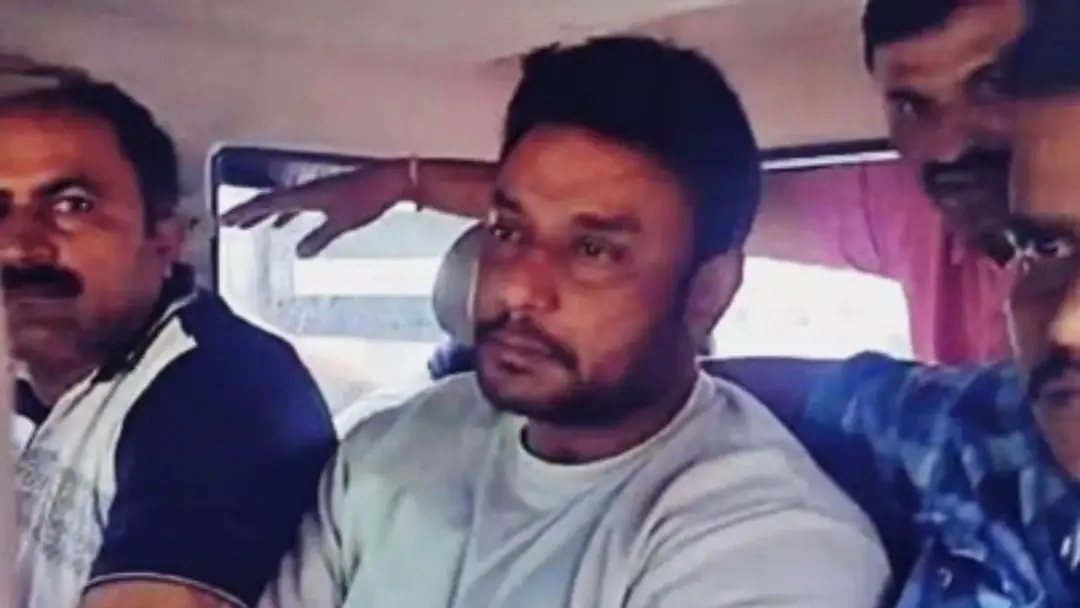
Co-accused turns approver in Renukaswamy murder case
A Bengaluru court on Wednesday granted pardon to Pradhosh Rao, 40, accused No. 14 in the Renukaswamy murder case, and admitted him as an approver. Rao applied on August 5 offering full disclosure. The prosecution backed the plea, saying the victim's mother did not fully endorse its version and a witness turned hostile. Judge Sujata M Sambrani rejected a petition by jailed actor Darshan Thoogudeepa seeking deferment of the order.
Source
Indian Express — Cities · read the original report ↗
Desk check · compared with the source
What the desk checked (5)
- A Bengaluru court granted pardon to accused No. 14 Pradhosh Rao and admitted him as an approver on Wednesday. — Attributed in source to the order of Judge Sujata M Sambrani; date given as Wednesday without calendar date.
- Rao filed the pardon application on August 5 and the prosecution supported it with a memo citing a hostile witness and the victim's mother not fully endorsing its version. — Figure and reasoning appear in source, attributed to court filings and prosecution memo.
- The court rejected Darshan Thoogudeepa's petition to defer the order, in which he alleged Kannada film industry rivals were targeting him. — Attributed in source to Darshan's petition and the court's decision.
- Post-mortem recorded 39 injuries, including 13 bleeding wounds and 17 fractured ribs; chargesheet alleges Rao was paid Rs 30 lakh to suppress evidence. — Figures appear in source, attributed to post-mortem report and chargesheet; allegations not adjudicated.
- Darshan, Pavithra Gowda and 15 others were arrested on June 11, 2024 and have remained in judicial custody. — Dates and numbers appear in source, attributed to police action; no external verification possible.
Analysts’ view opinion
Turning accused No. 14 into an approver is a classic prosecutorial repair move, and the timing tells its own story: the memo cites a victim's mother who did not fully endorse the prosecution version, one hostile witness and doubts about another eyewitness. In Indian criminal procedure, a tender of pardon buys full and true disclosure in exchange for immunity that is conditional and revocable — Pradhosh Rao stays in custody through trial and can be re-arraigned if he lies or suppresses material facts. The court's record of questioning him three times on voluntariness is not ceremony; it is the paper trail that will be tested when the defence attacks the reliability of the approver's testimony.
- An approver is an accomplice witness, and courts traditionally treat such evidence as weak unless it is corroborated on material particulars by independent evidence.
- The conditions imposed — continued custody and re-arraignment for false or suppressed evidence — are the statutory leash that keeps an approver's incentive pointed at truthful disclosure.
- The prosecution's own memo effectively concedes that parts of its oral evidence have wobbled, which is why the approver route matters to it and also gives the defence an argument that the testimony was procured out of necessity.
- The chargesheet allegation that Rao was paid to suppress evidence cuts both ways: it explains what he could reveal about the alleged cover-up, but it also arms cross-examination on his credibility.
- Darshan's petition to defer the order was rejected, and grievances about industry rivalry are ordinarily matters for trial argument rather than grounds to delay a pardon application; any challenge would typically lie in a higher court.
What to watch — Watch whether Rao's examination-in-chief and cross-examination hold up, whether independent corroboration is placed on record alongside the post-mortem findings, and whether the defence moves a superior court against the pardon order.
The story establishes only that a conditional pardon was granted; it does not establish what Rao will actually depose, whether his account will be believed, or the guilt of any accused, all of which remain to be decided at trial.
Deep dive
Research brief · 8 facts · 5 dates · exam-readyThe brief
Context
Renukaswamy, a resident of Chitradurga, was murdered in June 2024, allegedly after sending lewd comments to Pavithra Gowda on Instagram. Kannada actor Darshan Thoogudeepa was arrested on June 11, 2024 along with Pavithra Gowda and 15 others; all accused have remained in judicial custody since. In the ongoing trial before a Bengaluru court, accused No. 14 Pradhosh Rao has now been granted pardon and admitted as an approver — a co-accused who testifies for the prosecution in exchange for pardon. The prosecution supported the move after its case weakened, with the victim's mother not fully endorsing its version in cross-examination and a witness turning hostile.
Key facts
- A Bengaluru court on Wednesday granted pardon to Pradhosh Rao, 40, accused No. 14, and admitted him as an approver in the Renukaswamy murder case.
- Rao filed his application on August 5 seeking pardon in exchange for full and true disclosure.
- The prosecution's supporting memo said the victim's mother did not fully endorse its version during cross-examination, one witness turned hostile, and another eyewitness might also fail to support the case.
- Judge Sujata M Sambrani questioned Rao on three separate occasions to confirm the decision was voluntary.
- Conditions imposed: Rao must remain in custody throughout the trial and faces re-arraignment as an accused if he gives false evidence or suppresses material facts.
- Darshan Thoogudeepa's petition to defer the order on Rao's application, alleging rivals in the Kannada film industry were targeting him, was rejected.
- Darshan was arrested on June 11, 2024 with Pavithra Gowda and 15 others; the murder occurred three days earlier.
- The post-mortem recorded 39 injuries, including 13 bleeding wounds and 17 fractured ribs; the chargesheet alleges Rao was paid Rs 30 lakh to suppress evidence.
Timeline
- Around June 8, 2024Renukaswamy, a resident of Chitradurga, is murdered; his body is moved and dumped near a storm-water drain outside an apartment complex.
- June 11, 2024Darshan Thoogudeepa arrested along with Pavithra Gowda and 15 others; all accused have remained in judicial custody since.
- Not stated in the source (after arrests)Police file multiple chargesheets naming Pavithra Gowda as accused No. 1 and Darshan as accused No. 2.
- August 5Pradhosh Rao, accused No. 14, files an application seeking pardon in exchange for full and true disclosure.
- Wednesday (date not stated)Court grants pardon to Rao, admits him as approver on conditions, and rejects Darshan's deferment petition.
Who has a stake
- Pradhosh Rao (accused No. 14) — Gets pardon as approver but must stay in custody through the trial and can be re-arraigned as accused if he gives false evidence or hides material facts.
- Darshan Thoogudeepa (accused No. 2) — Faces an insider's testimony; his petition to defer the approver order, alleging film industry rivals were targeting him, was rejected.
- Pavithra Gowda (accused No. 1) — Named as prime accused; the murder allegedly followed lewd Instagram comments sent to her.
- Prosecution / police — Backed the approver plea to shore up a case weakened by a hostile witness and the victim's mother not fully endorsing its version.
- Renukaswamy's family — Seek conviction; the mother's cross-examination did not fully support the prosecution's version.
- Bengaluru trial court (Judge Sujata M Sambrani) — Must ensure the pardon is voluntary and the approver's evidence is tested for truthfulness.
Why it matters
An approver's testimony can decisively shape a high-profile trial where direct evidence is thinning — here a hostile witness and the victim's mother's partial cross-examination had weakened the prosecution. The order also underlines the safeguards courts apply before turning a co-accused into a prosecution witness: repeated voluntariness checks, continued custody and the threat of re-arraignment for false evidence.
UPSC angle
Prelims pointers
- Approver: a co-accused granted pardon to give full and true disclosure and testify for the prosecution.
- Pradhosh Rao, 40, is accused No. 14 in the Renukaswamy murder case; Pavithra Gowda is accused No. 1 and Darshan Thoogudeepa accused No. 2.
- Rao's pardon application was filed on August 5 and allowed by Judge Sujata M Sambrani of a Bengaluru court.
- Darshan and 16 others were arrested on June 11, 2024; the victim Renukaswamy was from Chitradurga.
- Post-mortem in the case recorded 39 injuries, 13 bleeding wounds and 17 fractured ribs.
- Chargesheet alleges Rao was paid Rs 30 lakh to suppress evidence.
Mains framing
The admission of accused No. 14 Pradhosh Rao as an approver in the Renukaswamy murder trial illustrates how prosecutions in high-profile crimes fall back on tainted-but-insider testimony when their evidentiary base erodes — in this case the victim's mother not fully endorsing the prosecution version in cross-examination, one witness turning hostile and apprehension that another eyewitness would not support the case. The device serves investigative necessity in group-crime cases where only participants know the sequence of events, but it carries risks: an approver has an obvious interest in pleasing the prosecution, and his account may be shaped to fit the case theory, which is why courts treat such evidence as requiring careful corroboration. The safeguards visible here — questioning the applicant thrice to test voluntariness, requiring continued custody through the trial, and the express warning of re-arraignment for false evidence or suppression of material facts — are the judicial answer to that risk. The way forward lies in strengthening witness protection so that ordinary witnesses do not turn hostile in cases involving influential accused, ensuring speedy trials so testimony is recorded while memories and resolve hold, and insisting that approver evidence be weighed alongside independent forensic material such as the post-mortem findings and money trails alleged in the chargesheet.
Key terms
- Approver
- A co-accused who is granted pardon by the court in exchange for making a full and true disclosure and deposing for the prosecution.
- Hostile witness
- A witness who resiles from earlier statements and no longer supports the party that called them, here weakening the prosecution.
- Re-arraignment
- Placing the pardoned approver back on trial as an accused if he gives false evidence or conceals material facts.
- Chargesheet
- The final police report naming accused and setting out allegations; multiple chargesheets were filed in this case.
- Cross-examination
- Questioning of a witness by the opposing side; the victim's mother did not fully endorse the prosecution version during it.
Practice questions
- What is an approver, and what safeguards did the Bengaluru court apply while granting pardon to accused No. 14 in the Renukaswamy murder case?
- Discuss the evidentiary value and risks of relying on approver testimony in high-profile criminal trials involving influential accused.
- Witnesses turning hostile weakens the criminal justice system. Examine with reference to the developments in the Renukaswamy murder trial.
Grounded only in the source report — figures and dates are the source's, not inferred.