
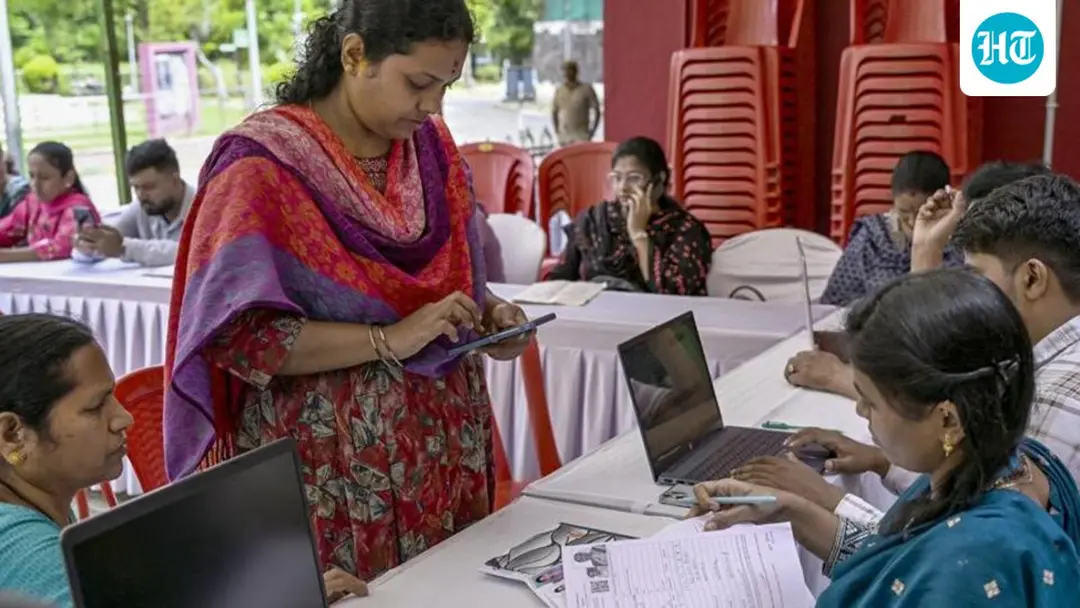
Supreme Court to hear plea against Delhi SIR on September 22
The Supreme Court said it will hear on September 22 a fresh petition challenging the special intensive revision of Delhi's electoral rolls, along with other pending SIR matters. Filed by Anjali Bhardwaj and Amrita Johri through advocate Prashant Bhushan, it says names and reasons for notices to 33,12,919 flagged voters were not disclosed. The August 31 draft roll lists 97,53,577 electors after 47,56,722 exclusions. The final roll is due November 4.
Source
Hindustan Times — India · read the original report ↗
Desk check · compared with the source
What the desk checked (5)
- Supreme Court will hear the fresh plea against Delhi SIR on September 22 along with other pending SIR matters. — Attributed in source to Chief Justice of India Surya Kant.
- 33,12,919 voters retained in the draft roll have been flagged, including 13,79,785 for 'no mapping' and 19,33,134 for 'logical discrepancies'. — Figures appear in the source; presented as data behind the petition and internally consistent.
- Delhi's August 31 draft roll has 97,53,577 electors, about 32.8% fewer than the earlier 1,45,10,299, with 47,56,722 names excluded under the ASDD category. — Figures appear in source, attributed to the draft roll and Delhi CEO data.
- Petition filed by activists Anjali Bhardwaj and Amrita Johri through advocate Prashant Bhushan under Article 32. — Named attribution present in source; advocates Neha Rathi and Kajal Giri also cited.
- Claims and objections continue till September 30, notices to be disposed of by October 29 and final roll published November 4. — Schedule stated in source without a named official; treated as procedural information.
Analysts’ view opinion
Delhi's SIR has moved beyond an administrative exercise into contested political terrain, driven by the raw arithmetic: a draft roll 32.8% smaller than before, plus notices to another 33.13 lakh voters. The petitioners are not asking for deletions to be reversed but for transparency — who received notices and on what basis. By giving the plea precedence for September 22, the Supreme Court has ensured the issue stays politically live well before the November 4 final roll.
- The story does not establish which party gains or loses from these changes, but a revision of this scale forces every party in Delhi to redo its booth-level arithmetic.
- The claim that "logical discrepancies" is undefined and its criteria undisclosed is politically easy for opponents to run with, because it speaks the language of transparency rather than technicality.
- The Election Commission's side is not weak: officials have stressed that a notice is not a finding of ineligibility, with claims and objections open till September 30 and disposal expected by October 29.
- That the case comes from civil-society activists rather than a political party gives it a non-partisan face without reducing its political resonance.
- Because the court is hearing it alongside other pending SIR matters, the Delhi case could set a benchmark that travels well beyond one city.
What to watch — Watch whether the court on September 22 orders any disclosure of the notice list or classification criteria, which could bear on the September 30, October 29 and November 4 deadlines.
The story does not establish that the deletions or notices deliberately targeted any particular community or party's voter base — what exists so far is allegation and data, not a judicial finding.
Deep dive
Research brief · 8 facts · 7 dates · exam-readyThe brief
Context
The Election Commission of India is conducting a special intensive revision (SIR) of Delhi's electoral rolls, an exercise in which existing electors are re-verified, in part by linking them to the 2002 electoral roll. A draft roll published on August 31 dropped 47,56,722 names under the ASDD (absent, shifted, dead or duplicate) category, and flagged another 33,12,919 electors who remain on the roll but face notices for "no mapping" with the 2002 roll or "logical discrepancies". Activists Anjali Bhardwaj and Amrita Johri have moved the Supreme Court under Article 32 saying the names of those noticed, and the criteria used to flag them, have not been disclosed. The Chief Justice of India said the plea will be heard on September 22 along with other pending SIR matters.
Key facts
- Delhi's draft electoral roll published on August 31 contains 97,53,577 electors, about 32.8% fewer than the 1,45,10,299 names on the rolls before the revision.
- 47,56,722 names were excluded from the draft roll under the ASDD category (absent, shifted, dead or duplicate); Delhi CEO data shows 57.2% were men and 42.8% women.
- 33,12,919 voters remain on the draft roll but are flagged: 13,79,785 for "no mapping" with the 2002 electoral roll and 19,33,134 under "logical discrepancies".
- The petition was filed by activists Anjali Bhardwaj and Amrita Johri through advocate Prashant Bhushan, with advocates Neha Rathi and Kajal Giri.
- CJI Surya Kant said the plea would be heard on Tuesday, September 22, with other SIR matters, and would "certainly have precedence" as a new matter.
- The plea is under Article 32, alleging the ECI and Delhi CEO's failure to publish names of noticed voters and specific reasons violates constitutional and fundamental rights.
- The petition relies on an Election Commission communication of May 14, 2026 which, it says, requires publication of names of persons issued notices on the CEO's website and display at local offices.
- Claims and objections continue until September 30, disposal of notices is expected by October 29, and the final electoral roll is to be published on November 4.
Timeline
- May 14, 2026 (as cited in the petition)Election Commission communication requiring EROs to issue notices where an elector could not be linked to the previous roll, and to publish the names of those noticed.
- August 31Delhi's draft electoral roll published with 97,53,577 electors after 47,56,722 exclusions.
- Thursday (date of hearing mention)Supreme Court agrees to urgently hear the fresh challenge to Delhi's SIR.
- September 22Supreme Court to hear the fresh petition along with other pending SIR matters.
- September 30Claims and objections process scheduled to conclude.
- October 29Disposal of notices expected to be completed.
- November 4Publication of the final electoral roll.
Who has a stake
- 33,12,919 flagged Delhi voters — Face notices for "no mapping" or "logical discrepancies" and must respond with documents or clarifications before the final roll is prepared.
- 47,56,722 excluded electors — Names dropped from the August 31 draft roll under the ASDD category; must use the claims and objections process to seek inclusion.
- Election Commission of India and Delhi Chief Electoral Officer — Accused of not publishing names of noticed voters or the criteria behind the "logical discrepancies" category; must defend the SIR in court.
- Supreme Court (CJI Surya Kant) — Must decide, before the November 4 final roll, on transparency obligations in the SIR while other SIR petitions are pending.
- Petitioners Anjali Bhardwaj and Amrita Johri — Seek a consolidated searchable list of noticed electors with addresses and reasons, and disclosure of criteria and algorithmic parameters.
- Electoral registration officers (EROs) — Required to issue notices where linkage with the earlier roll fails or shows discrepancies, and to publish names of those noticed.
Why it matters
Delhi's draft roll is about 32.8% smaller than the pre-revision roll, and another 33.13 lakh electors on the roll face scrutiny notices — so the transparency of the SIR directly affects who can vote. With claims and objections closing September 30 and the final roll due November 4, the Supreme Court's September 22 hearing comes in a narrow window in which affected voters can still be heard. The case also tests whether criteria and algorithmic parameters used to flag voters must be publicly disclosed.
UPSC angle
Prelims pointers
- Special Intensive Revision (SIR): re-verification of electoral rolls; Delhi's exercise links current electors to the 2002 roll.
- ASDD category in roll revision stands for absent, shifted, dead or duplicate.
- Delhi draft roll (August 31): 97,53,577 electors, down from 1,45,10,299; 47,56,722 names excluded.
- Flagged electors: 13,79,785 under "no mapping" and 19,33,134 under "logical discrepancies", totalling 33,12,919.
- Article 32 allows direct petitions to the Supreme Court for enforcement of fundamental rights.
- SIR calendar: claims and objections till September 30; notices disposed by October 29; final roll November 4.
Mains framing
Delhi's special intensive revision has produced two distinct sets of affected voters: 47,56,722 names excluded from the August 31 draft roll under the ASDD category, and 33,12,919 electors retained on the roll but flagged for "no mapping" with the 2002 roll or for "logical discrepancies". The petitioners' case, filed under Article 32, is less about the existence of these categories than about procedural fairness: the term "logical discrepancies" is undefined, neither the original SIR order nor subsequent ECI communications on the Delhi CEO's website specify the criteria or parameters, and notices reportedly carry only generic descriptions without the underlying material a voter would need to reply. Officials say the flags reflect database inconsistencies such as differing name spellings between the current and 2002 rolls, or unusual age gaps between an elector and a parent or between siblings, and that a notice does not by itself mean ineligibility since voters may furnish documents before the final roll. The remedies sought — a consolidated searchable list of noticed electors with addresses and reasons, and disclosure of criteria, definitions, algorithmic parameters and operational guidelines — point to a way forward centred on published, auditable standards and adequate notice, especially given the compressed calendar ending with the final roll on November 4.
Key terms
- Special Intensive Revision (SIR)
- An intensive re-verification of electoral rolls; in Delhi it involves linking current electors to the 2002 electoral roll.
- ASDD
- The category — absent, shifted, dead or duplicate — under which 47,56,722 names were excluded from Delhi's draft roll.
- Logical discrepancies
- An undefined flag covering database inconsistencies such as name-spelling differences or unusual age gaps; applied to 19,33,134 Delhi electors.
- No mapping
- Flag for electors who could not be linked to the 2002 electoral roll; applied to 13,79,785 voters in Delhi.
- Claims and objections
- The post-draft window, running until September 30 in Delhi, for seeking inclusion, deletion or correction of entries.
- Article 32
- Constitutional provision allowing a person to move the Supreme Court directly for enforcement of fundamental rights.
Practice questions
- Examine the transparency obligations of the Election Commission of India during intensive revision of electoral rolls, with reference to the disclosure issues raised in the Delhi SIR case.
- Delhi's draft roll of 97,53,577 electors is about 32.8% smaller than the pre-revision roll of 1,45,10,299. Discuss the implications of large-scale deletions for electoral inclusiveness and the remedies available to affected voters.
- "Automated flagging of voters must be accompanied by disclosure of criteria and parameters." Critically analyse in the context of the "logical discrepancies" category in the Delhi SIR.
Grounded only in the source report — figures and dates are the source's, not inferred.