
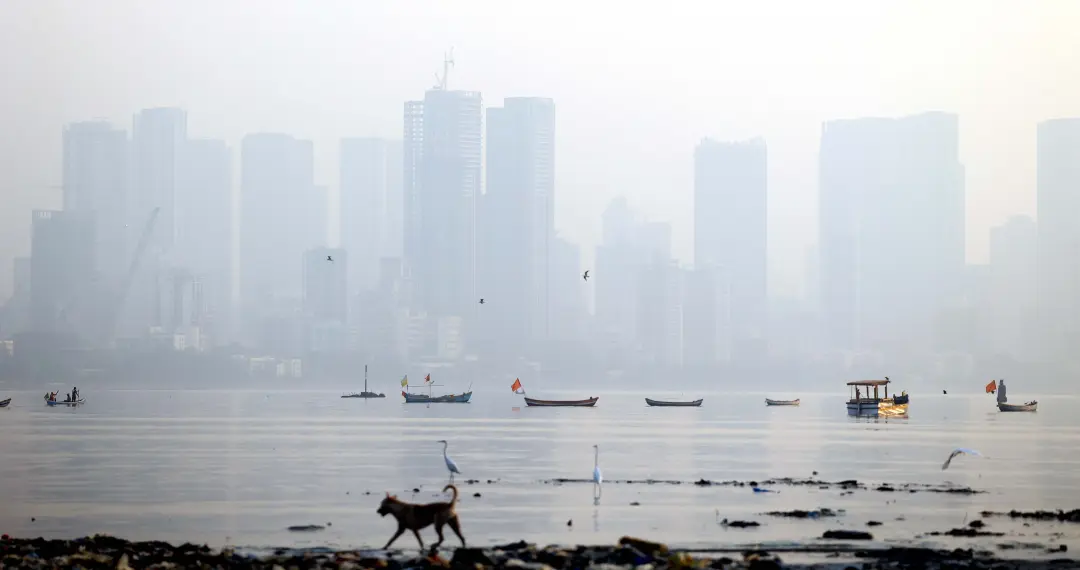
Mumbai spent Rs 573.88 crore of air grant; ranking slips
The BMC has spent Rs 573.88 crore, or 92.54 per cent, of the Rs 620.11 crore received under the 15th Finance Commission air-quality grant, RTI documents show. Of this, Rs 493.37 crore, or 79.56 per cent, was allocated to BEST for electric buses. BEST's fleet fell from 3,546 buses in 2021-22 to 2,532 in 2026-27, and about half of 2,100 buses ordered are undelivered. Mumbai ranked 28th of 48 cities in the 2026 clean air survey, down from 25th.
Source
Indian Express — Cities · read the original report ↗
Desk check · compared with the source
What the desk checked (5)
- BMC has spent Rs 573.88 crore, 92.54% of the Rs 620.11 crore received under the 15th Finance Commission air-quality grant. — Figure appears in source, attributed to documents obtained under the RTI Act by The Indian Express.
- Rs 493.37 crore (79.56%) was allocated to BEST for electric buses under a wet lease arrangement. — Figure appears in source and is internally consistent with the stated grant total.
- Mumbai ranked 28th among 48 cities in the 2026 national clean air survey, down from 25th in 2025. — Figure appears in source; survey findings said to have been announced earlier this month, no ranking agency named.
- BEST fleet fell from 3,546 buses in 2021-22 to 2,532 in 2026-27; about half of 2,100 ordered e-buses undelivered. — Attributed to source data and BEST officials; the 29% decline is consistent with the two fleet figures.
- No rule mandates a fixed share of the grant be spent on electric vehicles. — Attributed to an unnamed senior bureaucrat in the Union environment ministry.
Analysts’ view opinion
This is less an environment story than an accountability story about who answers for how Mumbai's civic money was spent. The combination — 92.54 per cent of a central grant spent, yet the city sliding from 10th in 2023 to 28th in 2026 — is the kind of line that converts easily into a campaign charge of "money gone, results missing". The administration's defence, that dust from major infrastructure work spiked pollution while it focused on vehicular emissions, is not politically weak, but the shrinking bus fleet undercuts it.
- With the BMC functioning under administrators rather than elected corporators, the question of who owns this spending record points straight at the state government.
- Allocating 79.56 per cent of the grant to electric buses — while the BMC's own plan named construction dust, road dust and open waste burning as the top pollution sources — hands the opposition a clean argument about misplaced priorities.
- The Union environment ministry official's statement that no rule mandated spending a set share on EVs sets up a classic Centre-versus-state blame exchange.
- That half of the 2,100 ordered buses are undelivered and the fleet fell from 3,546 to 2,532 touches daily commuter experience, which usually moves votes more than air-quality rankings do.
- The very small sums spent on research and hotspot identification, alongside the scientist's criticism, feed the charge that visible procurement was favoured over less visible groundwork.
What to watch — Watch whether opposition parties make the ranking slide and the BEST fleet contraction a central plank ahead of civic polls, and whether the Centre-state correspondence on redirecting the remaining Rs 46.23 crore becomes public.
The story does not establish that the spending pattern caused the ranking decline, nor does it settle who is responsible for the bus delivery delays or who will bear the political cost.
Deep dive
Research brief · 8 facts · 10 dates · exam-readyThe brief
Context
The 15th Finance Commission (FFC) air-quality grant is money routed by the Union finance ministry's Department of Expenditure to urban local bodies, on the recommendation of the Ministry of Environment, Forest and Climate Change, to improve air quality management in big cities. Mumbai's civic body, the BMC, received Rs 620.11 crore under this grant between 2020-21 and 2022-23 and directed nearly 80 per cent of it to BEST for electric buses on wet lease. RTI documents accessed by The Indian Express show Rs 573.88 crore spent by January this year, even as BEST's fleet has shrunk and Mumbai's rank in the national clean air survey has slipped to 28th of 48 cities in 2026. The BMC's own Mumbai Air Pollution Mitigation Plan had named construction and demolition dust, road dust and open waste burning as the top three pollution sources.
Key facts
- BMC has spent Rs 573.88 crore, or 92.54 per cent, of the Rs 620.11 crore received under the 15th Finance Commission air-quality grant, as of January this year.
- Rs 493.37 crore, or 79.56 per cent of the grant, was allocated to BEST to acquire electric buses under a wet lease arrangement.
- The Rs 620.11 crore was received between 2020-21 and 2022-23; Rs 46.23 crore remains unspent with the civic body.
- Unspent balance earmarked: Rs 21.47 crore for a waste processing plant, Rs 9.27 crore for green spaces, Rs 8.47 crore for piped natural gas lines at crematoriums.
- Only Rs 50 lakh was earmarked for expert and research services from IIT Bombay and Rs 36 lakh spent on identifying air pollution hotspots.
- BEST's fleet declined from 3,546 buses in 2021-22 to 2,532 in 2026-27, a fall of nearly 29 per cent.
- BEST awarded a tender for 2,100 electric buses in March 2022 with delivery due by August 2023; about half is still undelivered.
- Mumbai ranked 28th of 48 major metropolitan cities in the 2026 clean air survey, down from 25th in 2025; it was 28th in 2024 and 10th in 2023.
Timeline
- 2020-21 to 2022-23BMC receives Rs 620.11 crore under the 15th Finance Commission air-quality grant.
- 2021-22BEST fleet stands at 3,546 buses.
- March 2022BEST awards a tender for 2,100 electric buses, with delivery scheduled to be completed by August 2023.
- August 2023Scheduled deadline for completing delivery of the 2,100 electric buses; about half remain undelivered.
- 2023Mumbai ranks 10th in the national clean air survey.
- 2024The Indian Express first reports on utilisation of the grant funds; Mumbai ranks 28th in the clean air survey.
- 2025Mumbai ranks 25th in the national clean air survey.
- January this yearRTI documents show Rs 573.88 crore of the grant utilised, leaving Rs 46.23 crore.
- Earlier this monthFindings of the 2026 national clean air survey announced; Mumbai ranks 28th among 48 cities.
- 2026-27BEST fleet down to 2,532 buses.
Who has a stake
- Brihanmumbai Municipal Corporation (BMC) — Recipient urban local body; accountable for how the Rs 620.11 crore air-quality grant was allocated and whether it improved Mumbai's air.
- BEST (transport undertaking) — Received Rs 493.37 crore for electric buses on wet lease, but its fleet has shrunk and half the 2,100-bus order is undelivered.
- Union Ministry of Environment, Forest and Climate Change — Recommends disbursal of FFC funds; a senior bureaucrat says no rule mandates spending a fixed share on EVs and funds could be rerouted.
- Department of Expenditure, Union finance ministry — Allots the 15th Finance Commission air-quality grant to urban local bodies across states.
- Maharashtra state government — The environment ministry says it took multiple follow-ups with the state on utilisation of the funds.
- Mumbai residents and commuters — Face worsening clean-air rankings and a shrinking public bus fleet despite the crore-scale spending.
- Atmospheric scientist Dr Gufran Beig — Argues the funds should have gone to identifying local hotspots, localised solutions and research and design rather than e-bus procurement.
Why it matters
A dedicated central grant meant for air quality management was overwhelmingly spent on one intervention — electric buses — while the BMC's own mitigation plan named construction dust, road dust and waste burning as the biggest sources. With the fleet shrinking by nearly 29 per cent, half the buses undelivered and the city's clean air rank slipping to 28th, the case raises questions about outcome-linked spending of Finance Commission grants. It also shows how little of such money reaches source apportionment and research: Rs 36 lakh on identifying hotspots against Rs 493.37 crore on buses.
UPSC angle
Prelims pointers
- 15th Finance Commission air-quality grant is allotted by the Department of Expenditure, Union finance ministry, to urban local bodies.
- Disbursal to ULBs is based on recommendations of the Ministry of Environment, Forest and Climate Change (MoEFCC).
- BMC received Rs 620.11 crore (2020-21 to 2022-23); Rs 493.37 crore (79.56%) went to BEST electric buses on wet lease.
- Mumbai's national clean air survey rank: 10th (2023), 28th (2024), 25th (2025), 28th of 48 cities (2026).
- Mumbai Air Pollution Mitigation Plan lists construction and demolition dust, road dust and open burning of solid waste as the top three sources.
- BEST fleet: 3,546 buses (2021-22) to 2,532 (2026-27); 2,100 e-bus tender awarded March 2022, delivery due August 2023.
Mains framing
Mumbai's experience with the 15th Finance Commission air-quality grant illustrates a mismatch between diagnosis and expenditure in urban pollution governance. Although the BMC's own Mumbai Air Pollution Mitigation Plan identified construction and demolition dust, road dust and open burning of solid waste as the leading contributors, 79.56 per cent of the Rs 620.11 crore grant (Rs 493.37 crore) was routed to BEST for electric buses on wet lease, while only Rs 50 lakh was earmarked for IIT Bombay expert services and Rs 36 lakh spent on hotspot identification. The outcome has been poor on both counts: BEST's fleet fell from 3,546 buses in 2021-22 to 2,532 in 2026-27, about half of the 2,100 buses tendered in March 2022 remain undelivered past the August 2023 deadline, and Mumbai's clean air survey rank slid from 10th in 2023 to 28th among 48 cities in 2026. A civic official defends the choice as prioritising vehicular emissions during a phase of heavy infrastructure construction; the MoEFCC says no rule mandated EV spending and unusable funds should have been rerouted; scientists argue for localised source identification, mitigation design and research. The way forward suggested by the source is outcome-linked utilisation aligned to the city's own source apportionment findings, timely rerouting of funds when procurement stalls, and greater allocation to research, hotspot mapping and dust and waste-burning control.
Key terms
- 15th Finance Commission (FFC) air-quality grant
- Central grant given by the Department of Expenditure to urban local bodies for better air quality management, on MoEFCC recommendations.
- Urban Local Body (ULB)
- Municipal-level authority, such as the BMC, that receives and spends the FFC air-quality grant.
- BEST
- Mumbai's civic transport undertaking, which received Rs 493.37 crore of the grant to acquire electric buses.
- Wet lease
- Arrangement under which BEST acquired electric buses using the air-quality grant funds, rather than outright purchase.
- Mumbai Air Pollution Mitigation Plan
- BMC's own plan that identified construction and demolition dust, road dust and open burning of solid waste as the top three pollution contributors.
- National clean air survey
- Annual ranking of major metropolitan cities on air quality; Mumbai was 28th of 48 in 2026, down from 25th in 2025.
Practice questions
- Examine whether Finance Commission air-quality grants to urban local bodies are being spent in line with city-level source apportionment studies, using the case of Mumbai's Rs 620.11 crore grant.
- "Electrification of public transport alone cannot clean urban air." Critically analyse in the context of dust and waste-burning emissions in Indian metros.
- Discuss the accountability gaps in the disbursal and utilisation of centrally allotted grants to municipal bodies, and suggest measures to link such funds to measurable outcomes.
Grounded only in the source report — figures and dates are the source's, not inferred.