
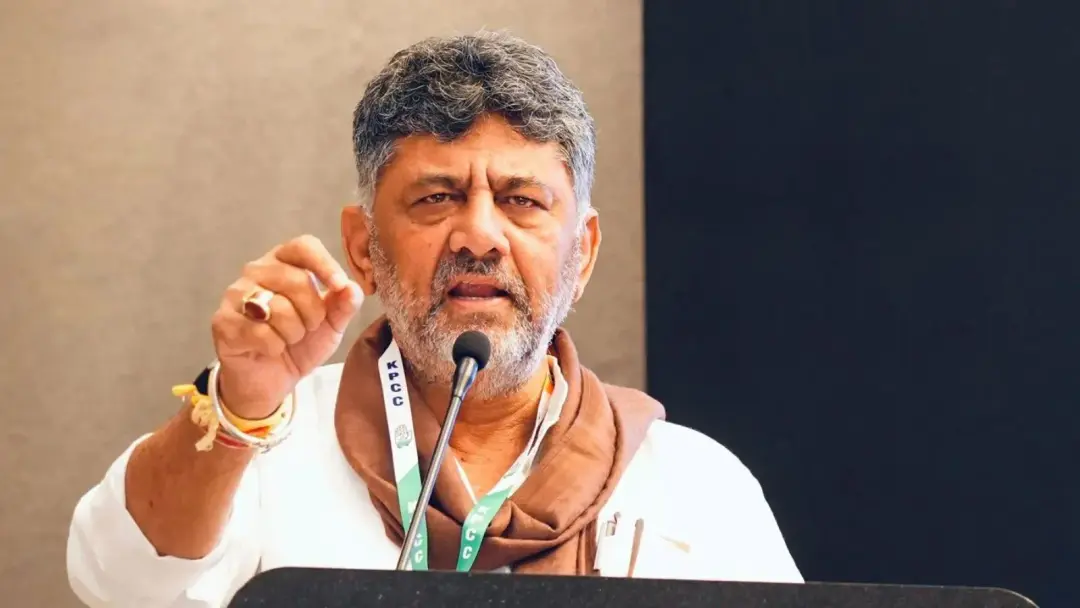
Shivakumar asks Modi to release 50% of drought relief sought
Karnataka Chief Minister D K Shivakumar wrote to Prime Minister Narendra Modi on Wednesday seeking interim release of 50 per cent of the Rs 3,705 crore assistance sought by the state, and advance release of the Centre's share of the second SDRF instalment. The state submitted its Kharif 2026 Drought Memorandum on September 10 seeking Rs 3,705.30 crore for 101 taluks. Now 177 taluks are declared drought-hit, with over 200 likely by September 30.
Source
Indian Express — Cities · read the original report ↗
Desk check · compared with the source
What the desk checked (5)
- Karnataka CM D K Shivakumar wrote to PM Narendra Modi on Wednesday seeking early release of 50% of Rs 3,705 crore assistance. — Attributed to Shivakumar's letter as described in the source; date given only as Wednesday.
- The state submitted its Kharif 2026 Drought Memorandum on September 10 seeking Rs 3,705.30 crore for 101 taluks. — Figure and date appear in the source, attributed to the Karnataka government's submission.
- An additional 76 taluks were declared drought-affected, taking the total to 177. — Figures appear in source, attributed to assessments under the Manual for Drought Management, 2020; arithmetic is internally consistent.
- Over 200 taluks are likely to be declared drought-hit by September 30. — Projection attributed to Shivakumar's letter, not an independently verified figure.
- Low Cauvery basin reservoir storage may affect drinking water in Bengaluru and neighbouring districts. — Attributed to the Chief Minister's letter; no supporting data cited in the source.
Analysts’ view opinion
This drought-relief letter is administrative on its face but political in its design. By writing to the Prime Minister while a four-day special legislature session on drought is under way, Chief Minister D K Shivakumar puts on record that the state has done its part — filed the memorandum, declared 177 taluks, asked for interim funds. If Delhi is slow, the blame can be shifted outward; if it moves fast, the Centre can claim credit for standing with farmers.
- Timing the letter to the special session reframes the drought debate from a test of his own administration into a Centre-state funding question.
- The rising taluk count — 101 to 177, with over 200 projected by September 30 — builds both urgency and the political case for a larger eventual demand.
- Flagging that the Centre's assessment process is "time-consuming" pre-positions responsibility for any delay without naming anyone.
- Invoking Bengaluru's drinking water risk widens the constituency from rural distress to urban voters, broadening the pressure on Delhi.
- For the Centre it is a two-sided choice: release quickly and earn goodwill, or cite due process and risk criticism over delay.
What to watch — Watch how quickly the Centre dispatches the inter-ministerial team and whether it advances the second SDRF instalment — and whether the state files a bigger revised memorandum after September 30.
The story establishes only the state's request; it does not show any Central response, disbursal timeline, or the political motives of either side.
Deep dive
Research brief · 8 facts · 4 dates · exam-readyThe brief
Context
Karnataka is facing a worsening drought during the Southwest Monsoon season, with a large cumulative rainfall deficit hitting agriculture, power generation, fodder supply and groundwater recharge. The state submitted a Kharif 2026 Drought Memorandum to the Centre on September 10 seeking Rs 3,705.30 crore for 101 taluks, but the number of drought-declared taluks has since risen to 177. Chief Minister D K Shivakumar has written to Prime Minister Narendra Modi asking for 50 per cent of that amount as interim assistance and for advance release of the Centre's share of the second SDRF instalment, arguing the standard central assessment process is too slow for a rapidly evolving drought.
Key facts
- Karnataka CM D K Shivakumar wrote to PM Narendra Modi on Wednesday seeking early release of 50 per cent of the Rs 3,705 crore assistance sought by the state.
- The Kharif 2026 Drought Memorandum was submitted on September 10, seeking Rs 3,705.30 crore in Central assistance for 101 taluks initially declared drought-hit.
- An additional 76 taluks were later declared drought-affected, taking the total to 177 taluks.
- Shivakumar warned that over 200 taluks are likely to be officially declared drought-hit by the end of the Southwest Monsoon on September 30.
- The additional taluks were declared after scientific assessments under the Manual for Drought Management, 2020.
- The CM also sought advance release of the Central share of the second instalment of the State Disaster Response Fund (SDRF).
- The letter was sent amid a special four-day session of the Karnataka legislature convened on the worsening drought situation.
- Low reservoir storage in the Cauvery basin is expected to affect drinking water availability in Bengaluru and neighbouring districts ahead of summer.
Timeline
- September 10Karnataka submits its Kharif 2026 Drought Memorandum seeking Rs 3,705.30 crore for 101 drought-hit taluks.
- After the memorandum76 more taluks declared drought-affected after assessments under the Manual for Drought Management, 2020, raising the total to 177.
- Wednesday (date not stated in the source)CM Shivakumar writes to PM Modi seeking 50 per cent interim release and advance SDRF second instalment, during a special four-day legislature session.
- September 30End of the Southwest Monsoon; over 200 taluks expected to be declared drought-hit by then.
Who has a stake
- Karnataka government / CM D K Shivakumar — Needs early central funds to sustain input subsidy, drinking water, livestock and other drought-relief measures.
- Union government / PM Narendra Modi — Must decide on interim release of 50 per cent of the memorandum amount and advance SDRF disbursal pending formal assessment.
- Farmers in drought-hit taluks — Await input subsidy assistance for crop loss and fodder support amid rainfall deficit.
- Residents of Bengaluru and neighbouring districts — Face drinking water risk due to low reservoir storage in the Cauvery basin ahead of summer.
- Inter-ministerial central team, NEC sub-committee, high-level committee — Constitute the formal assessment and approval chain that the state says is time-consuming.
Why it matters
The dispute is about the speed of India's disaster-relief architecture: a rapidly spreading drought outpaces a multi-stage central assessment process, leaving farmers and towns waiting for money. With reservoir levels in the Cauvery basin low, the outcome affects not just crop losses but drinking water for Bengaluru in the coming summer.
UPSC angle
Prelims pointers
- Drought declaration in Karnataka was based on scientific assessments under the Manual for Drought Management, 2020.
- SDRF: State Disaster Response Fund; the Centre releases its share in instalments, and Karnataka sought the second instalment in advance.
- Central relief process: inter-ministerial central team assessment, report to a sub-committee of the national executive committee, then high-level committee approval.
- Karnataka sought Rs 3,705.30 crore for 101 taluks in its Kharif 2026 Drought Memorandum submitted on September 10.
- Drought-declared taluks in Karnataka rose from 101 to 177 after 76 more were added; over 200 expected by September 30.
- Southwest Monsoon season ends on September 30.
Mains framing
Karnataka's appeal for a 50 per cent interim release of its Rs 3,705.30 crore drought memorandum illustrates a structural mismatch between the tempo of climatic distress and the pace of fiscal federal procedure. The immediate cause is a cumulative rainfall deficit during the Southwest Monsoon that has hit agriculture, power generation, fodder availability and groundwater recharge, with drought-declared taluks rising from 101 to 177 and possibly beyond 200 by September 30. The procedural cause is the sequential central mechanism the state itself acknowledges as robust but slow: on-ground verification by an inter-ministerial central team, scrutiny by a sub-committee of the national executive committee, and final clearance by a high-level committee. The implications are cumulative, as delayed input subsidy, drinking water and livestock protection spending can convert a monsoon failure into a summer water crisis, with low Cauvery basin storage threatening Bengaluru's supply. The state's suggested way forward is a two-track approach: interim disbursal of half the requested amount pending formal review, plus advance release of the Centre's share of the second SDRF instalment, so that relief begins before assessment concludes. Any wider reform argument must rest on this evidence of assessment lag rather than assumed political motives.
Key terms
- Kharif 2026 Drought Memorandum
- Karnataka's formal request to the Centre, submitted September 10, seeking Rs 3,705.30 crore for 101 drought-hit taluks.
- SDRF (State Disaster Response Fund)
- Fund for state disaster relief to which the Centre contributes a share in instalments; Karnataka sought the second instalment in advance.
- Manual for Drought Management, 2020
- Framework of scientific criteria used by Karnataka to assess and declare 76 additional taluks as drought-affected.
- Inter-ministerial central team
- Central team that conducts on-ground assessment of a state's disaster claims and reports to a sub-committee of the national executive committee.
- Input subsidy assistance
- Relief paid to farmers for crop loss, one of the heads for which Karnataka wants interim funds.
- Taluk
- Administrative sub-district unit; the unit at which Karnataka declares drought, now 177 in number.
Practice questions
- Examine how the multi-stage central assessment process for disaster relief affects the timeliness of drought response, using Karnataka's 2026 request as an illustration.
- Discuss the role of the State Disaster Response Fund in centre-state disaster financing and the case for interim or advance releases during rapidly evolving droughts.
- How does a deficient Southwest Monsoon translate into cascading effects on agriculture, power, fodder and urban drinking water supply? Illustrate with reference to the Cauvery basin.
Grounded only in the source report — figures and dates are the source's, not inferred.