
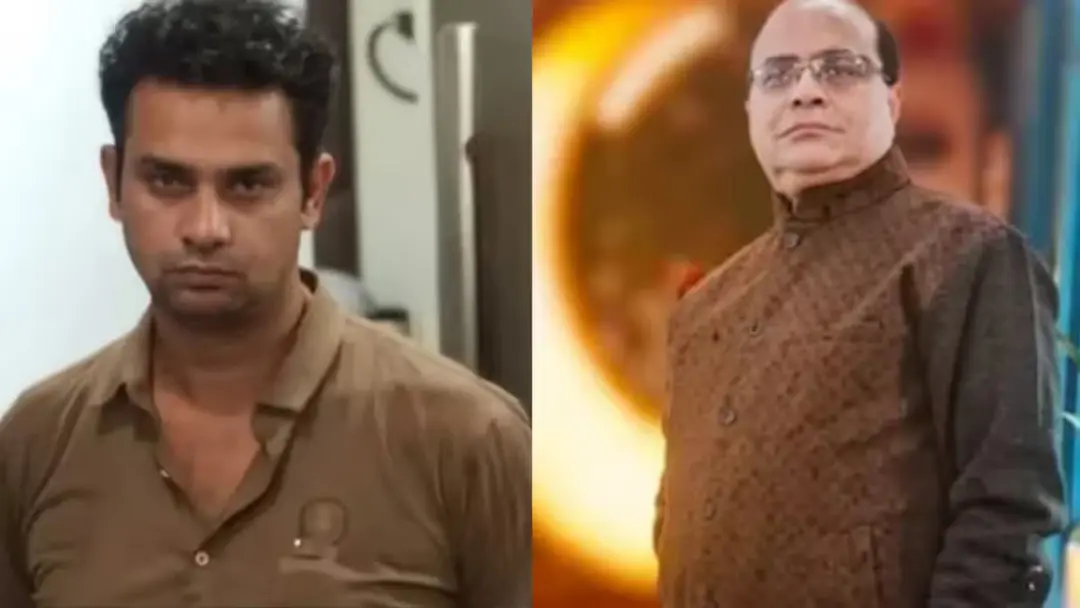
Son arrested in Kanpur trader's murder case, say police
Police have arrested Subrat, son of Kanpur trader Vineet Minocha, in connection with his father's murder. Family servant Vishal Gautam told police during custodial questioning that Subrat offered him Rs 6 lakh to kill his father and asked him to name Subrat's wife Shalu if caught. Vineet, 60, was stabbed to death at his Ratan Orbit flat in Kalyanpur on September 5. Shalu, Vishal and Rajkishore were arrested the next day. Commissioner Raghubir Lal cited circumstantial and electronic evidence, including call records.
Source
News18 — India · read the original report ↗
Desk check · some claims need care
What the desk checked (5)
- Subrat, son of trader Vineet Minocha, was arrested over his father's murder. — Attributed to police in the source; arrest stated as fact by police.
- Servant Vishal Gautam said Subrat offered him Rs 6 lakh to kill his father and told him to name Subrat's wife Shalu if caught. — Attributed to Vishal's custodial statement, which the source says he changed from an earlier claim naming Shalu; uncorroborated.
- Vineet, 60, was stabbed to death in his apartment at Ratan Orbit, Kalyanpur, on September 5; Shalu, Vishal and Rajkishore were arrested the next day. — Dates, age and place appear consistently in the source.
- Subrat disclosed debts of around Rs 15 lakh and had earlier arranged a theft at his own shop through Vishal. — Attributed to police; figure appears in source, no independent documentation cited.
- Blood-stained cloth, a gamchha and the flat key were recovered from a vacant plot on Rajkishore's information. — Attributed to police recovery account; unverified externally.
Analysts’ view opinion
The prosecution's starting point here is a statement made by a co-accused, Vishal Gautam, during custodial questioning — one of the weakest categories of material under Indian evidence law. Confession-type statements made to police, especially those implicating a co-accused, cannot by themselves sustain a conviction without independent corroboration, which is why the call records, the new SIM, the flat key and the blood-stained cloth will carry the real weight in court. The fact that Vishal changed his account — first naming Shalu, then Subrat — hands the defence an obvious line of attack at trial.
- Confessions made to police are barred as direct proof under Indian evidence law; only discoveries traceable to such statements (the key, the gamchha and the blood-stained cloth allegedly recovered on Rajkishore's information) are admissible, and only to a limited extent.
- Courts have consistently treated the statement of one accused implicating another with caution, requiring independent corroboration before it can be acted upon.
- The claim that the first call from a newly bought SIM went to Subrat, along with chats, is central for the prosecution — but electronic records must clear statutory certification and authentication requirements.
- A contract-killing allegation typically opens up charges of murder alongside criminal conspiracy and abetment; the alleged Rs 15 lakh debt and the staged shop theft go to motive, which can strengthen suspicion but cannot substitute for proof.
- Procedurally, expect remand, a charge sheet (normally within the statutory 90-day window), bail applications and then framing of charges — until then every accused retains the presumption of innocence.
What to watch — Watch which sections are invoked against Subrat in the charge sheet, how police explain Vishal's shifting statement, and whether the electronic evidence is forensically authenticated — the bail hearings will be the first real test of the case's strength.
Everything here is a police allegation at the investigation stage; no court has found Subrat or Shalu guilty, the accused's own version is absent from the story, and this note is analysis, not legal advice.
Deep dive
Research brief · 8 facts · 6 dates · exam-readyThe brief
Context
Kanpur trader Vineet Minocha, 60, was stabbed to death inside his flat at Ratan Orbit in Kalyanpur on September 5. Police initially arrested his daughter-in-law Shalu along with alleged contract killers Vishal Gautam (a family servant) and Rajkishore the next day. Subsequently, during custodial questioning, Vishal alleged that it was Vineet's son Subrat who had offered him Rs 6 lakh for the killing and had told him to name Shalu if caught. Kanpur Police Commissioner Raghubir Lal said circumstantial and electronic evidence, including call records, led to Subrat's arrest.
Key facts
- Vineet Minocha, 60, a Kanpur trader, was stabbed to death inside his apartment at Ratan Orbit, Kalyanpur, on September 5.
- Shalu (Subrat's wife) and alleged contract killers Vishal Gautam and Rajkishore were arrested the day after the murder.
- Family servant Vishal Gautam told police Subrat offered him Rs 6 lakh to kill his father and told him to implicate Shalu if caught.
- Vishal had initially alleged that Shalu offered him the same Rs 6 lakh for the murder, before changing his account.
- Police said Vishal bought a new SIM card a few days before the murder and made his first call from that number to Subrat.
- Subrat's arrest followed a confrontation with Vishal during the 24-hour custody remand of Vishal, Rajkishore and Shalu.
- Police said Subrat disclosed a debt of around Rs 15 lakh, and that he had earlier arranged a theft at his own shop through Vishal, causing frequent disputes with his father.
- Acting on Rajkishore's information, police recovered a blood-stained cloth, a gamchha and the key to Vineet's flat from a vacant plot in Ratan Orbit.
Timeline
- A few days before the murderVishal Gautam obtained a new SIM card and made his first call from the new number to Subrat, per police.
- September 5Vineet Minocha, 60, stabbed to death inside his flat at Ratan Orbit, Kalyanpur.
- September 6 (the following day)Police arrest Shalu and alleged contract killers Vishal Gautam and Rajkishore.
- During 24-hour custody remand of the three accusedPolice confront Subrat with Vishal; Subrat is arrested after Vishal's statement implicating him.
- During investigationShalu, Vishal and Rajkishore taken to Z Square Mall, Kalyanpur police station and IIT police outpost to reconstruct events; recoveries made from a vacant plot.
- September 24, 2026 (report published)Police say probe continues into the change in Vishal's statement and the roles of Subrat and Shalu.
Who has a stake
- Vineet Minocha (deceased trader) — The 60-year-old victim stabbed to death in his own flat; justice in his killing is the object of the probe.
- Subrat (son of the victim) — Arrested after police say evidence, including call records and chats, points to his involvement; alleged Rs 15 lakh debt cited.
- Shalu (Subrat's wife) — Arrested a day after the murder on Vishal's initial allegation; police now probing new information and whether she was framed.
- Vishal Gautam (family servant) and Rajkishore — Arrested as alleged contract killers; Vishal's shifting statement is central to the case and itself under scrutiny.
- Kanpur Police / Commissioner Raghubir Lal — Must build a case resting on circumstantial and electronic evidence and explain the change in the key witness's account.
- The couple's son (minor, per Shalu's query in custody) — A child whose both parents are now implicated in the case.
Why it matters
The case shows how modern investigations increasingly turn on electronic trails — new SIM cards, call records and chats — rather than eyewitnesses alone, especially in alleged contract killings within a family. It also highlights the fragility of confessional statements in police custody: the same accused named two different people as the paymaster, raising questions about how courts weigh such retractions. For readers, it is a reminder that arrest is not conviction, and that the quality of corroborating evidence decides the outcome.
UPSC angle
Prelims pointers
- Victim: Kanpur trader Vineet Minocha, 60, stabbed to death at Ratan Orbit flat, Kalyanpur, on September 5.
- Kanpur Police Commissioner named in the case: Raghubir Lal; Kanpur has a Police Commissionerate system.
- Alleged contract amount offered to the servant: Rs 6 lakh; Subrat's disclosed debt: around Rs 15 lakh.
- Four persons arrested: Shalu, Vishal Gautam, Rajkishore (day after murder) and Subrat (later).
- Recoveries from a vacant plot at Ratan Orbit: blood-stained cloth, a gamchha and the flat key.
- Electronic evidence relied upon: call records from a newly purchased SIM card and chats.
Mains framing
The Kanpur murder case illustrates the evidentiary architecture of modern criminal investigation in India and its weak points. With no independent eyewitness reported, the police case rests on a co-accused's custodial statement, circumstantial evidence, recoveries pointed out by another accused, and electronic footprints — a new SIM card whose first call was allegedly to the arrested son, plus chats and call detail records. The twist that the key accused first named the daughter-in-law and then the son, allegedly on the son's own instruction to implicate her, shows how custodial statements can be shaped by prior planning or by the conditions of interrogation, and why Indian law treats confessions to police with suspicion while allowing recovery-based disclosures and independent corroboration. Motive here is presented as financial — an alleged Rs 15 lakh debt and a staged theft at the family shop that soured father-son relations. The way forward lies in scientific corroboration: forensic matching of the blood-stained cloth and gamchha, certified call and chat records, reconstruction of movements, and a charge sheet that does not depend solely on a statement that has already changed once, so that both wrongful implication and wrongful escape are avoided.
Key terms
- Custodial questioning / custody remand
- Period in which police interrogate an arrested person; here a 24-hour remand of Vishal, Rajkishore and Shalu during which Subrat was confronted.
- Circumstantial evidence
- Indirect evidence from which a fact is inferred, relied on here alongside electronic records rather than direct eyewitness testimony.
- Electronic evidence / call records
- Digital material such as call detail records and chats; police cited a call from Vishal's new SIM to Subrat.
- Contract killing
- Murder committed for payment; police allege Vishal and Rajkishore were hired for Rs 6 lakh.
- Gamchha
- A thin cotton towel; police allege Shalu gave one to Vishal to cover his face during the murder, and it was later recovered.
- Police Commissioner
- Head of a city police commissionerate; Raghubir Lal holds the post in Kanpur and announced the findings.
Practice questions
- Custodial statements of co-accused are often the starting point of Indian murder investigations but a weak basis for conviction. Discuss with reference to the need for forensic and electronic corroboration.
- How has electronic evidence such as call detail records and chat logs changed the investigation of crimes in India? Examine the safeguards needed for its reliability in court.
- Examine the investigative and legal issues that arise when a key accused changes his statement and names a different person as the conspirator.
Grounded only in the source report — figures and dates are the source's, not inferred.