
Jharkhand SIR: September 30 final deadline for claims, objections
The deadline for filing claims and objections under Jharkhand's SIR of electoral rolls has been extended for the second and final time, to September 30. The initial deadline was September 4, later extended to September 15. When the draft roll was published on August 5, names of 43,61,987 voters were left out under absent, shifted, dead and duplicate (ASDD) categories. The EC said notices would be issued to 63,24,116 voters for hearings. CEO K Ravi Kumar said filing Form 7 does not automatically delete a name.
Source
Indian Express — India · read the original report ↗
Desk check · compared with the source
What the desk checked (5)
- Deadline for claims and objections under Jharkhand SIR extended to September 30, described as the second and final extension. — Attributed to the Chief Electoral Officer's office; figure and date appear in source.
- 43,61,987 voters were left out under absent, shifted, dead and duplicate (ASDD) categories when the draft roll was published on August 5. — Figure appears in source with sub-category breakdown; no independent verification possible.
- Notices would be issued to 63,24,116 voters for hearings. — Attributed to the Election Commission in the source.
- Filing Form 7 does not automatically delete a voter's name; inquiry and hearing are required. — Attributed to CEO K Ravi Kumar.
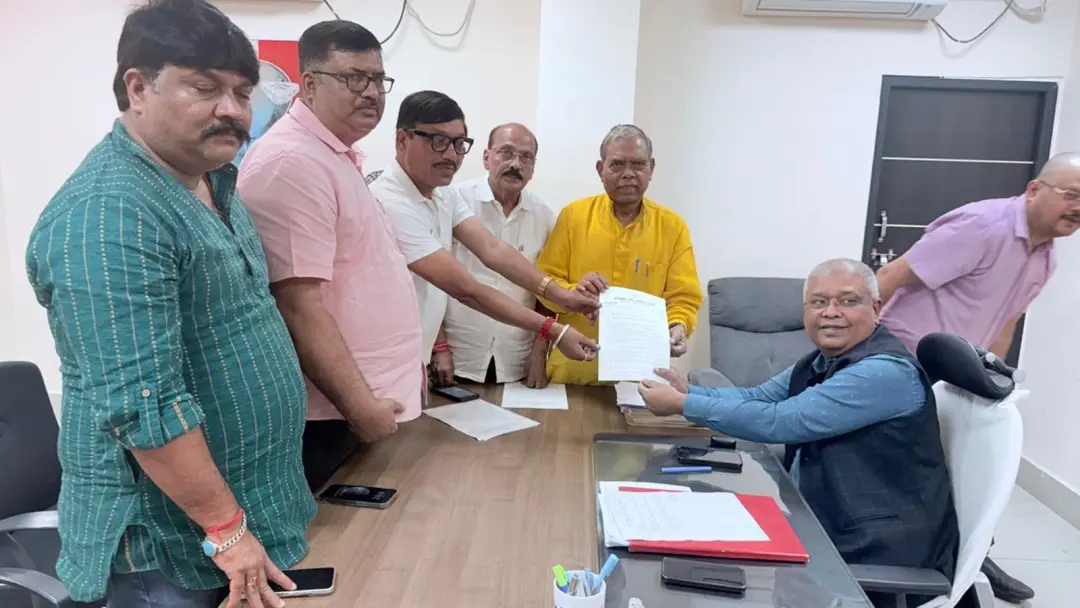
- Congress leaders, including SIR convener Suryakant Shukla, submitted a memorandum on September 11 seeking an extension. — Attributed to Shukla in a direct quote to The Indian Express.
Analysts’ view opinion
The special revision of Jharkhand's electoral rolls has moved from being an administrative exercise to a political battleground. Numbers of this scale — 43.6 lakh names left out under the absent/shifted/dead/duplicate heads and hearing notices planned for 63.2 lakh voters — are too large for any party to ignore. The second extension, coming after a Congress memorandum, hands the opposition a modest win to claim, while also letting the EC demonstrate that the process is accommodating stakeholders.
- Congress is well placed to present the extension as the fruit of its pressure, which is useful for mobilising booth-level workers.
- By labelling this the "final" extension, the EC has closed the door on further demands — meaning any grievance after September 30 will land straight in the political arena.
- That the CEO had to publicly clarify that a Form 7 does not mean automatic deletion suggests anxieties exist about how that objection route could be used.
- The real political impact will only become clear once it is known which regions and communities saw the heaviest deletions; migrant-heavy and tribal areas could plausibly show up more in the "absent/shifted" category.
- The same exercise gives both sides a usable line — one can campaign on "protecting the right to vote", the other on "removing ineligible names".
What to watch — Watch how many names are restored and how many deletions survive in the final roll after September 30 — that will shape the next political and possibly legal moves by the parties.
The story does not establish how many of the deletions were wrongful, which constituencies were most affected, or what the formal positions of parties such as the BJP and JMM are.
Deep dive
Research brief · 8 facts · 5 dates · exam-readyThe brief
Context
The Election Commission is conducting a Special Intensive Revision (SIR) of electoral rolls in Jharkhand, under which a draft voter list was published on August 5 and citizens can file claims and objections to correct it. Names of over 43 lakh voters were excluded in the draft under the absent, shifted, dead and duplicate (ASDD) categories, and the EC said notices would go to more than 63 lakh voters for hearings. Amid requests from political parties and a heavy inflow of Forms 6, 7 and 8, the Chief Electoral Officer has extended the claims-and-objections deadline for a second and final time to September 30.
Key facts
- The deadline for claims and objections under Jharkhand's SIR has been extended for the second and final time, to September 30.
- The initial deadline was September 4, first extended to September 15 (Tuesday).
- The draft electoral roll was published on August 5, leaving out 43,61,987 voters under ASDD categories.
- Of the excluded voters, 7,63,903 were classified as dead and 15,92,194 as shifted.
- 14,50,810 were classified as absent or untraceable and 68,283 as duplicate.
- The EC said notices would be issued to 63,24,116 voters for hearings as part of the claims and objections process.
- CEO K Ravi Kumar said eligible citizens missing from the draft roll can submit Form 6 with the required declaration via ECINET or their Booth Level Officer by September 30.
- Congress leaders, including state general secretary and SIR convener Suryakant Shukla, submitted a memorandum on September 11 seeking an extension.
Timeline
- August 5Draft electoral roll published in Jharkhand; 43,61,987 names left out under ASDD categories.
- September 4Initial deadline for filing claims and objections.
- September 11Congress leaders submit a memorandum to election officials seeking an extension of the deadline.
- September 15 (Tuesday)First extended deadline; CEO's office announces a further extension to September 30.
- September 30Second and final deadline for filing Forms 6, 7 and 8 for inclusion, objection or correction.
Who has a stake
- Election Commission of India / Jharkhand CEO's office — Must ensure no eligible citizen is left out and no ineligible person is included; managing hearings for 63,24,116 voters.
- Chief Electoral Officer K Ravi Kumar — Announced the extension and clarified that filing Form 7 does not lead to automatic deletion of a name.
- 43,61,987 voters excluded under ASDD — Risk of losing voting rights unless they file claims or corrections before September 30.
- Congress (state general secretary and SIR convener Suryakant Shukla) — Sought more time so claims and objections are handled properly and eligible voters are not left out.
- Electoral Registration Officers and Booth Level Officers — Must receive forms, conduct inquiry and hearings before any final decision on deletion.
Why it matters
Electoral rolls determine who can vote, and the exclusion of over 43 lakh names in Jharkhand's draft roll makes the claims-and-objections window decisive for millions of citizens. Repeated extensions and party memoranda show how roll revision has become a politically contested administrative exercise. The CEO's clarification that Form 7 does not mean automatic deletion is a safeguard against misuse of objections.
UPSC angle
Prelims pointers
- Jharkhand draft electoral roll published on August 5; final claims and objections deadline September 30.
- ASDD categories = absent, shifted, dead, duplicate; 43,61,987 names excluded in the draft roll.
- Form 6 – inclusion of a new/missing voter; Form 7 – objection or deletion; Form 8 – correction, change of address or transfer of registration.
- ECINET and Booth Level Officers (BLOs) are the channels for submitting forms.
- Electoral Registration Officer (ERO) must conduct inquiry and hearing before deleting a name on a Form 7 objection.
- EC said notices for hearings would be issued to 63,24,116 voters in Jharkhand.
Mains framing
Jharkhand's SIR illustrates the tension between purifying electoral rolls and protecting the franchise. The draft roll excluded 43,61,987 names under absent, shifted, dead and duplicate heads, and the EC proposed hearings for 63,24,116 voters — a scale of verification that strains field machinery of BLOs and EROs and creates a real risk that genuine voters, especially migrants and the untraceable, are dropped for want of timely claims. The twin extensions of the deadline, from September 4 to September 15 and then to September 30, were driven by stakeholder requests, including a Congress memorandum of September 11, and by the volume of Forms 6, 7 and 8 received, suggesting the original timeline underestimated citizen response. The CEO's assurance that Form 7 does not cause automatic deletion, and that inquiry and hearing must precede any decision, is the key procedural safeguard against politically motivated objections. The way forward, as the source indicates, lies in wide awareness so citizens do not wait till the last date, use of digital channels such as ECINET alongside BLO outreach, and strict adherence to the prescribed hearing process so that the stated aim — no eligible citizen left out, no ineligible person included — is met in practice.
Key terms
- SIR (Special Intensive Revision)
- The intensive revision of electoral rolls being carried out in Jharkhand, aimed at including all eligible citizens and excluding ineligible ones.
- ASDD
- Absent, shifted, dead and duplicate — the categories under which 43,61,987 names were left out of Jharkhand's draft roll.
- Form 6 / Form 7 / Form 8
- Form 6 for inclusion of a missing name, Form 7 for objection or deletion, Form 8 for correction, change of address or shifting registration.
- ECINET
- The Election Commission's online platform through which voters can submit forms during roll revision.
- Electoral Registration Officer (ERO)
- Official who must follow the prescribed process of inquiry and hearing before finally deciding on deletion of a voter's name.
- Booth Level Officer (BLO)
- Field-level election official through whom citizens can submit Form 6 and other forms.
Practice questions
- Discuss the administrative and democratic challenges of large-scale electoral roll revision, using the Jharkhand SIR and the exclusion of 43,61,987 names as a case study.
- What procedural safeguards exist against wrongful deletion of voters during roll revision? Examine the role of the Electoral Registration Officer and the claims-and-objections process.
- Repeated extension of deadlines in roll revision reflects both responsiveness and poor planning. Critically examine with reference to Jharkhand's SIR timeline.
Grounded only in the source report — figures and dates are the source's, not inferred.