
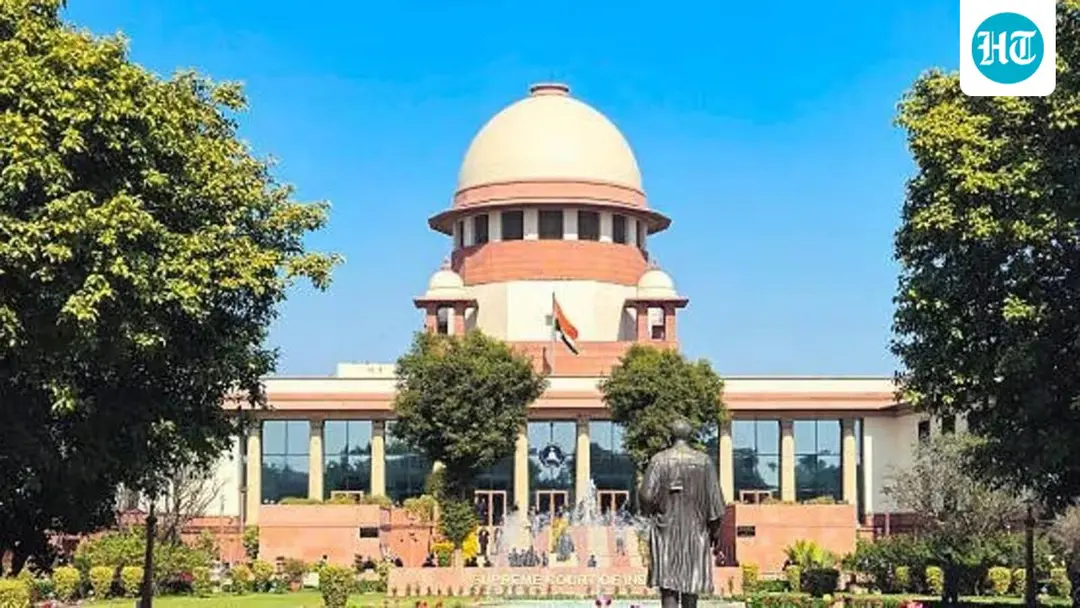
Supreme Court orders child's custody to adoptive parents in Telangana
The Supreme Court has ordered that a two-year-old boy be handed to his adoptive parents in Telangana, holding that a biological mother giving up her child due to financial constraints does not by itself create a presumption of child sale. The bench of justices MM Sundresh and PB Varale set aside a high court order and directed Shishu Griha, Hyderabad, to hand over custody. The state said the couple admitted paying ₹6 lakh through one 'Vijayalaxmi'. The court said its order does not affect trafficking investigations involving other children.
Source
Hindustan Times — India · read the original report ↗
Desk check · compared with the source
What the desk checked (5)
- A bench of justices MM Sundresh and PB Varale ordered Shishu Griha, Hyderabad, to hand the two-year-old boy to his adoptive parents. — Attributed to the Supreme Court order passed on Thursday, with direct quotations reproduced in the source.
- Financial constraints of a biological mother do not by themselves create a presumption that she sold the child. — Direct quotation from the bench's order as it appears in the source.
- The adoptive parents admitted paying ₹6 lakh to procure the infant through one 'Vijayalaxmi'. — Attributed to the Telangana government's submission through advocate Sravan Kumar Karanam; not independently established in the source.
- The trafficking network extended to Gujarat, Maharashtra, Karnataka and Tamil Nadu. — Attributed to police investigation as submitted by the state; figures and extent not otherwise sourced.
- The Telangana High Court refused to release the child in June 2025, citing non-compliance with the Juvenile Justice Act, 2015 and CARA. — Stated in the source as the high court's reasoning; consistent with the rest of the account.
Analysts’ view opinion
This is a court order, but the political weight of it falls on the Telangana state machinery. The state argued this was not an isolated custody matter but part of an inter-state trafficking network — and lost that argument, which sharpens questions about how the Child Welfare Committee and police handled the case. Yet the bench's clarification that the order does not affect the wider probe is a meaningful cushion for the government, making this a ruling both sides can plausibly claim.
- The rejection of the state's submission gives opposition voices and child-rights advocates an opening to question the CWC's forcible removal of the child in February 2025.
- The principle that financial hardship alone cannot imply a sale puts administrative pressure on the state to revisit how adoption-related cases are screened.
- By insulating the trafficking investigation, the court lets the government keep its 'tough on trafficking' narrative intact.
- The officially recorded ₹6 lakh payment through an alleged middle figure feeds the broader criticism that legal adoption channels such as CARA remain under-used and hard to access.
- The state's claim that the network extends to Gujarat, Maharashtra, Karnataka and Tamil Nadu could turn this into a demand for inter-state coordination rather than a single-state issue.
What to watch — Watch whether Telangana announces any review of CWC procedures or adoption-vetting norms, and how quickly the investigations involving the other children move forward.
The story does not establish whether the trafficking allegations will be proven, and it records no reaction from any political party — the political reading here is inference, not reported fact.
Deep dive
Research brief · 8 facts · 6 dates · exam-readyThe brief
Context
A married Telangana couple, childless since their marriage in 2012, took in a boy born in April 2024 from a financially strained single mother through a private adoption deed. The state's Child Welfare Committee forcibly removed the child in February 2025, and the Telangana High Court refused to return him in June 2025, holding the adoption did not comply with the Juvenile Justice (Care and Protection of Children) Act, 2015 or go through CARA, and pointing to pending trafficking investigations. On appeal, a Supreme Court bench of justices MM Sundresh and PB Varale set aside that order and directed Shishu Griha, Hyderabad, to hand the child to the adoptive parents, while insulating the wider inter-state trafficking probe from its ruling.
Key facts
- The Supreme Court ordered the handover of a two-year-old boy to his adoptive parents in Telangana; the bench comprised justices MM Sundresh and PB Varale, order passed on Thursday.
- The court held that a biological mother giving a child in adoption due to financial constraints would 'ipso facto not lead to the presumption that she sold the child to the adoptive parents'.
- The child was born in April 2024; the adoption deed was signed by the biological mother on April 30, 2024.
- The Child Welfare Committee forcibly took the child away in February 2025; the high court refused to release the child in June 2025.
- The court noted the adoptive parents vaccinated the child regularly, celebrated his first birthday and enrolled him in the Aadhaar database.
- The Telangana government, through advocate Sravan Kumar Karanam, said the couple admitted paying Rs 6 lakh to procure the infant through one 'Vijayalaxmi', stated to be part of a trafficking chain.
- Police investigation, as submitted by the state, showed the network extended beyond Telangana to Gujarat, Maharashtra, Karnataka and Tamil Nadu.
- The high court had held the adoption deed was neither in accordance with the Juvenile Justice (Care and Protection of Children) Act, 2015 nor executed through the Central Adoption Resource Authority (CARA).
Timeline
- 2012The petitioner couple got married; they failed to conceive a child for 12 years.
- April 2024The boy is born to a single mother who already had a girl child; the child is given to the couple soon after birth.
- April 30, 2024The biological mother signs the adoption deed voluntarily giving the child in adoption.
- February 2025The state's Child Welfare Committee forcibly takes the child away from the couple.
- June 2025The high court refuses to release the child, citing non-compliance with the JJ Act, 2015 and CARA, and pending investigations.
- Thursday (date of order, year not stated in the source)Supreme Court sets aside the high court order and directs Shishu Griha, Hyderabad, to hand over custody to the adoptive parents.
Who has a stake
- The adoptive couple (petitioners) — Married in 2012 and unable to conceive for 12 years; sought restoration of custody of the child they had cared for since birth.
- The two-year-old child — His custody, stability and best interest are the central question, having been moved between adoptive parents and institutional care.
- The biological mother — A single parent with another girl child who gave the infant in adoption due to financial inability to raise two children; her maternity was undisputed.
- Telangana government / police — Argued release was not in the child's best interest, citing an organised inter-state child trafficking network and separate FIRs on infant sales.
- Child Welfare Committee and Shishu Griha, Hyderabad — CWC removed the child in February 2025; Shishu Griha held custody and was directed to hand the child over.
- Central Adoption Resource Authority (CARA) — The statutory route for adoption that the high court found was bypassed in this case.
Why it matters
The ruling draws a line between poverty-driven relinquishment of a child and commercial sale, which matters for thousands of informal adoptions that bypass the statutory CARA route. At the same time, the court expressly kept the wider inter-state trafficking probe untouched, signalling that individual custody relief cannot become a shield for organised infant sale networks spanning Telangana, Gujarat, Maharashtra, Karnataka and Tamil Nadu.
UPSC angle
Prelims pointers
- Adoption in India is regulated under the Juvenile Justice (Care and Protection of Children) Act, 2015, with the Central Adoption Resource Authority (CARA) as the statutory body.
- Child Welfare Committees (CWCs) function under the JJ Act, 2015 and handle children in need of care and protection.
- Supreme Court bench in the case: justices MM Sundresh and PB Varale.
- Shishu Griha, Hyderabad was directed to hand over the child's custody to the adoptive parents.
- The state alleged Rs 6 lakh was paid through one 'Vijayalaxmi' to procure the infant.
- Alleged trafficking network spanned Telangana, Gujarat, Maharashtra, Karnataka and Tamil Nadu.
Mains framing
The case exposes the gap between India's statutory adoption framework under the Juvenile Justice (Care and Protection of Children) Act, 2015 and CARA, and the reality of private, deed-based transfers of infants driven by poverty on one side and childlessness on the other. The high court prioritised procedural legality and the pending trafficking probe, holding institutional custody with the CWC safer; the Supreme Court prioritised the demonstrated duty of care by the adoptive parents, refusing to convert the mother's financial distress into an automatic presumption of sale. The tension is between the best interest of the individual child and the deterrence needed against organised infant procurement, which the state said operated through agents and middlemen across five states and involved an admitted payment of Rs 6 lakh. A grounded way forward, on the facts of the source, lies in faster and more accessible legal adoption so that distressed mothers and aspiring parents are not pushed to middlemen, alongside uninterrupted investigation of the trafficking chain, which the court expressly left open for the other children involved.
Key terms
- Juvenile Justice (Care and Protection of Children) Act, 2015
- The law governing children in need of care and protection, including the legal procedure for adoption in India.
- CARA (Central Adoption Resource Authority)
- The statutory authority through which adoptions must be executed; the high court found this route was bypassed here.
- Child Welfare Committee (CWC)
- Body under the JJ Act, 2015 that takes decisions on children in need of care and protection; it removed the child in February 2025.
- Shishu Griha
- Institutional home for infants; the Hyderabad Shishu Griha held the child and was directed to hand over custody.
- Ipso facto
- By the very fact itself; the court said financial constraints do not by themselves prove the child was sold.
- Adoption deed
- The private document signed by the biological mother on April 30, 2024 transferring the child, which the high court found non-compliant with the 2015 Act.
Practice questions
- Does poverty-driven relinquishment of a child by a biological mother amount to child sale? Critically examine in light of the Supreme Court's reasoning in the Telangana custody case.
- Discuss the adequacy of the Juvenile Justice (Care and Protection of Children) Act, 2015 and CARA framework in preventing adoption-disguised child trafficking.
- How should courts balance the 'best interest of the child' against the requirements of procedural legality and ongoing criminal investigations in custody disputes?
Grounded only in the source report — figures and dates are the source's, not inferred.