
3.7 million SIR appeals pending in Bengal, ECI tells Supreme Court
The Election Commission of India told the Supreme Court that 3.7 million of the 3.8 million appeals filed over voters deleted from West Bengal's electoral roll during the special intensive revision remain pending. Over 2.2 million were filed by excluded voters and about 1.6 million are cross-appeals against inclusions. With 19 tribunals functioning, the ECI proposed raising the number to 42, matching the state's Lok Sabha seats. The affidavit responded to an application by TMC MP Derek O'Brien.
Source
Election Commission · read the original report ↗
Desk check · compared with the source
What the desk checked (4)
- Of 3.8 million appeals filed, 3.7 million are pending in West Bengal. — Attributed to an ECI affidavit before the Supreme Court; figures appear in the source.
- Over 2.2 million appeals are from excluded voters and about 1.6 million are cross-appeals against inclusion. — Attributed to ECI; source elsewhere cites 1.61 million inclusion appeals and says exclusion appeals exceed 57%, broadly consistent.
- ECI proposes increasing tribunals from 19 to 42, matching the state's Lok Sabha seats. — Quoted directly from the ECI affidavit in the source.
- The affidavit responds to an application by TMC Rajya Sabha MP Derek O'Brien. — Attributed in source; O'Brien described as one of the petitioners challenging SIR.
Analysts’ view opinion
Ahead of elections in West Bengal, the electoral roll itself has become the main political battleground — and the ECI's own affidavit, admitting 3.7 million pending appeals and proposing to raise tribunals from 19 to 42, is effectively an acknowledgement of the scale of the problem. For the TMC, this strengthens the "voters are being deleted" narrative; at the same time, the 1.6 million appeals challenging inclusions gives the rival argument about improper additions something to stand on. One affidavit has handed ammunition to both sides.
- With over 57% of appeals filed against exclusions, voter-rights is likely to become a central plank of opposition campaigning.
- The figure of 1.6 million cross-appeals against inclusions is politically useful to those arguing that ineligible names entered the rolls.
- The ECI's proposal for 42 tribunals can be read both as a genuine push for speed and as an attempt to blunt criticism about capacity and even-handedness.
- By routing the fight through Derek O'Brien's petition, the TMC has moved it from the political stage to the courtroom — a strategy that yields political returns either way.
- How many appeals are decided, and how fast, will determine the credibility of the final roll and therefore how widely the eventual result is accepted.
What to watch — Watch what the Supreme Court says on expanding the tribunals and on any timeline for disposing of appeals — that will shape the political direction of this dispute.
The story does not establish that any deletion or inclusion was wrongful, or that it favoured any party; these are only numbers of appeals filed, with outcomes still undecided.
Deep dive
Research brief · 8 facts · 3 dates · exam-readyThe brief
Context
The Election Commission of India (ECI) has been conducting a special intensive revision (SIR) of electoral rolls, including in West Bengal, where large numbers of names were deleted. Voters excluded from the revised rolls, and others objecting to names being included, have filed appeals before election tribunals in the state. The SIR exercise in West Bengal is under challenge in the Supreme Court, where Trinamool Congress Rajya Sabha MP Derek O'Brien is among the petitioners. In an affidavit filed this week, the ECI told the court it needs 42 tribunals — matching the state's Lok Sabha seats — to clear the backlog.
Key facts
- Of 3.8 million appeals filed over West Bengal's SIR electoral roll changes, 3.7 million remain pending, the ECI told the Supreme Court.
- Over 2.2 million appeals were filed by voters excluded from the roll; appeals against exclusion account for over 57% of the total.
- About 1.6 million (1.61 million) are cross-appeals challenging the inclusion of names in the electoral rolls after SIR.
- 19 election tribunals are currently handling the appeals in West Bengal.
- The ECI proposed increasing appellate tribunals to correspond with the number of Parliamentary constituencies in the state.
- West Bengal has 42 Parliamentary constituencies, so the ECI suggests 42 tribunals in total.
- The affidavit was filed in response to an application by TMC leader and Rajya Sabha MP Derek O'Brien, a petitioner against the SIR in West Bengal.
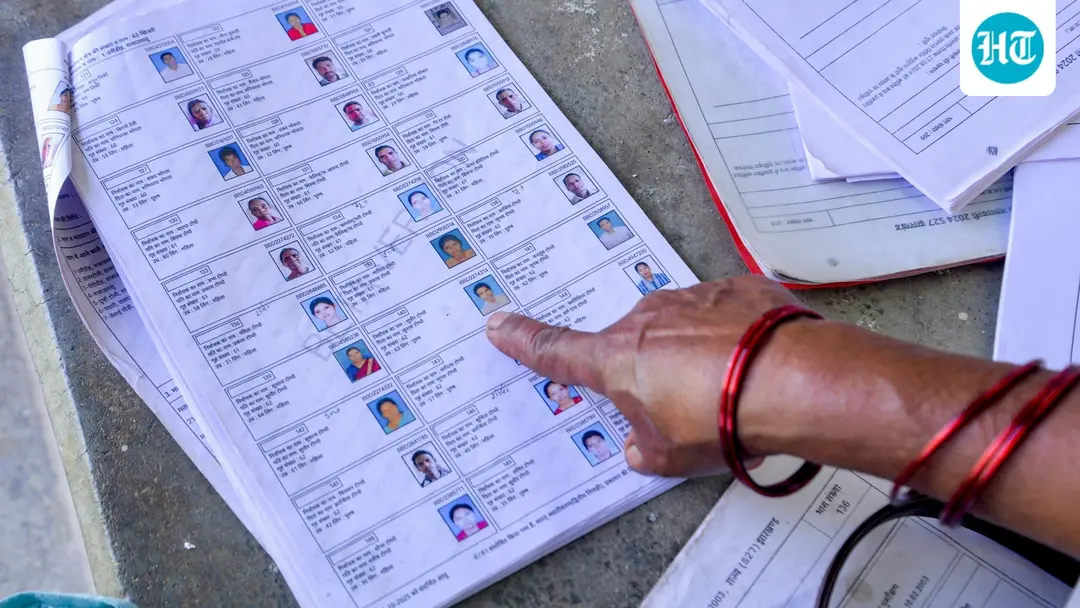
- Booth Level Officers (BLOs) cross-check voter lists ahead of the SIR, as seen in Ranchi, Jharkhand on Saturday, May 23.
Timeline
- Saturday, May 23Booth Level Officers cross-check voter lists ahead of the Special Intensive Revision, in Ranchi, Jharkhand (as per photo reference in the source).
- Not stated in the source (date of filing)Derek O'Brien, TMC Rajya Sabha MP and a petitioner challenging the SIR in West Bengal, moves an application in the Supreme Court.
- This weekECI files affidavit before the Supreme Court stating 3.7 million of 3.8 million appeals are pending and proposing an increase to 42 tribunals.
Who has a stake
- Election Commission of India — Must dispose of 3.7 million pending appeals credibly and quickly; has sought more tribunals to handle the caseload.
- Excluded voters in West Bengal — Over 2.2 million have appealed against deletion of their names; their right to vote depends on timely disposal.
- Appellants challenging inclusions — About 1.61 million cross-appeals seek removal of names they claim were wrongly included in the rolls.
- Supreme Court — Hearing petitions challenging the SIR in West Bengal and examining the ECI's appeal-disposal machinery.
- Derek O'Brien / Trinamool Congress — Petitioner whose application prompted the ECI affidavit; the party contests the SIR exercise in the state.
- Election tribunals and Booth Level Officers — Tribunals (19 now, 42 proposed) adjudicate appeals; BLOs do the field-level verification of voter lists.
Why it matters
A backlog of 3.7 million pending appeals means millions of West Bengal residents remain uncertain whether they will be on the final electoral roll, directly affecting the right to vote. The ECI's own admission that existing capacity is inadequate — asking for tribunals to be more than doubled from 19 to 42 — signals the administrative scale of the SIR and the risk of disenfranchisement if appeals are not decided in time.
UPSC angle
Prelims pointers
- SIR stands for Special Intensive Revision of electoral rolls, conducted by the Election Commission of India.
- West Bengal has 42 Parliamentary (Lok Sabha) constituencies.
- ECI affidavit: 3.8 million SIR appeals filed in West Bengal, 3.7 million pending.
- Appeals against exclusion form over 57% of the total; 1.61 million appeals challenge inclusion.
- Election tribunals in West Bengal currently number 19; ECI proposes raising it to 42.
- Booth Level Officers (BLOs) carry out cross-checking of voter lists during SIR.
Mains framing
The West Bengal SIR appeals backlog illustrates the tension between the Election Commission's mandate to produce an accurate electoral roll and the citizen's right to be heard before deletion. A revision exercise conducted at scale has generated 3.8 million appeals — over 2.2 million from excluded voters and 1.61 million cross-appeals against inclusions — of which 3.7 million are pending before just 19 tribunals, a mismatch the ECI itself acknowledges by proposing 42 tribunals, one per Parliamentary constituency. The causes lie in the volume of deletions and objections thrown up by the SIR and the limited adjudicatory infrastructure created alongside it; the implications include prolonged uncertainty for millions of voters, contested roll accuracy, and litigation before the Supreme Court, where petitioners including TMC MP Derek O'Brien are challenging the exercise. The way forward, as suggested in the affidavit itself, is capacity expansion of appellate tribunals to match constituency numbers, coupled with time-bound disposal so that adjudication precedes the finalisation of rolls; the source does not specify timelines, procedures or whether the Court has accepted the proposal.
Key terms
- Special Intensive Revision (SIR)
- An intensive electoral roll revision drive by the ECI involving field verification and additions or deletions of voter names.
- Election tribunal (appellate tribunal)
- Forum that hears appeals against exclusion from, or inclusion in, the revised electoral roll; 19 functioning in West Bengal, 42 proposed.
- Booth Level Officer (BLO)
- Field-level election official who cross-checks and verifies voter lists at the polling booth level during roll revision.
- Cross-appeal
- Here, an appeal challenging the inclusion of a person's name in the electoral roll, as opposed to appealing against deletion; 1.61 million such appeals.
- Parliamentary constituency
- A Lok Sabha seat; West Bengal has 42, the number the ECI wants to match with tribunals.
Practice questions
- Discuss the administrative and constitutional challenges thrown up by large-scale electoral roll revisions, using the West Bengal SIR appeals backlog as an example.
- How far can expanding appellate tribunals address grievances arising from voter deletions? Examine with reference to the ECI's proposal for 42 tribunals in West Bengal.
- Examine the role of the Supreme Court in balancing the Election Commission's autonomy in roll revision with the citizen's right to vote.
Grounded only in the source report — figures and dates are the source's, not inferred.