
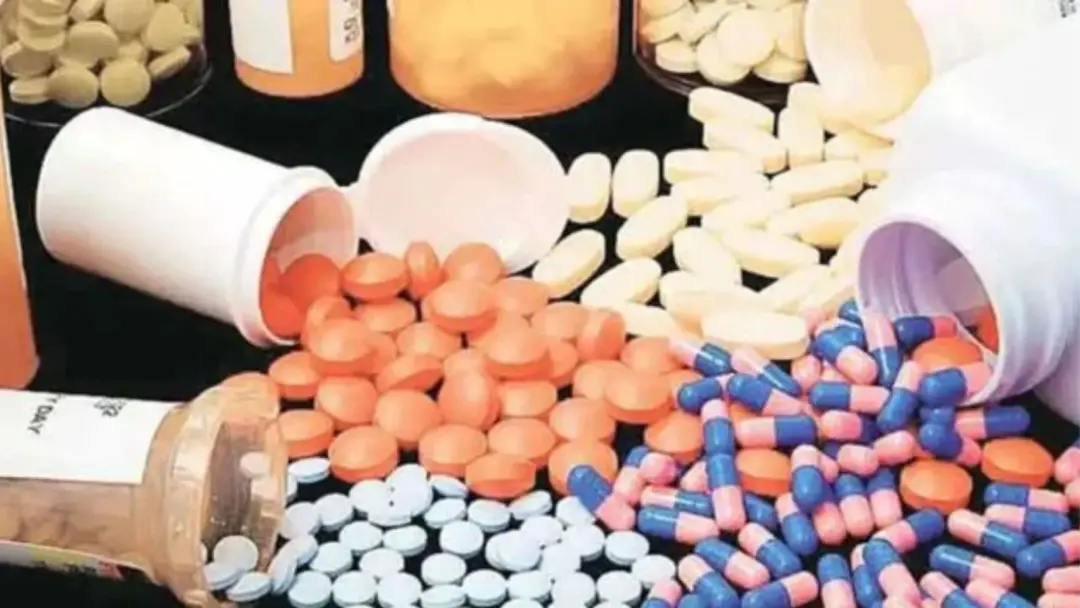
Karnataka mulls CBI probe into Bidadi fake-drug racket
The Karnataka government is considering handing the multi-crore counterfeit drug racket unearthed near Bidadi in Bengaluru South district to the CBI, sources said Wednesday, as prime accused R Prashant is in Azerbaijan and the racket has interstate links. A Special Investigation Team has arrested five people. Counterfeit and expired medicines worth about Rs 5 crore were seized in August. Minister U T Khader said selling fake medicines should be treated as attempt to murder.
Source
Indian Express — Cities · read the original report ↗
Desk check · some claims need care
What the desk checked (5)
- Karnataka is considering handing the Bidadi counterfeit drug case to the CBI due to interstate links and the prime accused being in Azerbaijan. — Attributed to unnamed sources; separately supported by Minister U T Khader's on-record remarks to reporters in Mangaluru.
- An SIT has arrested five people and is working to bring back R Prashant from Azerbaijan, where his passport was reportedly seized. — Attributed to unnamed sources; the passport seizure is hedged with 'reportedly' in the source.
- Counterfeit and expired medicines worth about Rs 5 crore were seized in Bengaluru South district in August. — Figure appears in source; no investigating agency named for the valuation.
- Medicines were repackaged with forged labels of multinational firms including Pfizer and sold at about 50% below market price. — Based on preliminary investigation as stated in source; alleged and unconfirmed, company not quoted.
- Khader directed sampling of Pushti nutritional powder in Shivamogga after MLC Dhananjay Sarji's complaint. — Attributed on record to the minister and the named MLC; lab results not yet available.
Analysts’ view opinion
At its core this is a jurisdiction problem. With the prime accused reportedly abroad and preliminary findings pointing to manufacturing units in other states, the matter runs past the reach of a state SIT — which makes the CBI option a logical, if not yet formalised, step. Separately, the minister's call to treat fake-drug sales as attempted murder would need legislative change; the charges actually available in this case still depend on existing law and on the laboratory evidence.
- The CBI ordinarily takes up cases in a state with that state's consent, so a formal notification of transfer would be the operative legal step — the story does not say one has been issued.
- Bringing the accused back from Azerbaijan is not a simple arrest; passport seizure, look-out or extradition/deportation processes and diplomatic channels would all be in play.
- Several legal layers overlap here: drug regulation law on spurious and expired medicines, trademark violation through allegedly forged labels of well-known companies, and criminal provisions on cheating and forgery.
- The minister's view that penalties are too lenient is a policy argument; treating the offence as attempted murder would require proving intent or knowledge, a demanding evidentiary threshold.
- Officials saying cancer-drug lab reports are still awaited is significant, because the gravity of charges and any defence will both turn on that scientific evidence.
What to watch — Watch for a formal order handing the case to the CBI, whether charges are upgraded once lab reports arrive, and how courts treat bail pleas by the five arrested.
The story does not establish that a CBI probe has been ordered, that guilt has been proven, or which specific statutory provisions have been invoked — everything at this stage is allegation and preliminary investigation.
Deep dive
Research brief · 8 facts · 4 dates · exam-readyThe brief
Context
A counterfeit drug racket was busted in August at an alleged illegal repackaging and relabelling facility running from a farmhouse near Bidadi and Hejjala in Bengaluru South district, Karnataka. Cheap, substandard and expired critical-care, ICU and cancer medicines were allegedly sourced from unlicensed units in other states, put into new vials with forged labels of multinational firms such as Pfizer, and sold to hospitals and pharmacies at about 50 per cent below market price. A Special Investigation Team has arrested five people, but the prime accused, R Prashant, is in Azerbaijan. With interstate links established, the state government is now weighing a CBI referral, and Health Minister U T Khader wants sale of fake medicines treated as attempt to murder.
Key facts
- Counterfeit and expired medicines worth around Rs 5 crore were seized in Bengaluru South district in August.
- A Special Investigation Team (SIT) has arrested five people in the case so far.
- Prime accused R Prashant is holed up in Azerbaijan, where immigration authorities have reportedly seized his passport.
- The racket operated from an unlicensed repackaging and relabelling facility at a farmhouse near Bidadi and Hejjala, Bengaluru South.
- Substandard and expired medicines were allegedly sourced from illegal manufacturing units in states including Himachal Pradesh and Telangana.
- Medicines were transferred into new vials with forged labels and stamps of multinational pharma companies, including Pfizer.
- The spurious medicines were supplied to hospitals and pharmacies at around 50 per cent below market price.
- Among those arrested is Veeresh Kumar Jain, owner of Krupa Health Care; the SIT raided his unit near Minerva Circle, Bengaluru, last week.
Timeline
- AugustCounterfeit and expired medicines worth about Rs 5 crore seized in Bengaluru South district; racket at Bidadi-Hejjala farmhouse busted.
- Last week (as per report)SIT raided the unit of Krupa Health Care owner Veeresh Kumar Jain near Minerva Circle, Bengaluru.
- TuesdayHealth Minister U T Khader, in Mangaluru, said the state was considering referring the case to the CBI and sought stringent central laws.
- WednesdaySources said the government is considering handing the probe to the CBI, given the accused in Azerbaijan and interstate links.
Who has a stake
- Karnataka Health and Family Welfare Department / Minister U T Khader — Must ensure drug safety, weigh CBI referral and press the Centre for stringent penal provisions on counterfeit medicines.
- Special Investigation Team (SIT) — Has arrested five accused and is exploring ways to bring back R Prashant from Azerbaijan.
- Central Bureau of Investigation (CBI) — Potential agency for a comprehensive probe covering manufacturers and distributors across multiple states.
- Patients in critical and intensive care, and cancer patients — Risk to life from spurious, substandard and expired ICU, critical-care and cancer medicines.
- Multinational pharma companies such as Pfizer — Their brand names and stamps were allegedly forged on repackaged vials.
- Anganwadi children in Shivamogga — Quality of Pushti nutritional powder supplied to them is being lab-tested after an MLC's complaint.
- MLC Dhananjay Sarji (Opposition) — Complained about Pushti powder quality and procurement without adequate checks; sought food and drug testing labs in Shivamogga and Mangaluru.
Why it matters
Spurious ICU, critical-care and cancer drugs sold at half price directly endanger the most vulnerable patients, and the trail runs from unlicensed units in Himachal Pradesh and Telangana to Karnataka hospitals. The minister's admission that existing penalties amount only to licence cancellation or nominal fines — allowing operators to restart businesses in family members' names elsewhere — points to a regulatory and enforcement gap in India's drug supply chain.
UPSC angle
Prelims pointers
- Bidadi and Hejjala, where the racket was busted, are in Bengaluru South district, Karnataka.
- Seizure value: counterfeit and expired medicines worth about Rs 5 crore, seized in August.
- Source states for the substandard/expired medicines: Himachal Pradesh and Telangana.
- U T Khader is Karnataka's Health and Family Welfare Minister; he sought CBI referral and stringent central law.
- Pushti nutritional powder is supplied to children through anganwadi centres (women and child development department).
- CBI is the central investigating agency proposed for the interstate probe.
Mains framing
The Bidadi fake-drug racket illustrates how India's fragmented drug regulation is exploited: an unlicensed farmhouse facility allegedly sourced expired and substandard medicines from units in Himachal Pradesh and Telangana, repackaged them in fresh vials with forged labels of multinationals, and pushed them to hospitals and pharmacies at 50 per cent discounts — a price signal that itself should have triggered scrutiny. The causes lie in weak licensing oversight of repackaging units, poor traceability of vials and labels, procurement systems that reward the lowest price, and, as Minister U T Khader concedes, penalties limited to licence cancellation or nominal fines that let offenders reopen in other states or in relatives' names. The implications are grave since the drugs involved were critical-care, ICU and cancer medicines, where therapeutic failure is fatal and hard to attribute. The interstate spread and the prime accused's presence in Azerbaijan explain the case for a CBI probe over a state SIT. A way forward, on the evidence in the story, would combine stricter criminal provisions from the Union government as demanded by the state, faster laboratory testing capacity (the parallel demand for sophisticated food and drug labs in Shivamogga and Mangaluru), and pre-purchase quality checks in public procurement, as the Pushti powder complaint suggests.
Key terms
- Counterfeit / spurious medicine
- Drug falsely labelled as to identity or source; here expired and substandard stock repackaged under forged multinational brand labels.
- Special Investigation Team (SIT)
- Dedicated police team formed to investigate a specific case; it has arrested five accused in the Bidadi racket.
- Central Bureau of Investigation (CBI)
- Central investigating agency being considered for the probe because of the racket's interstate and overseas dimensions.
- Relabelling and repackaging facility
- Unit that transfers medicines into new vials and affixes labels; illegal when unlicensed, as alleged at the Bidadi farmhouse.
- Pushti nutritional powder
- Supplementary nutrition powder given to children at anganwadi centres, whose samples in Shivamogga were ordered tested.
- MLC
- Member of the Legislative Council, the upper house of the state legislature; Dhananjay Sarji raised the Pushti quality complaint.
Practice questions
- Spurious drug networks in India operate across state boundaries while regulation remains largely state-level. Examine the enforcement gaps this creates, using the Bidadi counterfeit drug racket as an illustration.
- Should the manufacture and sale of counterfeit medicines be prosecuted as an attempt to murder? Critically discuss the arguments for and against stronger penal provisions.
- Public procurement of medicines and supplementary nutrition often prioritises the lowest bid. Discuss how quality assurance mechanisms can be strengthened without inflating costs.
Grounded only in the source report — figures and dates are the source's, not inferred.