
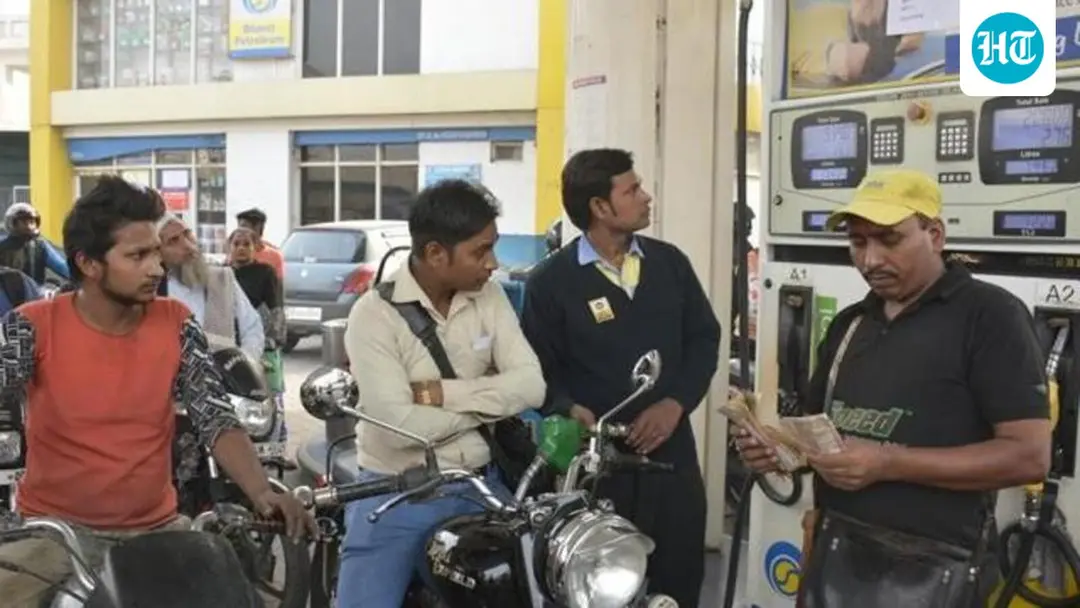
Petrol dealers warn of cash-only shift over ₹5 UPI charge
Petrol pump dealers across India have threatened to stop accepting UPI payments of ₹2,000 and above and switch to cash if they must pay a flat merchant discount rate of ₹5 per transaction. Dealers say margins of ₹2.40-3.40 per litre cannot absorb the cost, and associations FAIPT, AIPDA and AKFPT have sought an exemption. NPCI's FAQs said MDR stays at 0% below ₹2,000. The petroleum and finance ministries and three state-run oil companies did not respond.
Source
Hindustan Times — India · read the original report ↗
Desk check · compared with the source
What the desk checked (5)
- Petrol pump dealers may stop accepting UPI payments of ₹2,000 and above unless exempted from MDR — Attributed to FAIPT spokesperson Monty Sehgal and dealers from several states in the source
- NPCI FAQs say fuel purchases above ₹2,000 via UPI attract a flat ₹5 MDR, with 0% below ₹2,000 — Quoted directly from NPCI FAQs released Tuesday, as cited in the source
- Dealer margins are around ₹2.40-3.40 per litre — Figure appears in source, attributed to dealers; not independently sourced
- Petrol pumps handle 23.9 million UPI payments worth ₹1,573 crore; about 20% exceed ₹2,000, implying ₹230-250 per day per pump — Attributed to UP dealer Hemant Sirohi citing official data; underlying data not shown
- There are 1,03,023 petrol pumps in India as of April 2026 — Figure appears in source with no source given
Analysts’ view opinion
It looks like a trivial fee, but in a business running on a government-set margin it comes straight out of profit. Dealers earn roughly ₹2.40-3.40 a litre and cannot raise the pump price, so any rise in the cost of accepting a payment mode has nowhere to go but their own margin — that is the economic heart of this dispute. Dealers put the hit at ₹230-250 a day per pump: small individually, but material across more than a lakh outlets. If the threat to revert to cash is actually carried out, the bigger cost is to digital payment adoption rather than to any single balance sheet.
- A retailer with no pricing freedom absorbs 100% of any new cost, which makes the dealers' case economically strong on its own terms.
- NPCI's zero MDR below ₹2,000 shields everyday small refuels, so the burden falls mainly on higher-value fill-ups typically by car users.
- A flat ₹5 is cheaper for fuel retail than a percentage-based charge, since it caps the cost on large-ticket sales — that is the counter-argument on the policy side.
- Switching to cash is not free either: handling, security and banking costs mean the threat may function more as negotiating leverage than a settled plan.
- Even with an explicit merchant-side rule, industry voices warn that weak enforcement could see costs drift to customers and dent trust among first-time, price-sensitive digital users.
What to watch — Watch whether the petroleum and finance ministries grant an exemption or shift the cost to oil marketing companies or banks — that will decide if dealers actually turn UPI away.
The story does not establish when or by whom the charge would be collected, or the government's position on an exemption; the ₹230-250 per day figure is a dealer estimate, not independently verified.
Deep dive
Research brief · 8 facts · 3 dates · exam-readyThe brief
Context
The government has moved to reintroduce a merchant discount rate (MDR) on high-value UPI payments, with a flat concessional charge of ₹5 on fuel purchases above ₹2,000 at petrol stations, as clarified in NPCI's FAQs. Petrol pump dealers, whose retail selling prices and commissions are fixed by state-run oil marketing companies, say they cannot pass on this cost and have threatened to refuse UPI payments of ₹2,000 and above and switch to cash. Dealer bodies FAIPT, AIPDA and AKFPT have written to the Union government and OMCs seeking a full exemption, arguing fuel retail cannot be compared with ordinary retail. The petroleum and finance ministries and the three state-run OMCs did not respond to queries.
Key facts
- NPCI FAQs, released on Tuesday, said fuel purchases via UPI above ₹2,000 attract a flat concessional MDR of ₹5, while MDR stays at 0% for fuel payments under ₹2,000.
- Dealers say their margins are wafer-thin at around ₹2.40-3.40 per litre, and are determined by the government through oil marketing companies.
- There are 1,03,023 petrol pumps across India as of April 2026.
- More than 90% of pumps are operated by three state-run OMCs — IOC, BPCL and HPCL; the rest by private firms such as Nayara, Jio-BP and Shell.
- UP dealer Hemant Sirohi (EPDF) said petrol pumps countrywide handle 23.9 million UPI payments worth ₹1,573 crore, with about 20% above ₹2,000.
- The estimated financial implication is ₹230-250 per day per petrol pump, according to Sirohi's calculation.
- AIPDA, in a letter dated September 16, sought complete exemption for petrol pumps from MDR on UPI transactions above ₹2,000.
- AKFPT wrote to the Union government and state-run OMCs arguing petroleum retail outlets cannot be compared with ordinary retail businesses.
Timeline
- September 16All India Petroleum Dealers Association (AIPDA) writes to the government seeking complete exemption for petrol pumps from MDR on UPI transactions above ₹2,000.
- Tuesday (as reported)NPCI releases FAQs clarifying a flat ₹5 MDR on fuel purchases above ₹2,000 and 0% MDR below ₹2,000.
- April 2026 (as cited)Count of petrol pumps in India stands at 1,03,023.
Who has a stake
- Petrol pump dealers (Delhi NCR, Punjab, UP, Mumbai, Karnataka, Rajasthan) — A ₹5 flat charge per high-value UPI transaction eats into fixed margins of ₹2.40-3.40 per litre that they cannot raise on their own.
- FAIPT, AIPDA, AKFPT, EPDF — Dealer associations pressing the government and OMCs for a full MDR exemption for fuel retail outlets.
- IOC, BPCL, HPCL (state-run OMCs) — They set retail selling prices and dealer commissions and operate over 90% of pumps; did not respond to queries.
- Ministries of Petroleum and Finance — Must decide on exemption demands and policy design; did not respond to email queries.
- NPCI — Operator of UPI, which has issued the FAQs explaining how the concessional MDR applies to fuel purchases.
- Consumers — Risk of being pushed back to cash at pumps, or of merchants informally passing on a merchant-side charge.
Why it matters
Fuel retail is one of the largest everyday use cases for high-value UPI payments, so a dealer revolt could visibly push millions of transactions back to cash. Industry voices warn that if merchants pass on a merchant-side charge or refuse digital payments, public trust in digital finance — especially among first-time and price-sensitive users — could erode. It also spotlights the structural squeeze on dealers whose prices and commissions are administratively fixed.
UPSC angle
Prelims pointers
- MDR (merchant discount rate) is a merchant-side charge levied on digital payment transactions, not a customer charge.
- NPCI operates UPI; its FAQs set a flat ₹5 concessional MDR on fuel payments above ₹2,000 and 0% below ₹2,000.
- India had 1,03,023 petrol pumps as of April 2026; over 90% run by IOC, BPCL and HPCL.
- Private fuel retailers named in the story: Nayara, Jio-BP and Shell.
- Dealer bodies involved: FAIPT, AIPDA, AKFPT and EPDF; AIPDA's exemption letter is dated September 16.
- Petrol pump dealer margins are around ₹2.40-3.40 per litre, fixed via OMCs.
Mains framing
The dispute over a flat ₹5 MDR on UPI fuel payments above ₹2,000 exposes a design tension in India's digital payments architecture: zero-MDR built volumes and trust, but cost recovery must fall somewhere. Petrol pumps are an awkward test case because they are administered-margin businesses — selling prices and dealer commissions are set by state-run OMCs, so a dealer cannot re-price to absorb a new payment cost, unlike an ordinary retailer. Dealers estimate a hit of ₹230-250 per pump per day, with about 20% of the 23.9 million daily-scale UPI payments worth ₹1,573 crore falling above the threshold, and have threatened to refuse such payments and revert to cash; associations want outright exemption, while some dealers distrust shifting the cost to OMCs, citing past cartelisation with payment service providers and weekend blocking of settlements. The wider risk, as flagged by industry experts, is leakage of a merchant-side charge onto consumers where enforcement is weak, undermining trust among first-time and price-sensitive users. A way forward would require clarity from the petroleum and finance ministries and NPCI on either an exemption for administered-margin sectors, a rebalancing of dealer commissions to reflect payment costs, or transparent enforcement that MDR is not passed to customers — none of which the government has yet articulated in the source.
Key terms
- MDR (Merchant Discount Rate)
- A fee borne by the merchant on a digital payment transaction; here proposed as a flat ₹5 on UPI fuel payments above ₹2,000.
- UPI
- Unified Payments Interface, India's real-time retail payment system, operated by NPCI.
- NPCI
- National Payments Corporation of India, which runs UPI and issued the FAQs on how MDR applies to fuel purchases.
- OMCs
- Oil Marketing Companies — IOC, BPCL and HPCL — which fix retail selling prices and dealer commission structures.
- FAIPT / AIPDA / AKFPT
- Dealer bodies: Federation of All India Petroleum Traders, All India Petroleum Dealers Association, Akhila Karnataka Federation of Petroleum Traders.
- Dealer commission/margin
- The prescribed per-litre earning of a petrol pump dealer, around ₹2.40-3.40 per litre, which the dealer cannot unilaterally raise.
Practice questions
- Examine the trade-offs between zero-MDR policy and the financial sustainability of digital payment infrastructure in India, using the petrol pump MDR dispute as a case study.
- "Administered pricing limits a retailer's ability to absorb new transaction costs." Discuss with reference to petrol pump dealer margins and the proposed ₹5 MDR on high-value UPI payments.
- What measures can regulators and banks take to ensure a merchant-side charge like MDR is not passed on to consumers, and why does this matter for trust in digital finance?
Grounded only in the source report — figures and dates are the source's, not inferred.