
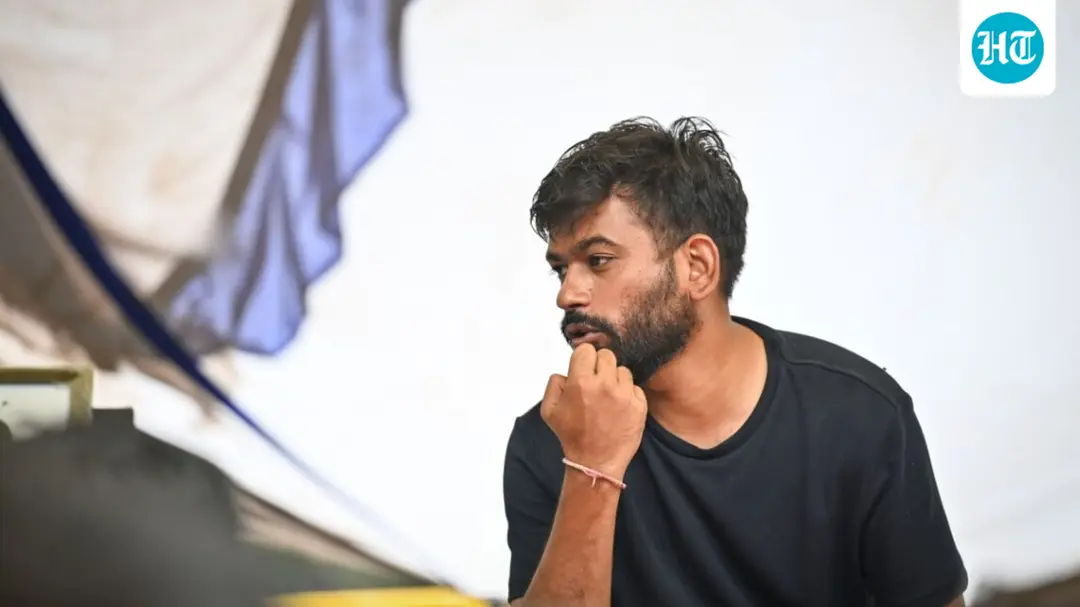
CJP to launch tribal school campaign from Gadchiroli on September 17
The Cockroach Janta Party (CJP) will launch the "Adivasi School Thik Karo" campaign to improve facilities at tribal schools from Maharashtra's Gadchiroli district on September 17, founder Abhijeet Dipke said on Wednesday. He alleged tribal schools had been neglected by all governments over the last 80 years. Dipke claimed more than 590 tribal students died in Maharashtra in two years and that 477 of 720 Eklavya Model Residential Schools were non-functional.
Source
Hindustan Times — India · read the original report ↗
Desk check · some claims need care
What the desk checked (5)
- CJP will launch the 'Adivasi School Thik Karo' campaign from Gadchiroli on September 17. — Attributed to CJP founder Abhijeet Dipke, speaking on Wednesday; date appears in source.
- More than 590 tribal students died in Maharashtra over the last two years, some due to snakebites. — Alleged by Dipke; no official source or document cited in the text.
- 477 of 720 Eklavya Model Residential Schools are non-functional. — Figures presented by Dipke at the press conference; source notes they are his claim, unverified.
- ST students account for 22.8% of higher education enrolment and only 130 ST applicants secured IIT admission. — Claimed by Dipke; no data source given, and the enrolment percentage is not benchmarked in the source.
- CJP launched a nationwide 'School Thik Karo' campaign a month earlier, starting at Santuk Pimpri in Hingoli district. — Reported as background by the publication, consistent with earlier HT reporting cited in the text.
Analysts’ view opinion
This is not a government policy announcement but a monitoring campaign run by a political outfit — and yet, in policy terms, it probes a real gap: tribal education schemes are usually reported through inputs like funds, buildings and hostel sanctions, while verifiable public data on how many schools actually function and how safe students are remains thin. The figures cited — 477 of 720 Eklavya schools non-functional, over 590 tribal student deaths in two years — are Dipke's own claims from a press conference, with no government confirmation in the story. The campaign's worth will therefore rest less on the allegations than on the quality of evidence its school inspections produce.
- Starting from Gadchiroli is more than symbolism — remote, infrastructure-poor districts are exactly where delivery failures in centrally designed schemes show up most sharply.
- The Eklavya Model Residential School design carries the core challenge: sanctioning a school is easy, but aligning buildings, teacher and warden recruitment and recurring maintenance funds is hard — the complaint about schools running from rented premises points to precisely that.
- Allegations about snakebite deaths and inadequate compensation push the debate beyond education policy into safety standards and accountability mechanisms inside residential hostels.
- This extends the nationwide 'School Thik Karo' campaign launched a month ago; seeking data from state education ministers on repairs, teacher vacancies, toilets and digital facilities mirrors a transparency-and-pressure strategy rather than a service-delivery one.
- The framing that 'all governments over 80 years' failed spreads blame widely, which avoids partisanship but also blurs which specific scheme failed, where and when.
What to watch — Watch whether, after September 17, CJP publishes school-level inspection findings that can be independently checked, and whether the tribal welfare department or the state government responds to these numbers — that will decide if the campaign has any policy traction.
The story records Dipke's claims and figures only; they are not independently verified, no government response is included, and the campaign's duration, methodology and scale are not established.
Deep dive
Research brief · 8 facts · 4 dates · exam-readyThe brief
Context
The Cockroach Janta Party (CJP), founded by Abhijeet Dipke, announced a campaign called "Adivasi School Thik Karo" to be launched from Maharashtra's Gadchiroli district on September 17, aimed at improving facilities in tribal schools. It follows CJP's nationwide "School Thik Karo" campaign, launched a month earlier from a government school in Dipke's native village Santuk Pimpri in Hingoli district, which sought better basic facilities in government schools. At a press conference, Dipke alleged long-standing neglect of tribal schools and presented figures on tribal student deaths, non-functional Eklavya Model Residential Schools and low tribal presence in higher education. All figures cited are as presented by Dipke at the press conference; independent verification is not stated in the source.
Key facts
- CJP will launch the "Adivasi School Thik Karo" campaign from Gadchiroli district, Maharashtra, on September 17, founder Abhijeet Dipke announced on Wednesday.
- Dipke alleged that schools in tribal regions across India have been neglected by all governments in the last 80 years.
- Dipke claimed more than 590 tribal students died in Maharashtra over the last two years, with several deaths linked to incidents such as snakebites.
- He alleged that 477 of the 720 Eklavya Model Residential Schools were non-functional; these figures were presented by Dipke at the press conference.
- Dipke claimed Scheduled Tribe students accounted for 22.8% of enrolment in higher education and that only 130 ST applicants secured admission to IITs.
- CJP representatives will inspect tribal schools, including those operating from rented buildings, and highlight infrastructure and facility gaps.
- The tribal campaign comes a month after CJP launched its nationwide "School Thik Karo" campaign for rural and urban government schools.
- CJP sought information from state education ministers on school repairs, teacher vacancies, government funding, digital learning facilities, toilets and sports infrastructure.
Timeline
- About a month before the announcementCJP launched its nationwide "School Thik Karo" campaign, beginning with a visit to a government school in Santuk Pimpri village, Hingoli district, Maharashtra.
- Earlier (date not stated in the source)Dipke wrote a letter saying government schools lacked safe drinking water, functional washrooms, proper classrooms and benches; CJP sought data from state education ministers.
- Wednesday (date not stated in the source)Dipke announced the "Adivasi School Thik Karo" campaign at a press conference and was scheduled to interact with tribal students in Nagpur later the same day.
- September 17The "Adivasi School Thik Karo" campaign is to be launched from Gadchiroli district.
Who has a stake
- Tribal (Adivasi) students in Gadchiroli and other tribal belts — Access to safe, adequately equipped schools; the campaign alleges inadequate infrastructure, rented buildings and student deaths.
- Cockroach Janta Party (CJP) and founder Abhijeet Dipke — Driving the campaign; CJP representatives will inspect tribal schools and publicise deficiencies.
- Eklavya Model Residential Schools (EMRS) network — Dipke alleges 477 of 720 such schools are non-functional, questioning the delivery of residential tribal education.
- State and central governments / state education ministers — Accused of 80 years of neglect; asked by CJP for data on repairs, teacher vacancies, funding, toilets and sports facilities.
- Families of deceased tribal students — Dipke claims they did not always receive adequate compensation.
- Parents, sarpanches and local communities — Urged by Dipke to take responsibility for improving basic school facilities.
Why it matters
Tribal education outcomes depend heavily on residential and remote-area schools, and the claims cited — hundreds of student deaths, non-functional Eklavya schools and thin representation in IITs — point to gaps between scheme design and delivery. A civil-society style audit of school infrastructure, if it produces verifiable data, can push accountability on repairs, teacher vacancies and safety in tribal belts. It also frames education as a governance and equity question, not merely a budget one.
UPSC angle
Prelims pointers
- "Adivasi School Thik Karo" campaign: launched by CJP from Gadchiroli district, Maharashtra, on September 17.
- Eklavya Model Residential Schools (EMRS): Dipke claimed 477 of 720 were non-functional.
- Claim cited: ST students formed 22.8% of higher education enrolment; only 130 ST applicants secured IIT admission.
- Claim cited: more than 590 tribal students died in Maharashtra in the last two years, some due to snakebites.
- CJP's earlier nationwide "School Thik Karo" campaign began in Santuk Pimpri village, Hingoli district, Maharashtra.
- Dipke has asked that the PM Cares Fund be used to develop schools in rural areas.
Mains framing
The CJP campaign frames tribal schooling as a case of persistent implementation failure rather than absent policy: schools functioning from rented buildings, weak infrastructure, alleged non-functioning of 477 of 720 Eklavya Model Residential Schools, and reported deaths of over 590 tribal students in Maharashtra in two years, some from snakebites, with families allegedly not adequately compensated. The causes suggested by the source are administrative neglect over decades, thin monitoring of residential schools in remote and difficult terrain such as Gadchiroli, and limited attention to safety and basic amenities like drinking water, washrooms, classrooms and benches. The implications extend to higher education, where the claimed low ST presence in premier institutions such as IITs suggests that foundational deficits translate into narrowed opportunity. The way forward indicated in the source is community-anchored accountability — parents, sarpanches and local bodies taking responsibility — combined with transparency from state education departments on repairs, teacher vacancies, funding, digital facilities, toilets and sports infrastructure, and physical inspection of schools to generate verifiable evidence. Aspirants should note that all figures here are claims made at a press conference and require official corroboration.
Key terms
- Cockroach Janta Party (CJP)
- The political outfit founded by Abhijeet Dipke that is running the school improvement campaigns described in the story.
- Adivasi School Thik Karo
- CJP's campaign to inspect tribal schools and highlight infrastructure and facility problems, launching from Gadchiroli on September 17.
- School Thik Karo
- CJP's earlier nationwide campaign for improving government schools in rural and urban areas, begun in Santuk Pimpri, Hingoli.
- Eklavya Model Residential Schools (EMRS)
- Residential schools for tribal students; Dipke alleged 477 of 720 were non-functional.
- Gadchiroli
- A tribal-majority district of Maharashtra chosen as the launch point of the tribal school campaign.
- PM Cares Fund
- Fund that Dipke has asked be used to develop schools in rural areas.
Practice questions
- Discuss the challenges in delivering quality residential education to tribal students in India, with reference to the functioning of Eklavya Model Residential Schools.
- Civil-society audits of school infrastructure can complement official monitoring. Examine with reference to the "School Thik Karo" and "Adivasi School Thik Karo" campaigns.
- Low representation of Scheduled Tribe students in premier higher education institutions is rooted in school-level deficits. Critically analyse.
Grounded only in the source report — figures and dates are the source's, not inferred.