
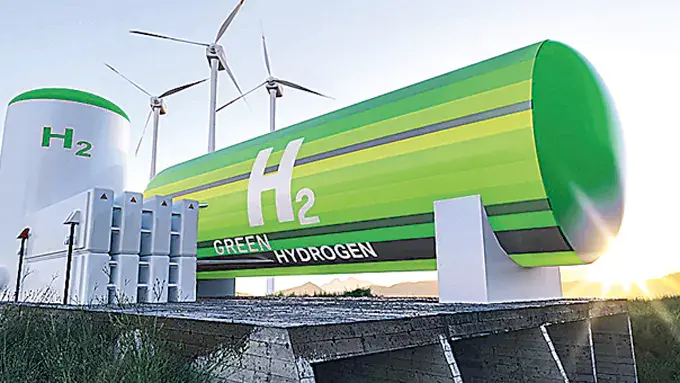
AM Green to export green ammonia from Kakinada to Germany
Hyderabad-based AM Green Ammonia has won the Asia segment of the German government-backed H2Global auction, signing a ten-year contract to supply renewable ammonia worth at least Rs 5,500 crore. Hintco, H2Global's trading arm, will purchase the output. AM Green is converting a natural gas-based ammonia and urea complex at Kakinada in Andhra Pradesh into a green ammonia plant compliant with European Union rules. The company said first supplies to Germany begin in 2029, shipped through Kakinada Port.
Source
Kakinada — స్థానికం · read the original report ↗
Desk check · compared with the source
What the desk checked (5)
- Hyderabad-based AM Green Ammonia won the Asia segment of the German government-backed H2Global auction. — Stated in source; attributed to the company announcement, no auction document cited.
- The contract covers renewable ammonia supply worth at least Rs 5,500 crore over ten years. — Figure appears in source as given; no independent breakdown provided.
- Hintco, H2Global's trading arm, will buy the renewable ammonia produced under non-biological origin rules. — Attributed to the source text; terms of purchase not detailed.
- First supplies to Germany begin in 2029, exported via Kakinada Port. — Attributed to AM Green; forward-looking timeline, not independently verifiable.
- AM Green is converting an existing natural gas-based ammonia-urea complex at Kakinada into an alkaline electrolysis green ammonia plant meeting EU norms. — Company claim quoted in source; group president and joint MD Mahesh Kolli cited on industrial-scale supply capability.
Analysts’ view opinion
This is, above all, a demand-certainty deal for India's green fuels sector. The binding constraint on green ammonia has never been the ability to build plants — it is finding a buyer willing to pay a premium price over a long horizon. The German government-backed H2Global model bridges that price gap with public money, and a ten-year revenue floor worth at least Rs 5,500 crore is precisely what makes the Kakinada project financeable.
- A large share of the price premium is effectively borne by German public support; the story notes that proceeds from reselling the ammonia in Europe could fund additional volumes.
- Converting an existing natural gas-based ammonia and urea complex rather than building greenfield is a capital-efficiency play that shortens both capex and construction timelines.
- Siting next to Kakinada port trims logistics costs and could seed a port-linked export cluster in Andhra Pradesh, though the story gives no employment numbers.
- The requirement to meet EU rules is also a trade barrier: only Indian producers able to certify against those standards will access the European market.
- With first deliveries only in 2029, this is not near-term revenue; power tariffs, electrolyser costs and the rupee-euro rate will all shape the eventual margin.
What to watch — Watch whether the 2029 first-delivery timeline holds, whether Hintco exercises the option for additional volumes, and whether other Indian producers can win similar long-term offtake contracts.
The story does not disclose the capital cost of the conversion, the contracted price, the supply volumes or any jobs figure, so no firm judgement on the project's profitability is possible.
Deep dive
Research brief · 8 facts · 3 dates · exam-readyThe brief
Context
Green ammonia — ammonia made using hydrogen produced from renewable-powered electrolysis instead of natural gas — is emerging as a traded "green molecule" for shipping, fertiliser and industrial decarbonisation. Germany, which needs imported clean fuels, runs H2Global, a government-backed auction mechanism in which the trading arm Hintco buys renewable hydrogen derivatives abroad under long-term contracts and resells them in Europe. Hyderabad-based AM Green Ammonia has now won the Asia segment of this auction with a ten-year supply deal worth at least Rs 5,500 crore. It is converting an existing natural gas-based ammonia and urea complex at Kakinada in Andhra Pradesh into a green ammonia plant using alkaline electrolysis, with exports through the nearby Kakinada Port.
Key facts
- AM Green Ammonia, based in Hyderabad, won the Asia segment of the H2Global auction conducted with German government support.
- The contract runs for ten years and covers renewable ammonia supply worth at least Rs 5,500 crore.
- Hintco, the trading arm of H2Global, will purchase the ammonia from AM Green.
- The ammonia must comply with non-biological origin (renewable fuels of non-biological origin) norms.
- First supplies to Germany are to begin in 2029, as stated by AM Green.
- Proceeds from reselling the ammonia in Europe may be used to buy additional volumes.
- The Kakinada natural gas-based ammonia and urea complex in Andhra Pradesh is being converted into a green ammonia plant using alkaline electrolysis.
- Exports will move through Kakinada Port, located near the plant; AM Green Group President and Joint Managing Director Mahesh Kolli said the deal proves India can supply green ammonia at industrial scale.
Timeline
- Reported nowAM Green Ammonia declared winner of the Asia segment of the German-backed H2Global auction and signs a ten-year contract with Hintco.
- OngoingConversion of the natural gas-based ammonia and urea complex at Kakinada into an alkaline electrolysis-based green ammonia plant.
- 2029First consignment of renewable ammonia to be supplied to Germany, shipped via Kakinada Port.
Who has a stake
- AM Green Ammonia (Hyderabad) — Wins a ten-year, minimum Rs 5,500 crore export contract and must retrofit the Kakinada plant to EU-compliant green ammonia production.
- Hintco / H2Global — Buyer of the renewable ammonia under the German government-backed auction; resells it in Europe, with proceeds possibly funding extra volumes.
- Government of Germany — Backs the H2Global auction to secure long-term imports of renewable hydrogen derivatives for its energy transition.
- Andhra Pradesh and Kakinada Port — Hosts the converted plant and handles the export shipments, gaining industrial and port activity.
- India's green hydrogen/ammonia industry — The deal is cited as proof that India can export green ammonia at industrial scale, supporting growth in green molecule exports.
- European Union regulators — The plant's production process must meet EU rules for the ammonia to qualify in European markets.
Why it matters
A ten-year, Rs 5,500 crore-plus offtake contract gives an Indian producer the bankable long-term demand that green hydrogen and ammonia projects usually lack, turning a fossil-fuel-era fertiliser complex into an export asset. It positions India as a supplier of green molecules to Europe's decarbonisation drive and puts Kakinada Port on the emerging clean-fuel export map.
UPSC angle
Prelims pointers
- H2Global is a German government-backed auction mechanism; Hintco is its trading/commercial arm that buys renewable hydrogen derivatives.
- AM Green Ammonia, headquartered in Hyderabad, won the Asia segment of the H2Global auction.
- Contract: ten years, renewable ammonia worth at least Rs 5,500 crore; first supplies in 2029.
- The Kakinada (Andhra Pradesh) natural gas-based ammonia-urea complex is being converted using alkaline electrolysis.
- Exports will be routed through Kakinada Port; the plant's process will meet EU norms.
- Mahesh Kolli is Group President and Joint Managing Director of AM Green.
Mains framing
India's green ammonia ambitions have long been constrained by the absence of assured long-term buyers, since renewable ammonia is costlier than the natural gas-based product and needs certification under importing-country rules. The AM Green–Hintco contract addresses this directly: a German government-backed auction mechanism, H2Global, provides a ten-year offtake worth at least Rs 5,500 crore, with Hintco reselling the ammonia in Europe and potentially recycling the proceeds into further purchases — effectively a demand-side subsidy bridging the price gap. The supply-side response is equally instructive: instead of a greenfield build, AM Green is retrofitting an existing natural gas-based ammonia and urea complex at Kakinada to alkaline electrolysis, reusing brownfield assets and the adjacent Kakinada Port for exports, while ensuring the process meets EU and non-biological origin norms. The way forward lies in replicating such bankable offtake-plus-brownfield-conversion models, aligning Indian certification with EU requirements, and building port and evacuation infrastructure so that green molecule exports scale beyond a single contract — the significance Mahesh Kolli flagged when he said the deal proves India can supply green ammonia at industrial scale.
Key terms
- Green ammonia
- Ammonia produced using renewable energy-based processes rather than natural gas, here via alkaline electrolysis at Kakinada.
- H2Global
- Auction mechanism run with German government support to procure renewable hydrogen and its derivatives from global suppliers.
- Hintco
- The commercial/trading arm of H2Global that signs purchase contracts with producers and resells the product in Europe.
- Non-biological origin norms
- Rules requiring the fuel to be made from renewable, non-biological sources, which AM Green's ammonia must comply with.
- Alkaline electrolysis
- An electrolyser technology used to split water into hydrogen, the route chosen for the converted Kakinada plant.
- Green molecules
- Exportable low-carbon chemical energy carriers such as green hydrogen, ammonia and methanol.
Practice questions
- Long-term offtake mechanisms like H2Global are being called the missing link in green hydrogen markets. Examine with reference to the AM Green–Hintco renewable ammonia contract.
- Discuss the advantages and challenges of converting existing natural gas-based ammonia-urea complexes into green ammonia plants, using the Kakinada project as an example.
- How can India position itself as an exporter of green molecules to Europe? Discuss the role of compliance with importing-country norms and of port infrastructure.
Grounded only in the source report — figures and dates are the source's, not inferred.