
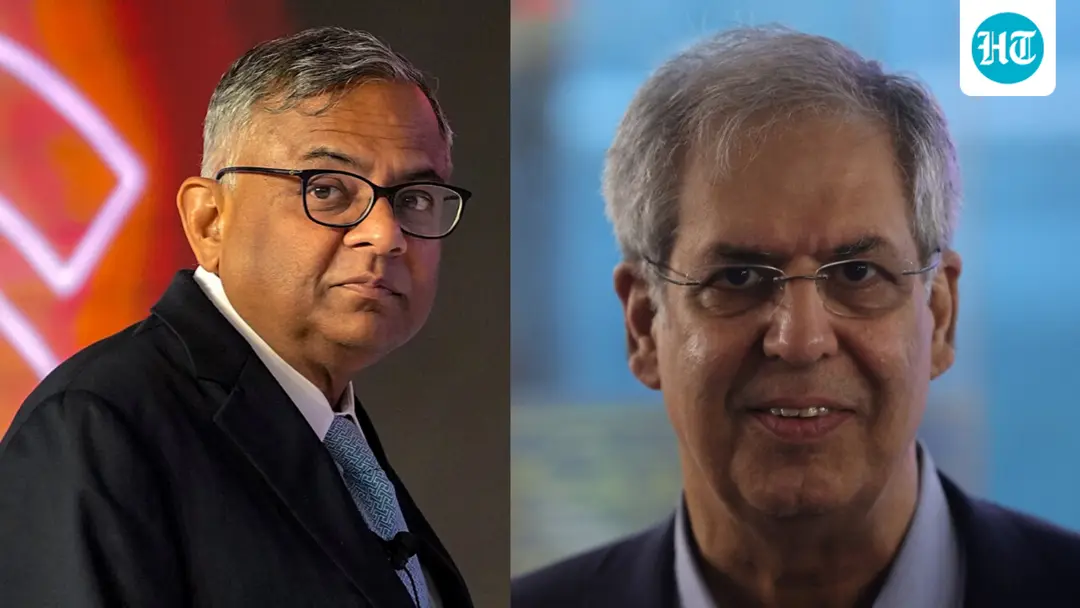
Tata Sons board, Tata Trusts differ over Chandrasekaran reappointment
The Tata Sons board's September 17 vote to extend N Chandrasekaran's term as chairman for five more years has exposed differences with Tata Trusts. Trusts chairman Noel Tata, the lone dissenting board member, called the resolution a "legal nullity", arguing the two trustee nominees did not vote together. Tata Sons says the majority vote made the appointment valid. The sides have also clashed over Air India losses and a possible listing. Trusts holds 66% of Tata Sons.
Source
Hindustan Times — India · read the original report ↗
Desk check · some claims need care
What the desk checked (5)
- Tata Sons board voted on September 17 to extend N Chandrasekaran's tenure beyond February 2027. — Date and decision appear in source; no board document cited.
- Noel Tata was the only board member to vote against and called the resolution a 'legal nullity'. — Attributed to a statement by Noel Tata in the source.
- Tata Trusts holds a 66% stake in Tata Sons; Sir Ratan Tata Trust holds 23.6%. — Figures appear in source without a named document or filing.
- A charity regulator has barred Sir Ratan Tata Trust from convening trustees. — Attributed in source to Reuters reporting.
- Tata Sons is dealing with a proposed $2.6 billion stake sale by a minority shareholder. — Figure appears in source; no source named for the number.
Analysts’ view opinion
A governance dispute at the top of India's largest conglomerate is, in economic terms, a cost-of-capital story. Tata Sons is the holding vehicle for businesses spanning aviation, autos, IT, electronics and semiconductors, and unresolved questions over who has the authority to appoint its chairman raise the risk premium attached to every large capital commitment the group makes. The board's majority-vote position and the Trusts' insistence that both nominees must concur are competing readings of internal rules — and until one prevails, decision cycles on listing, stake sales and loss-making units are likely to lengthen.
- The immediate economic exposure is not the chairman's post but capital allocation: semiconductor and electronics expansion is long-gestation, capex-heavy investment that depends on stable, unchallenged sign-off authority.
- Air India, acquired from the government in January 2022, is the clearest flashpoint because the group's cited losses put the Trusts' charitable payout interests in tension with a long turnaround runway.
- The listing question is a genuine trade-off, not a mere power fight — a listing would unlock market value and price discovery for shareholders, while the Trusts argue it would alter the character of a charity-majority-owned group.
- The reported regulatory bar preventing Sir Ratan Tata Trust from convening trustees means 66% ownership is not currently translating into clean control, which is precisely the kind of gap that unsettles counterparties and minority holders.
- A pending $2.6 billion minority stake sale gives the dispute a price tag: valuation talks are harder to close when the governance framework around them is contested.
What to watch — Watch whether the listing decision, the $2.6 billion stake sale and Air India's funding plans keep moving on schedule — visible slippage would be the first real economic cost of the standoff.
The story does not establish which side's reading of the internal rules is legally correct, nor does it quantify Air India's losses, the group's financing costs or any measurable market impact so far.
Deep dive
Research brief · 8 facts · 6 dates · exam-readyThe brief
Context
Tata Sons is the holding company of the Tata Group, and Tata Trusts — an umbrella of affiliated charities now chaired by Noel Tata — holds a 66% stake in it. N Chandrasekaran, a career Tata man who joined TCS in 1987 and became Tata Sons chairman in January 2017, had said last month he would step down when his term ends in February 2027. On September 17 the Tata Sons board instead voted to extend his tenure by five years, with Noel Tata the sole dissenter calling the resolution a "legal nullity". The clash has widened into a dispute between the board and its largest shareholder over governance rules, Air India's losses and a possible listing of Tata Sons.
Key facts
- On September 17, the Tata Sons board voted to extend N Chandrasekaran's tenure as chairman by five more years.
- Chandrasekaran, 63, had announced last month that he would step down when his term ends in February 2027.
- Noel Tata, chairman of Tata Trusts, was the only board member to vote against, later calling the resolution a "legal nullity".
- Tata Trusts holds a 66% stake in Tata Sons; Sir Ratan Tata Trust, one of its two largest institutions, holds 23.6%.
- Tata Trusts argues chairman appointments need approval of both its board nominees — Noel Tata and Venu Srinivasan; Srinivasan did not vote against.
- Tata Sons maintains the appointment was valid as it was approved by majority vote.
- Tata Sons acquired Air India from the Indian government in January 2022; combined annual losses of Air India Group are a point of clash.
- Tata Sons is dealing with a proposed $2.6 billion stake sale by a minority shareholder and a debate over listing the holding company.
Timeline
- 1987Chandrasekaran joins Tata Consultancy Services (TCS), spending his entire corporate career in the Tata Group.
- January 2017Chandrasekaran is appointed chairman of Tata Sons.
- January 2022Tata Sons acquires Air India from the Indian government; substantial losses follow for the airline and group.
- August 2025 (last month, per source)Chandrasekaran announces he would step down when his tenure ends in February 2027.
- September 17Tata Sons board votes to extend his tenure by five years; Noel Tata dissents and calls it a "legal nullity".
- February 2027Original end date of Chandrasekaran's tenure as Tata Sons chairman.
Who has a stake
- N Chandrasekaran — His extended five-year term as Tata Sons chairman is contested; a senior Tata executive said he must resolve the matter himself.
- Tata Trusts / Noel Tata — As 66% shareholder, wants its two board nominees' joint approval respected and opposes a Tata Sons listing it says would "destroy" the group's charitable character.
- Tata Sons board — Defends the reappointment as valid by majority vote, putting it in open dispute with its largest shareholder.
- Venu Srinivasan — The other Trusts nominee on the Tata Sons board; his decision not to vote against is central to the legality argument.
- Sir Ratan Tata Trust — Holds 23.6% of Tata Sons but has been barred by a charity regulator from convening trustees, limiting its decision-making.
- Air India Group — Its combined annual losses since the January 2022 acquisition are one of the issues over which the two sides have clashed.
- Minority shareholder of Tata Sons — Has proposed a $2.6 billion stake sale, adding to the governance questions before the holding company.
Why it matters
The Tata Group is India's most prominent conglomerate, and a contested chairmanship at its unlisted holding company raises questions about who really controls it — the board or a 66% charitable shareholder. The dispute lands while the group is absorbing Air India's losses, expanding into electronics and semiconductors, and weighing a listing of Tata Sons. Unsettled leadership and shareholder-board conflict at this scale carry consequences for investors, employees and the philanthropic institutions that own the group.
UPSC angle
Prelims pointers
- Tata Sons is the holding company of the Tata Group; Tata Trusts holds a 66% stake in it.
- Sir Ratan Tata Trust, one of Tata Trusts' two largest institutions, holds 23.6% of Tata Sons.
- N Chandrasekaran became Tata Sons chairman in January 2017; joined TCS in 1987; tenure was to end February 2027.
- Tata Sons acquired Air India from the Government of India in January 2022.
- Noel Tata chairs Tata Trusts; the Trusts' two Tata Sons board nominees are Noel Tata and Venu Srinivasan.
- A charity regulator has barred Sir Ratan Tata Trust from convening its trustees over a dispute on their appointments.
Mains framing
The Tata Sons chairmanship dispute is essentially a corporate governance question about the balance between board majorities and shareholder-nominee rights in an unlisted holding company owned mainly by charitable trusts. Tata Trusts contends that internal rules require both its nominees, Noel Tata and Venu Srinivasan, to approve a chairman's appointment; since only Noel Tata voted against and Srinivasan did not join him, the Trusts calls the September 17 resolution a "legal nullity", while Tata Sons rests its case on the majority vote. The conflict is aggravated by substantive disagreements — Air India Group's combined annual losses since the January 2022 acquisition, a proposed $2.6 billion stake sale by a minority shareholder, and the Trusts' resistance to any listing, which it warns would "destroy" the character of a group majority-owned by charities. The Trusts' 66% ownership has not translated into effective control because a charity regulator has stopped Sir Ratan Tata Trust, holder of 23.6%, from convening trustees. The way forward, as the source suggests through a senior executive's remark, lies in Chandrasekaran resolving the matter himself, alongside clarity on the trustee-nomination rules and on the regulatory impasse over trustee appointments.
Key terms
- Tata Sons
- The holding company of the Tata Group, 66% owned by Tata Trusts and currently unlisted.
- Tata Trusts
- Umbrella organisation of affiliated Tata charities, chaired by Noel Tata, holding a 66% stake in Tata Sons.
- Sir Ratan Tata Trust
- One of the two largest institutions under Tata Trusts, holding 23.6% of Tata Sons; currently barred from convening trustees.
- Legal nullity
- Noel Tata's description of the September 17 resolution — that it has no legal effect because both Trusts nominees did not vote together.
- Trustee nominees
- Tata Trusts' representatives on the Tata Sons board — Noel Tata and Venu Srinivasan — whose joint approval the Trusts says chairman appointments require.
- TCS
- Tata Consultancy Services, the Tata Group company Chandrasekaran joined in 1987 before becoming Tata Sons chairman.
Practice questions
- Examine the corporate governance issues raised by the dispute over N Chandrasekaran's reappointment as Tata Sons chairman, with reference to shareholder-nominee rights versus board majority decisions.
- Discuss the implications of a conglomerate being majority-owned by charitable trusts, using the Tata Trusts–Tata Sons relationship and the debate over listing Tata Sons.
- How do regulatory restrictions on charitable trusts' internal functioning affect their ability to exercise ownership rights in companies? Illustrate with the Sir Ratan Tata Trust case.
Grounded only in the source report — figures and dates are the source's, not inferred.