
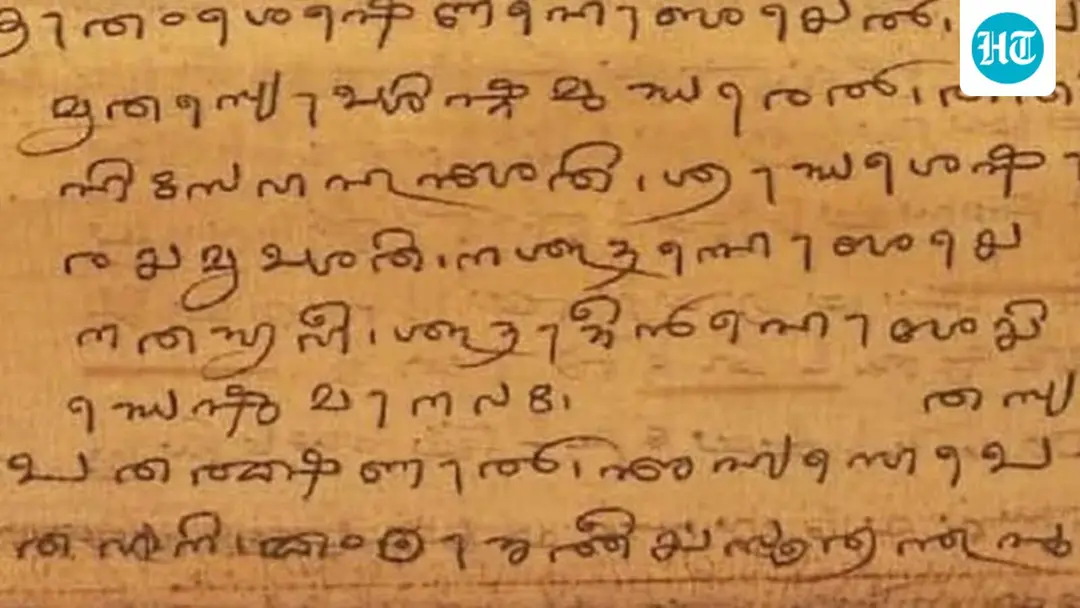
Karnataka makes Tulu additional official language in two districts
Chief Minister D K Shivakumar announced on Friday that Karnataka has granted Tulu the status of an additional official language in Dakshina Kannada and Udupi districts. The decision was taken at the first Cabinet meeting held in Mangaluru, at the Praja Soudha building, considering the demand of the people. Tulu, a Dravidian language with a history of more than 2,000 years, is spoken by nearly one crore people globally. The Cabinet also discussed renaming Dakshina Kannada district as Mangaluru, with a decision due within a month.
Source
Hindustan Times — India · read the original report ↗
Desk check · compared with the source
What the desk checked (4)
- Karnataka has made Tulu an additional official language in Dakshina Kannada and Udupi districts. — Attributed to CM D K Shivakumar's announcement on Friday, with a direct quote in the source.
- Tulu is a Dravidian language over 2,000 years old, spoken by nearly one crore people globally. — Figure appears in the source but is stated without attribution to any study or agency.
- The decision was taken at the first Cabinet meeting held in Mangaluru, at the Praja Soudha building. — Stated as fact in the source; consistent with the CM's post-meeting briefing.
- A proposal to rename Dakshina Kannada district as Mangaluru was discussed and a decision will follow within a month. — Attributed to Shivakumar, who said public opinion would be collected; outcome pending.
Analysts’ view opinion
Granting Tulu additional official language status is more than a cultural gesture — it is an attempt by the Congress government to firm up its footing in coastal Karnataka. Holding the first Cabinet meeting in Mangaluru and making the announcement there maximised the political signal. Chief Minister D K Shivakumar's line that he will not ask why earlier governments failed to act is a carefully framed political sentence: it claims credit while avoiding a direct fight.
- By delivering on a long-pending demand, Congress is seeking an emotional connect in a region where it has historically been less dominant.
- Convening the Cabinet outside Bengaluru — at the Praja Soudha in Mangaluru — is a familiar political device to signal that regional aspirations are being heard.
- Given how sensitive language politics is in Karnataka, the government has deliberately capped this as an 'additional' status rather than anything that displaces Kannada.
- Deferring the Dakshina Kannada renaming proposal to public consultation and a decision 'within a month' keeps an emotive issue alive rather than settling it now.
- The opposition will find it hard to oppose the move outright, so its response is likely to centre on timing, implementation and electoral motive.
What to watch — Watch the promised decision on renaming within a month, and how quickly the government moves on the other long-pending coastal demands.
The story does not establish how the status will work administratively, what funding or machinery will back it, or whether it shifts voter behaviour.
Deep dive
Research brief · 8 facts · 3 dates · exam-readyThe brief
Context
Tulu, a Dravidian language with a documented history of more than 2,000 years, is spoken by nearly one crore people worldwide, with its principal base in undivided Dakshina Kannada, Udupi and parts of Kasaragod. Speakers in coastal Karnataka have long demanded formal recognition of the language by the state. At its first Cabinet meeting held in Mangaluru, at the Praja Soudha building, the Karnataka government decided to give Tulu the status of an additional official language in undivided Dakshina Kannada and Udupi districts. Chief Minister D K Shivakumar announced the decision on Friday, and also said a proposal to rename Dakshina Kannada district as Mangaluru was discussed.
Key facts
- Karnataka granted Tulu the status of an additional official language in undivided Dakshina Kannada and Udupi districts, announced by CM D K Shivakumar on Friday.
- The decision was taken at the state government's first Cabinet meeting held in the coastal city of Mangaluru, at the Praja Soudha building.
- Tulu is a Dravidian language with a history of more than 2,000 years.
- Tulu is spoken by nearly one crore people globally.
- Its principal base is undivided Dakshina Kannada and Udupi regions and parts of Kasaragod.
- The Cabinet also discussed a proposal to rename Dakshina Kannada district as Mangaluru; public opinion will be collected alongside a formal debate.
- Shivakumar said a decision on the renaming will be taken within a month.
- Shivakumar said the government considers the 'baduku' (life) and not the 'bhavane' (sentiments) of the people, adding that a region grows when a language is given recognition.
Timeline
- Before the current decisionLong-standing demand from coastal Karnataka for formal recognition of Tulu remained unfulfilled; Shivakumar said he would not question why earlier governments failed to act.
- Friday (day of announcement)First Cabinet meeting held in Mangaluru at Praja Soudha decides to make Tulu an additional official language in undivided Dakshina Kannada and Udupi; renaming proposal discussed.
- Within a month of the meetingDecision due on renaming Dakshina Kannada district as Mangaluru, after collection of public opinion and formal debate.
Who has a stake
- Tulu speakers in coastal Karnataka — Gain formal recognition of their language as an additional official language in undivided Dakshina Kannada and Udupi districts.
- Karnataka government / Cabinet — Took the decision at its first Mangaluru Cabinet meeting, responding to long-pending coastal demands.
- Chief Minister D K Shivakumar — Announced the language decision and framed it as prioritising people's lives over sentiments; must deliver on renaming decision within a month.
- Residents of Dakshina Kannada district — Public opinion is to be collected on renaming the district as Mangaluru.
- Tulu speakers in Kasaragod (parts) — Part of the language's principal base, though the official language status covers only the two Karnataka districts.
Why it matters
Official language status for Tulu in two districts marks the first formal state recognition of a long-standing regional demand and can shape administrative use and cultural visibility of the language. It also signals how sub-regional linguistic identities are being accommodated within a state whose official language is Kannada. The linked proposal to rename Dakshina Kannada as Mangaluru shows identity politics remains central to coastal Karnataka's demands.
UPSC angle
Prelims pointers
- Tulu declared an additional official language in undivided Dakshina Kannada and Udupi districts of Karnataka.
- Tulu is a Dravidian language with a history of more than 2,000 years, spoken by nearly one crore people globally.
- Principal Tulu-speaking base: undivided Dakshina Kannada, Udupi and parts of Kasaragod.
- Decision taken at the first Cabinet meeting in Mangaluru, held at the Praja Soudha building.
- Announcement made by Karnataka Chief Minister D K Shivakumar.
- Proposal to rename Dakshina Kannada district as Mangaluru: decision promised within a month after public opinion and debate.
Mains framing
The decision to make Tulu an additional official language in undivided Dakshina Kannada and Udupi districts illustrates how linguistic identity operates below the level of the state in India's federal set-up. The demand arose from a region where a Dravidian language with a claimed history of over 2,000 years and nearly one crore speakers worldwide has been widely spoken without formal official status, generating a sense of cultural neglect. The government's justification, articulated by Chief Minister D K Shivakumar, was that recognition of a language contributes to regional growth and that the focus is on people's livelihoods rather than sentiment alone; that distinction implies the status must be followed by concrete administrative use if it is not to remain symbolic. The parallel proposal to rename Dakshina Kannada as Mangaluru, on which public opinion is to be gathered and a decision taken within a month, shows that place-name and language demands travel together in coastal Karnataka's politics. The way forward suggested by the source is procedural: consultation, formal debate and time-bound decision-making, so that recognition responds to demonstrated public demand rather than contested sentiment. Details of implementation mechanisms are not stated in the source.
Key terms
- Additional official language
- Status allowing a language official use in specified areas alongside the state's official language; here granted to Tulu in two districts.
- Tulu
- A Dravidian language with a history of more than 2,000 years, spoken by nearly one crore people globally.
- Undivided Dakshina Kannada
- The historical coastal region referred to by the CM, whose people's demand prompted the Tulu decision, now covering Dakshina Kannada and Udupi.
- Praja Soudha, Mangaluru
- The building in the coastal city where the state's first Cabinet meeting outside the capital, per the source, took the Tulu decision.
- Kasaragod
- Region parts of which form part of Tulu's principal speaker base, along with undivided Dakshina Kannada and Udupi.
Practice questions
- Discuss the significance of granting a language additional official language status at the district level, using the case of Tulu in Karnataka.
- Sub-regional linguistic identities can coexist with a state's official language. Examine in the light of the Tulu decision in Dakshina Kannada and Udupi.
- Renaming of districts and recognition of languages are often linked demands. Critically evaluate with reference to coastal Karnataka.
Grounded only in the source report — figures and dates are the source's, not inferred.