
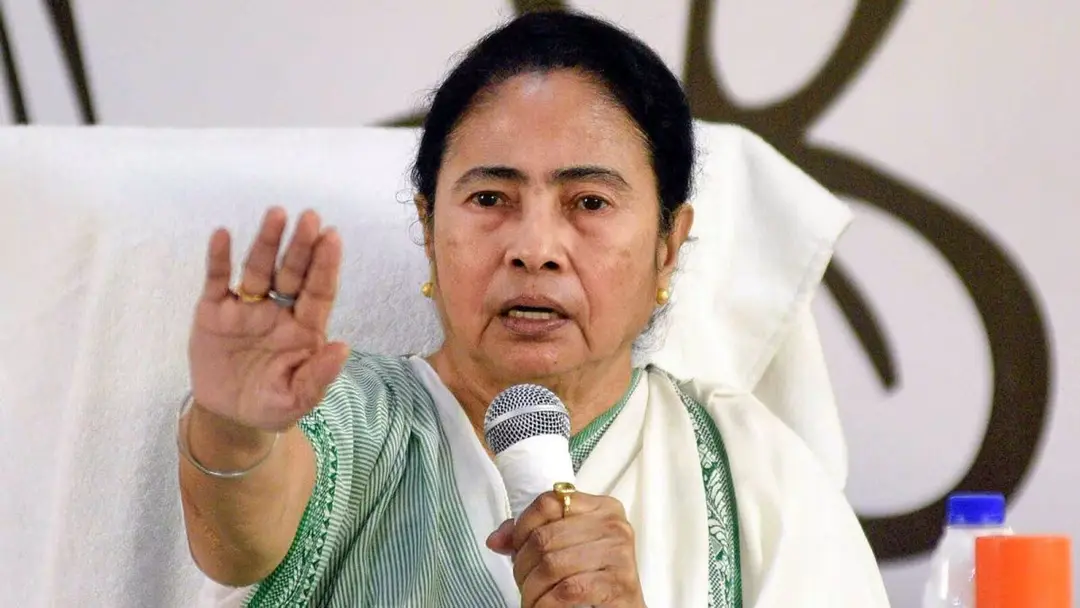
EC keeps TMC name, symbol out of Bengal bypolls
The Election Commission's interim decision keeps the All India Trinamool Congress name and its "Flowers and Grass" symbol out of the October 6 West Bengal bypolls, forcing both Mamata Banerjee's camp and party rebels to seek fresh electoral recognition. Mamata founded the TMC on January 1, 1998, after revolting against the Congress. The party's strength fell from 215 of 294 seats in 2021 to 80 in the 2026 assembly election. Later, 58 MLAs backed Ritabrata Banerjee and 20 MPs supported the NDA.
Source
News18 — India · read the original report ↗
Desk check · some claims need care
What the desk checked (5)
- The Election Commission's interim decision keeps the All India Trinamool Congress name and 'Flowers and Grass' symbol out of the October 6 West Bengal bypolls. — Figure appears in source and is repeated in its summary box; attributed to the Election Commission but no order number or official quote given.
- Mamata Banerjee founded the Trinamool Congress on January 1, 1998, after a dispute with then Bengal Congress chief Somen Mitra. — Stated as background fact in the source, no separate attribution.
- TMC's tally fell from 215 of 294 seats in 2021 to 80 in the 2026 assembly election. — Figures appear in source without attribution to an official result sheet; editor should verify.
- 58 MLAs backed expelled leader Ritabrata Banerjee as legislature party leader, and 20 Lok Sabha MPs led by Kakoli Ghosh Dastidar joined the NCPI and backed the NDA. — Numbers appear in source; no document or official confirmation cited.
- Analyst Shubhomoy Maitra says the party lacked an 'ideological fulcrum' after ousting the Left Front. — Directly attributed quote to a named analyst; opinion, not verifiable fact.
Analysts’ view opinion
This is not a quarrel over nomenclature; it is a battle over a 28-year political inheritance. After the TMC's fall from 215 seats to 80 in the 2026 assembly election, Mamata Banerjee's organisational grip — the very thing that contained past rebellions — has weakened, and the exit of 58 MLAs and 20 MPs shows it. In the short run the EC's interim order arguably hurts her more, because voter recall of the "Flowers and Grass" symbol was her strongest asset; but the rebels too now carry the burden of proving they have standalone appeal.
- The disintegration followed, rather than preceded, electoral defeat — suggesting Mamata's dominance worked as a deterrent that has now lost its edge.
- With 20 Lok Sabha MPs declaring support for the NDA, the BJP stands to gain in Bengal without fighting on the front foot, and a split anti-BJP vote could help it further.
- By taking the disqualification route to the Lok Sabha Speaker, Mamata has chosen a legal-procedural fight that buys time but places the outcome outside her control.
- The rebels are framing the revolt ideologically — centralised functioning and dynastic politics — which turns the Abhishek Banerjee succession question into open public debate.
- Rahul Gandhi's late-night call signals Congress warmth and possible opposition realignment, but it is an equation born of Mamata's weakness rather than her strength.
What to watch — Watch which camp holds voters with a new symbol on October 6, how the Speaker handles the disqualification plea, and when the EC moves from interim to final order.
The order is interim, and the story does not establish who will finally get the name and symbol, whether the rebel bloc will hold together, or how voters will actually respond.
Deep dive
Research brief · 8 facts · 9 dates · exam-readyThe brief
Context
The Election Commission has issued an interim order keeping the All India Trinamool Congress name and its "Flowers and Grass" symbol out of the October 6 West Bengal bypolls, amid a split between Mamata Banerjee's camp and party rebels. Mamata founded the TMC on January 1, 1998, after losing an organisational battle with then West Bengal Congress president Somen Mitra, and the party went on to end the CPI(M)-led Left Front's 34-year rule in Bengal. The dispute follows the TMC's defeat in the 2026 assembly election, when its tally fell from 215 of 294 seats in 2021 to 80, after which 58 MLAs backed expelled leader Ritabrata Banerjee and 20 Lok Sabha MPs moved to support the NDA. For the first time in nearly three decades, both factions must contest without the party's established name and symbol.
Key facts
- The EC's interim decision keeps the All India Trinamool Congress name and its "Flowers and Grass" symbol out of the October 6 West Bengal bypolls.
- Mamata Banerjee founded the Trinamool Congress on January 1, 1998, after walking out of the Congress; the story marks 28 years of her leadership.
- In the mid-1990s Mamata fought then West Bengal Congress president Somen Mitra for control of the state unit; Mitra retained the post and Mamata left.
- The TMC became central to the movement that ended the CPI(M)-led Left Front's 34-year rule in Bengal.
- The TMC's strength fell from 215 of 294 assembly seats in 2021 to 80 in the 2026 assembly election.
- Within weeks of the defeat, 58 MLAs backed expelled leader Ritabrata Banerjee as legislature party leader; he was recognised as leader of the opposition, while Mamata's nominee Sobhandeb Chattopadhyay was rejected.
- Twenty Lok Sabha MPs led by Kakoli Ghosh Dastidar joined the little-known NCPI and announced support for the BJP-led NDA; the TMC sought their disqualification before the Lok Sabha Speaker.
- Mamata personally sketched the party emblem of twin flowers emerging from grass, the visual shorthand for its grassroots politics.
Timeline
- Mid-1990sMamata Banerjee loses an organisational battle with West Bengal Congress president Somen Mitra and walks out of the Congress.
- January 1, 1998Mamata founds the Trinamool Congress.
- 2001Founding figure Ajit Panja clashes with Mamata over political strategy and unsuccessfully tries to build a separate platform.
- 2012Dinesh Trivedi's confrontation with Mamata over the railway fare increase ends his tenure as railway minister.
- 2017Mukul Roy, once the party's organisational number two, joins the BJP; he returns to the TMC after the 2021 assembly election.
- 2021TMC wins 215 of 294 assembly seats.
- 2022Amid tensions between the old guard and Abhishek Banerjee's younger leadership, Mamata dissolves the national office-bearer committee.
- 2026 assembly electionTMC's tally falls to 80 seats; 58 MLAs back Ritabrata Banerjee and 20 Lok Sabha MPs shift to the NDA via the NCPI.
- September 18, 2026Story published on the EC's interim order on the TMC name and symbol ahead of the October 6 bypolls.
Who has a stake
- Mamata Banerjee — Founder who has led the TMC for 28 years; faces the most direct challenge to her political legacy, name and symbol.
- Election Commission of India — Must adjudicate the rival claims over the party name and symbol; its interim order shapes the October 6 bypolls.
- Ritabrata Banerjee and the 58 rebel MLAs — Expelled leader recognised as leader of the opposition; the rebels seek electoral recognition and the party's inheritance.
- Kakoli Ghosh Dastidar and 20 Lok Sabha MPs — Joined the NCPI and backed the BJP-led NDA; face a TMC disqualification plea before the Lok Sabha Speaker.
- Abhishek Banerjee — His growing influence is central to the succession dispute and rebel criticism of dynastic politics.
- Congress and BJP-led NDA — Congress sees "karma" in the split; the NDA gains from the 20 MPs' support and TMC's fragmentation in Bengal.
- West Bengal voters in the bypoll seats — Must choose between factions contesting without the familiar TMC name and "Flowers and Grass" symbol.
Why it matters
A party's name and symbol are its chief instruments of voter recognition, and freezing both leaves two rival camps to build fresh identities within weeks of a bypoll. The dispute converts an internal succession fight into a formal contest over the political inheritance of the party that ended 34 years of Left Front rule in Bengal. It also tests how institutions like the EC and the Lok Sabha Speaker handle mass defections and rival leadership claims after a heavy electoral defeat.
UPSC angle
Prelims pointers
- All India Trinamool Congress founded January 1, 1998 by Mamata Banerjee; symbol "Flowers and Grass" (twin flowers on grass).
- EC interim order kept the TMC name and symbol out of the October 6 West Bengal bypolls.
- West Bengal assembly has 294 seats; TMC won 215 in 2021 and 80 in the 2026 election.
- Ritabrata Banerjee, backed by 58 MLAs, recognised as leader of the opposition; Mamata's nominee Sobhandeb Chattopadhyay rejected by rebels.
- Twenty Lok Sabha MPs led by Kakoli Ghosh Dastidar joined the NCPI and backed the NDA; disqualification sought before the Lok Sabha Speaker.
- CPI(M)-led Left Front ruled West Bengal for 34 years before the TMC-led change.
Mains framing
The freezing of the TMC's name and symbol illustrates how highly personalised parties become vulnerable once their electoral dominance breaks. The story traces the causes to two sources: an organisational one, in which the TMC's fall from 215 of 294 seats in 2021 to 80 in 2026 removed the dominance that had contained competing ambitions, and an ideological one, with analyst Shubhomoy Maitra arguing that after achieving its central objective of removing the Left Front the party lacked an "ideological fulcrum" or long-term development vision. Rebel MLA Sandipan Saha frames the revolt around an "increasingly centralised style" of functioning, shrinking internal discussion and dynastic politics centred on Abhishek Banerjee, while the Mamata camp calls the rebels "traitors" who contested on TMC tickets only months earlier and Saugata Roy predicts they will return. The implications extend beyond one party: rival claims to a name and symbol place the Election Commission in the role of arbiter of party identity, while the movement of 20 MPs to the NCPI and the NDA puts the anti-defection machinery before the Lok Sabha Speaker. A way forward, on the story's own terms, lies in stronger internal democracy, institutionalised succession and programmatic renewal rather than reliance on a single leader's charisma; the adjudication itself must rest on transparent tests of organisational and legislative support.
Key terms
- All India Trinamool Congress (TMC)
- Party founded by Mamata Banerjee on January 1, 1998 after breaking from the Congress; long the dominant force in West Bengal.
- "Flowers and Grass" symbol
- TMC's election symbol, twin flowers emerging from grass, sketched by Mamata as shorthand for grassroots politics.
- Election Commission interim decision
- Temporary order keeping the disputed party name and symbol out of the October 6 West Bengal bypolls pending resolution.
- Leader of the opposition
- Post to which Ritabrata Banerjee was recognised after 58 MLAs backed him as legislature party leader.
- NCPI
- Little-known party that 20 Lok Sabha MPs led by Kakoli Ghosh Dastidar joined while announcing support for the BJP-led NDA.
- Left Front
- CPI(M)-led coalition that ruled West Bengal for 34 years until the political movement in which the TMC was central.
Practice questions
- The Election Commission's role as arbiter of disputes over party names and symbols has grown with rising factionalism. Discuss with reference to the interim order on the Trinamool Congress.
- "Parties built around a single leader are electorally powerful but organisationally fragile." Examine this proposition in the light of the TMC's post-2026 split.
- How do mass defections by legislators test anti-defection safeguards and the office of the Speaker? Illustrate using the case of the 20 Lok Sabha MPs who joined the NCPI.
Grounded only in the source report — figures and dates are the source's, not inferred.