
India to showcase defence systems to 40 nations at Tarang Shakti
India will showcase its indigenous aerospace and defence systems to air force leaders from around 40 countries on the margins of Tarang Shakti, the IAF's largest multilateral combat exercise, in Jodhpur from September 26 to October 12, officials said. The visitors will be briefed at HAL and BEL in Bengaluru on September 29 and at the C295 line in Vadodara on October 3. Invitations went to 65 countries; eight are bringing aircraft and 32 come as observers. Defence exports hit a record ₹38,424 crore in 2025-26.
Source
Hindustan Times — India · read the original report ↗
Desk check · compared with the source
What the desk checked (5)
- Tarang Shakti will be held in Jodhpur from September 26 to October 12, with air force leaders from around 40 countries shown Indian defence systems. — Attributed to officials aware of the matter, who are not named in the source.
- Visiting air force officials will be briefed at HAL and BEL in Bengaluru on September 29 and at the C295 line in Vadodara on October 3. — Dates and venues attributed to the same unnamed officials.
- Invitations went to 65 countries; eight confirmed with air assets and 32 as observers. — Figures appear in the source; no individual attribution given.
- India's defence exports reached a record ₹38,424 crore in 2025-26, up 63% from ₹23,622 crore, against a ₹50,000 crore target for 2029-30. — Figures appear in the source without a named agency; internally consistent with the stated percentage increase.
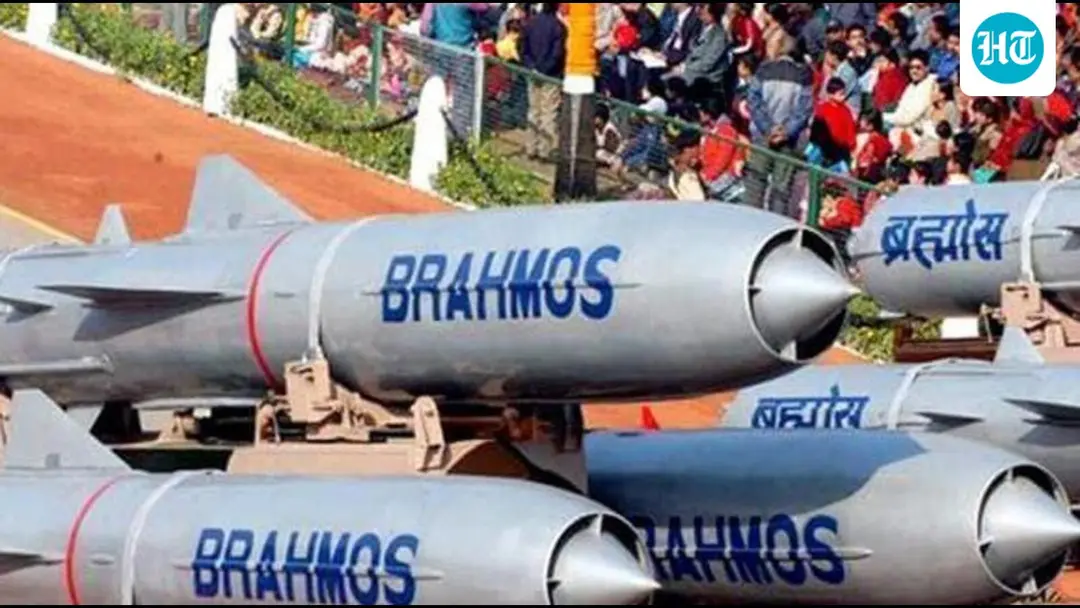
- July agreements will supply BrahMos and Astra missiles to Indonesia, the third ASEAN state to get BrahMos. — Stated in the source as concluded agreements; no source cited for the claim.
Analysts’ view opinion
Tarang Shakti is no longer just an air force exercise — it is a political and commercial showcase for the government. Flying air force chiefs from some 40 countries from Jodhpur to the production lines in Bengaluru and Vadodara is an attempt to convert military diplomacy into export orders, while giving the 'Atmanirbhar Bharat' pitch something visible to point to at home. Record exports of ₹38,424 crore hand the government a strong political narrative; the ₹50,000 crore target for 2029-30 simultaneously creates a yardstick it can be measured against.
- The government has made defence exports a matter of national prestige, and record figures are likely to feature as an achievement metric on political platforms.
- The release of 'Raksha', a 10-year defence diplomacy roadmap, and the reorganisation of the defence attaché network suggest a coordinated state strategy rather than a one-off publicity move.
- Participation with aircraft by the US, France, Germany and the UAE alongside Bangladesh and Sri Lanka is diplomatically useful for India, particularly in the neighbourhood.
- That invitations went to 65 countries but only eight are bringing air assets, with 32 attending as observers, leaves room for critics to argue interest is broad but commitment thin.
- The BrahMos and Astra agreements with Indonesia strengthen the claim of expanding Indian influence in Southeast Asia, while also inviting debate about regional balance of power.
What to watch — Watch whether the exercise translates into actual orders or negotiations in the months after, and whether the opposition begins questioning progress towards the ₹50,000 crore target.
The story does not establish how many new contracts this showcase will produce or which countries are genuinely close to buying, nor does it include any breakdown of the export figures or political reactions to them.
Deep dive
Research brief · 8 facts · 5 dates · exam-readyThe brief
Context
Tarang Shakti is the Indian Air Force's largest multilateral combat exercise, whose second edition is being held in Jodhpur from September 26 to October 12. On its margins, India will showcase indigenous aerospace and defence systems to air force leaders from around 40 countries, with industry visits to HAL and BEL in Bengaluru and the C295 production line in Vadodara. The outreach follows defence minister Rajnath Singh's release of "Raksha", a 10-year strategic roadmap for India's defence diplomacy. It comes as India pushes to expand military exports, which touched a record ₹38,424 crore in 2025-26.
Key facts
- Tarang Shakti, the IAF's largest multilateral combat exercise, will be held in Jodhpur from September 26 to October 12 (second edition).
- Air force leaders from around 40 countries will be shown India's indigenous aerospace and defence systems on the margins of the exercise.
- Visiting air force brass will be briefed at HAL and BEL in Bengaluru on September 29 and at the C295 production line in Vadodara on October 3.
- Invitations were sent to 65 countries; eight confirmed participation with air assets and 32 are coming as observers.
- Countries bringing aircraft: the US, France, Germany, the UAE, Australia, Bangladesh and Sri Lanka.
- Observers include Brazil, Egypt, Italy, Japan, Malaysia, Oman, Singapore, South Africa, Thailand and Vietnam.
- India's defence exports hit a record ₹38,424 crore in 2025-26, up 63% from ₹23,622 crore the previous financial year; the target is ₹50,000 crore by 2029-30.
- Agreements concluded in July to supply BrahMos cruise missiles and Astra beyond visual range air-to-air missiles to Indonesia; the Astra deal is the first export of that weapon system.
Timeline
- July (year not stated in the source)Agreements concluded to supply BrahMos cruise missiles and Astra BVR air-to-air missiles to Indonesia's armed forces.
- Weeks before the exerciseDefence minister Rajnath Singh released 'Raksha', a 10-year strategic roadmap for India's defence diplomacy.
- September 26 to October 12Second edition of Tarang Shakti multilateral combat exercise in Jodhpur.
- September 29Visiting air force leaders briefed at HAL and BEL in Bengaluru.
- October 3Visit to the C295 production line in Vadodara.
Who has a stake
- Indian Air Force — Hosts Tarang Shakti, its largest multilateral combat exercise, and uses it to build interoperability and partnerships with foreign air forces.
- HAL and BEL — Public sector defence firms whose facilities in Bengaluru will be showcased to prospective foreign buyers.
- Ministry of Defence / Department of Defence Production — Driving export reforms, the OGEL framework and the ₹50,000 crore export target by 2029-30.
- Participating and observer nations (40 countries, incl. US, France, Germany, UAE, Australia, Bangladesh, Sri Lanka) — Assess Indian platforms, sensors, weapons and unmanned systems as potential customers and exercise partners.
- Indonesia — Buyer of BrahMos and Astra missiles; will be the third ASEAN state after the Philippines and Vietnam to acquire BrahMos.
- Indian private and public defence industry — Gains market access abroad through simplified licensing, export authorisation and reorganised defence attaché network.
Why it matters
Using a major multilateral air exercise as a shop window marks a shift in India's posture from being one of the world's biggest arms buyers to positioning itself as a credible exporter. With exports at a record ₹38,424 crore and a ₹50,000 crore target for 2029-30, defence diplomacy is now tied directly to industrial and strategic objectives. Success would deepen India's ties with partner air forces while reducing dependence on foreign hardware.
UPSC angle
Prelims pointers
- Tarang Shakti: IAF's largest multilateral combat exercise; second edition at Jodhpur, September 26 - October 12.
- 'Raksha': 10-year strategic roadmap for India's defence diplomacy, released by defence minister Rajnath Singh.
- Defence exports 2025-26: record ₹38,424 crore, up 63% from ₹23,622 crore; target ₹50,000 crore by 2029-30.
- OGEL (Open General Export Licence): one-time standing authorisation letting eligible exporters self-generate authorisations for multiple consignments of specified defence items.
- BrahMos, jointly developed with Russia; Indonesia to be the third ASEAN buyer after the Philippines and Vietnam.
- Astra is a beyond visual range air-to-air missile; the Indonesia deal is its first export.
Mains framing
India's decision to convert Tarang Shakti, the IAF's largest multilateral combat exercise, into a platform for marketing indigenous aerospace and defence systems to some 40 countries reflects a deliberate fusion of defence diplomacy with industrial policy. The drivers are visible: a record ₹38,424 crore in exports in 2025-26 (up 63%), a ₹50,000 crore target for 2029-30, policy reforms such as simplified industrial licensing, removal of parts and components from the licence regime, easier export authorisation and a streamlined Open General Export Licence framework, and the reorganisation of the defence attaché network towards likely buyer countries rather than seller countries. The 'Raksha' 10-year roadmap and the July agreements to supply BrahMos and Astra missiles to Indonesia signal that credibility is now being built through actual contracts, not just showcases. As IAF vice chief Air Marshal Ashutosh Dixit framed it, Atmanirbharta and international cooperation are complementary rather than contradictory. The way forward, on the source's own logic, lies in sustaining industrial capacity at HAL, BEL and lines like the C295, converting observer interest into orders, and maintaining procedural ease so that Indian firms can access foreign markets reliably.
Key terms
- Tarang Shakti
- The Indian Air Force's largest multilateral combat exercise; second edition at Jodhpur, September 26 - October 12.
- Raksha
- A 10-year strategic roadmap for India's defence diplomacy released by defence minister Rajnath Singh, outlining global partnerships and exports.
- OGEL
- Open General Export Licence - a standing one-time authorisation allowing eligible exporters to self-generate authorisations for multiple consignments of specified defence items.
- Atmanirbharta
- Self-reliance in defence; per the IAF vice chief, it complements rather than contradicts international cooperation.
- BrahMos
- Cruise missile jointly developed by India and Russia; Indonesia will be the third ASEAN buyer after the Philippines and Vietnam.
- Astra
- Indian beyond visual range air-to-air missile; the Indonesia agreement marks its first export.
Practice questions
- How do multilateral military exercises such as Tarang Shakti serve as instruments of defence diplomacy and export promotion for India? Discuss with reference to recent initiatives.
- Examine the policy reforms that have driven India's defence exports to a record ₹38,424 crore in 2025-26, and the challenges in reaching the ₹50,000 crore target by 2029-30.
- "Atmanirbharta and international cooperation in defence are complementary, not contradictory." Critically evaluate this proposition in the Indian context.
Grounded only in the source report — figures and dates are the source's, not inferred.