
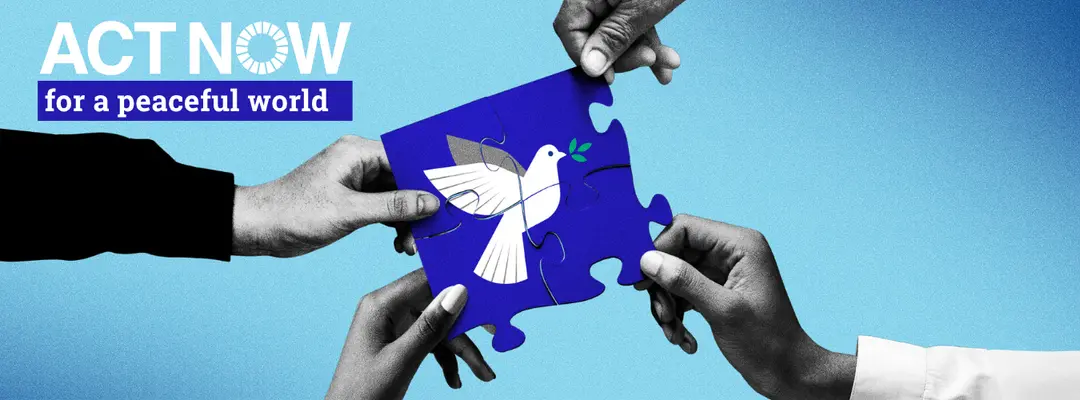
International Day of Peace marked on 21 September; 2026 theme announced
The world marks the International Day of Peace on 21 September. The 2026 theme, "Invest in Peace - For Everyone, Everywhere, Every Day", honours the 'everyday architects of peace' who drive local action and build stability from the ground up. UN Secretary-General António Guterres said the courage of those championing peace in neighbourhoods, classrooms and communities should inspire all, and urged world leaders to invest in a peaceful future. The Day was established by the UN General Assembly in 1981, and in 2001 the Assembly unanimously designated it a period of non-violence and cease-fire.
Source
United Nations / UNGA · read the original report ↗
Desk check · compared with the source
What the desk checked (5)
- The International Day of Peace is marked on 21 September. — Stated directly in the source (UN observance page).
- The 2026 theme is 'Invest in Peace - For Everyone, Everywhere, Every Day'. — Figure/theme appears in source text as the official theme.
- The Day was established in 1981 by the UN General Assembly. — Stated in the source's background section, attributed to the UN.
- In 2001 the General Assembly unanimously voted to designate the Day as a period of non-violence and cease-fire. — Stated in source background; no resolution number given.
- Secretary-General António Guterres called on world leaders to invest in a peaceful future for all people. — Quote attributed to Guterres in the source.
Analysts’ view opinion
The very wording of the 2026 theme, 'Invest in Peace', signals where the UN finds itself strategically: peace is being framed not as a moral aspiration but as an investment that requires resources — language chosen to compete for funding at a time when defence budgets are rising. The emphasis on 'everyday architects of peace' is genuinely inspiring, but it also hints at work being shifted downward to the grassroots because it cannot be settled at Security Council level amid great-power deadlock. Notably, the story does not say that the ceasefire designation adopted unanimously in 2001 is being honoured in any live conflict today — and that gap is the real story.
- 'Invest' is a deliberate choice: it makes the case for peacebuilding in budgetary language at a moment when global spending is tilting toward defence.
- Shifting focus from governments to neighbourhoods, classrooms and communities is the familiar UN fallback when multilateral forums are gridlocked.
- Established in 1981 and unanimously designated a period of non-violence and ceasefire in 2001 — a reminder that declaratory measures are often the only thing consensus can carry.
- The Secretary-General's appeal is addressed to 'world leaders', yet the observance carries no mechanism to hold any specific actor accountable.
- States routinely fold such themes into their own diplomatic narratives, so the risk is that it is used as messaging opportunity rather than obligation.
What to watch — Watch whether any conflict parties actually acknowledge the 21 September ceasefire appeal in practice, and what peacebuilding funding proposals surface in subsequent General Assembly discussions.
The story establishes only the theme and the historical background; it does not tell us what any country will fund, whether any ceasefire will hold, or what past themes have actually achieved.
Deep dive
Research brief · 8 facts · 3 dates · exam-readyThe brief
Context
The International Day of Peace is observed worldwide on 21 September. It was established by the United Nations General Assembly in 1981, and in 2001 the Assembly unanimously voted to designate the Day as a period of non-violence and cease-fire. The 2026 observance carries the theme "Invest in Peace - For Everyone, Everywhere, Every Day", which honours the "everyday architects of peace" — people driving local action and building stability from the ground up. UN Secretary-General António Guterres has urged world leaders to invest in a peaceful future for all people.
Key facts
- The International Day of Peace is marked on 21 September each year.
- The Day was established in 1981 by the United Nations General Assembly.
- In 2001, two decades later, the General Assembly unanimously voted to designate the Day as a period of non-violence and cease-fire.
- The 2026 theme is 'Invest in Peace - For Everyone, Everywhere, Every Day'.
- The 2026 observance honours the 'everyday architects of peace' — people driving local action and building peace from the ground up.
- UN Secretary-General António Guterres called for inspiration from 'those who champion peace in neighbourhoods, classrooms and communities' and urged world leaders to invest in a peaceful future.
- Suggested individual actions include giving time to help someone, lending one's voice for change, hosting a Peace Circle — an intergenerational youth-led conversation on solutions — and using one's platform to tell stories of peace and hope.
- The campaign hashtag for the observance is #InvestInPeace.
Timeline
- 1981The United Nations General Assembly establishes the International Day of Peace.
- 2001The General Assembly unanimously votes to designate the Day as a period of non-violence and cease-fire.
- 21 September (annually)The world marks the International Day of Peace; the 2026 theme is 'Invest in Peace - For Everyone, Everywhere, Every Day'.
Who has a stake
- United Nations General Assembly — Created the Day in 1981 and in 2001 designated it a period of non-violence and cease-fire; owns the mandate for the observance.
- UN Secretary-General António Guterres — Leads the appeal, urging world leaders to invest in a peaceful future and citing the courage of local peace champions.
- World leaders / governments — Called upon to invest in peace, since peace is framed as the foundation for tackling humanity's shared challenges.
- 'Everyday architects of peace' — local communities, neighbourhoods, classrooms — Honoured by the 2026 theme as the actors who lay the groundwork for stability and lasting peace from the ground up.
- Youth — Invited to lead Peace Circles — intergenerational, youth-led conversations on solutions.
Why it matters
The source notes that amidst staggering volatility the search for peace feels overwhelming but has never been more urgent. By defining peace as more than the absence of war — the lived experience of safety, dignity, opportunity and cooperation — the 2026 theme shifts the focus from conference rooms to everyday local action. It reframes peacebuilding as an investment and a shared civic responsibility rather than only a matter of high diplomacy.
UPSC angle
Prelims pointers
- International Day of Peace: observed on 21 September.
- Established in 1981 by the UN General Assembly; in 2001 the UNGA unanimously designated it a period of non-violence and cease-fire.
- 2026 theme: 'Invest in Peace - For Everyone, Everywhere, Every Day'; hashtag #InvestInPeace.
- The 2026 observance honours the 'everyday architects of peace'.
- UN Secretary-General: António Guterres.
- UN Headquarters in New York houses peace gifts including a bell forged from coins donated by 60 countries and a knotted bronze gun honouring John Lennon.
Mains framing
The 2026 International Day of Peace theme, 'Invest in Peace - For Everyone, Everywhere, Every Day', reflects a conceptual widening of peace from the mere absence of war to the lived experience of safety, dignity, opportunity and cooperation. The source situates this in a context of 'staggering volatility', where the search for peace feels overwhelming yet more urgent than ever, and argues that peace is the necessary foundation for collectively tackling humanity's challenges. The theme's emphasis on 'everyday architects of peace' — those driving local action in neighbourhoods, classrooms and communities — signals that peacebuilding is not confined to conference rooms or formal diplomacy, but is co-produced by citizens, youth and local institutions from the ground up. The UN Secretary-General's twin appeal is instructive: draw inspiration from the courage of local peace champions, and simultaneously press world leaders to invest in a peaceful future. The way forward suggested in the source is participatory and incremental — volunteering time, lending one's voice for positive change, hosting intergenerational youth-led Peace Circles on solutions, and using platforms to amplify stories of peace and hope. The observance also illustrates the broader function of international days: educating the public, mobilising political will and resources, and reinforcing humanity's achievements.
Key terms
- International Day of Peace
- UN observance on 21 September, established by the General Assembly in 1981 to promote peace worldwide.
- Invest in Peace - For Everyone, Everywhere, Every Day
- The 2026 theme of the International Day of Peace, calling on all people to do their part for peace.
- Everyday architects of peace
- People driving local action, laying the groundwork for stability and building lasting peace from the ground up.
- Peace Circle
- An intergenerational, youth-led conversation on solutions, suggested as an action for the observance.
- United Nations General Assembly
- UN organ that established the Day in 1981 and unanimously designated it a period of non-violence and cease-fire in 2001.
- International days
- Observances used to educate the public, mobilise political will and resources, and celebrate achievements of humanity; predate the UN but adopted by it as an advocacy tool.
Practice questions
- Trace the evolution of the International Day of Peace from its establishment in 1981 to its 2001 designation as a period of non-violence and cease-fire. What does this evolution tell us about the UN's approach to peacebuilding?
- 'Peace is more than the absence of war.' Examine this statement in the light of the 2026 International Day of Peace theme, 'Invest in Peace - For Everyone, Everywhere, Every Day'.
- How do UN-designated international days function as instruments of global advocacy? Discuss with reference to the International Day of Peace.
Grounded only in the source report — figures and dates are the source's, not inferred.