
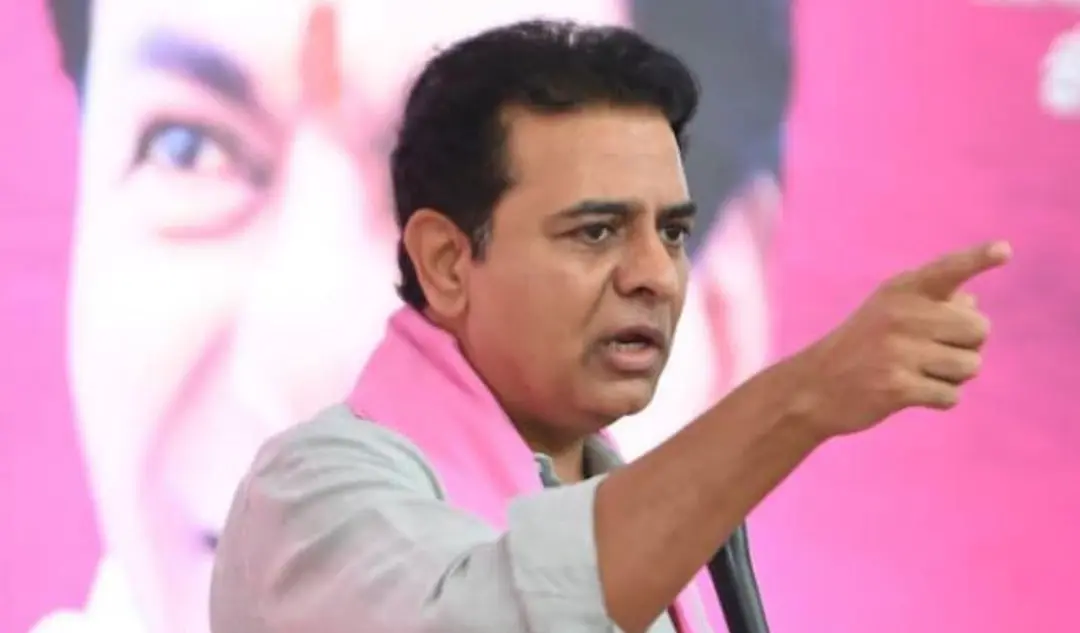
BRS asks Supreme Court for suo motu inquiry into ECI functioning
The BRS has urged the Supreme Court to take suo motu cognisance of concerns over the functioning of the Election Commission of India and order a court-monitored inquiry. In a statement in Hyderabad on Saturday, party working president KT Rama Rao said the ECI, a constitutional body, should remain above suspicion and no agency other than the Supreme Court could credibly investigate. He said doubts persisted despite a BRS delegation meeting three Election Commissioners in Delhi on the Special Intensive Revision and raising issues during the Bihar elections.
Source
KTR (BRS) · read the original report ↗
Desk check · compared with the source
What the desk checked (5)
- BRS has urged the Supreme Court to take suo motu cognisance of concerns over the ECI's functioning and order a court-monitored inquiry. — Attributed to a BRS statement issued on Saturday in Hyderabad, as reported in the source.
- KT Rama Rao said no agency other than the Supreme Court could credibly investigate the concerns. — Direct quote attributed to the BRS working president in the source.
- The Supreme Court should take cognisance of what former Election Commissioners are saying. — Quoted opinion; the source does not name the former Election Commissioners or their statements.
- A BRS delegation met three Election Commissioners in New Delhi over the Special Intensive Revision (SIR) process. — Recalled by Rama Rao himself; no date or independent confirmation in the source.
- BRS formally raised the issues during the Bihar elections. — Attributed to Rama Rao; no documentation cited in the source.
Analysts’ view opinion
This is a political move dressed as a legal request. Having lost power in Telangana, the BRS is fighting for relevance, and by latching on to the SIR issue that opposition parties are raising nationally, it is buying itself a seat in a bigger conversation. By stressing that it met the commissioners in Delhi and raised objections during the Bihar elections without result, the party is building a narrative that institutional avenues have been exhausted — but since suo motu cognisance by the Supreme Court is rare, the immediate payoff is more likely to be communicative than judicial.
- Asking for suo motu cognisance rather than filing a formal petition reads as a pressure play in the public arena more than a litigation strategy.
- With SIR already a shared opposition talking point, the BRS gains national visibility simply by joining that chorus.
- KT Rama Rao fronting the statement personally also serves an internal purpose, reinforcing his standing as the party's working president and public face.
- The line carries risk: questioning the electoral process invites the counter-charge that a defeated party is casting doubt on results it lost.
- The ECI can be expected to argue its revision processes are constitutionally grounded and that it does engage with party representations; no commission response is recorded in this story.
What to watch — Watch whether the Supreme Court takes any note of the plea, whether Congress and other opposition parties echo the same demand alongside the BRS, and whether the ECI issues a formal response.
The story establishes only that a party has made this demand — it does not establish any irregularity by the ECI, nor does it record the court's response, the commission's explanation, or the specifics of what former commissioners are said to have stated.
Deep dive
Research brief · 8 facts · 3 dates · exam-readyThe brief
Context
The Bharat Rashtra Samithi (BRS), the Telangana-based party led in an executive role by working president KT Rama Rao, has publicly asked the Supreme Court to take suo motu cognisance of doubts over how the Election Commission of India (ECI) functions and to order a court-monitored inquiry. The demand follows the party's earlier representations to the poll panel on the Special Intensive Revision (SIR) of electoral rolls and on issues it flagged during the Bihar elections. The BRS argues that the ECI, being a constitutional body, must remain above suspicion and that only the Supreme Court can credibly examine the concerns. The statement was issued in Hyderabad on Saturday, 23 September 2026.
Key facts
- BRS has urged the Supreme Court to take suo motu cognisance of concerns over the ECI's functioning and to order a court-monitored inquiry.
- The demand was made in a statement in Hyderabad on Saturday; the report is dated 23 September 2026, 06:56 PM.
- BRS working president KT Rama Rao said the ECI is a constitutional body and should remain above suspicion.
- Rama Rao said: 'We cannot believe any other agency to investigate other than the Supreme Court of India.'
- He said the Supreme Court should take cognisance of what former Election Commissioners are saying and launch a suo motu inquiry.
- Rama Rao recalled leading a BRS delegation to New Delhi to meet three Election Commissioners over the Special Intensive Revision (SIR) process.
- The party said it had formally raised issues during the Bihar elections, seeking clarity, transparency and redressal of apprehensions in the revision process.
- BRS maintains that serious doubts persist despite the representations made to the commission.
Timeline
- Date not stated in the sourceKT Rama Rao leads a BRS delegation to New Delhi and meets three Election Commissioners to raise concerns over the Special Intensive Revision (SIR).
- During the Bihar elections (dates not stated in the source)BRS formally raises issues with the poll panel, urging transparency and clarification of ambiguities in the revision process.
- Saturday, as reported on 23 September 2026BRS, in a statement in Hyderabad, asks the Supreme Court for suo motu cognisance and a court-monitored inquiry into the ECI's functioning.
Who has a stake
- Election Commission of India (ECI) — A constitutional body whose credibility and functioning are under question; faces a demand for judicial scrutiny of its processes.
- Bharat Rashtra Samithi (BRS) — Seeks a court-monitored inquiry after its representations to the ECI allegedly failed to resolve its doubts.
- KT Rama Rao, BRS working president — Led the party delegation to the Election Commissioners and is the face of the demand for a Supreme Court inquiry.
- Supreme Court of India — Asked to take suo motu cognisance and monitor an inquiry; the only agency BRS says it can trust for such a probe.
- Former Election Commissioners — Their public statements are cited by BRS as grounds for the Supreme Court to act.
- Voters and electors covered by SIR — Transparency and accuracy of electoral roll revision directly affects their right to vote.
Why it matters
The ECI's credibility underpins public acceptance of election outcomes, and a national party asking the judiciary to examine the poll panel's functioning signals a deepening trust deficit. It also places the Special Intensive Revision of electoral rolls at the centre of political contestation, since roll revision decides who can vote. How the Supreme Court responds to such demands will shape the boundary between judicial oversight and the autonomy of a constitutional body.
UPSC angle
Prelims pointers
- The Election Commission of India is a constitutional body, as noted in the BRS statement.
- Suo motu cognisance: a court taking up a matter on its own motion, without a petition being filed.
- Special Intensive Revision (SIR): the electoral roll revision process on which BRS raised concerns with the ECI.
- BRS working president KT Rama Rao led the party delegation that met three Election Commissioners in New Delhi.
- BRS statement issued in Hyderabad; report dated 23 September 2026.
- BRS says it also formally raised roll-revision concerns during the Bihar elections.
Mains framing
The BRS demand for a Supreme Court-monitored inquiry into the Election Commission of India reflects a wider contest over the perceived neutrality of constitutional bodies that manage elections. The immediate trigger, as stated by the party, is the Special Intensive Revision of electoral rolls, on which a BRS delegation met three Election Commissioners in New Delhi and also made formal representations during the Bihar elections, without, in the party's view, resolving its doubts; it additionally cites statements by former Election Commissioners. The implications are twofold: unaddressed suspicion over roll revision can erode confidence in election outcomes, while judicially supervised inquiries into a constitutional body raise questions about institutional autonomy and the limits of court oversight. A grounded way forward, on the source's own logic, lies in the ECI itself clarifying ambiguities, publishing the procedures and safeguards of the revision process, and engaging parties transparently so that doubts are settled institutionally before they escalate into demands for judicial intervention. The source does not state any response from the ECI or the Supreme Court.
Key terms
- Suo motu cognisance
- A court taking up an issue on its own initiative rather than on a petition by an aggrieved party.
- Court-monitored inquiry
- An investigation conducted under the supervision of a court, which oversees its progress and integrity.
- Election Commission of India (ECI)
- The constitutional body that conducts elections; described in the story as facing a crisis of confidence.
- Special Intensive Revision (SIR)
- The electoral roll revision exercise on which BRS sought transparency and clarification from the ECI.
- Bharat Rashtra Samithi (BRS)
- The party, with KT Rama Rao as working president, that issued the demand from Hyderabad.
Practice questions
- Should the Supreme Court take suo motu cognisance of allegations against the Election Commission of India? Discuss the balance between judicial oversight and the autonomy of constitutional bodies.
- Electoral roll revision exercises such as the Special Intensive Revision have become politically contested. Examine how transparency in roll revision affects public confidence in elections.
- 'Constitutional bodies must not only be impartial but be seen to be impartial.' Critically evaluate this proposition with reference to demands for an inquiry into the ECI's functioning.
Grounded only in the source report — figures and dates are the source's, not inferred.