
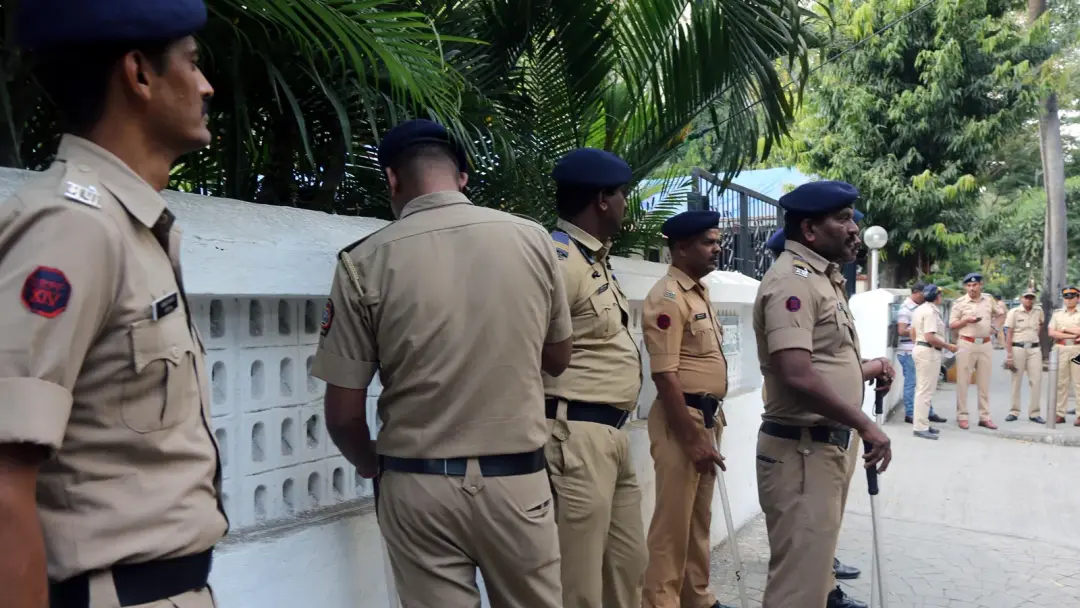
Mumbai activists allege detention over pro-Palestine event; police deny
Members of the Indian People in Solidarity with Palestine (IPSP), who planned a pro-Palestine event, have alleged that Mumbai Police harassed and detained them for several hours on September 15. Harshada said officers in plain clothes came to her Vakola home, refused to show ID cards, searched her library, seized friends' phones for nearly an hour and barred a minor from leaving. Police denied the allegations, saying they were probing a video of people making Palestinian flags and took no action.
Source
Indian Express — Cities · read the original report ↗
Desk check · some claims need care
What the desk checked (5)
- IPSP members were harassed and detained for several hours by Mumbai Police on Tuesday, September 15. — Attributed to citizens and activists of IPSP; police deny the allegation in the same source.
- Harshada says police in plain clothes searched her Vakola residence, refused to show ID, seized friends' phones for nearly an hour and barred a minor from leaving. — Direct quoted allegation by a named individual; not independently confirmed in the source.
- Police acted after finding a video of people making Palestinian flags and took no action, with no protest permission obtained. — Attributed to an unnamed senior officer.
- Police found 'left-leaning' books and QR codes prima facie for donations; enquiry ongoing. — Attributed to an unnamed official; characterisation is the police's own.
- A private screening of a documentary on Umar Khalid was cancelled after police pressure, while another screening took place in Kurla on Monday. — Attributed to a statement by two unnamed organisers; police response on this incident not given.
Analysts’ view opinion
This is less a police story than a story about how much political space protest is being given. Two incidents in one week in Mumbai — a pro-Palestine solidarity event and a documentary screening on Umar Khalid — allow opposition parties and civil liberties groups to bundle them into a single narrative about shrinking dissent. The police, for their part, are leaning on the legally safest ground available: no permission was sought for a protest, and no action was taken — meaning both sides already have their arguments ready.
- The reference to "left-leaning" books and donation QR codes frames the inquiry in ideological terms — a political gift to activists, and routine evidence-gathering in the police telling.
- The "no permission taken" line is a strong legal shield; the allegations about unshown ID cards and being held overnight raise process questions — the two claims win in different forums.
- With civil liberties already an opposition talking point in Maharashtra politics, episodes like this give opposition voices and parties courting minority constituencies an opening.
- A domestic protest over a foreign-policy issue is politically delicate for any government, which makes containment at the local policing level the path of least resistance.
- The fact that another screening did go ahead in Kurla suggests the clampdown was neither complete nor obviously uniform in design.
What to watch — Watch whether the activists take this to court or a rights commission, and whether opposition leaders raise the two incidents in the legislature or on public platforms.
The story records allegations and a police denial only — it does not establish whether any detention was unlawful, on whose orders it happened, or whether political direction was involved.
Deep dive
Research brief · 8 facts · 3 dates · exam-readyThe brief
Context
Members of the Indian People in Solidarity with Palestine (IPSP), a citizens' and activists' group, had planned a pro-Palestine event in Mumbai. They allege that Mumbai Police officers in plain clothes came to a private residence in Vakola on Tuesday, September 15, after a tip-off about Palestinian-themed flags, and effectively detained those present for hours without explaining the legal authority for the search. Police deny harassment or detention, saying they were tracing the source of a video showing people making Palestinian flags and that no permission had been taken from local police for any protest. Separately, organisers of a private screening of a documentary on former JNU student and activist Umar Khalid allege the event was cancelled due to police pressure.
Key facts
- IPSP members allege they were harassed and kept under detention for several hours by Mumbai Police on Tuesday, September 15.
- Harshada alleges police arrived at her Vakola residence in plain clothes and placed her under "illegal house arrest" after a tip-off about Palestinian-themed flags being displayed.
- She alleges officers refused to produce identity cards and began searching her library.
- She alleges friends' phones were seized for nearly an hour and a minor boy present was not allowed to leave.
- She alleges those present were verbally abused, given no reason for detention, and kept there through the night.
- A senior officer said police had come across a video showing a few people in a room making Palestinian flags and traced it to the house where the flags were kept.
- The officer said no permission was taken from local police for any protest, and that police found several "left-leaning" books and QR codes prima facie for accepting donations; an enquiry is ongoing.
- Organisers of a private screening of a documentary on Umar Khalid say civilian-clothed persons arrived at the venue around 7 pm, pressured the venue manager, and the screening was cancelled; another private screening took place in Kurla on Monday.
Timeline
- Tuesday, September 15IPSP members allege Mumbai Police came to a Vakola residence in plain clothes, searched the premises, seized phones and detained them for several hours, including overnight.
- Around 7 pm (date not stated in the source)People in civilian clothes allegedly arrived at the venue of a private screening of a documentary on Umar Khalid and pressured the manager; the screening was cancelled after a call from a senior police officer and arrival of a police vehicle.
- Monday (date not stated in the source)Another private screening of the Umar Khalid documentary took place in Kurla.
Who has a stake
- Indian People in Solidarity with Palestine (IPSP) — Its members allege harassment and unlawful detention while planning a pro-Palestine event; their right to assemble and express solidarity is at issue.
- Harshada, resident of Vakola — Alleges "illegal house arrest", a search of her library without stated authority, and verbal abuse at her own home.
- Mumbai Police — Denies harassment and detention, says it was probing a video of people making Palestinian flags and that no protest permission was taken; faces allegations of procedural violations.
- The minor boy present at the premises — Alleged to have been barred from leaving during the police action.
- Organisers of the Umar Khalid documentary screening — Allege their private screening was cancelled after police pressure on the venue manager.
- Venue manager of the screening — Alleged to have been questioned and intimidated by persons in civilian clothes and called by a senior police officer before cancelling the event.
Why it matters
The episode raises questions about the procedural limits on police action against private gatherings and speech on foreign policy issues, including whether officers must identify themselves and state the authority for a search or detention. It also highlights the contested line between a "probe" and de facto detention, and how event permissions are used in relation to protest-linked activity. The parallel allegation about a cancelled documentary screening points to a wider pattern alleged by activists.
UPSC angle
Prelims pointers
- Indian People in Solidarity with Palestine (IPSP) is the group whose members alleged harassment by Mumbai Police on September 15.
- The alleged incident took place at a residence in Vakola, Mumbai.
- Police said their trigger was a video showing people in a room making Palestinian flags.
- Police said no permission was taken from local police for any protest.
- Police said they found "left-leaning" books and QR codes prima facie for accepting donations; an enquiry is ongoing.
- A private screening of a documentary on former JNU student and activist Umar Khalid was cancelled; another screening later took place in Kurla.
Mains framing
The Mumbai episode illustrates the friction between policing of public order and citizens' freedoms of speech, assembly and privacy in their homes. The activists' specific allegations - plain-clothes officers refusing to show identity cards, a search of a private library without any stated legal authority, seizure of phones, restraint of a minor and overnight confinement - go to the core of procedural safeguards: an intrusion must be authorised, explained and documented, and any restraint on liberty must be recorded as such. The police version, that they were merely tracing the source of a video of Palestinian flag-making and found "left-leaning" books and donation QR codes, raises a separate concern: whether the content of a person's reading or their political sympathies can legitimately form the basis of continued enquiry, and whether "no protest permission was taken" justifies entry into a private residence where no protest was under way. The alleged pressure to cancel a documentary screening, followed by the screening happening elsewhere, suggests informal, undocumented policing that leaves no paper trail to challenge. The way forward lies in strict adherence to identification and search-and-seizure procedure, written grounds for any detention, contemporaneous records of police visits and enquiries, and grievance mechanisms so that disputed versions - as here, where allegations are flatly denied - can be tested against documentation rather than assertion.
Key terms
- Indian People in Solidarity with Palestine (IPSP)
- A group of citizens and activists that was planning a pro-Palestine event in Mumbai, whose members allege police harassment.
- "Illegal house arrest"
- The term Harshada used for being confined to her Vakola residence by police without a stated legal basis.
- Detention
- Restraint of a person's liberty by police; the activists say they were effectively detained overnight, while police say no action was taken.
- Plain clothes / civil dress policing
- Officers acting without uniform; the activists allege they refused to produce identity cards when asked.
- Umar Khalid
- Former JNU student and activist who is the subject of the documentary whose private screening was allegedly cancelled after police pressure.
Practice questions
- The Mumbai case shows competing claims of "probe" and "detention". Discuss the procedural safeguards that should govern police entry, search and restraint of liberty at a private residence.
- Can a citizen's reading material or political sympathies form a legitimate basis for police enquiry? Examine with reference to freedoms of speech and association.
- Informal police pressure that leads to the cancellation of private events leaves no official record. What accountability mechanisms could address such situations?
Grounded only in the source report — figures and dates are the source's, not inferred.