
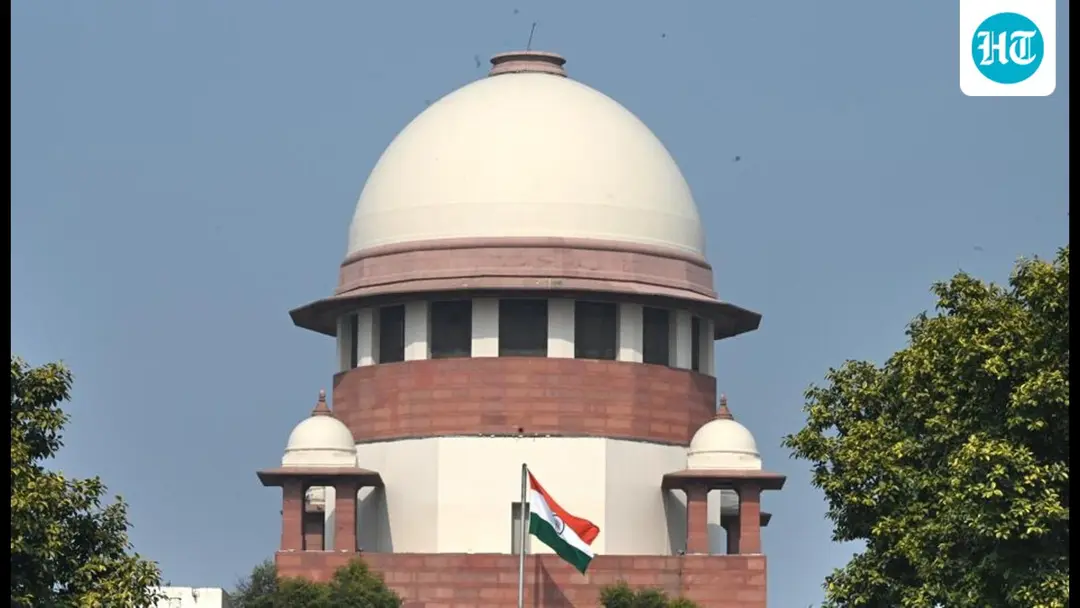
Supreme Court quashes arbitration, calls interim orders arbitrary
The Supreme Court has scrapped an arbitral proceeding in which a tribunal passed sweeping interim orders despite an objection to its appointment and bias allegations. A bench of justices JB Pardiwala and K Vinod Chandran, in a September 17 judgment, held the initiation of arbitration was 'non est in law' and quashed three orders freezing bank accounts, allowing property possession and directing transfer of deposits. Money transferred must be returned within a week and property restored.
Source
Hindustan Times — India · read the original report ↗
Desk check · compared with the source
What the desk checked (5)
- A bench of justices JB Pardiwala and K Vinod Chandran declared the initiation of arbitration 'non est in law' in a September 17 judgment. — Attributed to the named bench with a judgment date given in the source.
- Three interim orders under Section 17 of the Arbitration and Conciliation Act, 1996 froze accounts in IDBI Bank, Bank of Baroda, HDFC Bank and ICICI Bank and allowed property possession and transfer of deposits. — Detailed in the source as findings recorded by the court; bank names and statutory provision appear in the source.
- The appeal was by Arth Micro Finance Pvt Ltd and others against Shivalik Small Finance Bank Ltd. — Party names appear in the source; no independent verification possible.
- Money transferred under the interim orders must be returned within one week and property restored; advocate Mayuri Raghuwanshi appointed fresh arbitrator. — Stated in the source as directions of the bench.
- The appellants alleged tribunal members had close links with the respondent bank. — Presented in the source as an allegation by the petitioner, not an established fact.
Analysts’ view opinion
This is a commercial ruling, but its political echo is not small. At a time when arbitration is promoted as the system that will unclog the courts, the Supreme Court declaring the very initiation of a tribunal "non est in law" reopens the political argument about how trustworthy that system actually is. By striking down drastic orders — frozen accounts, seizure of property, transfer of deposits — as "arbitrary in nature", the court hands a strong talking point to anyone questioning how financial institutions exercise power.
- The immediate gainers are borrowers and smaller firms — the order to return money within a week and restore property lends itself easily to a "relief for the little guy" political narrative.
- The pressure falls on the banking side, since the court found nothing on record to support the claim that the parties had consented to the tribunal's appointment, inviting scrutiny of recovery practices.
- For policymakers who sell arbitration as central to the ease-of-doing-business agenda, this is an awkward signal that could fuel demands for reform.
- That the proceeding rolled on despite an explicit objection and a bias allegation opens space for a legislative-level debate on transparency in arbitrator appointments.
- The Supreme Court overturning a high court dismissal grounded in limitation can be used politically to argue that technicalities are defeating substantive justice.
What to watch — Watch whether demands to tighten rules on arbitrator appointment and conflict-of-interest disclosure gain traction in government and parliamentary forums.
The story concerns one specific dispute and does not establish a systemic pattern, any move by the government to amend the law, or any political reaction from any quarter.
Deep dive
Research brief · 8 facts · 4 dates · exam-readyThe brief
Context
Arbitration is a private dispute-resolution mechanism under the Arbitration and Conciliation Act, 1996, where a tribunal chosen by or with the consent of the parties decides the dispute; Section 17 lets such a tribunal pass interim measures. In a dispute between Arth Micro Finance Pvt Ltd and Shivalik Small Finance Bank Ltd arising from an agreement with an arbitration clause, a tribunal passed three sweeping interim orders even though the appellants had objected to its appointment and alleged the members had close links with the bank. The Delhi-level challenge in the high court was thrown out on limitation grounds. On appeal, the Supreme Court held the very initiation of the arbitration was "non est in law" and quashed the interim orders.
Key facts
- A bench of justices JB Pardiwala and K Vinod Chandran delivered the judgment on September 17.
- The court held the very initiation of the arbitration proceedings was "non est in law" as nothing on record showed the appellants consented to the tribunal's appointment.
- The bench observed: "Arbitration, though rhymes with it, cannot result in an arbitrary measure, even in the appointment of an Arbitral Tribunal."
- Three interim orders were passed under Section 17 of the Arbitration and Conciliation Act, 1996, despite the appellants' objection and bias allegations.
- The orders froze accounts linked to the appellants' PAN with IDBI Bank, Bank of Baroda, HDFC Bank and ICICI Bank.
- A second order allowed the respondent bank to take possession of the appellants' movable and immovable properties; a third directed transfer of their bank deposits to the respondent.
- The high court had dismissed Arth's challenge on limitation as no application for condonation of delay under Section 5 of the Limitation Act had been filed.
- Money transferred under the interim orders must be returned within one week; property taken over or attached must be restored; advocate Mayuri Raghuwanshi was appointed fresh arbitrator.
Timeline
- Before the interim ordersAppellants received the tribunal's communication and objected to its appointment, alleging the members had close links with the respondent bank.
- After the objectionThe tribunal nonetheless passed three interim orders under Section 17 freezing accounts, permitting possession of properties and directing transfer of deposits.
- SubsequentlyArth Micro Finance's challenge before the high court was dismissed on limitation, as no condonation-of-delay application under Section 5 of the Limitation Act was filed.
- September 17 judgmentSupreme Court set aside the high court order, declared the arbitration's initiation non est in law, quashed all three interim orders and appointed a fresh arbitrator.
Who has a stake
- Arth Micro Finance Pvt Ltd and other appellants — Their bank accounts were frozen, deposits transferred and properties taken over; they now get money back within a week and property restored.
- Shivalik Small Finance Bank Ltd (respondent) — Claimed the tribunal was appointed with consent of parties; must return transferred money and restore property, and faces a fresh arbitrator.
- The arbitral tribunal in question — Faced allegations of close links with the respondent; its appointment and its three Section 17 interim orders stand invalidated.
- Supreme Court bench (justices JB Pardiwala and K Vinod Chandran) — Laid down that arbitral appointments and interim measures cannot be arbitrary; appointed advocate Mayuri Raghuwanshi as fresh arbitrator.
- Banks holding the accounts (IDBI, Bank of Baroda, HDFC, ICICI) — Had implemented freezes on accounts linked to the appellants' PAN under orders now quashed.
- High court — Its dismissal of the challenge purely on limitation was set aside by the Supreme Court.
Why it matters
Arbitration depends on party consent; if a tribunal can be imposed without proven consent and then freeze accounts and seize property, the process loses its legitimacy. The ruling signals that objections to appointment and allegations of bias must be addressed before drastic interim relief under Section 17, and that technical limitation bars should not shut out challenges going to the root of the proceedings.
UPSC angle
Prelims pointers
- Section 17, Arbitration and Conciliation Act, 1996: empowers an arbitral tribunal to grant interim measures.
- Section 5 of the Limitation Act: provides for condonation of delay; absence of such an application led the high court to dismiss Arth's challenge.
- "Non est in law": the Supreme Court's description of the initiation of the arbitration proceedings.
- Case: Arth Micro Finance Pvt Ltd and others vs Shivalik Small Finance Bank Ltd; judgment dated September 17.
- Bench: justices JB Pardiwala and K Vinod Chandran; advocate Mayuri Raghuwanshi appointed fresh arbitrator.
- Accounts frozen were held with IDBI Bank, Bank of Baroda, HDFC Bank and ICICI Bank, linked to the appellants' PAN.
Mains framing
The judgment turns on the foundational principle that arbitration derives its authority from party consent: where the record showed nothing to establish that the appellants agreed to the tribunal's appointment, the Supreme Court held the initiation of proceedings itself to be non est in law. The problem was compounded when the tribunal, despite an express objection to its constitution and an allegation that its members had close links with the respondent bank, invoked Section 17 of the Arbitration and Conciliation Act, 1996 to freeze multiple bank accounts, permit possession of movable and immovable property and order transfer of deposits to the respondent — measures the court called "arbitrary in nature". The high court's refusal to look at the merits, purely because no condonation application under Section 5 of the Limitation Act was filed, meant a defect going to the root of jurisdiction escaped scrutiny. The corrective path the court chose is instructive: quash the tainted orders, order restitution of money within a week and restoration of property, leave the question of interest to the new arbitrator, and appoint a fresh, neutral arbitrator so that the underlying commercial dispute is still resolved through arbitration rather than litigation. The wider lesson is that speed and party autonomy in arbitration cannot come at the cost of consent, impartiality and reasoned treatment of bias objections before coercive interim relief.
Key terms
- Arbitral tribunal
- The panel or arbitrator that decides a dispute under an arbitration clause, ordinarily constituted by or with the consent of the parties.
- Section 17, Arbitration and Conciliation Act, 1996
- Provision allowing an arbitral tribunal to pass interim measures, such as freezing accounts or securing property, during proceedings.
- Non est in law
- Treated as non-existent in law; here, the Supreme Court's finding on the initiation of the arbitration proceedings.
- Section 5, Limitation Act
- Enables condonation of delay in filing; no such application was made, so the high court dismissed the challenge on limitation.
- Interim order
- A temporary direction issued before final adjudication; here it froze accounts, allowed property possession and transferred deposits.
- Allegation of bias
- Claim that tribunal members had close links with one party, undermining the impartiality required of an arbitrator.
Practice questions
- Party consent is the foundation of arbitration. Examine, in light of the Supreme Court's September 17 ruling, how courts should deal with objections to the appointment of an arbitral tribunal and allegations of bias.
- Discuss the scope and limits of an arbitral tribunal's power to grant interim measures under Section 17 of the Arbitration and Conciliation Act, 1996.
- Should procedural bars such as limitation prevent courts from examining challenges that go to the root of an arbitral tribunal's jurisdiction? Critically analyse.
Grounded only in the source report — figures and dates are the source's, not inferred.