
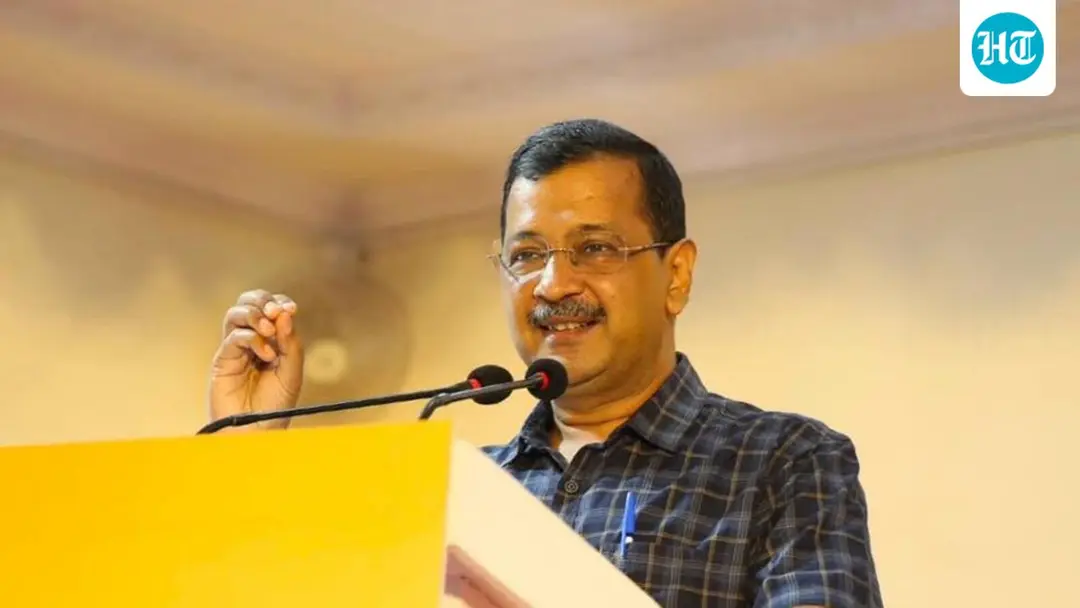
Contempt case: Delhi HC gives Kejriwal, AAP leaders four weeks to reply
The Delhi High Court on Monday granted four weeks to former Delhi chief minister Arvind Kejriwal and other AAP leaders to file replies in a criminal contempt case initiated by Justice Swarana Kanta Sharma over allegedly defamatory social media posts targeting her. The respondents include Manish Sisodia, Sanjay Singh, Saurabh Bharadwaj, Vinay Mishra and Durgesh Pathak. A bench of Justices Navin Chawla and Arun Bhardwaj also allowed them to approach the judicial registrar for document copies. The next hearing is November 16.
Source
Hindustan Times — India · read the original report ↗
Desk check · compared with the source
What the desk checked (5)
- Delhi High Court gave Kejriwal and AAP leaders four weeks to reply in a criminal contempt case, with next hearing on November 16. — Attributed to the court's order, which is quoted in the source.
- The bench of Justices Navin Chawla and Arun Bhardwaj allowed the respondents to approach the judicial registrar for undisclosed documents. — Figure and names appear in source; attributed to the court order.
- Justice Swarana Kanta Sharma initiated contempt proceedings on May 14 over allegedly defamatory social media posts and withdrew from the matter. — Stated in source with date and reasoning attributed to the judge.
- A trial court discharged Kejriwal and others in the excise policy case on February 27, after which the CBI approached the high court. — Chronology stated in source without direct document citation.
- Lawyer Ashok Chaitanya sought contempt action against Kejriwal, Bharadwaj, Gopal Rai and a journalist over an alleged coordinated campaign. — Allegation attributed to the named lawyer; unproven in source.
Analysts’ view opinion
This looks like a courtroom matter, but its political weight falls on the entirety of AAP's top leadership. With Kejriwal, Sisodia, Sanjay Singh and Saurabh Bharadwaj all named as respondents, legal battles continue to crowd out the party's political agenda. The four-week window and the permission to seek document copies are procedural relief — politically it buys breathing room, not closure.
- Having lost power in Delhi, AAP leaders appearing mainly in court-related headlines pulls the party's messaging away from governance themes.
- Because the respondent list spans the party's first and second rung, this becomes an institutional burden rather than one leader's problem.
- AAP's camp is likely to frame this within its stated apprehension of not getting a fair hearing, while opponents could cast it as an attack on the judiciary.
- That Justice Sharma withdrew from the matter and a different bench is hearing it somewhat blunts questions about procedural fairness.
- A separate lawyer also seeking contempt action signals the dispute could widen further.
What to watch — Whether AAP leaders file explanations by November 16 and adopt a conciliatory posture, or stay on the boycott-and-confrontation track, will set the political direction of this case.
The story does not establish that any allegation has been proved, that any penalty has been imposed, or what the final outcome of the excise case will be — this is only a procedural deadline.
Deep dive
Research brief · 8 facts · 10 dates · exam-readyThe brief
Context
The Delhi High Court is hearing a criminal contempt case against former Delhi chief minister Arvind Kejriwal and other AAP leaders, initiated by Justice Swarana Kanta Sharma over allegedly defamatory social media posts targeting her. The posts came amid proceedings in the Delhi excise policy case, in which a trial court had discharged Kejriwal and others on February 27, a decision the CBI challenged before the High Court. After the AAP leaders sought her recusal and then boycotted her court, Justice Sharma initiated contempt proceedings on May 14 and withdrew from hearing the matter. A bench of Justices Navin Chawla and Arun Bhardwaj is now hearing the contempt case.
Key facts
- The Delhi High Court on Monday gave Arvind Kejriwal and other AAP leaders four weeks to file replies in the criminal contempt case; next hearing is November 16.
- The contempt case was initiated by Justice Swarana Kanta Sharma over alleged defamatory social media posts targeting her.
- Respondents named: Kejriwal, Manish Sisodia, Sanjay Singh, Saurabh Bharadwaj, Vinay Mishra and Durgesh Pathak.
- The bench of Justices Navin Chawla and Arun Bhardwaj allowed the respondents to approach the judicial registrar for copies of documents forming the basis of the contempt proceedings.
- Senior advocate Vikram Chaudhary, for Kejriwal, and other leaders' lawyers said certain documents had not been supplied to the accused.
- On February 27, a trial court discharged Kejriwal and others in the excise policy case, prompting the CBI to move the High Court.
- On March 9, Justice Sharma stayed the trial court's direction for departmental action against a CBI officer and deferred ED proceedings.
- On May 14, Justice Sharma initiated contempt proceedings and withdrew herself from hearing the matter.
Timeline
- February 27A trial court discharged Kejriwal and others in the excise policy case; the CBI approached the Delhi High Court.
- March 9Justice Swarana Kanta Sharma stayed the trial court's direction for departmental action against a CBI officer and deferred ED proceedings.
- March 13Chief Justice DK Upadhyaya rejected Kejriwal's plea to transfer the matter from Justice Sharma's bench.
- April 5Kejriwal, Sisodia and others sought Justice Sharma's recusal.
- April 20Justice Sharma dismissed the recusal plea.
- April 27Kejriwal informed the judge he would boycott the proceedings; Sisodia and Pathak later wrote similar letters.
- May 5The court decided to appoint senior advocates as amicus curiae for the three leaders; the matter was deferred on three occasions.
- May 14Justice Sharma initiated criminal contempt proceedings over the social media posts and withdrew from hearing the case.
- Monday (current hearing)Bench of Justices Navin Chawla and Arun Bhardwaj granted four weeks for replies and access to documents via the judicial registrar.
- November 16Next date of hearing in the contempt case.
Who has a stake
- Arvind Kejriwal and AAP leaders (Sisodia, Sanjay Singh, Bharadwaj, Vinay Mishra, Durgesh Pathak) — Face criminal contempt proceedings over allegedly defamatory social media posts; must file replies within four weeks.
- Justice Swarana Kanta Sharma — Judge who initiated the contempt action over posts targeting her and then withdrew from hearing the excise-related matter.
- Bench of Justices Navin Chawla and Arun Bhardwaj — Now hearing the contempt case; issued directions on replies and supply of documents.
- Delhi High Court Chief Justice DK Upadhyaya — Rejected Kejriwal's plea on March 13 to transfer the matter from Justice Sharma's bench.
- CBI and Enforcement Directorate — CBI challenged the February 27 discharge order in the excise policy case; ED proceedings were deferred on March 9.
- Advocate Ashok Chaitanya — Sought contempt proceedings against Kejriwal, Bhardwaj, Gopal Rai and a journalist for an alleged coordinated campaign against the judge.
- Senior advocate Vikram Chaudhary — Appearing for Kejriwal; submitted that certain documents had not been provided to the accused.
Why it matters
The case tests the boundary between free political speech on social media and the judiciary's power to punish criminal contempt that vilifies judges. It also raises procedural fairness questions, since the respondents say documents forming the basis of the contempt were not supplied to them, and it intersects with the high-profile Delhi excise policy litigation.
UPSC angle
Prelims pointers
- Criminal contempt proceedings against Kejriwal and AAP leaders were initiated on May 14 by Justice Swarana Kanta Sharma of the Delhi High Court.
- The contempt case is now before a bench of Justices Navin Chawla and Arun Bhardwaj; next hearing November 16.
- Trial court discharged Kejriwal and others in the excise policy case on February 27; CBI moved the High Court against it.
- Delhi HC Chief Justice DK Upadhyaya rejected the plea to transfer the case from Justice Sharma's bench on March 13.
- Recusal plea filed April 5 was dismissed on April 20; Kejriwal announced a boycott of proceedings on April 27.
- Amicus curiae: senior advocates the court decided on May 5 to appoint to represent the three leaders.
Mains framing
The Delhi High Court contempt case against Arvind Kejriwal and other AAP leaders illustrates the friction between political criticism of the judiciary on social media and the constitutional courts' contempt jurisdiction. The sequence recorded in the source — a trial court discharge in the excise policy case on February 27, the CBI's challenge, Justice Sharma's March 9 orders, a rejected transfer plea (March 13), a dismissed recusal plea (April 20), an announced boycott of proceedings (April 27), and finally the initiation of contempt on May 14 followed by the judge withdrawing from the matter — shows how allegations of judicial bias and campaigns against a judge can disrupt adjudication itself. Justice Sharma's reasoning that a judge who initiates contempt over vilifying material cannot continue hearing that very matter reflects the principle that justice must appear to be done. At the same time, the respondents' grievance that documents underlying the contempt were not supplied, and the court's direction allowing them to approach the judicial registrar and file replies in four weeks, underlines that contempt is a quasi-criminal process requiring full disclosure and a fair opportunity to defend. The way forward lies in strict procedural fairness, restraint by political actors in commenting on sitting judges, and sparing, principled use of contempt powers so that judicial authority is protected without chilling legitimate criticism.
Key terms
- Criminal contempt
- Contempt action taken for conduct or publications that allegedly scandalise or vilify a court or judge; here initiated over social media posts.
- Recusal
- A judge withdrawing from hearing a case; Kejriwal and Sisodia sought Justice Sharma's recusal on April 5, dismissed on April 20.
- Amicus curiae
- A lawyer appointed by the court to assist it; the court on May 5 decided to appoint senior advocates for the three leaders.
- Judicial registrar
- High Court officer the respondents were permitted to approach for copies of documents forming the basis of the contempt proceedings.
- Excise policy case
- Case in which a trial court discharged Kejriwal and others on February 27; the CBI challenged the order in the High Court.
- Enforcement Directorate (ED)
- Central financial investigation agency whose proceedings in the matter were deferred by Justice Sharma on March 9.
Practice questions
- Discuss the balance between the judiciary's contempt powers and the right to criticise judges in the age of social media, with reference to recent proceedings in the Delhi High Court.
- Why is procedural fairness — including supply of documents underlying charges — critical in criminal contempt cases? Examine in light of the Delhi High Court's directions.
- When should a judge recuse or withdraw from a case? Analyse with reference to Justice Swarana Kanta Sharma's withdrawal after initiating contempt proceedings.
Grounded only in the source report — figures and dates are the source's, not inferred.