
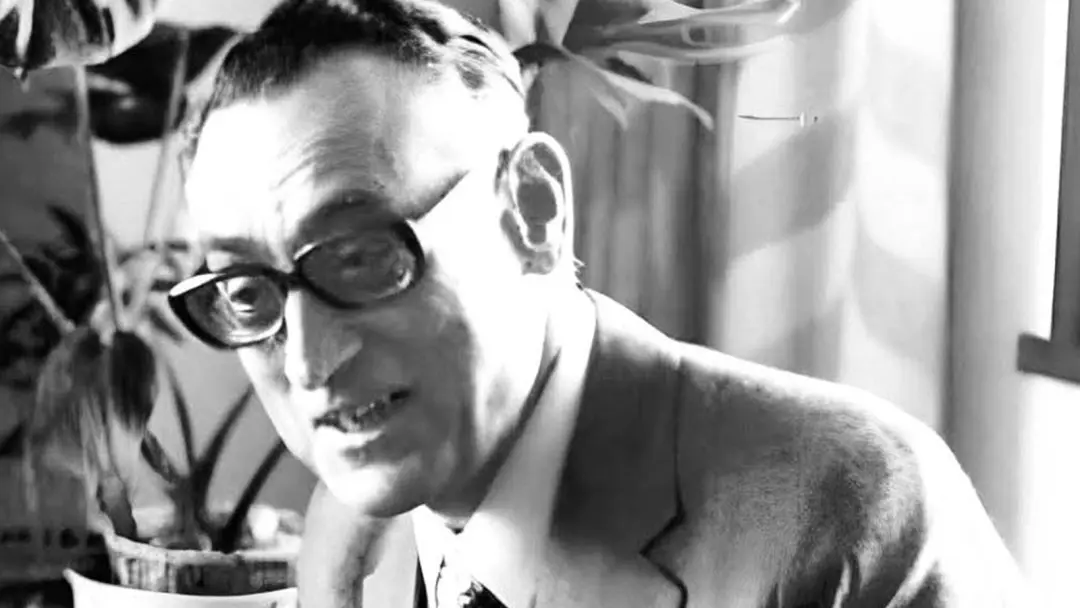
R&AW marks 58th year; first chief R N Kao built agency from scratch
The Research and Analysis Wing, India's external intelligence agency established in 1968, completes its 58th year on September 21. Former Intelligence Bureau officer Rameshwar Nath Kao built it from scratch after Prime Minister Indira Gandhi tasked him with the job. In 1971, the agency's intelligence on Pakistan's planned pre-emptive air strikes put the Indian Air Force on alert. B Raman's book says Kao's men compromised Yahya Khan's communications. Kao retired prematurely in 1977.
Source
Indian Express — India · read the original report ↗
Desk check · compared with the source
What the desk checked (5)
- R&AW was established in 1968 and completes its 58th year on September 21. — Figure and date appear in the source; the arithmetic of 1968 to a 58th year is not explained, an editor may wish to check.
- A source of K Sankaran Nair warned of Pakistan's planned pre-emptive air strikes; the IAF was alerted and Pakistan struck on December 3, 1971. — Attributed to the source article and to former R&AW officer V Balachandran.
- Kao's men compromised General Yahya Khan's communications, giving Indira Gandhi daily extracts of his conversations. — Attributed to B Raman's book "Kaoboys of RAW".
- Kao went incognito to Bangladesh in 1975 to warn Sheikh Mujibur Rahman of a conspiracy, but was not taken seriously. — Attributed to Balachandran in an interview with The Indian Express; single-source recollection.
- Kao retired prematurely in 1977 and became Senior Adviser in the Cabinet Secretariat in 1981. — Dates appear in the source, drawn largely from Nitin A Gokhale's biography and Balachandran.
Analysts’ view opinion
The R&AW story is not only intelligence history; it is also a story about how power was organised in Delhi. Setting up a dedicated external agency in 1968 under Indira Gandhi and her adviser P N Haksar, separate from the police-centric IB, was a political act that pulled security decision-making closer to the Prime Minister's office. The 1971 Bangladesh outcome gave that choice its political legitimacy; the Emergency years and the Janata government's suspicion in 1977 exposed its costs.
- Creating an external agency outside the IB's police-centric structure shifted intelligence authority towards the Prime Minister's orbit — an enduring institutional rearrangement.
- The 1971 intelligence success strengthened Indira Gandhi's image as a decisive wartime leader and gave a three-year-old agency political cover and resources; intelligence wins convert into political capital.
- Opposition charges that the agency became the government's handmaiden during the Emergency illustrate the lasting risk for agencies seen as tied to the ruling party.
- The change of government in 1977 brought budget and power cuts and Kao's premature retirement — a reminder that institutional fortunes track regime change in India.
- Kao's return as Senior Adviser in the Cabinet Secretariat in 1981, after Indira Gandhi's comeback, underlines how personalised trust, rather than formal structure, has often driven India's security apparatus.
What to watch — Watch how political camps claim or contest this legacy around the anniversary — the credit for building the agency versus the Emergency-era allegations against it.
On the Emergency-era allegations the story offers only a former officer's account and does not settle whether they were true, nor does it establish anything about the agency's present-day functioning.
Deep dive
Research brief · 8 facts · 10 dates · exam-readyThe brief
Context
The Research and Analysis Wing (R&AW), India's external intelligence agency, was set up in 1968 and completes its 58th year of existence on September 21. It was built from scratch by Rameshwar Nath Kao, a former Intelligence Bureau officer whom Prime Minister Indira Gandhi tasked with creating India's first dedicated external intelligence organisation, distinct from the police-centric IB. The agency's early years coincided with the East Pakistan crisis, and its intelligence and covert action capability fed directly into the 1971 war that led to the creation of Bangladesh. Accounts by B Raman ("Kaoboys of RAW"), Nitin A Gokhale ("R.N. Kao: Gentleman Spymaster") and former officer V Balachandran document Kao's role and his deliberately low public profile.
Key facts
- R&AW was established in 1968 and completes its 58th year of existence on September 21; the Cabinet Secretariat gave it the name Research and Analysis Wing.
- In the last week of November 1971, a source of K Sankaran Nair warned of Pakistan's planned pre-emptive air strikes on Indian bases in the western sector; the IAF was put on alert. Pakistan struck on December 3, 1971.
- Thirteen days after the December 3 strikes, the Pakistani Army surrendered in Dhaka and Bangladesh was born.
- B Raman's book says Kao set two priority tasks in the agency's first months: intelligence collection on Pakistan and China, and covert action in East Pakistan.
- Raman writes that Kao's men completely compromised Gen Yahya Khan's communications, giving Indira Gandhi near-daily extracts of his telephonic conversations with officers in East Pakistan.
- Kao joined the Indian Police in 1940, moved to the IB after Independence, handled PM Nehru's security under IB chief B N Mullik, and headed the Aviation Research Centre from 1963 to 1966.
- R&AW played a major role in the events surrounding the integration of Sikkim in 1975; in August 1975 Sheikh Mujibur Rahman and most of his family were assassinated in Dhaka.
- Kao retired prematurely in 1977 as the Janata government cut the agency's budget and powers; he returned in 1981 as Senior Adviser in the Cabinet Secretariat.
Timeline
- 1940Kao joins the Indian Police; moves to the Intelligence Bureau after Independence, later handling PM Nehru's security.
- 1962War with China prompts creation of the Aviation Research Centre (ARC), which developed aerial intelligence capabilities with American assistance.
- 1963-1966Kao heads the ARC; he also helps establish the Special Frontier Force for India's northern border terrain.
- After the 1965 warIndira Gandhi and adviser P N Haksar task Kao with designing a separate external intelligence organisation.
- 1968R&AW is established; Kao becomes its first chief and brings in K Sankaran Nair.
- Last week of November 1971Nair's source reveals Pakistan's planned pre-emptive air strike; IAF placed on alert.
- December 3, 1971Pakistan launches air strikes; India is prepared. Pakistani Army surrenders in Dhaka 13 days later.
- 1975R&AW plays a major role around the integration of Sikkim; in August, Sheikh Mujibur Rahman is assassinated in Dhaka despite Kao's incognito warning.
- 1977Kao retires prematurely as the Janata government takes over; R&AW chief N F Suntook seeks his help to dissuade PM Morarji Desai from signing the NPT.
- 1981Kao advises using The New York Times/BBC Panorama 'Islamic bomb' investigation; becomes Senior Adviser in the Cabinet Secretariat.
Who has a stake
- R&AW — India's external intelligence agency, built from scratch in 1968; its institutional culture, covert capability and autonomy were shaped by Kao.
- R N Kao — First R&AW chief; designed the agency, recruited talent outside normal bureaucratic channels, retired prematurely in 1977.
- Prime Minister Indira Gandhi and P N Haksar — Commissioned the new agency after the 1965 war and relied on its intelligence during the 1971 war.
- K Sankaran Nair — Officer with deep knowledge of Pakistan and the Islamic world; his source provided the November 1971 air-strike warning.
- Indian Air Force and Indian Army — Acted on R&AW intelligence; the IAF was alerted before December 3, 1971 and the Army intervened in East Pakistan.
- Intelligence Bureau — Kao's parent organisation; its police-centric structure was the model R&AW was designed to differ from, and Balachandran says IB, not R&AW, made Emergency arrests.
- Janata government (1977) — Suspicious of the agency; began cutting R&AW's budget and powers, coinciding with Kao's premature retirement.
- Bengali political leaders and resistance groups — Cultivated and coordinated by R&AW to sustain attrition against Pakistani forces before the Indian Army's intervention.
Why it matters
R&AW's founding shows how quickly a new national security institution can be built and how decisive external intelligence can be in war — its warning of Pakistan's December 3, 1971 strikes and its penetration of Yahya Khan's communications shaped the Bangladesh war. The story also highlights the recurring tension between intelligence agencies and politics, from Emergency-era allegations to the post-1977 curtailment of R&AW's budget and powers. Kao's career, from the ARC and SFF to the Cabinet Secretariat adviser's role, traces the evolution of India's national security architecture.
UPSC angle
Prelims pointers
- R&AW established 1968; first chief R N Kao; name given by the Cabinet Secretariat; completes 58th year on September 21.
- Aviation Research Centre created after the 1962 China war; headed by Kao 1963-1966; developed aerial intelligence with American assistance.
- Special Frontier Force: raised with Kao's help for operations in difficult terrain along India's northern borders.
- 1971 war: Pakistan's air strikes on December 3; Pakistani Army surrendered in Dhaka 13 days later; Bangladesh created.
- 1975: R&AW played a major role in events around the integration of Sikkim; Sheikh Mujibur Rahman assassinated in Dhaka in August 1975.
- 1977: R&AW chief N F Suntook used Kao to persuade AEC chairman Homi Sethna to advise PM Morarji Desai against signing the NPT.
Mains framing
India's dedicated external intelligence capability was a direct response to strategic surprise: the 1962 war with China produced the Aviation Research Centre and the Special Frontier Force, and the 1965 war with Pakistan led Indira Gandhi and P N Haksar to task R N Kao with designing an agency free of the Intelligence Bureau's police-centric structure. Within barely three years of its 1968 founding, R&AW had built collection capability against Pakistan and China, covert action networks in East Pakistan, contacts with Bengali political and resistance groups, and, per B Raman, signals access to Yahya Khan's communications — inputs that alerted the IAF before Pakistan's December 3, 1971 strikes. The same period exposed structural vulnerabilities: intelligence can warn but not compel action, as the August 1975 assassination of Sheikh Mujibur Rahman showed despite Kao's incognito warning; and agencies remain exposed to domestic political suspicion, evident in Emergency-era allegations and the Janata government's cuts to R&AW's budget and powers after 1977. Kao's practice — recruiting specialised talent outside bureaucratic channels, insisting on precision in reporting, keeping the agency out of "palace politics", and later using channels such as the international press to make the case on Pakistan's nuclear programme — suggests that professional insulation, analytical rigour and institutional continuity, rather than visibility, are the way forward for intelligence institutions.
Key terms
- R&AW (Research and Analysis Wing)
- India's external intelligence agency, set up in 1968 under the Cabinet Secretariat, which gave it its name.
- Intelligence Bureau (IB)
- India's older, police-centric intelligence organisation where Kao served; R&AW was designed to be structurally different.
- Aviation Research Centre (ARC)
- Aerial intelligence body created after the 1962 China war, developed with American assistance; headed by Kao from 1963 to 1966.
- Special Frontier Force (SFF)
- Force Kao helped establish, intended to operate in the difficult terrain along India's northern borders.
- Nuclear Non-Proliferation Treaty (NPT)
- Treaty that Kao, in 1977, was enlisted to help dissuade PM Morarji Desai from signing, via AEC chairman Homi Sethna.
- 'Islamic bomb'
- Term used for Pakistan's clandestine nuclear weapons programme, investigated in 1981 by The New York Times with BBC Panorama.
Practice questions
- Trace the evolution of India's external intelligence architecture from the 1962 and 1965 wars to the founding of R&AW in 1968. What strategic gaps did each new institution seek to fill?
- "Intelligence can warn, but it cannot compel decision-makers to act." Discuss with reference to R&AW's role in the 1971 war and the 1975 assassination of Sheikh Mujibur Rahman.
- Examine the tension between intelligence agencies and domestic politics in India, drawing on the Emergency-era allegations against R&AW and the post-1977 curtailment of its budget and powers.
Grounded only in the source report — figures and dates are the source's, not inferred.