
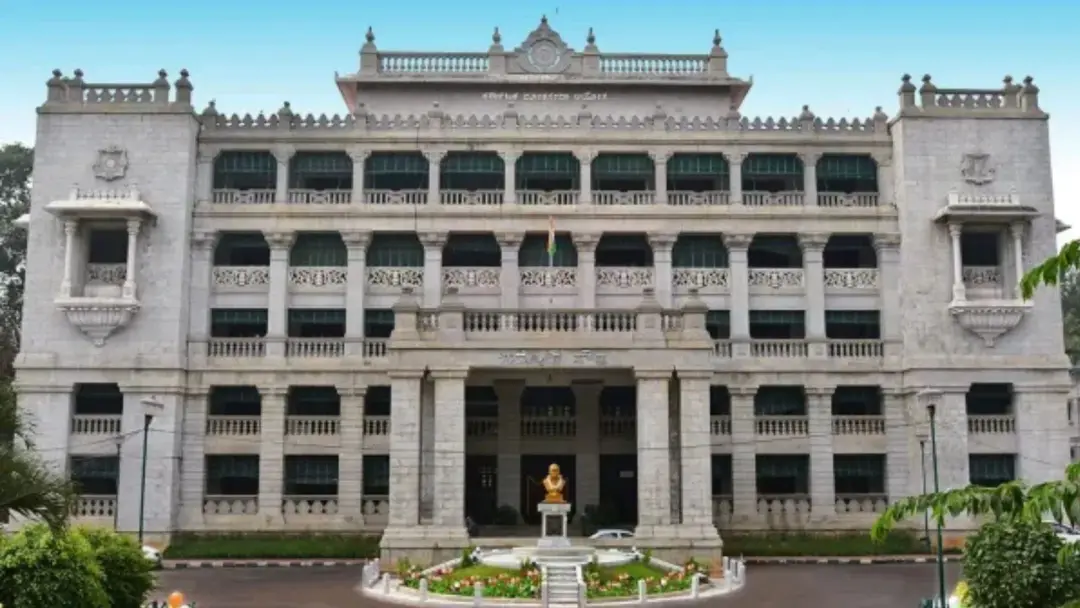
ED arrests IAS officer, middleman in KPSC recruitment case
The Enforcement Directorate, probing the money laundering aspect of alleged irregularities in the Karnataka Public Service Commission recruitment of veterinary doctors, has arrested IAS officer Gyanendra Kumar Gangwar, then KPSC exam controller, and middleman Basavaraj Kannale after four days of questioning. The CID probe found 11 of 329 aspirants allegedly paid Rs 35 lakh to Rs 80 lakh for the 400 vacancies. Gangwar allegedly leaked question papers. The exams were held on January 8 and 9.
Source
Indian Express — Cities · read the original report ↗
Desk check · some claims need care
What the desk checked (5)
- ED has arrested IAS officer Gyanendra Kumar Gangwar, former KPSC exam controller, and middleman Basavaraj Kannale after four days of questioning. — Attributed to ED sources in the source text; arrest dates given as September 18 night and a day earlier respectively.
- 11 of 329 aspirants allegedly paid Rs 35 lakh to Rs 80 lakh to Kannale for recruitment to 400 veterinary doctor vacancies. — Figures appear in the source, attributed to the CID investigation.
- About Rs 52 lakh collected from aspirants was funnelled into gold and diamond jewellery purchases by Gangwar, a 2016-batch IAS officer. — Attributed to the CID probe; the jewellery showroom is unnamed in the source.
- Kannale took paying candidates to Orchid Resort in Devanahalli the night before the exam and coached them; leaked papers were shared via encrypted channels. — Attributed to investigators/the CID probe; no independent confirmation in source.
- The BJP has accused the ruling Congress of shielding the IAS officer from the ED probe. — Political allegation reported without detailed attribution or a Congress response.
Analysts’ view opinion
This is a case with two parallel tracks — the CID's probe into the predicate offence and the ED's PMLA money laundering investigation built on top of it. Because both men were already in custody following CID arrests, the ED's step of arresting them in prison and then seeking formal custody before a special court is a familiar procedural route in laundering cases. Crucially, the laundering charge stands only as long as the underlying offence holds, so the strength of the CID case will shape the ED's case too.
- The PMLA case turns on "proceeds of crime" — the investigators' claim that money collected from aspirants was routed into gold and diamond jewellery purchases is what gives the ED its jurisdictional hook.
- Arresting persons already in judicial custody and then obtaining custody through the court is a procedural step; safeguards such as being informed of the grounds of arrest in writing and production before a court remain available to the accused.
- Bail thresholds under the PMLA are stringent, so defence arguments at the custody stage — on proof that the money was a bribe, and on the admissibility of digital evidence from encrypted channels — become critical early.
- With an IAS officer involved, service-rules processes such as suspension and departmental disciplinary action can run separately from the criminal trial.
- Not arresting the suspended KPSC chairman on the stated ground of cooperation is consistent with the principle that arrest must be necessary rather than automatic, though it inevitably invites political criticism.
What to watch — Watch the special court's order on the ED's custody plea, any subsequent bail applications, and whether the agencies file their chargesheet or complaint within the statutory timelines.
Everything here is an investigative allegation — no guilt has been established, the accused persons' responses are not in the story, and nothing is recorded about the validity or cancellation of the examination.
Deep dive
Research brief · 8 facts · 7 dates · exam-readyThe brief
Context
The Karnataka Public Service Commission (KPSC) held examinations on January 8 and 9 this year to fill 400 veterinary doctor posts in the state government. A CID investigation found that question papers were allegedly leaked by the then KPSC exam controller, IAS officer Gyanendra Kumar Gangwar, to a middleman, Basavaraj Kannale, who allegedly collected large sums from aspirants. The Enforcement Directorate is separately probing the money laundering angle under the PMLA and has now arrested both men in prison after four days of questioning.
Key facts
- CID probe found 11 of 329 aspirants allegedly paid Rs 35 lakh to Rs 80 lakh each to middleman Basavaraj Kannale for recruitment to 400 veterinary doctor vacancies.
- Around Rs 52 lakh collected from aspirants was allegedly funnelled into buying gold and diamond jewellery by Gangwar at a prominent jewellery showroom, per the CID probe.
- Gyanendra Kumar Gangwar is a 2016-batch IAS officer and was the KPSC exam controller.
- The KPSC veterinary doctor exams were held on January 8 and 9 this year.
- CID arrested Gangwar on August 29; Kannale was nabbed a day later at New Delhi airport before he could flee to Uzbekistan via Almaty, Kazakhstan.
- ED arrested the middleman on September 17 and the IAS officer on the night of September 18, both inside Bengaluru central prison.
- Last month the ED searched 21 premises under PMLA in Bengaluru, Hassan, Chitradurga, Davanagere, Raichur, Karwar, Kalaburagi, Belagavi and Ahmedabad.
- Leaked papers were allegedly shared in handwritten and printed form through encrypted channels, investigators said.
Timeline
- January 8 and 9 this yearKPSC examinations for 400 veterinary doctor posts held; candidates allegedly coached at Orchid Resort, Devanahalli the night before and driven to test centres.
- August 29CID arrests IAS officer Gyanendra Kumar Gangwar, then KPSC exam controller.
- August 30 (a day later)Middleman Basavaraj Kannale nabbed at New Delhi airport before allegedly fleeing to Uzbekistan via Almaty.
- Last monthED conducts PMLA searches at 21 premises across eight Karnataka locations and Ahmedabad.
- September 17ED arrests middleman Basavaraj Kannale in prison.
- September 18 nightED arrests IAS officer Gangwar in prison after four days of questioning.
- Monday (upcoming)ED to seek formal custody of both accused in a special court, per ED sources.
Who has a stake
- Enforcement Directorate (ED) — Probing the money laundering aspect under PMLA; has arrested both accused and will seek formal custody in a special court.
- Karnataka CID — Conducting the criminal probe into the recruitment irregularities; made the original arrests on August 29-30.
- Karnataka Public Service Commission (KPSC) — Institutional credibility at stake as its exam controller allegedly leaked papers and its chairman stands suspended.
- Gyanendra Kumar Gangwar, 2016-batch IAS officer — Then KPSC exam controller; accused of leaking exam questions and of buying gold and diamond jewellery with Rs 52 lakh of tainted funds.
- Basavaraj Kannale, middleman — Accused of collecting Rs 35-80 lakh from 11 aspirants, coaching them at a Devanahalli resort and ferrying them to centres.
- Suspended KPSC chairman Shivashankarappa S Sahukar — Under investigation for suspected links to Kannale; already faces a separate case over his daughter's alleged illegal recruitment.
- Aspirants for the 400 veterinary doctor posts — 329 candidates appeared; merit-based selection compromised by alleged paper leak and payments.
- Karnataka BJP and ruling Congress — BJP has accused the Congress government of shielding the IAS officer from the ED probe.
Why it matters
A state public service commission is the gatekeeper of merit-based government recruitment, and an alleged leak by its own exam controller strikes at the integrity of that process for 329 aspirants competing for 400 posts. The case also shows how examination fraud converts into laundered wealth — here allegedly Rs 52 lakh routed into gold and diamond jewellery — bringing the ED and PMLA into what began as a CID case. With the KPSC chairman suspended and under investigation, the episode raises questions about institutional oversight of recruitment bodies.
UPSC angle
Prelims pointers
- KPSC (Karnataka Public Service Commission) is a state public service commission; the case concerns recruitment to 400 veterinary doctor posts.
- Enforcement Directorate investigates money laundering under the Prevention of Money Laundering Act (PMLA).
- CID (Criminal Investigation Department) of Karnataka Police conducted the criminal probe and made the August arrests.
- ED searches under PMLA covered 21 premises in Bengaluru, Hassan, Chitradurga, Davanagere, Raichur, Karwar, Kalaburagi, Belagavi and Ahmedabad.
- Gangwar is a 2016-batch IAS officer who served as KPSC exam controller; exams were held January 8-9 this year.
- PMLA cases are tried in designated special courts, where the ED seeks custody of the arrested.
Mains framing
The KPSC veterinary recruitment case illustrates how examination-related corruption in state recruitment bodies operates through an insider-middleman nexus: the CID probe alleges the exam controller, a 2016-batch IAS officer, leaked question papers in handwritten and printed form via encrypted channels to a middleman who collected Rs 35-80 lakh each from 11 of 329 aspirants, coached them at a Devanahalli resort the night before the January 8-9 exams and ferried them to centres. The proceeds allegedly took the form of gold and diamond jewellery worth about Rs 52 lakh, drawing in the ED under the PMLA, which searched 21 premises across Karnataka and Ahmedabad and has now arrested both accused inside Bengaluru central prison. Underlying causes visible in the source include concentration of custody of question papers in a single official, weak internal checks within the commission — its chairman stands suspended and is himself under investigation for links to the middleman — and the political contest over the probe, with the BJP alleging the ruling Congress shielded the officer. The implications extend beyond one exam to the credibility of state-level merit recruitment and the confidence of lakhs of aspirants. A way forward consistent with the facts would involve insulating question-paper custody through multi-person, auditable processes, independent oversight of commission functioning, time-bound completion of both the CID and ED probes, and transparent action against officials irrespective of rank or political patronage.
Key terms
- KPSC
- Karnataka Public Service Commission, the state body that conducted the veterinary doctor recruitment exam for 400 vacancies.
- Enforcement Directorate (ED)
- Central agency probing the money laundering aspect of the alleged recruitment irregularities.
- PMLA
- Prevention of Money Laundering Act, the law under which the ED conducted searches at 21 premises and made the arrests.
- CID
- Criminal Investigation Department of Karnataka Police, which investigated the leak and arrested Gangwar and Kannale in August.
- Exam controller
- KPSC official responsible for examination conduct; the post held by Gangwar, who allegedly leaked question papers.
- Middleman
- Intermediary, here Basavaraj Kannale, who allegedly collected money from aspirants and passed on leaked papers.
Practice questions
- Examination leaks in state recruitment bodies are as much a failure of institutional design as of individual integrity. Discuss with reference to the KPSC veterinary recruitment case.
- Examine the role of the Enforcement Directorate under the PMLA in cases that originate as state police investigations. What are the advantages and risks of such parallel probes?
- How can state public service commissions be insulated from political and administrative interference while maintaining accountability? Suggest reforms.
Grounded only in the source report — figures and dates are the source's, not inferred.