
Father, two children found dead in Nizam Sagar backwater
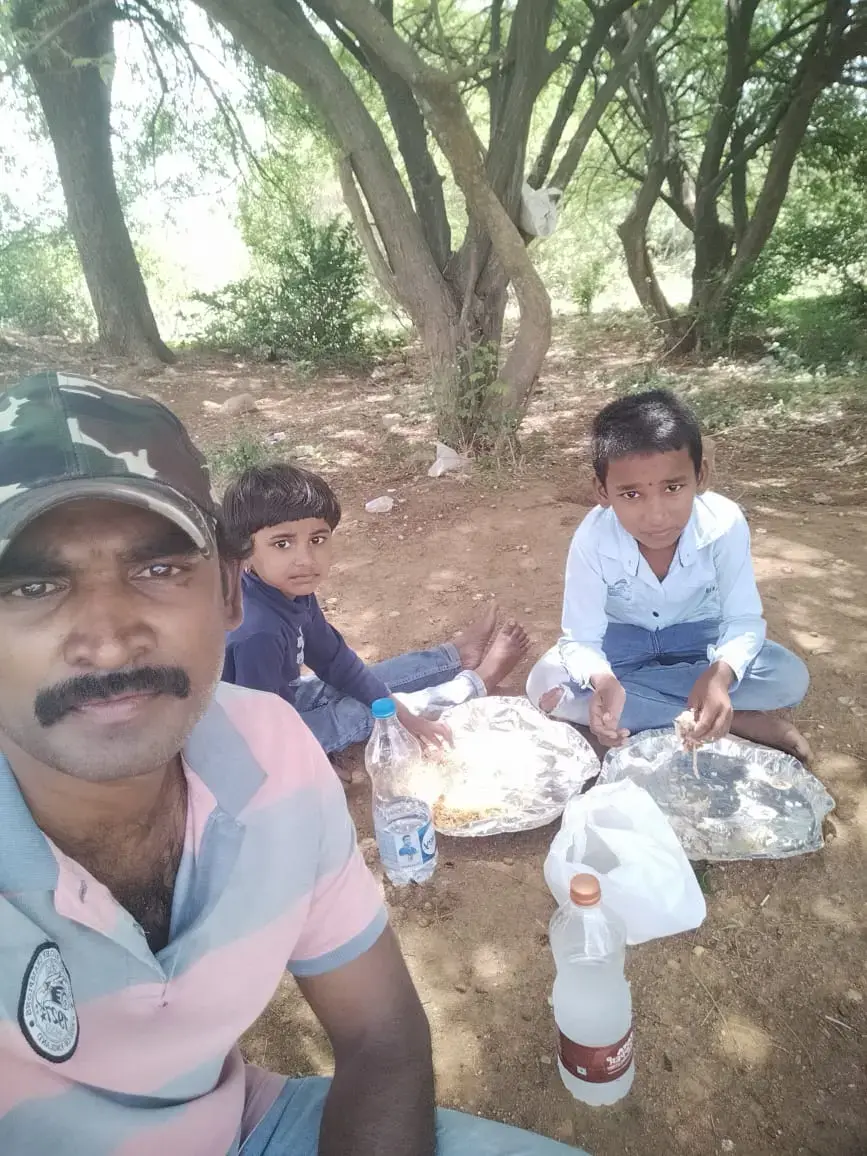
A father and his two children were found dead in the Nizam Sagar backwater in Nizampet mandal of Kamareddy district. Gula Krishna (34), who lived in Patancheru in Hyderabad, came to his native village on Thursday with son Rakshit (9) and daughter Ananya (5). He reportedly sent selfies with the children to his brother-in-law with a message saying he was leaving them. Police recovered the bodies with expert swimmers and are investigating whether family disputes were the cause.
Source
Sangareddy — crime & civic · read the original report ↗
Desk check · some claims need care
What the desk checked (5)
- Gula Krishna (34) jumped into the Nizam Sagar backwater with his son Rakshit (9) and daughter Ananya (5), and all three died. — Attributed in the source to villagers and police; ages and names appear in the source.
- The family lived in Patancheru, Hyderabad, and Krishna's wife Savita is 32. — Figure and place appear in the source; no direct official quote given.
- Krishna sent selfies with the children and a message saying 'I am leaving you all' to his brother-in-law. — Reported in the source as 'information received' (samacharam); not directly attributed to a named source.
- Bodies were recovered with the help of expert swimmers and sent for post-mortem; a case has been registered. — Attributed to police in the source.
- Family disputes and personal problems were the cause. — Presented in the source as an unresolved question under police investigation, not a confirmed finding.
Analysts’ view opinion
Legally this is two distinct strands in one incident: the father's death and the deaths of two minor children. Because children aged 9 and 5 cannot be treated as capable of a voluntary decision, their deaths must be examined by investigators as unnatural deaths in their own right, not as an extension of the adult's act. With the person whose conduct would be under scrutiny also dead, no trial is ordinarily possible, which leaves the post-mortem findings, phone messages and scene evidence as the primary record.
- In unnatural death cases, registering a case, conducting a post-mortem and reporting to the magistrate are standard procedural steps — the story confirms a case has been registered and the inquiry is ongoing.
- The law treats the deaths of minors independently; legal principle clearly recognises that children of 9 and 5 cannot give meaningful consent or make such a decision.
- Criminal liability in India is personal, so where the person who would face scrutiny has died, proceedings normally cannot continue.
- Digital material such as the message reportedly sent to the brother-in-law and the selfies could become central evidence, but would need technical authentication and lawful collection.
- "Family disputes" is at this stage only a line of inquiry, not an established cause, so attributing blame to any individual would be both legally and ethically premature.
What to watch — Watch for what the post-mortem and examination of digital evidence yield, and whether police close the case or widen it under additional sections.
The story does not establish an officially confirmed cause, nor the verified content of the message — the details rest on preliminary police and local accounts.
Deep dive
Research brief · 8 facts · 5 dates · exam-readyThe brief
Context
A 34-year-old man from Nizampet in Kamareddy district, Gula Krishna, was found dead along with his two young children in the backwater of the Nizam Sagar project. According to villagers and police, Krishna, who lived with his family in Patancheru in Hyderabad, told his wife he was taking the children out, then travelled to his native village on Thursday. After spending time with the children on the bank, he took them on a raft into the middle of the water and sent his brother-in-law selfies with a message that he was leaving them. Police, assisted by expert swimmers, recovered three bodies and have registered a case, probing whether family disputes were behind the deaths.
Key facts
- Gula Krishna, 34, of Nizampet mandal in Kamareddy district, was found dead along with son Rakshit (9) and daughter Ananya (5) in the Nizam Sagar backwater.
- Krishna lived with wife Savita (32) and the two children in Patancheru, Hyderabad.
- On Thursday he told his wife he was taking the children out and instead travelled to his native village, Nizampet.
- He bought the children their favourite food, ate with them on the bank and took selfies before boarding a raft into the middle of the water.
- From the raft he sent the selfies to his brother-in-law with the message "I am leaving you all".
- The brother-in-law rushed to the spot and found only Krishna's motorcycle and the children's clothes, and alerted police.
- Police used expert swimmers (gaja eetagallu) in the search and recovered all three bodies.
- Bodies were sent to hospital for post-mortem; a case has been registered and police are investigating from all angles.
Timeline
- ThursdayKrishna leaves Patancheru with the two children after telling his wife he is taking them out, and reaches his native Nizampet.
- Same day, laterHe buys the children food, eats with them on the bank of the Nizam Sagar backwater and takes selfies.
- Shortly afterHe takes the children on a raft to the middle of the water and sends the selfies with a farewell message to his brother-in-law.
- After the messageThe brother-in-law reaches the spot, finds only the bike and children's clothes, and informs police.
- SubsequentlyPolice with expert swimmers recover the three bodies; bodies sent for post-mortem and a case registered.
Who has a stake
- Savita (32), the wife and mother — Lost her husband and both children; her account of events is central to the probe into alleged family disputes.
- The brother-in-law — Received the farewell message and selfies, first to reach the spot and inform police; key witness.
- Police in Nizampet mandal, Kamareddy district — Registered the case, conducted the recovery with expert swimmers and must establish the cause from all angles.
- Expert swimmers assisting the search — Carried out the recovery of bodies from the Nizam Sagar backwater.
- Residents of Nizampet mandal — Community deeply shaken by the deaths of two young children and three members of one family.
Why it matters
The case underlines how family disputes and personal distress can end in the deaths of children who have no say in the matter, raising questions about early counselling and family-dispute intervention. It also shows the role of digital traces — selfies and a farewell message — in alerting relatives and police, and the dependence of rural police on local expert swimmers for water recoveries.
UPSC angle
Prelims pointers
- Nizam Sagar project backwater lies in Nizampet mandal of Kamareddy district, Telangana.
- Deceased: Gula Krishna (34), son Rakshit (9), daughter Ananya (5); wife Savita (32) survives.
- The family was residing in Patancheru, Hyderabad, while Nizampet was the native village.
- Police recovered the bodies with the help of expert swimmers and sent them for post-mortem.
- Police have registered a case and are probing family disputes as a possible cause.
Mains framing
The Nizam Sagar incident, in which a 34-year-old man and his two children aged nine and five died in reservoir backwater, is reported by villagers and police as linked to family disputes and personal distress. Its features are instructive: a parent moved the children away from the urban household in Patancheru to his native village, spent apparently normal time with them, and communicated his intent only through selfies and a farewell message to a relative — leaving no window for intervention. The implications extend beyond one family: children in such cases are wholly dependent victims, and the source records nothing about prior counselling, mediation or any complaint. The way forward suggested by the facts on record is thorough, all-angle police investigation including post-mortem findings and the testimony of the wife and brother-in-law, so that motive is established rather than assumed; and, more broadly, accessible family counselling and mental-health support at the mandal level, plus community readiness — here, local expert swimmers were essential for recovery. Reporting restraint on method is also part of responsible handling of such deaths.
Key terms
- Nizam Sagar backwater
- The stretch of water spread behind the Nizam Sagar project, located in Nizampet mandal, Kamareddy district, where the bodies were found.
- Mandal
- An administrative sub-district unit in Telangana; here, Nizampet mandal in Kamareddy district.
- Post-mortem
- Medico-legal autopsy conducted to determine cause of death; the three bodies were shifted to hospital for it.
- Expert swimmers ('gaja eetagallu')
- Skilled local divers/swimmers engaged by police to search for and retrieve bodies from deep water bodies.
- Patancheru
- Locality in the Hyderabad area where the family was living before the incident.
Practice questions
- Family disputes are often treated as a private matter until they turn fatal. Discuss the institutional mechanisms needed at the district and mandal level to detect and defuse such distress early.
- Children are the most defenceless victims in family-related deaths. Examine the state's responsibility towards child protection in cases arising from domestic conflict.
- Discuss the role of digital evidence such as messages and photographs in police investigation of unnatural deaths, with reference to reported cases.
Grounded only in the source report — figures and dates are the source's, not inferred.