
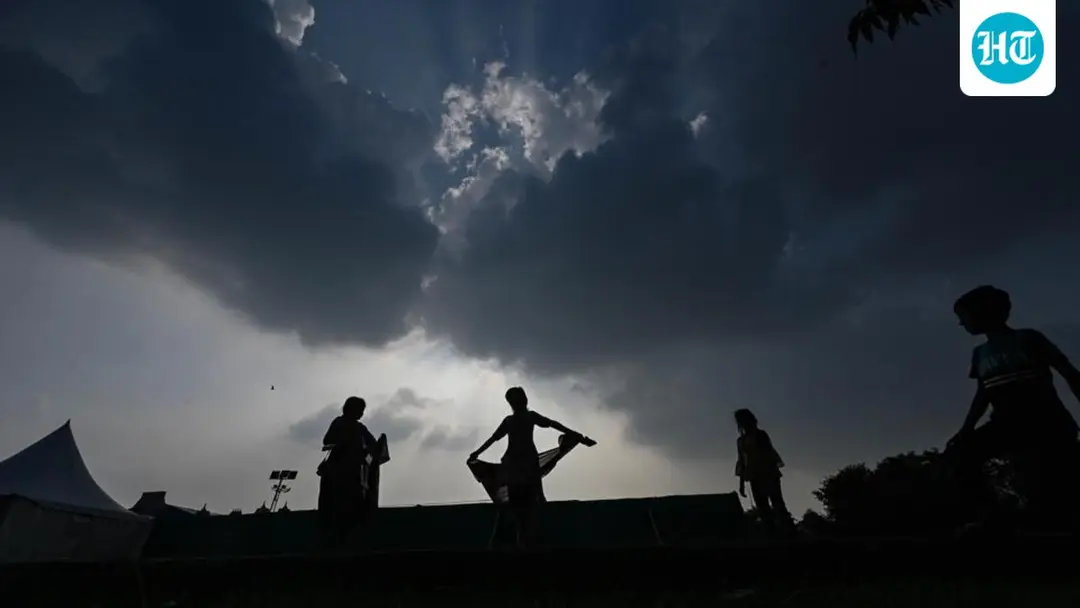
Monsoon withdrawal to begin September 19, deficit at 15%: IMD
The southwest monsoon's withdrawal is expected to commence from west Rajasthan around September 19, against a normal date of September 17, the India Meteorological Department said on Monday. The all-India rainfall deficit stood at -15% as of September 13, with the season severely affected by a strengthening El Nino. The shortfall is largest in the south peninsula (-28%) and east and northeast India (-25%). Andhra Pradesh is at -43%, Punjab -40%, Bihar -35% and Telangana -20%. IMD forecast rain in several regions this week.
Source
Hindustan Times — India · read the original report ↗
Desk check · compared with the source
What the desk checked (5)
- Southwest monsoon withdrawal to begin from west Rajasthan around September 19, against a normal date of September 17. — Attributed to an IMD statement quoted in the source; figures appear in source.
- All-India monsoon deficit stands at -15% as of September 13. — Attributed to IMD; source also gives month-end figures of -40% in June, -13% in July and -14% in August.
- State-wise deficits include Andhra Pradesh -43%, Punjab -40%, Bihar -35%, Karnataka -29%, Telangana -20%, Meghalaya -59%. — Cited as 'data shows' without naming the dataset; figures appear in source.
- Skymet expects withdrawal by September 20 and had forecast seasonal rainfall at 85% of LPA with 70% drought probability. — Attributed to Skymet vice president Mahesh Palawat and Skymet's August 17 revised forecast.
- IMD's quoted statement mentions withdrawal 'around September 19, 2026'. — Year in the quoted statement is inconsistent with the rest of the report; flagged for editorial check.
Analysts’ view opinion
వర్షపాత లోటు అనేది వాతావరణ వార్త మాత్రమే కాదు — అది రాజకీయ ఎజెండాను నిర్దేశించే అంశం. ఆంధ్రప్రదేశ్ (-43%), పంజాబ్ (-40%), బిహార్ (-35%), కర్ణాటక (-29%), తెలంగాణ (-20%) వంటి కీలక వ్యవసాయ రాష్ట్రాల్లో ఈ లోటు పూడే అవకాశం లేదని ఐఎండీ చెప్పడం, రాబోయే నెలల్లో కరవు ప్రకటనలు, ఇన్పుట్ సబ్సిడీలు, పరిహారం, రుణమాఫీ డిమాండ్ల చుట్టూ కేంద్ర-రాష్ట్ర రాజకీయ ఘర్షణకు దారితీసే అవకాశం ఉంది. అధికార పక్షాలకు ఇది పరిపాలనా సవాలు, ప్రతిపక్షాలకు రెడీమేడ్ ఆయుధం.
- లోటు ఎక్కువగా ఉన్న రాష్ట్రాల్లో రైతు ఓటు బ్యాంకు నిర్ణయాత్మకం కావడంతో, పరిహారం-సాయం ప్యాకేజీల డిమాండ్లు వెంటనే రాజకీయ రూపం తీసుకునే అవకాశం ఉంది.
- కరవు నిర్ధారణ, నిధుల కేటాయింపు కేంద్రం చేతిలో ఉండటం వల్ల ఇది సాధారణంగా కేంద్ర-రాష్ట్ర సమాఖ్య వివాదంగా మారుతుంది — ప్రతిపక్ష పాలిత రాష్ట్రాలు వివక్ష ఆరోపణలు చేసే అవకాశం ఉంది.
- బిహార్, పంజాబ్, ఆంధ్రప్రదేశ్, తెలంగాణ, కర్ణాటక వంటి రాష్ట్రాల్లో వేర్వేరు పార్టీలు అధికారంలో ఉన్నందున, ఒకే వాతావరణ సంకటానికి భిన్నమైన రాజకీయ కథనాలు వెలువడతాయి.
- రుతుపవనాల ఉపసంహరణ సాధారణ తేదీ కంటే రెండు రోజులు ఆలస్యం కావడం, ఈ వారం వర్షాలు అనే అంశాలను అధికార పక్షాలు 'పరిస్థితి మెరుగుపడుతోంది' అనే వాదనకు ఉపయోగించుకోవచ్చు.
- ధరల పెరుగుదల, ఆహార ద్రవ్యోల్బణం రాజకీయంగా అత్యంత సున్నితమైన అంశాలు కావడంతో, ప్రభుత్వాల దృష్టి సరఫరా నిర్వహణ, నిల్వల విడుదల వైపు మళ్లే అవకాశం ఉంది.
What to watch — రబీ సీజన్ ప్రారంభంలో నీటి విడుదల, విత్తన-ఎరువుల సరఫరా, కరవు మండలాల ప్రకటనలపై రాష్ట్ర ప్రభుత్వాల ప్రకటనలు — అక్కడే ఈ లోటు రాజకీయంగా ఎంత పెద్ద అంశమవుతుందో తేలుతుంది.
ఈ కథనం వాతావరణ శాఖ అంచనాలు, లోటు గణాంకాలను మాత్రమే తెలియజేస్తుంది; పంట నష్టం పరిమాణం, ఏదైనా ప్రభుత్వ సహాయ ప్రకటన, పార్టీల స్పందన లేదా ఎన్నికల ప్రభావం గురించి ఇది ఏమీ నిర్ధారించలేదు — ఆ కోణం పూర్తిగా నా విశ్లేషణ మాత్రమే.
Deep dive
Research brief · 8 facts · 10 dates · exam-readyThe brief
Context
The southwest monsoon, which delivers most of India's annual rainfall between June and September, is drawing to a close. The India Meteorological Department (IMD) said on Monday that withdrawal will begin from parts of west Rajasthan around September 19, two days later than the normal withdrawal date of September 17. The season has been severely hit by a strengthening El Nino, leaving an all-India rainfall deficit of -15% as of September 13, with districts in the west, south and northeast in a shortfall IMD says is unlikely to be bridged. Both IMD and private forecaster Skymet had progressively downgraded their seasonal forecasts through the year.
Key facts
- IMD said conditions are becoming favourable for withdrawal of the southwest monsoon from some parts of west Rajasthan around September 19, against the normal date of September 17.
- Last year, monsoon withdrawal began as early as September 14.
- All-India monsoon deficit stood at -15% as of September 13, after touching -40% in June, -13% by end-July and -14% at end-August.
- Regional deficits: south peninsula -28%, east and northeast India -25%, northwest India -10%, central India -6%.
- State deficits include Meghalaya -59%, Andhra Pradesh -43%, Arunachal Pradesh -42%, Punjab -40%, Bihar -35%, Karnataka -29%, Kerala -27%, Tamil Nadu -26%, Rajasthan -25%, Haryana -23%, Telangana -20%.
- IMD's August 31 forecast for September said below normal rainfall (<91% of the long period average) was likely.
- Skymet's revised forecast of August 17 put seasonal rainfall at 85% of LPA with a 70% probability of drought; its April forecast was 94% of LPA.
- IMD forecast in April was 92% of LPA, revised down in June to 90% with a 60% probability of a deficient season.
Timeline
- AprilIMD forecast monsoon at 92% of LPA; Skymet forecast 94% of LPA.
- JuneAll-India deficit touched -40%; IMD revised its forecast down to 90% of LPA with 60% probability of a deficient season.
- End of JulyWidespread July rains brought the all-India deficit down to -13%.
- August 17Skymet issued a revised forecast of 85% of LPA with a 70% probability of drought.
- End of AugustAll-India deficit stood at -14%.
- August 31IMD's September forecast said below normal rainfall (<91% of LPA) was likely.
- September 13All-India monsoon deficit recorded at -15%.
- September 15-17IMD forecast fairly widespread rain over Jammu, Kashmir, Ladakh, Gilgit-Baltistan and Muzaffarabad; isolated rain over west and east Rajasthan.
- September 16-17Rain forecast across Punjab, Haryana and Delhi, and over Bihar.
- September 18-20Rain forecast along coastal Andhra Pradesh and Telangana; Odisha September 19-20.
Who has a stake
- India Meteorological Department (IMD) — Official forecaster announcing withdrawal dates and rainfall deficits; had to revise its seasonal forecast downward from 92% to 90% of LPA.
- Skymet Weather — Private forecaster that cut its estimate to 85% of LPA with a 70% drought probability; its vice president Mahesh Palawat expects withdrawal by September 20.
- Farmers in agrarian states — Punjab (-40%), Haryana (-23%), Bihar (-35%), Andhra Pradesh (-43%), Karnataka (-29%) and others face deficits unlikely to be recovered.
- South peninsular and northeast India — Worst-hit regions with -28% and -25% deficits; Meghalaya at -59% and Arunachal Pradesh at -42%.
- States forecast to get late-season rain — Jammu and Kashmir, Ladakh, Punjab, Haryana, Delhi, Rajasthan, UP, Tamil Nadu, Kerala, Karnataka, Chhattisgarh, MP, West Bengal, Sikkim, Bihar, Odisha expect activity till around September 20.
Why it matters
A -15% all-India deficit, concentrated in agrarian states like Punjab, Bihar and Andhra Pradesh, means the shortfall will not be made up before withdrawal begins, with consequences for kharif output, reservoir storage and rural incomes. The season also shows how a strengthening El Nino can force repeated downward revisions of seasonal forecasts by both IMD and private agencies.
UPSC angle
Prelims pointers
- Normal date for the start of southwest monsoon withdrawal from west Rajasthan is September 17; IMD expects it around September 19 this year.
- All-India monsoon deficit: -40% in June, -13% end-July, -14% end-August, -15% as of September 13.
- Regional deficits: south peninsula -28%, east and northeast India -25%, northwest -10%, central India -6%.
- IMD classifies below normal September rainfall as less than 91% of the long period average (LPA).
- IMD's revised June forecast: 90% of LPA with 60% probability of a deficient season; Skymet's August 17 revision: 85% of LPA with 70% drought probability.
- El Nino strengthening was cited by IMD as the key factor that severely impacted this monsoon.
Mains framing
India's 2023-type monsoon season illustrates how large-scale ocean-atmosphere drivers translate into uneven domestic outcomes: IMD attributes the severe impact on this season to a strengthening El Nino, which left the all-India deficit at -15% as of September 13 after a -40% June, a recovery to -13% in July, and stagnation thereafter. The distress is spatially concentrated—south peninsula (-28%) and east and northeast India (-25%) versus central India (-6%)—and states central to food production, such as Punjab (-40%), Bihar (-35%), Andhra Pradesh (-43%) and Karnataka (-29%), face gaps IMD says are unlikely to be bridged. The forecasting record itself is instructive: IMD moved from 92% of LPA in April to 90% in June with a 60% deficiency probability, while Skymet cut 94% to 85% with a 70% drought probability, underlining the limits of long-range prediction under evolving El Nino conditions. With withdrawal set to begin around September 19 from west Rajasthan, the policy focus shifts to district-level drought assessment, reservoir and groundwater management for the rabi season, and reliance on remaining rain spells forecast till about September 20 in the south, east and central regions.
Key terms
- Southwest monsoon
- India's main rain-bearing season from June to September; its withdrawal normally begins from west Rajasthan around September 17.
- El Nino
- Warming phase of the Pacific ocean-atmosphere cycle; IMD said a strengthening El Nino severely impacted this monsoon season.
- Long period average (LPA)
- Benchmark long-term average rainfall against which seasonal performance is measured; below 91% of LPA is treated as below normal for September.
- Low-pressure area / trough / upper-air cyclonic circulation
- Rain-producing synoptic systems; IMD cited one over southwest MP-southeast Rajasthan-north Gujarat, a trough across Jharkhand-Gujarat-Chhattisgarh-MP and a circulation over the Bay of Bengal.
- IMD
- India Meteorological Department, the government's official weather forecasting agency.
- Skymet Weather
- Private weather forecaster; its August 17 revision put the season at 85% of LPA with 70% drought probability.
Practice questions
- Discuss how El Nino conditions influence the performance of the Indian southwest monsoon, using the deficits recorded in the 2023 season as illustration.
- The 2023 monsoon deficit was regionally uneven. Examine the implications of such spatial variation for agriculture and water management in India.
- Both IMD and Skymet revised their seasonal monsoon forecasts downward during the season. What does this suggest about the challenges of long-range monsoon prediction, and how can forecasting be strengthened?
Grounded only in the source report — figures and dates are the source's, not inferred.