
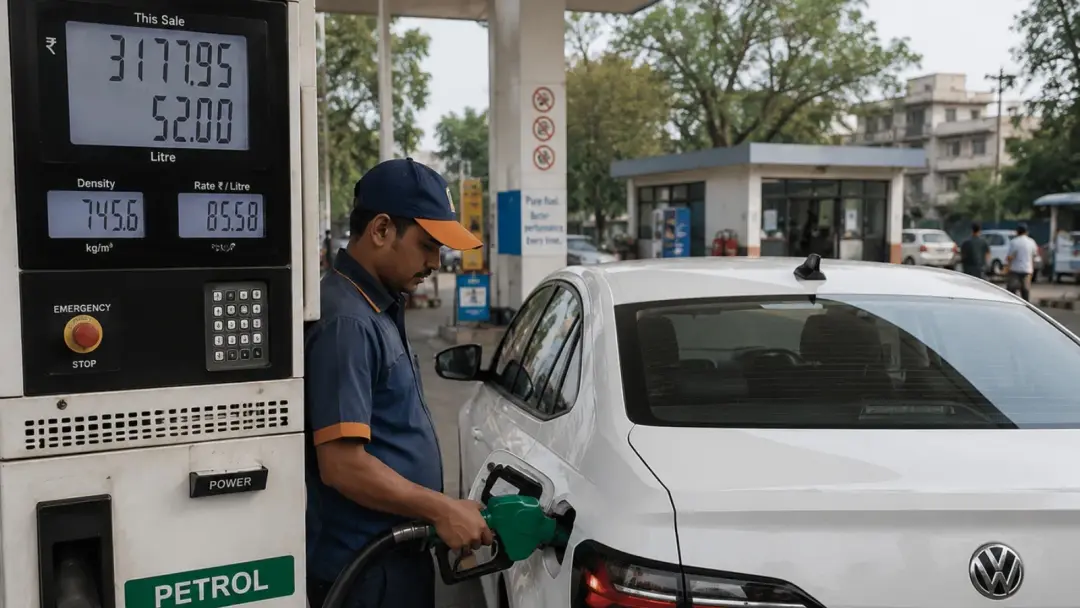
Maharashtra petrol dealers seek full UPI MDR exemption from Centre
The Federation of All Maharashtra Petrol Dealers Associations (FAMPEDA) has asked the Centre for complete exemption of petroleum retail outlets from MDR and other digital payment charges. Its September 18 letter went to the Finance Ministry, Petroleum Ministry, RBI, NPCI and marketing directors of Indian Oil, Bharat Petroleum and Hindustan Petroleum. It cited a reported proposal to levy 0.4 per cent on UPI transactions above Rs 2,000, saying government-fixed prices and margins bar passing on costs. A national-level meeting is scheduled for September 27.
Source
Indian Express — Cities · read the original report ↗
Desk check · compared with the source
What the desk checked (5)
- FAMPEDA wrote on September 18 to the Finance Ministry, Petroleum Ministry, RBI, NPCI and marketing directors of IOC, BPCL and HPCL seeking MDR waiver. — Attributed to FAMPEDA's dated letter as described in the source.
- A proposal to levy 0.4 per cent on UPI transactions above Rs 2,000 is under consideration. — Source calls it a 'reported proposal'; no issuing authority or document is cited.
- Petrol and diesel prices and dealer margins are fixed per litre by the government and oil marketing companies. — Stated in the source as FAMPEDA's argument; no independent sourcing given.
- Dealers' bank accounts are being frozen or placed under lien after cyber-fraud complaints linked to customer transactions. — Attributed to FAMPEDA's letter; no case numbers or figures provided.
- A national-level meeting of petroleum dealers is scheduled for September 27. — Figure and date appear in the source without named convener.
Analysts’ view opinion
This is a classic margin-squeeze dispute rather than a fight about digital payments. Fuel retailing is one of the few businesses where both the selling price and the dealer commission are set externally, so a transaction fee cannot be recovered from the customer the way a shop or restaurant would recover it — it lands entirely on the dealer's fixed per-litre margin. The economics explain why dealers are asking to be classified as a special merchant category, and also why any relief simply pushed onto oil marketing companies may not settle the question of who ultimately pays.
- Because pump prices and dealer margins are administered, a 0.4 per cent charge on transactions above Rs 2,000 cannot be passed through to consumers, so the incidence falls on the dealer rather than being shared.
- Fuel is unusually exposed to a Rs 2,000 threshold: the story notes that even routine tank fills at current prices often cross it, so a large share of digital sales would attract the fee rather than a small tail.
- The dealers' ask is essentially for a cost to be shifted upstream — to banks, payment service providers or the OMCs — which means the real fiscal and commercial question is who absorbs it, not whether it disappears.
- FAMPEDA's point that shifting MDR to OMCs is not a lasting fix is economically sound, since costs in a regulated chain tend to resurface as POS rentals, deductions or delayed settlements.
- The frozen-account issue is a separate working-capital risk: for a high-volume, thin-margin business, funds locked during a fraud investigation can hurt cash flow more than the fee itself.
What to watch — Watch the 27 September national dealers' meeting and any signal from the Finance Ministry, RBI or NPCI on whether the levy proposal proceeds, and whether dealers move from representation to restricting digital acceptance at the pump.
The story does not establish that the 0.4 per cent levy has been finalised or notified, nor does it give dealer margin figures, transaction volumes or any response from the government, RBI, NPCI or the oil marketing companies.
Deep dive
Research brief · 8 facts · 2 dates · exam-readyThe brief
Context
Petrol and diesel retail prices and dealer commissions in India are fixed by the government and oil marketing companies on a per-litre basis, leaving dealers no power to revise prices or margins. Amid a reported proposal to levy a 0.4 per cent charge on UPI transactions above Rs 2,000, Maharashtra's petrol dealers say such a Merchant Discount Rate (MDR) would be absorbed entirely from their capped margins. The Federation of All Maharashtra Petrol Dealers Associations (FAMPEDA) has written to the Centre, RBI, NPCI and the three public oil marketing companies seeking a complete exemption for fuel outlets from MDR and equivalent digital payment charges.
Key facts
- FAMPEDA's letter dated September 18 seeks complete exemption of petroleum retail outlets from MDR and all equivalent digital-payment charges, regardless of transaction value.
- The letter went to the Union Finance Ministry, Ministry of Petroleum and Natural Gas, RBI, NPCI, and the marketing directors of Indian Oil, Bharat Petroleum and Hindustan Petroleum.
- The trigger is a reported proposal to levy a charge of 0.4 per cent on UPI transactions above Rs 2,000.
- Dealers note that filling even a two-wheeler or car tank at current petrol and diesel prices often exceeds the Rs 2,000 threshold.
- FAMPEDA wants fuel outlets recognised as a special category of merchants because of their regulated pricing and fixed margins.
- The federation says shifting the MDR burden to oil marketing companies is not a lasting fix, citing past delayed settlements, non-transparent deductions and high POS/EDC rentals by fintech partners.
- FAMPEDA has flagged dealer bank accounts being frozen or placed under lien after cyber-fraud complaints linked to customer transactions, and asked for a time-bound review and grievance-redressal mechanism.
- A national-level meeting of the petroleum dealer fraternity is scheduled for September 27 to decide the collective way forward on MDR and continued acceptance of UPI payments.
Timeline
- September 18FAMPEDA writes to the Finance Ministry, Petroleum Ministry, RBI, NPCI and marketing directors of IOC, BPCL and HPCL seeking full MDR exemption.
- September 27National-level meeting of the petroleum dealer fraternity scheduled to discuss MDR and continued acceptance of UPI payments.
Who has a stake
- Petrol pump dealers in Maharashtra (FAMPEDA, PDAP) — Any MDR or transaction fee would come out of fixed, thin per-litre margins they cannot revise, threatening viability of fuel retailing.
- Union Finance Ministry and Ministry of Petroleum and Natural Gas — Must decide on exemption while balancing digital payment economics and regulated fuel pricing.
- RBI and NPCI — Regulate and operate digital payment systems; asked to direct that no MDR-type charge be recovered from dealers directly or indirectly.
- Oil marketing companies (Indian Oil, Bharat Petroleum, Hindustan Petroleum) — Fix pump prices and dealer margins; could be asked to absorb MDR, which dealers say is not a lasting solution.
- Banks, payment-service providers and fintech partners — Revenue from MDR, POS/EDC rentals and maintenance fees; accused of delayed settlements and non-transparent deductions.
- Fuel consumers — Continued hassle-free digital payment at pumps; dealers say costs cannot be passed on to them under fixed pricing.
Why it matters
Fuel retailing is a high-volume, government-priced business where dealers cannot pass on new costs, so a levy on large UPI transactions directly erodes their regulated margin. The dispute tests how India's zero-MDR digital payments push works in sectors with administered prices, and could affect whether pumps keep accepting UPI. The parallel problem of dealer accounts being frozen after cyber-fraud complaints also raises questions about due process for merchants handling hundreds of digital payments daily.
UPSC angle
Prelims pointers
- MDR (Merchant Discount Rate) is the fee a merchant pays to banks/payment providers for processing a digital transaction.
- NPCI - National Payments Corporation of India - is the umbrella organisation that operates UPI.
- Reported proposal in the story: 0.4 per cent charge on UPI transactions above Rs 2,000.
- Petrol and diesel retail prices and dealer margins are fixed by the government and oil marketing companies on a per-litre basis.
- FAMPEDA = Federation of All Maharashtra Petrol Dealers Associations; PDAP = Petrol Dealers Association Pune.
- Public sector OMCs named: Indian Oil, Bharat Petroleum, Hindustan Petroleum.
Mains framing
The demand by Maharashtra's petrol dealers for full exemption from MDR highlights a structural tension between India's digital payments architecture and administratively priced sectors. Where retail prices and dealer commissions are fixed per litre by the government and oil marketing companies, any transaction-linked charge - such as the reported 0.4 per cent levy on UPI payments above Rs 2,000 - cannot be recouped from consumers and is absorbed from a capped margin, especially as most fuel purchases cross that threshold. Dealers argue they have invested in UPI, QR codes, card machines and fleet cards to support the cashless economy push, so the cost of providing that public convenience should not fall on the last-mile retailer. Their caution that merely shifting MDR to OMCs is no lasting fix - given past delayed settlements, opaque deductions and high POS/EDC rentals by payment intermediaries - points to a wider need for transparency and settlement discipline among payment-service providers. A related grievance is the freezing or lien-marking of dealer accounts following a single customer's cyber-fraud complaint, which disrupts legitimate business funds and calls for a time-bound review and grievance-redressal mechanism. A balanced way forward, as the dealers suggest, would involve recognising regulated-margin merchants as a special category, clear directions to banks, payment-service providers and NPCI, and data-based consultation before any levy is finalised.
Key terms
- MDR (Merchant Discount Rate)
- The charge levied on a merchant for accepting a digital payment, usually a percentage of the transaction value.
- FAMPEDA
- Federation of All Maharashtra Petrol Dealers Associations, the body that sent the September 18 representation.
- NPCI
- National Payments Corporation of India, which operates UPI and sets payment system rules along with the RBI.
- OMCs
- Oil marketing companies such as Indian Oil, Bharat Petroleum and Hindustan Petroleum that fix pump prices and dealer margins.
- POS/EDC machines
- Point-of-sale / electronic data capture terminals used to accept card payments, often leased to merchants for rental and maintenance fees.
- Lien on bank account
- A hold placed on funds in an account, here after cyber-fraud complaints, blocking their use during investigation.
Practice questions
- Should merchants in sectors with government-fixed prices and margins, such as fuel retailing, be exempted from MDR on digital payments? Examine with reference to the FAMPEDA representation.
- Discuss the institutional roles of the RBI and NPCI in regulating digital payment charges, and the trade-offs between payment infrastructure costs and a zero-cost digital push.
- Freezing of merchant bank accounts following customer cyber-fraud complaints can disrupt legitimate business. Suggest safeguards balancing fraud investigation with due process for merchants.
Grounded only in the source report — figures and dates are the source's, not inferred.