
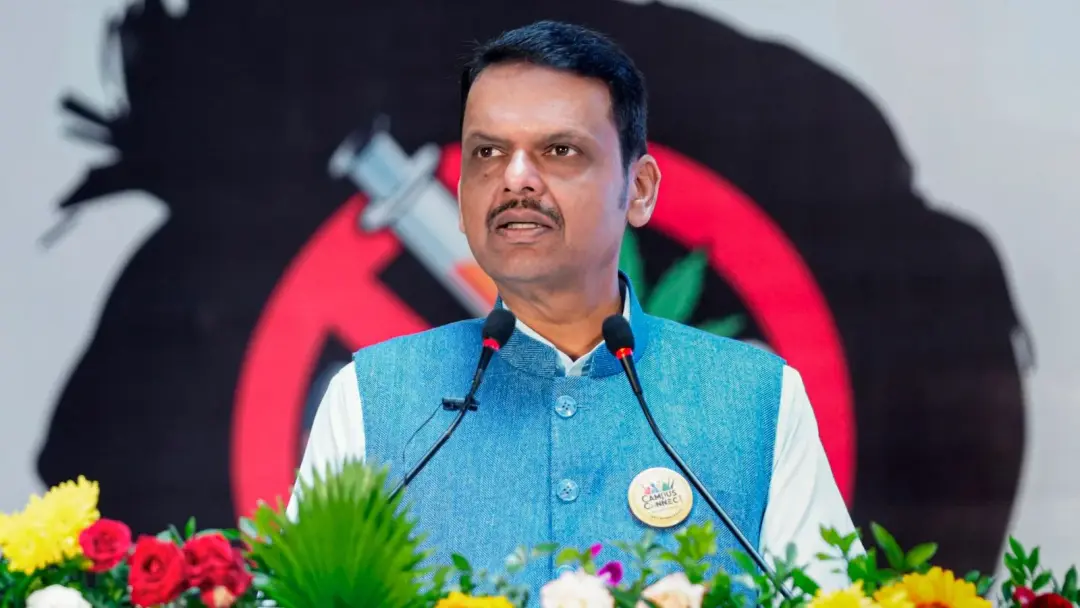
Fadnavis pitches Pune as major hub for global capability centres
A high-level dialogue titled 'Why Not Pune' was held with senior representatives from IT, technology, manufacturing and other industries to develop Pune as a major hub for Global Capability Centres. Addressing the interaction via video conferencing, Chief Minister Devendra Fadnavis said Pune was a natural choice given its strong manufacturing, technology and IT ecosystem. Under the Maharashtra GCC Policy 2025, the state targets around 400 new GCCs and four lakh high-skilled jobs. He cited metro, ring road and tunnel projects.
Source
Indian Express — Cities · read the original report ↗
Desk check · compared with the source
What the desk checked (4)
- Maharashtra GCC Policy 2025 targets about 400 new GCCs and four lakh high-skilled jobs. — Figures appear in source, presented as state policy targets stated at the event.
- Chief Minister Devendra Fadnavis said Pune is a natural choice for GCCs due to its manufacturing, technology and IT ecosystem. — Attributed to Fadnavis, who addressed the interaction via video conferencing.
- A high-level dialogue titled 'Why Not Pune' was held with industry representatives. — Stated in source; organiser not explicitly named.
- Mayor Manjusha Nagpure and PMC Commissioner Naval Kishore Ram commented on industry-administration cooperation. — Attributed to named officials in source.
Analysts’ view opinion
GCCs are now the highest-value job category Indian cities compete for — these are not back-office units but the engineering, finance and data arms of multinationals. Pune's mix of manufacturing, automotive, IT and engineering talent gives the 'Why Not Pune' pitch genuine economic logic. But 400 GCCs and four lakh high-skilled jobs are policy targets, not investment commitments — the story does not state a timeline or the cost of any incentives. Growth of this kind brings gains and price pressures on the city in equal measure.
- GCC roles typically sit in higher wage bands, so the indirect employment multiplier in real estate, retail, transport and food services tends to be large.
- The clear gainers are engineering and tech graduates, office-space developers and local services; the upfront cost sits with the state exchequer through infrastructure and incentives.
- The emphasis on metro, ring road and tunnels is not incidental — commute times and quality of life are decisive factors in where GCCs choose to locate.
- The downside is that such hubs push up rents and housing prices quickly, making the city costlier for residents outside the boom sectors.
- Pune is competing against Bengaluru, Hyderabad and Gurgaon, where speed of execution, land availability and ease of approvals matter more than the policy announcement itself.
What to watch — Watch for actual GCC announcements, office leasing activity and specific government follow-through on the industry suggestions raised at the dialogue.
The story does not establish that any company has committed investment, nor does it specify the timeline for the targets or the fiscal cost of the incentives involved.
Deep dive
Research brief · 8 facts · 2 dates · exam-readyThe brief
Context
Global Capability Centres (GCCs) are offshore units set up by multinational companies to handle technology, engineering, research, analytics and back-office work for their global operations. Maharashtra has framed a dedicated GCC policy to attract such centres, and the state government is now positioning Pune — already a manufacturing, technology and IT base — as a major GCC hub. To that end, a high-level dialogue titled 'Why Not Pune' was organised with senior representatives from IT, technology, manufacturing and other industries to understand their expectations and requirements, addressed by Chief Minister Devendra Fadnavis through video conferencing.
Key facts
- A high-level dialogue titled 'Why Not Pune' was held with senior representatives from IT, technology, manufacturing and other industries to develop Pune as a major GCC hub.
- Under the Maharashtra GCC Policy 2025, the state targets attracting around 400 new GCCs.
- The policy targets generation of four lakh high-skilled jobs.
- Chief Minister Devendra Fadnavis addressed the interaction through video conferencing, calling Pune a natural choice for GCCs.
- Fadnavis cited Pune's infrastructure development including metro, ring road, tunnels and various transport and communication projects.
- Fadnavis said Pune's skilled engineering and technology workforce was another key strength in attracting GCCs.
- Pune Mayor Manjusha Nagpure said such engagements would strengthen ties between the city, industry and the global business community.
- PMC Commissioner Naval Kishore Ram said the initiative aimed to bridge communication gaps between industry and the administration.
Timeline
- 2025 (policy)Maharashtra GCC Policy 2025 sets a target of around 400 new GCCs and four lakh high-skilled jobs.
- Date not stated in the source'Why Not Pune' high-level dialogue held with industry representatives; CM Fadnavis addresses it via video conferencing and seeks suggestions on policy gaps.
Who has a stake
- Maharashtra government / CM Devendra Fadnavis — Wants to deliver on the GCC policy targets of 400 GCCs and four lakh jobs and make Pune a globally competitive GCC hub.
- Pune Municipal Corporation (Commissioner Naval Kishore Ram) — Must align city development plans, infrastructure projects and communication with industry expectations.
- Pune Mayor Manjusha Nagpure — Sees sustained city-industry-global business cooperation as crucial to Pune's future development.
- IT, technology and manufacturing industry representatives — Opportunity to flag policy gaps, operational challenges and areas needing government intervention.
- Pune's engineering and technology workforce — Stands to gain from high-skilled jobs created by new GCCs.
- Pune residents — Affected by metro, ring road, tunnel and connectivity projects meant to improve quality of life.
Why it matters
GCCs are becoming a major driver of high-skilled white-collar employment in India, and states are competing to host them. Maharashtra's bid to channel 400 new GCCs and four lakh jobs through a dedicated policy, with Pune as an anchor city, links industrial policy directly to urban infrastructure and skills. The outreach also signals a shift towards consultative, industry-oriented city development planning.
UPSC angle
Prelims pointers
- GCC stands for Global Capability Centre — an offshore unit of a multinational handling its global technology and business functions.
- Maharashtra GCC Policy 2025 targets around 400 new GCCs and four lakh high-skilled jobs.
- 'Why Not Pune' was the high-level industry dialogue to position Pune as a GCC hub.
- Devendra Fadnavis is the Chief Minister of Maharashtra; he addressed the event via video conferencing.
- Manjusha Nagpure is Pune's Mayor; Naval Kishore Ram is the Pune Municipal Corporation Commissioner.
- Infrastructure cited for Pune: metro, ring road, tunnels and transport and communication projects.
Mains framing
Maharashtra's push to make Pune a Global Capability Centre hub illustrates how sub-national industrial policy now turns on three levers: a dedicated incentive framework (the Maharashtra GCC Policy 2025, with targets of about 400 GCCs and four lakh high-skilled jobs), a deep talent pool (Pune's engineering and technology workforce), and urban infrastructure (metro, ring road, tunnels and connectivity projects that shape both logistics and quality of life). The 'Why Not Pune' dialogue reflects a consultative approach — the Chief Minister explicitly invited industry to identify policy gaps, operational challenges and areas needing government intervention, while the municipal commissioner framed the exercise as bridging communication gaps so that city development plans become more practical, responsive and industry-oriented. The implied challenges are that GCC investment is mobile and competitively courted, so execution of infrastructure timelines, ease of operations and liveability will determine outcomes; the municipal administration also wants to retain Pune's identity as a city balancing diverse industries rather than becoming single-sector dependent. The way forward, as articulated in the source, rests on sustained cooperation between government, administration and industry to build a globally competitive ecosystem.
Key terms
- Global Capability Centre (GCC)
- An offshore centre set up by a global company to deliver technology, engineering and business functions for its worldwide operations.
- Maharashtra GCC Policy 2025
- The state's dedicated policy for attracting GCCs, targeting around 400 new centres and four lakh high-skilled jobs.
- 'Why Not Pune'
- High-level dialogue with IT, technology and manufacturing industry leaders to understand their expectations for making Pune a GCC hub.
- Pune Municipal Corporation (PMC)
- Pune's civic body, headed by Commissioner Naval Kishore Ram, which links city development plans with industry needs.
- Pune ring road
- One of the city infrastructure projects cited by the Chief Minister alongside metro and tunnels to improve connectivity.
Practice questions
- Discuss how Global Capability Centres are reshaping India's services economy, and evaluate the role of state-level policies such as the Maharashtra GCC Policy 2025 in attracting them.
- Urban infrastructure is increasingly an industrial policy instrument. Examine this statement with reference to Pune's bid to become a GCC hub.
- What are the risks of a city becoming dependent on a single sector for growth, and how can administrations balance diverse industries while courting global investment?
Grounded only in the source report — figures and dates are the source's, not inferred.