
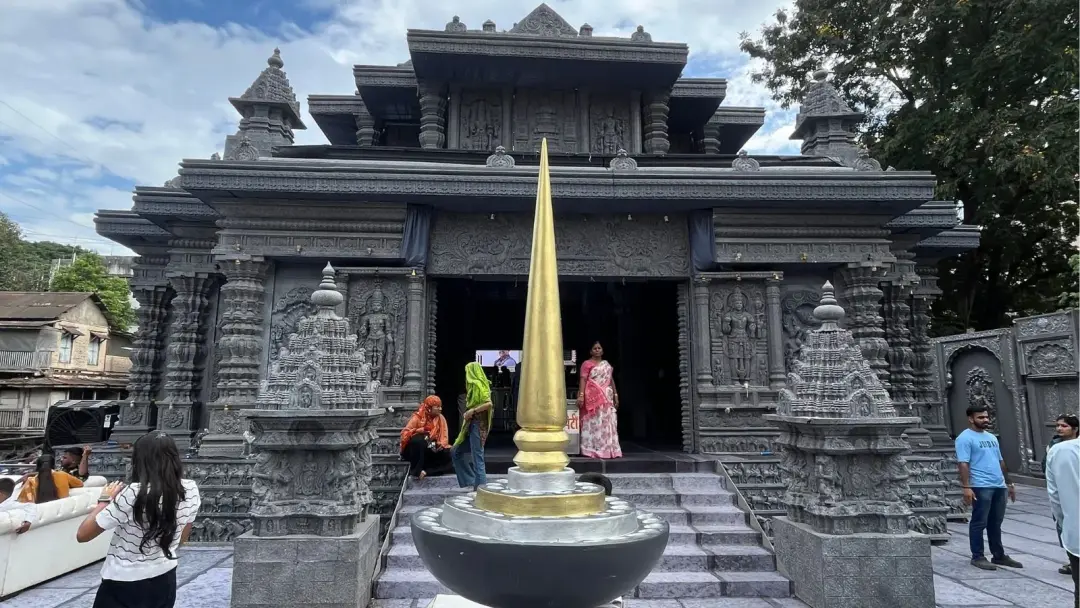
Pune pandal recreates Belur's Chennakeshava Temple for Ganeshotsav
The Chhatrapati Rajaram Mandal in Pune has recreated the 12th-century Chennakeshava Temple of Belur, Karnataka, as its Ganeshotsav pandal. Art director and pandal in-charge Meghraj Nimbalkar said the set took a month to complete and was made using eco-friendly material. The replica features the star-shaped platform, sculpted friezes of elephants and lions, lathe-turned pillars and Madanika bracket figures. Organisers said the aim is to familiarise visitors with Hoysala architecture. UNESCO's World Heritage Centre describes the temple as a "living temple".
Source
Indian Express — Cities · read the original report ↗
Desk check · compared with the source
What the desk checked (5)
- Chhatrapati Rajaram Mandal has recreated the Chennakeshava Temple as its Ganeshotsav pandal in Pune. — Stated directly in source as reported fact; organisers identified by name.
- The set took a month to complete and used eco-friendly material. — Attributed to Meghraj Nimbalkar, art director and pandal in-charge.
- The Chennakeshava Temple at Belur, Karnataka, is a 12th-century structure standing for more than 900 years. — Figure appears in source; presented as background, no separate citation given.
- The UNESCO World Heritage Centre describes the temple as a 'living temple'. — Attributed to the UNESCO World Heritage Centre in the source.
- Replica uses fibre moulding, plaster and matte grey-charcoal paint to mimic soapstone. — Descriptive detail from the source report; not independently verifiable.
Analysts’ view opinion
A Ganeshotsav pandal today is not just a marquee — it is a production-design contest for public attention. The Chhatrapati Rajaram Mandal's recreation of the Belur Chennakeshava Temple in Pune shows how film-set craft has migrated into festival art. A month of work led by an art director, using fibre moulding, plaster and layered matte paint, is essentially cinema and theatre technique applied to devotion.
- Naming an art director as pandal in-charge signals that festival mandaps now operate in the territory of professional set design.
- Fibre moulding, plaster and matte grey-charcoal paint layers to mimic soapstone are standard screen and stage set-building methods.
- The star-shaped platform, elephant and lion friezes and Madanika figures are inherently shareable visuals, which could lift footfall through social media word of mouth.
- The stated aim of introducing Hoysala architecture to local visitors places this close to the 'immersive heritage' trend that blends education with spectacle.
- The use of eco-friendly material aligns with rising audience expectations around sustainability in festival production.
What to watch — Watch whether other mandals shift towards heritage-monument replicas and how visitors respond to this pandal.
The story does not establish visitor numbers, cost or any measured public reception.
Deep dive
Research brief · 8 facts · 4 dates · exam-readyThe brief
Context
Pune's Ganeshotsav pandals are known for elaborate themed sets, often replicating famous monuments. This year the Chhatrapati Rajaram Mandal has recreated the 12th-century Chennakeshava Temple of Belur, Karnataka — a landmark of Hoysala architecture that the UNESCO World Heritage Centre describes as a "living temple". The replica reproduces the temple's exterior and interior features so Pune devotees can experience Hoysala art without travelling to Karnataka.
Key facts
- The Chhatrapati Rajaram Mandal in Pune has recreated the Chennakeshava Temple, Belur (Karnataka), as its Ganeshotsav pandal.
- The Chennakeshava Temple dates to the 12th century and has stood for more than 900 years as a testament to Hoysala architecture and religious history.
- The UNESCO World Heritage Centre describes the Chennakeshava Temple as a "living temple".
- Meghraj Nimbalkar, art director and in-charge of the pandal, said the set took a month to complete and used eco-friendly material.
- Specialised fibre moulding, plaster and layers of matte grey-charcoal paint were used to mimic the original temple's soapstone (chloritic schist).
- The replica reproduces the star-shaped platform, multi-tiered structure and sculpted friezes of elephants, lions and floral motifs; two large guardian elephants flank the entrance.
- Inside, the hall is lined with lathe-turned pillars with circular grooves and geometric detailing, topped by replicas of the Madanika bracket figures.
- Madanikas depict dancers, musicians and figures in dynamic poses and are among the most recognisable elements of Hoysala art.
Timeline
- 12th centuryThe Chennakeshava Temple is built at Belur, Karnataka, in the Hoysala period.
- Over 900 years sinceThe temple continues as a place of worship; UNESCO's World Heritage Centre calls it a "living temple".
- One month before the festivalWork begins on the replica pandal set, completed in a month using eco-friendly material.
- This GaneshotsavPune residents can view the recreated temple at the Chhatrapati Rajaram Mandal pandal.
Who has a stake
- Chhatrapati Rajaram Mandal, Pune — Organiser of the pandal; seeks to draw visitors and spread awareness of Hoysala architectural heritage.
- Meghraj Nimbalkar, art director and pandal in-charge — Led the one-month construction of the eco-friendly replica set.
- Pune devotees and visitors — Get exposure to the architecture of the Belur temple without travelling to Karnataka.
- UNESCO World Heritage Centre — Describes the Chennakeshava Temple as a "living temple", framing its heritage significance.
- Artisans and set-makers — Employed in fibre moulding, plaster work and painting to replicate soapstone finishes.
Why it matters
Themed Ganeshotsav pandals have become an informal channel of heritage education, bringing distant monuments and architectural traditions to urban festival crowds. The use of eco-friendly material for a month-long set also reflects the growing emphasis on sustainable festival practices. For readers, it links a popular religious festival to the study and appreciation of Hoysala temple art.
UPSC angle
Prelims pointers
- Chennakeshava Temple is at Belur in Karnataka and dates to the 12th century (Hoysala period).
- UNESCO's World Heritage Centre describes the Chennakeshava Temple as a "living temple".
- Hoysala temples are built in soapstone, also called chloritic schist.
- Madanikas are the celebrated bracket figures of the Belur temple, depicting dancers and musicians.
- Hoysala features seen in the replica: star-shaped platform, multi-tiered structure, lathe-turned pillars, friezes of elephants and lions.
- The pandal was made by the Chhatrapati Rajaram Mandal, Pune, in one month using eco-friendly material.
Mains framing
Festival art in Indian cities increasingly doubles as public heritage communication: the Chhatrapati Rajaram Mandal's Ganeshotsav pandal in Pune replicates the 12th-century Chennakeshava Temple of Belur, reproducing the star-shaped platform, multi-tiered elevation, friezes of elephants and lions, lathe-turned pillars and Madanika bracket figures that define Hoysala architecture. The causes are twofold — competitive pandal culture that rewards spectacle, and a conscious organiser intent, stated in the source, to familiarise local devotees with the architectural traditions of the Hoysala period. Implications include wider popular awareness of a monument the UNESCO World Heritage Centre calls a "living temple", alongside questions of fidelity when soapstone is simulated through fibre moulding, plaster and grey-charcoal paint. The use of eco-friendly material for the month-long set also aligns festival practice with sustainability concerns. The way forward suggested by the story itself is interpretive: pairing such replicas with accurate information on Hoysala art so that spectacle translates into informed appreciation and, potentially, support for conservation of the originals.
Key terms
- Hoysala architecture
- Temple style of the Hoysala period, marked by star-shaped platforms, lathe-turned pillars and dense sculptural friezes.
- Madanika
- Bracket figure sculptures at Belur depicting dancers, musicians and other figures in dynamic poses.
- Chloritic schist (soapstone)
- The soft, carvable stone used in the original Chennakeshava Temple, simulated in the pandal with paint and plaster.
- Lathe-turned pillars
- Polished stone pillars with circular grooves and geometric detailing, a hallmark of Hoysala interiors.
- "Living temple"
- UNESCO World Heritage Centre's description of the Chennakeshava Temple, which remains in active worship.
- Ganeshotsav pandal
- Temporary festival structure housing the Ganesh idol, often built on elaborate themes by city mandals.
Practice questions
- How do themed festival pandals function as vehicles of heritage awareness in urban India? Illustrate with the Pune recreation of the Chennakeshava Temple.
- Discuss the defining features of Hoysala temple architecture with reference to the Chennakeshava Temple at Belur.
- Examine the balance between spectacle and sustainability in large public festivals, using the example of eco-friendly pandal construction.
Grounded only in the source report — figures and dates are the source's, not inferred.