
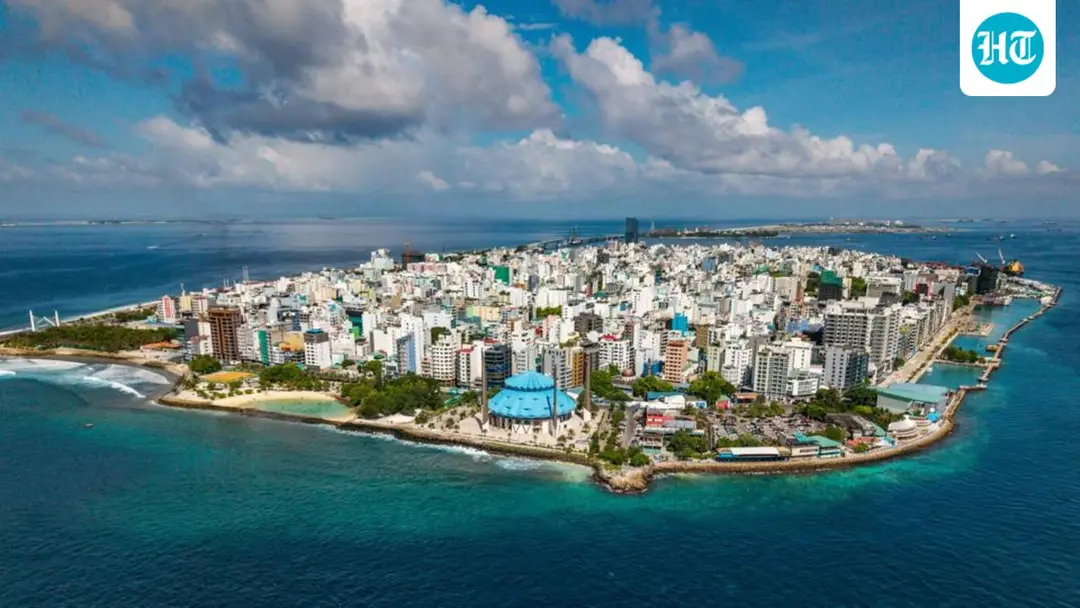
Maldives repays $150 million loan to India amid economic strain
The Maldives has fully repaid a $150-million loan from India, settling the final $50-million tranche of treasury bills on September 17, external affairs ministry spokesperson Randhir Jaiswal said. The bills were subscribed by the State Bank of India in 2019 and extended six times. India bore interest of close to $45 million over five years. New Delhi also extended a ₹30-billion currency swap facility, while SBI subscribed to $350 million in bonds. Maldivian reserves were $643.8 million at end-August.
Source
Hindustan Times — India · read the original report ↗
Desk check · compared with the source
What the desk checked (5)
- Maldives settled the final $50 million tranche of $150 million in treasury bills subscribed by SBI on September 17. — Attributed to external affairs ministry spokesperson Randhir Jaiswal at a media briefing; figures appear in source.
- India bore interest payments of close to $45 million on the treasury bills over five years. — Direct quote attributed to Jaiswal in the source.
- SBI has subscribed to treasury bonds worth $350 million valid till 2029 and 2030, and India extended a ₹30 billion currency swap facility. — Attributed to Jaiswal; figures appear in source.
- Maldives' foreign exchange reserves stood at $643.8 million at end-August and will dip below $600 million after repayment. — Reserve figure attributed to the Maldivian Monetary Authority; the post-repayment projection is stated without explicit attribution.
- India agreed to provide over ₹6,300 crore in support during President Mohamed Muizzu's October 2024 visit. — Background stated in source without a named source.
Analysts’ view opinion
The Maldives clearing its $150-million treasury bill exposure to India is less a balance-sheet event than a strategic signal. The detail that the bills were rolled over six times across five years, with New Delhi itself absorbing roughly $45 million in interest, tells you India treated this as influence-building in the Indian Ocean rather than commercial lending. Yet the fact that the repayment pushes Male's reserves towards the sub-$600-million mark shows the relationship is still being driven by the archipelago's underlying fragility.
- That this repayment happened under President Muizzu, who came to power on an "India Out" platform, suggests economic reality has outweighed campaign rhetoric.
- India retains long-term financial leverage through the ₹30-billion currency swap and SBI's $350 million in treasury bonds running to 2029 and 2030.
- One loan closing does not reduce net dependence — India remains embedded in the Maldivian economy via essential-commodity supplies, credit lines and swap support.
- If reserves erode further after the payment, Male may need fresh external support, and who fills that gap matters for Indian Ocean competition.
- By carrying the interest cost itself, India also gains a diplomatic talking point that contrasts its neighbourhood assistance with "debt trap" criticisms levelled at other lenders.
What to watch — Watch the trajectory of Maldivian foreign exchange reserves in the coming months, the use of the currency swap window, and whether Male returns to India or to other partners for another round of support.
The story establishes only that the loan was repaid; it does not tell us where the money came from, nor the Maldives' overall debt position or the state of its financial arrangements with other countries.
Deep dive
Research brief · 8 facts · 6 dates · exam-readyThe brief
Context
The Maldives, a tourism-dependent Indian Ocean archipelago facing high public debt and low foreign exchange reserves, has fully repaid a $150-million loan from India raised through treasury bills subscribed by the State Bank of India in 2019. India had borne the interest cost on these bills, close to $45 million over five years. The repayment comes amid a broader Indian financial support package for Male, and after a period in which bilateral ties dipped under President Mohamed Muizzu's "India Out" campaign before improving from 2024.
Key facts
- The final tranche of treasury bills worth $50 million, out of a total of $150 million subscribed by SBI, was settled by the Maldives on September 17.
- The treasury bills were subscribed by the State Bank of India in 2019 and were extended six times, each time for a year.
- The principal was repaid by the Maldives, but India bore the interest, totalling close to $45 million over five years, per MEA spokesperson Randhir Jaiswal.
- India extended a currency swap facility of Rs 30 billion to support the Maldivian financial system.
- SBI has subscribed to Maldivian treasury bonds worth $350 million, valid till 2029 and 2030.
- Maldivian foreign exchange reserves stood at $643.8 million at the end of August, according to the Maldives Monetary Authority (MMA).
- The repayment will push Maldivian foreign exchange reserves below $600 million.
- India provided a $400-million currency swap facility in October 2024 to ease liquidity stress.
Timeline
- 2019State Bank of India subscribes to Maldivian treasury bills worth $150 million.
- 2019 onwardsThe treasury bills are extended on six occasions, each time for one year, with India bearing the interest.
- 2024President Mohamed Muizzu is among regional leaders invited to Prime Minister Narendra Modi's inauguration, beginning a thaw in ties.
- October 2024India provides a $400-million currency swap facility; during Muizzu's visit to India, New Delhi agrees to support of more than Rs 6,300 crore.
- End-August (current year)Maldivian foreign exchange reserves recorded at $643.8 million by the MMA.
- September 17Maldives settles the final $50-million tranche, completing repayment of the $150-million loan.
Who has a stake
- Government of the Maldives — Clears a $150-million obligation but sees foreign exchange reserves dip below $600 million amid debt and liquidity stress.
- Government of India / Ministry of External Affairs — Sustains a longstanding development partnership and regional influence; bore close to $45 million in interest costs.
- State Bank of India — Subscribed the $150-million treasury bills and holds $350 million in Maldivian treasury bonds maturing in 2029 and 2030.
- Maldives Monetary Authority — Manages reserves and financial stability; reported reserves of $643.8 million at end-August.
- President Mohamed Muizzu — Came to power on an 'India Out' platform but now depends on Indian financial support after the 2024 thaw in ties.
- Maldivian economy and public — Exposed to high public debt, low reserves and heavy dependence on tourism and imports, including essential commodities from India.
Why it matters
The repayment shows how deeply India is embedded in the Maldives' financial lifeline, even as Male's reserves fall below $600 million and it continues to rely on Indian swaps, bond subscriptions and supplies of essential commodities. It also marks how far ties have recovered from the "India Out" phase, when Male tilted towards China. For India, such support is central to its influence in the Indian Ocean neighbourhood.
UPSC angle
Prelims pointers
- Maldives repaid the final $50-million tranche of a $150-million treasury bill facility on September 17; bills subscribed by SBI in 2019, extended six times.
- India bore interest of close to $45 million on the Maldivian treasury bills over five years.
- India extended a Rs 30-billion currency swap facility to the Maldives; SBI holds $350 million in Maldivian treasury bonds valid till 2029 and 2030.
- Maldivian foreign exchange reserves: $643.8 million at end-August (Maldives Monetary Authority).
- India provided a $400-million currency swap facility in October 2024 under support for balance of payments stress; assistance has included the SAARC Currency Swap Framework.
- During Muizzu's October 2024 visit to India, New Delhi agreed to over Rs 6,300 crore in support.
Mains framing
The Maldives' full repayment of a $150-million Indian loan illustrates both the fragility of a small island economy and the strategic depth of India's neighbourhood financial diplomacy. The Maldivian economy is strained by high public debt, thin foreign exchange reserves and heavy dependence on tourism and imports, which is why the $150-million treasury bill facility had to be rolled over six times since 2019, with India absorbing nearly $45 million in interest. India's toolkit has combined credit lines, the SAARC Currency Swap Framework, a $400-million swap in October 2024, a Rs 30-billion swap facility, SBI's $350-million bond subscription valid till 2029-30, and supplies of essential commodities. Politically, the repayment comes after a reversal in relations: President Muizzu's "India Out" campaign and tilt towards China gave way to a thaw from 2024, including his invitation to PM Modi's inauguration and an October 2024 visit yielding more than Rs 6,300 crore in support. The way forward lies in converting emergency liquidity support into durable resilience: diversification of the Maldivian economy beyond tourism, sustainable debt management, and predictable, project-based Indian development partnership that reduces the need for repeated rollovers while keeping India the first responder in the Indian Ocean.
Key terms
- Treasury bills
- Short-term government debt instruments; here $150 million worth subscribed by SBI in 2019 and rolled over annually six times.
- Currency swap facility
- An arrangement allowing a country to access foreign currency against its own to meet short-term liquidity or balance of payments needs.
- SAARC Currency Swap Framework
- Regional arrangement under which India has provided short-term financial support, including to the Maldives.
- Maldives Monetary Authority (MMA)
- The central monetary authority of the Maldives, which reported reserves of $643.8 million at end-August.
- Balance of payments crisis
- A situation where a country cannot meet external payment obligations due to inadequate foreign exchange, as faced by the Maldives.
- 'India Out' campaign
- The platform on which President Mohamed Muizzu came to power, seeking to reduce Indian presence and move closer to China.
Practice questions
- Examine how India's financial assistance instruments - credit lines, currency swaps and bond subscriptions - serve its strategic objectives in the Indian Ocean region, with reference to the Maldives.
- The Maldivian economy faces high public debt, low reserves and dependence on tourism and imports. Discuss the risks this poses for regional stability and for India's neighbourhood policy.
- Trace the trajectory of India-Maldives relations from the 'India Out' campaign to the present, and assess what sustains cooperation despite political shifts.
Grounded only in the source report — figures and dates are the source's, not inferred.