
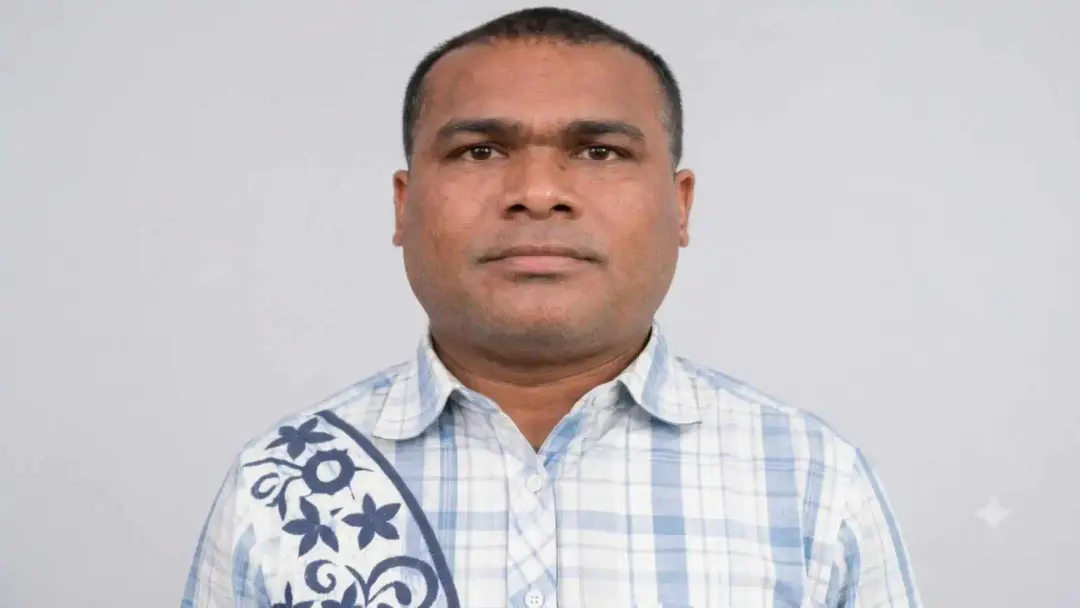
Jharkhand Naxal commander killed in Varanasi encounter
Brijesh Ganjhu alias Gopal Singh Bhokta, a commander of the banned Jharkhand-based Naxalite outfit Tritiya Prastuti Committee, was killed in an encounter in the Ramnagar area of Varanasi early Sunday, officials said. Police said they acted on an informer's tip and tried to stop him on a motorcycle, but he jumped off and opened fire. He was declared dead on arrival at hospital. Jharkhand had announced a Rs 25 lakh reward and the NIA Rs 5 lakh.
Source
Indian Express — Cities · read the original report ↗
Desk check · compared with the source
What the desk checked (5)
- UP police killed TPC commander Brijesh Ganjhu alias Gopal Singh Bhokta in an encounter in Ramnagar, Varanasi, early Sunday. — Attributed to officials in the source; single-source police account.
- Jharkhand government had announced a Rs 25 lakh reward and the NIA a Rs 5 lakh reward for information leading to his arrest. — Figures appear in source, attributed to police.
- Brijesh jumped off the motorcycle and began firing at police, sustaining bullet injuries in the exchange of fire. — Police version, hedged as alleged in the source; no other witnesses cited.
- Bullets struck bulletproof jackets of UP ATS DSP Vipin Rai and Head Constable Nitendra Krishna. — Attributed to police; names and ranks as given in source.
- He was declared dead on arrival at hospital. — Stated in source without naming the hospital.
Analysts’ view opinion
In every death during a police encounter, the law asks one central question: was the firing genuinely in self-defence, or was it an unlawful killing? What is on record so far is the police account alone; the independent scrutiny that tests such an account has yet to begin. Indian jurisprudence has long insisted that every such case requires an independent investigation and magisterial examination — and the gravity of the allegations against the deceased does not alter that process.
- However large the reward and however senior the alleged role in a banned outfit, an accusation is not a conviction — and with the accused dead, those allegations will never be tested in court.
- Where a death results from police firing, registration of a case, investigation by an independent agency or separate unit, a post-mortem and a magisterial inquiry are generally treated as non-negotiable steps.
- The police version — that he jumped off the motorcycle and fired, with bullets striking officers' bulletproof jackets — offers physical corroboration for a self-defence claim, but it still has to be established forensically.
- The inter-state dimension matters here: a Jharkhand-based accused killed in Uttar Pradesh, in a case where the NIA too had announced a reward, makes jurisdiction and coordination between agencies a live issue.
- The story does not make clear what happened to the associate who was with him, and his account as a witness could become significant in any inquiry.
What to watch — Watch for whom the FIR names and under which sections, whether a magisterial or independent inquiry is ordered, and whether any human rights body takes up the matter.
The story does not establish who fired first or whether the police response stayed within lawful limits — what exists so far is the official account, not independently verified findings.
Deep dive
Research brief · 8 facts · 4 dates · exam-readyThe brief
Context
The Tritiya Prastuti Committee (TPC) is a banned Jharkhand-based Naxalite organisation. One of its commanders, Brijesh Ganjhu alias Gopal Singh Bhokta, a resident of Jharkhand, was wanted by both the Jharkhand government and the National Investigation Agency, which had announced cash rewards for information leading to his arrest. He was shot dead in an encounter with Uttar Pradesh police in the Ram Nagar area of Varanasi early on a Sunday morning, according to officials.
Key facts
- Brijesh Ganjhu alias Gopal Singh Bhokta, a commander of the banned Jharkhand-based Tritiya Prastuti Committee (TPC), was gunned down by UP police in an encounter.
- The encounter took place early Sunday morning in the Ram Nagar area of Varanasi.
- The Jharkhand government had announced a reward of Rs 25 lakh for information leading to Brijesh Ganjhu's arrest.
- The National Investigation Agency (NIA) had announced a reward of Rs 5 lakh on him.
- Police acted on information from an informer; Brijesh was travelling on a motorcycle with an associate from Tegara crossing towards Mughalsarai via Ramnagar.
- Police said that instead of stopping, he jumped off the motorcycle and allegedly began firing at police personnel, sustaining bullet injuries in the exchange of fire.
- Bullets fired by the accused struck the bulletproof jackets of UP ATS Deputy Superintendent of Police Vipin Rai and Head Constable Nitendra Krishna.
- Brijesh was taken to a hospital, where he was declared dead on arrival.
Timeline
- Before the encounter (date not stated in the source)Jharkhand government announces Rs 25 lakh reward and the NIA Rs 5 lakh for information leading to Brijesh Ganjhu's arrest.
- Sunday morning (date not stated in the source)Acting on an informer's tip, police try to stop Brijesh, who was riding a motorcycle with an associate from Tegara crossing towards Mughalsarai via Ramnagar.
- Same Sunday morningHe allegedly jumps off the motorcycle and fires at police; in the exchange of fire he sustains bullet injuries and bullets hit the bulletproof jackets of two policemen.
- Shortly afterBrijesh is taken to a hospital and declared dead on arrival.
Who has a stake
- Uttar Pradesh Police / UP ATS — Conducted the operation in Varanasi; its personnel, including a DSP and a head constable, came under fire during the encounter.
- Tritiya Prastuti Committee (TPC) — Banned Jharkhand-based Naxalite outfit that loses a commander in the operation.
- Jharkhand government — Had announced a Rs 25 lakh reward for information leading to the slain commander's arrest.
- National Investigation Agency (NIA) — Had announced a Rs 5 lakh reward on Brijesh Ganjhu, indicating a central counter-terror interest in the case.
- UP ATS DSP Vipin Rai and Head Constable Nitendra Krishna — Bullets fired by the accused struck their bulletproof jackets during the exchange of fire.
- Brijesh Ganjhu alias Gopal Singh Bhokta — The wanted TPC commander, declared dead on arrival at hospital.
Why it matters
The killing of a rewarded TPC commander outside Jharkhand shows that left-wing extremist cadres move across state borders and are being tracked by state anti-terror squads in coordination with central agencies. Rewards announced by both a state government and the NIA signal how such cases straddle state policing and central counter-terror mandates. It also renews scrutiny of encounter deaths and the standards of accountability expected in them.
UPSC angle
Prelims pointers
- Tritiya Prastuti Committee (TPC) is a banned Jharkhand-based Naxalite organisation.
- Brijesh Ganjhu alias Gopal Singh Bhokta carried a Rs 25 lakh Jharkhand government reward and a Rs 5 lakh NIA reward.
- The encounter took place in the Ram Nagar area of Varanasi, Uttar Pradesh.
- UP ATS (Anti-Terrorism Squad) personnel, including a Deputy Superintendent of Police, took part in the operation.
- NIA is the central agency that had announced a reward in this case.
- Bulletproof jackets of two UP ATS personnel were hit by bullets during the exchange of fire.
Mains framing
The Varanasi encounter illustrates three features of India's internal security landscape. First, left-wing extremist outfits such as the banned Tritiya Prastuti Committee, though rooted in Jharkhand, operate and move beyond their home state, requiring inter-state intelligence sharing and specialised units like the UP ATS rather than routine district policing. Second, the parallel rewards - Rs 25 lakh by the Jharkhand government and Rs 5 lakh by the NIA - show the layered architecture of response, where state governments handle law and order while a central agency investigates offences with a terror dimension; coordination gaps in such dual-track systems can let wanted cadres relocate undetected. Third, the reliance on informer-based operations and the police account that the accused fired first, with bullets striking the bulletproof jackets of two officers, places the episode within the wider debate on encounter deaths, where transparent magisterial and forensic scrutiny is essential to public confidence. The way forward lies in strengthening inter-state fugitive tracking databases, sustained intelligence-led policing instead of episodic operations, protective equipment for personnel, and rigorous documented post-encounter review - alongside the development and rehabilitation measures that address the socio-economic roots of Naxalism. The source does not state any specific policy initiative arising from this incident.
Key terms
- Tritiya Prastuti Committee (TPC)
- A banned Jharkhand-based Naxalite organisation, of which the man killed was a commander.
- National Investigation Agency (NIA)
- Central investigating agency that had announced a Rs 5 lakh reward on Brijesh Ganjhu.
- UP ATS
- Uttar Pradesh Anti-Terrorism Squad; its DSP and head constable were among those fired at during the encounter.
- Encounter
- An exchange of fire between police and a suspect; here it ended with the accused being declared dead on arrival at hospital.
- Reward for information
- Cash announced by authorities for inputs leading to a wanted person's arrest - Rs 25 lakh by Jharkhand and Rs 5 lakh by the NIA in this case.
Practice questions
- Left-wing extremist outfits increasingly operate across state boundaries. Examine the challenges this poses for policing and suggest institutional mechanisms for inter-state coordination.
- Discuss the role of central agencies such as the NIA vis-a-vis state police forces in tackling left-wing extremism, using the reward structure in this case as an illustration.
- Encounter deaths raise questions of accountability even when the suspect is a wanted extremist. Critically evaluate the safeguards that should govern such operations.
Grounded only in the source report — figures and dates are the source's, not inferred.