
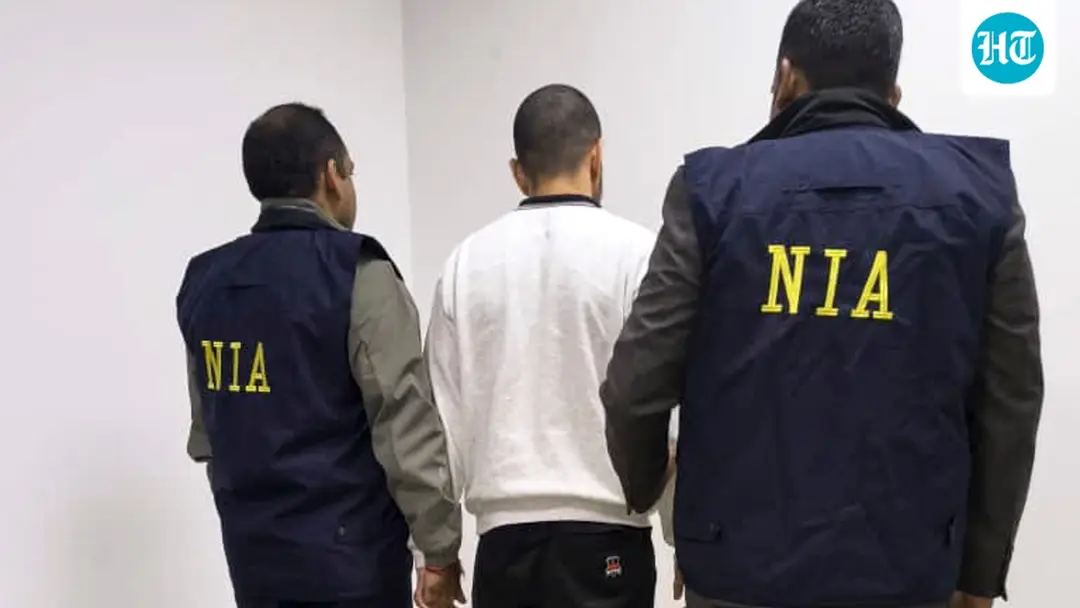
NIA chargesheets nine ISIS members, supporters in Vijayawada case
The NIA has chargesheeted nine ISIS members and supporters for allegedly radicalising youths to join violent terrorist activities, officials said on Friday. The chargesheet was filed before a special court in Vijayawada under BNS sections 61(2), 3(5) and 152 and UAPA sections 13(1), 38 and 39. The agency said the accused conspired via social media platforms like Instagram to establish a caliphate in India through violent jihad. The case, registered on March 23, 2026, at Vijayawada II Town police station, has seen 11 accused and a child apprehended so far.
Source
Hindustan Times — India · read the original report ↗
Desk check · compared with the source
What the desk checked (5)
- NIA has chargesheeted nine ISIS members and supporters before a special court in Vijayawada. — Attributed to NIA statement and officials cited in the source; names of the nine accused appear in the source.
- Case was registered on March 23, 2026, at Vijayawada II Town police station and later taken over by NIA. — Date and police station appear twice in the source, internally consistent.
- Accused allegedly radicalised youths via social media platforms like Instagram to establish a caliphate in India through violent jihad. — Attributed to the NIA statement; remains an allegation, unverified independently.
- 11 accused and a child in conflict with law have been apprehended so far. — Figure appears in source, attributed to the agency; note it exceeds the nine chargesheeted.
- Accused developed and tested a secure application for secret communication and planned explosives and weapon training. — Attributed to the NIA; no independent corroboration provided.
Analysts’ view opinion
A chargesheet is an accusation, not an adjudication — the special court in Vijayawada must still decide whether to take cognizance and frame charges. The combination of BNS Section 152 (endangering sovereignty, unity and integrity) with UAPA Sections 13(1), 38 and 39 places this case under a stricter bail threshold and longer permissible custody timelines than ordinary criminal procedure. At the same time, membership and "support" offences require the prosecution to establish intent and active involvement — an area repeatedly examined in Supreme Court jurisprudence.
- A chargesheet only sets out allegations; the accused remain presumed innocent until the trial concludes.
- Under UAPA, judicial discretion on bail is narrowed — courts may refuse bail where allegations appear prima facie credible on the record.
- The story notes 11 arrests but nine persons charge-sheeted, which leaves open the possibility of a supplementary chargesheet; the reasons are not stated.
- The "child in conflict with law" will proceed separately under the juvenile justice framework with distinct protections, and should not be conflated with the adult trial.
- Because the allegations rest on social media and an encrypted application, the manner of collection and admissibility of digital evidence is likely to become a central legal contest at trial.
What to watch — Watch for the court taking cognizance, supply of chargesheet copies to the accused, orders on bail applications, and whether a supplementary chargesheet follows for the remaining arrested persons.
Everything here rests on the NIA's own statement; the defence version, any response from counsel, and whether any attack actually occurred are not established by this story.
Deep dive
Research brief · 8 facts · 4 dates · exam-readyThe brief
Context
The National Investigation Agency (NIA), India's federal counter-terror agency, has filed a chargesheet against nine alleged members and supporters of the banned terrorist organisation ISIS in a case originally registered by Andhra Pradesh police. The agency alleges the accused used social media, chiefly Instagram, to radicalise young people and conspired to establish a caliphate in India through violent jihad. The chargesheet was filed before a special court in Vijayawada under the new Bharatiya Nyaya Sanhita (BNS) as well as the Unlawful Activities (Prevention) Act (UAPA). The NIA says the accused also planned explosives-making and weapons training, and built a secure app for covert communication.
Key facts
- The NIA chargesheeted nine ISIS members and supporters for allegedly radicalising 'gullible youths' to join violent terrorist activities; officials announced this on a Friday.
- The case was registered on March 23, 2026, at Vijayawada II Town police station and was later taken over by the NIA.
- So far, 11 accused and one child in conflict with law have been apprehended in the case.
- The chargesheet was filed before a special court in Vijayawada, Andhra Pradesh.
- Charges invoked: BNS sections 61(2) read with 3(5) and 152, and UAPA sections 13(1), 38 and 39.
- Those chargesheeted: Mohammad Rehmatullah Shariff, Mohammed Danish, Mirza Sohail Baig, Lucky Ahmad, Jishan Abdul Majid, Mir Ashif Ali, Abdul Salaam, Sharuk Khan and Shaikh Faiz ur Rehman.
- NIA alleges the conspiracy ran primarily through social media platforms like Instagram, aiming to establish a caliphate in India through violent jihad.
- NIA says the accused planned and prepared for making explosives and weapon training, and developed and tested a secure app for secret communication.
Timeline
- March 23, 2026Case registered at Vijayawada II Town police station, Andhra Pradesh.
- After registration (date not stated in the source)NIA takes over the investigation from the state police.
- Course of the probe11 accused and a child in conflict with law apprehended.
- Friday (date not stated in the source)NIA files chargesheet against nine accused before the special court in Vijayawada; officials make it public.
Who has a stake
- National Investigation Agency (NIA) — Lead investigating agency; must prove the conspiracy and ISIS linkages in court after taking over the state-registered case.
- Nine chargesheeted accused — Face prosecution under BNS and UAPA provisions covering conspiracy and endangering India's sovereignty and unity.
- Child in conflict with law apprehended in the case — A minor drawn into the alleged radicalisation network, to be dealt with separately from adult accused.
- Special NIA court, Vijayawada — Will try the case and test the evidence on radicalisation, explosives preparation and weapons training.
- Andhra Pradesh police (Vijayawada II Town PS) — Registered the original FIR on March 23, 2026, before handing the case to the NIA.
- Social media platforms such as Instagram — Named as the primary channel allegedly used for the conspiracy and radicalisation, raising platform-moderation questions.
- Youths targeted for radicalisation — Described by NIA as 'gullible youths' motivated to join violent terrorist activities.
Why it matters
The case illustrates how online platforms and encrypted, self-built communication tools are being used to radicalise young Indians for a banned global terror outfit, far from any conflict zone. It also shows the working of the state-to-NIA handover mechanism and one of the early prosecutions combining the new Bharatiya Nyaya Sanhita with the UAPA.
UPSC angle
Prelims pointers
- NIA is India's central counter-terror investigation agency; cases registered by state police can be taken over by it.
- Case registered March 23, 2026, at Vijayawada II Town police station, Andhra Pradesh; chargesheet filed before a special court in Vijayawada.
- BNS sections invoked: 61(2) with 3(5) and 152 - criminal conspiracy, common intention/interest, and endangering sovereignty, unity and integrity of India.
- UAPA sections invoked: 13(1), 38 and 39 - punishment for unlawful activities, membership of and support to terrorist organisations.
- Nine accused chargesheeted; 11 accused and one child in conflict with law apprehended so far.
- ISIS is a banned terror organisation; the alleged aim was a caliphate in India through violent jihad.
Mains framing
The Vijayawada ISIS case shows how terror recruitment in India has shifted from physical networks to digital radicalisation: the NIA alleges that nine accused used mainstream social media, primarily Instagram, to motivate and radicalise young people, while simultaneously developing and testing a bespoke secure application for covert internal communication and preparing for explosives-making and weapons training. The causes lie in easy availability of extremist propaganda online, the anonymity of encrypted channels, and the vulnerability of young users described by the agency as 'gullible'. The implications are threefold - a law-and-order challenge in a state not conventionally associated with ISIS-linked cases, a prosecutorial challenge of proving online conspiracy and organisational 'membership' and 'support' under UAPA sections 13(1), 38 and 39 read with BNS conspiracy and sovereignty provisions, and a child-protection dimension given that a child in conflict with law is among those apprehended. The way forward, as suggested by the facts on record, involves timely transfer of such cases to a specialised federal agency, evidence-grade digital forensics to sustain convictions before special courts, platform accountability for extremist content, and counter-radicalisation and rehabilitation measures aimed at young people, with due process safeguards given the stringency of UAPA.
Key terms
- NIA (National Investigation Agency)
- India's central agency for investigating terror and offences against national security; it took over this case from Andhra Pradesh police.
- UAPA
- Unlawful Activities (Prevention) Act; sections 13(1), 38 and 39 punish unlawful activities, membership of and support to terrorist organisations.
- Bharatiya Nyaya Sanhita (BNS)
- India's criminal code; sections 61(2) with 3(5) and 152 cover criminal conspiracy, common intention and endangering India's sovereignty, unity and integrity.
- ISIS
- Banned terrorist organisation whose activities the accused allegedly conspired to support, seeking a caliphate in India through violent jihad.
- Child in conflict with law
- Legal term for a minor alleged to have committed an offence; one such child has been apprehended in this case.
- Radicalisation
- Process of motivating individuals towards violent extremism; here alleged to have been carried out over platforms like Instagram.
Practice questions
- Online radicalisation has changed the nature of terror recruitment in India. Examine with reference to the legal framework available under the UAPA and the Bharatiya Nyaya Sanhita.
- Discuss the role and jurisdiction of the National Investigation Agency in taking over terror cases registered by state police. What challenges arise in prosecuting conspiracy established largely through digital evidence?
- What institutional and social measures are needed to counter the radicalisation of youths and minors by banned terrorist organisations, while protecting civil liberties?
Grounded only in the source report — figures and dates are the source's, not inferred.