
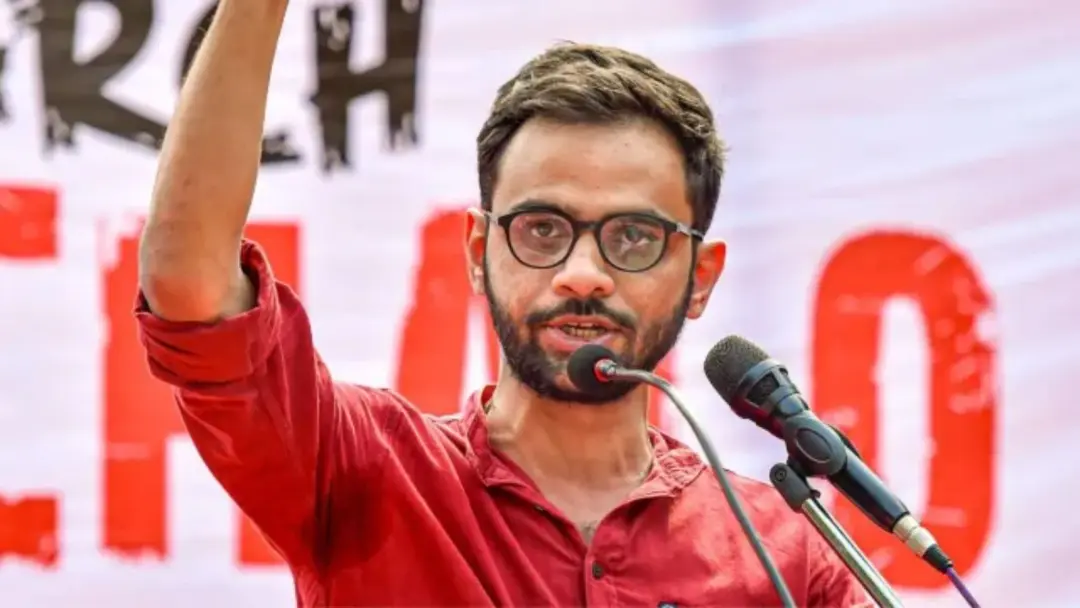
IIIT-Hyderabad cancels screening of Umar Khalid documentary
IIIT-Hyderabad has cancelled a proposed screening of 'Prisoner No. 626710 is Present', a documentary on jailed activist Umar Khalid, a day after the CBFC flagged it on X, saying public exhibition of an uncertified film violates the Cinematograph Act unless an exemption is sought. The institute said no public or private screening would be permitted in any institute space, including classrooms, laboratories or offices. An informal student group had proposed the screening, directed by Lalit Vachani, at the KRB Auditorium at 8 pm on September 18.
Source
Indian Express — India · read the original report ↗
Desk check · compared with the source
What the desk checked (5)
- IIIT-Hyderabad cancelled the screening of 'Prisoner No. 626710 is Present' and barred any public or private screening in institute spaces. — Attributed to an official IIIT-Hyderabad statement quoted in the source.
- CBFC flagged the proposed screening on X, saying showing an uncertified film violates the Cinematograph Act unless an exemption is sought. — Attributed in source to a CBFC post on X; text of the post not fully reproduced.
- An informal student group proposed the screening at the KRB Auditorium at 8 pm on September 18. — Figures and date appear in the source, sourced to the institute's account of the event.
- A planned screening at NLSIU Bengaluru was postponed after ABVP objections, citing logistical and security considerations. — Attributed in source to the student committee and ABVP's stated objection; no direct quotes from ABVP given.
- The documentary is directed by filmmaker Lalit Vachani. — Stated in source without further attribution; internally consistent.
Analysts’ view opinion
What can and cannot be screened on a campus has now become an openly political battleground. IIIT-Hyderabad has framed its decision entirely in legal and procedural terms — no CBFC certification, no official permission — which is the safest, lowest-cost route for an institution. But coming after the postponement of the same film at NLSIU Bengaluru, the cancellation will inevitably be read as part of the wider political polarisation around the Umar Khalid case.
- The institute's statement pointedly avoids free speech or the film's content and rests solely on the 'unauthorised event' procedural argument — a deliberate way to stay out of the political line of fire.
- The cancellation coming a day after the CBFC flagged it on X shows how quickly a public post by a regulator can shape a campus decision.
- A postponement at NLSIU after ABVP objections and a cancellation here on legal grounds — the same outcome via two different routes suggests the film has become a national political symbol.
- The publicity generated by the cancellation may exceed what a quiet screening would have drawn, and critics are likely to fold it into a narrative about the shrinking space for dissent.
- For pro-government student outfits this reads as a tactical win, though the story says nothing about ABVP or any other outfit being involved in this particular instance.
What to watch — Watch whether similar screenings are proposed at other campuses, whether student groups now seek a formal exemption under the Act, or whether such screenings simply shift off-campus.
The story does not establish whether any political pressure lay behind the procedural reasoning or that anyone influenced the institute, and it carries no response from the student group involved.
Deep dive
Research brief · 8 facts · 4 dates · exam-readyThe brief
Context
A documentary on jailed activist Umar Khalid, 'Prisoner No. 626710 is Present', directed by filmmaker Lalit Vachani, was to be screened by an informal student group at IIIT-Hyderabad's KRB Auditorium at 8 pm on September 18. The Central Board of Film Certification (CBFC) flagged the proposed screening on X, saying public exhibition of a film not certified by it violates the Cinematograph Act unless a specific exemption is sought under the Act. A day later, IIIT-Hyderabad cancelled the programme, saying it was an "unauthorised" event with no official permission. An earlier planned screening at NLSIU Bengaluru had been postponed after objections from the ABVP.
Key facts
- The documentary 'Prisoner No. 626710 is Present', on jailed activist Umar Khalid, is directed by filmmaker Lalit Vachani.
- The screening was scheduled at IIIT-Hyderabad's KRB Auditorium at 8 pm on September 18 (Friday).
- The CBFC flagged the proposed screening on X, saying public screening of an uncertified documentary violates the Cinematograph Act unless a specific exemption is sought.
- IIIT-Hyderabad cancelled the screening a day after the CBFC's post.
- The institute said no public or private screening of the film will be permitted in any institute space, including classrooms, laboratories or offices.
- IIIT-H said an informal student group had proposed the screening in a campus lecture hall and that it had 'no link to IIIT-H officially in any way'.
- The institute said neither it nor any recognised student clubs, cells or bodies were involved, and no permission was obtained from competent authorities.
- An earlier planned screening at the National Law School of India University (NLSIU), Bengaluru was postponed after objections from the RSS-affiliated ABVP, which called it 'political propaganda'; the student committee cited 'logistical and security considerations'.
Timeline
- Earlier (date not stated in the source)Planned screening of the documentary at NLSIU Bengaluru postponed after ABVP objections; student committee cited logistical and security considerations and said it would be held later in the trimester.
- Before September 18An informal student group proposes to screen the documentary at IIIT-Hyderabad's KRB Auditorium at 8 pm on September 18.
- A day before the cancellationCBFC flags the proposed IIIT-H screening on X, citing the Cinematograph Act and lack of certification or exemption.
- Next dayIIIT-Hyderabad cancels the screening, saying it was unauthorised and barring any public or private screening in institute spaces.
Who has a stake
- IIIT-Hyderabad administration — Says the event was unauthorised and not institute-organised; enforcing campus permission protocols and legal compliance while facing questions on academic space.
- Informal student group at IIIT-H — Organised the proposed screening without official permission; screening cancelled and barred from all institute spaces.
- Central Board of Film Certification (CBFC) — Asserted that exhibiting an uncertified film publicly violates the Cinematograph Act absent a specific exemption.
- Lalit Vachani, filmmaker — Director of the documentary, whose screenings have now been blocked or postponed on two campuses.
- Umar Khalid — Jailed activist who is the subject of the documentary.
- NLSIU Bengaluru and ABVP — NLSIU student committee postponed its screening; ABVP claimed the screening would amount to political propaganda on campus.
Why it matters
The episode places campus autonomy and student expression against film certification law, with the CBFC's public intervention preceding an institute's cancellation. It also shows a pattern across two premier institutions — IIIT-Hyderabad and NLSIU Bengaluru — where screenings of the same documentary were blocked or postponed on grounds of certification, permission or security.
UPSC angle
Prelims pointers
- 'Prisoner No. 626710 is Present' is a documentary on jailed activist Umar Khalid, directed by Lalit Vachani.
- CBFC is the statutory film certification body; it flagged the IIIT-H screening on X.
- Public exhibition of an uncertified film violates the Cinematograph Act unless a specific exemption is sought under the Act.
- The proposed venue and time: KRB Auditorium, IIIT-Hyderabad, 8 pm, September 18.
- ABVP is described in the source as RSS-affiliated; it objected to the NLSIU Bengaluru screening.
- IIIT-H barred both public and private screenings in classrooms, laboratories or offices.
Mains framing
The cancellation at IIIT-Hyderabad raises the question of how film certification law interacts with academic and campus spaces. The immediate legal trigger was the CBFC's position that publicly exhibiting a film not certified by it breaches the Cinematograph Act unless a specific exemption is sought; the institute's stated ground was procedural — no official permission was taken, no protocols followed, and the organisers were an informal group with no link to the institute or its recognised clubs. Yet the institute went further than the certification question by barring private as well as public screenings in any institute space, which sharpens the debate on whether closed-door academic viewing falls within the intent of certification rules. The NLSIU precedent, where a screening was postponed after ABVP objections and on 'logistical and security considerations', suggests that pressure from outside groups and risk-aversion can produce similar outcomes even without a regulatory notice. A way forward consistent with the source lies in clarity: institutions publishing transparent, uniformly applied permission processes for screenings, and organisers using the exemption route the Cinematograph Act provides, so that decisions rest on stated law and procedure rather than ad hoc reaction.
Key terms
- CBFC (Central Board of Film Certification)
- The body that certifies films; it flagged the IIIT-H screening as an uncertified film exhibition.
- Cinematograph Act
- The law under which public exhibition of an uncertified film is a violation unless a specific exemption is obtained.
- 'Prisoner No. 626710 is Present'
- Documentary on jailed activist Umar Khalid, directed by Lalit Vachani; not certified by the CBFC.
- ABVP (Akhil Bharatiya Vidyarthi Parishad)
- RSS-affiliated student organisation that objected to the documentary's screening at NLSIU Bengaluru.
- NLSIU
- National Law School of India University, Bengaluru, where a planned screening was postponed to later in the trimester.
- KRB Auditorium
- The IIIT-Hyderabad campus venue where the 8 pm September 18 screening was to be held.
Practice questions
- Does the requirement of CBFC certification for public exhibition under the Cinematograph Act extend to screenings in educational institutions? Discuss with reference to the IIIT-Hyderabad case.
- Examine the tension between institutional permission protocols on campuses and freedom of expression of students, using recent documentary screening controversies.
- "Risk-aversion, not law, often decides what is screened on campuses." Critically evaluate in the light of the NLSIU and IIIT-Hyderabad episodes.
Grounded only in the source report — figures and dates are the source's, not inferred.