
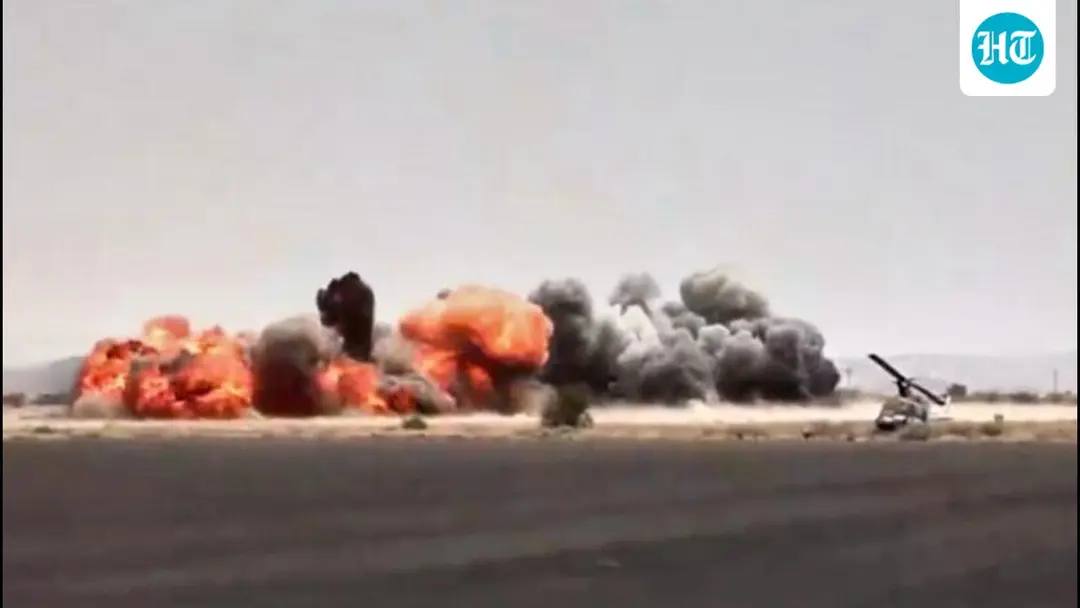
Houthi attacks on Saudi Arabia undermine regional security: MEA
Attacks by Yemen's Houthi rebels on Saudi Arabia are unacceptable to India as they undermine regional security and threaten freedom of navigation in the Bab el-Mandeb Strait, the external affairs ministry said on Friday. Spokesperson Randhir Jaiswal said New Delhi is deeply concerned over the Red Sea escalation, with the drone attack targeting Makkah seen as a major escalation. All Indian nationals in Yemen are safe. The issue figured in a Jaishankar-Prince Faisal meeting on the Brics Summit margins on September 13.
Source
Hindustan Times — India · read the original report ↗
Desk check · compared with the source
What the desk checked (5)
- India finds Houthi attacks on Saudi Arabia unacceptable as they undermine regional security and threaten navigation in the Bab el-Mandeb Strait. — Attributed directly to MEA spokesperson Randhir Jaiswal at a regular media briefing, with quotes.
- A drone attack targeted the holy city of Makkah and is seen as a major escalation. — Appears in source as reported characterisation; no specific source or damage details given.
- Houthis have taken control of key territories close to the Bab el-Mandeb Strait in recent days. — Stated in source without attribution to a named official or agency.
- All Indian nationals in Yemen are safe and the Indian embassy in Saudi Arabia is in contact with them. — Attributed to Jaiswal in the source.
- Bab el-Mandeb's importance for India's energy supplies grew after Iran's closure of the Strait of Hormuz; the issue figured in Jaishankar's September 13 meeting with Prince Faisal bin Farhan Al Saud on the margins of the Brics Summit. — Figures and date appear in source; no separate sourcing provided for the Hormuz closure claim.
Analysts’ view opinion
India's use of "totally unacceptable" is firmer than the carefully hedged language Delhi usually deploys on West Asian conflicts, and it reflects direct strategic self-interest in energy and sea-lane security as much as solidarity with Riyadh. The story notes that Bab el-Mandeb's importance for India has grown after Iran's closure of the Strait of Hormuz — meaning Delhi's margin for alternative energy routing is narrowing. The attempted drone strike on Makkah pushes the conflict into religiously sensitive territory, which could sharpen the regional response.
- Freedom of navigation is the core Indian concern, consistent with its long-standing opposition to attacks on merchant shipping and civilian and economic infrastructure.
- The most strategically significant detail is that the Houthis have reportedly taken key territory near Bab el-Mandeb — geographic control translates into coercive leverage over a chokepoint.
- With Hormuz closed and the Red Sea route under threat, India faces a compounding concentration of chokepoint risk on its energy lifelines.
- Singling out the Makkah attempt signals Delhi's sensitivity to how the issue lands with Gulf partners and the wider Muslim world.
- That the matter came up in the Jaishankar–Prince Faisal meeting on the Brics Summit margins suggests it has moved from statements into the working bilateral agenda.
What to watch — Watch the shape of Saudi Arabia's response, any shift in shipping insurance and freight costs on the Red Sea route, and whether Delhi moves towards advisories or contingency planning for Indians in Yemen.
The story does not establish who, if anyone, backs the Houthis externally, the scale or damage of the attacks, or whether India is contemplating any concrete step such as naval deployment, evacuation or a diplomatic initiative.
Deep dive
Research brief · 8 facts · 4 dates · exam-readyThe brief
Context
India has publicly condemned attacks by Yemen's Houthi rebels on Saudi Arabia, including an attempted drone strike on the holy city of Makkah, calling them unacceptable. The external affairs ministry says such strikes undermine regional peace and threaten freedom of navigation in the Bab el-Mandeb Strait, a chokepoint whose importance for India's energy supplies has grown after Iran's closure of the Strait of Hormuz. The Houthis have recently taken control of key territories close to the Bab el-Mandeb, and India has repeatedly opposed attacks on merchant shipping and civilian infrastructure amid the West Asia conflict.
Key facts
- MEA spokesperson Randhir Jaiswal said on Friday that Houthi attacks on Saudi Arabia are "totally unacceptable" to India.
- India said such attacks vitiate and undermine regional peace and security and threaten freedom of navigation in the Bab el-Mandeb Strait.
- New Delhi said it is "deeply concerned" about the escalation in the security situation in the Red Sea.
- The drone attack targeting Makkah is seen as a major escalation in renewed Saudi-Houthi hostilities.
- The Houthis have taken control of key territories close to the Bab el-Mandeb Strait in recent days.
- All Indian nationals currently in Yemen are safe; the Indian embassy in Saudi Arabia is in contact with them.
- The importance of the Bab el-Mandeb Strait for India's energy supplies has grown after Iran's closure of the Strait of Hormuz.
- Houthi strikes on Saudi Arabia figured in a meeting between S Jaishankar and Prince Faisal bin Farhan Al Saud on the margins of the Brics Summit on September 13.
Timeline
- Recent days (as stated in source)Houthis take control of key territories close to the Bab el-Mandeb Strait.
- Before the briefing (date not stated in the source)Attempted drone attack on the holy city of Makkah; India issues a statement condemning it.
- September 13Jaishankar discusses Houthi strikes on Saudi Arabia with Saudi counterpart Prince Faisal bin Farhan Al Saud on the margins of the Brics Summit.
- Friday (date not stated in the source)MEA spokesperson Randhir Jaiswal reiterates India's condemnation at the regular media briefing and says Indians in Yemen are safe.
Who has a stake
- India / Ministry of External Affairs — Energy security, safety of merchant shipping and of Indian nationals; condemns attacks and seeks early restoration of peace and stability.
- Saudi Arabia — Attacks on its sovereign territory, civilians and economic assets, including the attempted strike on Makkah.
- Yemen's Houthi rebels — Actors behind the attacks; have seized territories near the Bab el-Mandeb Strait.
- Indian nationals in Yemen — Reported safe; Indian embassy in Saudi Arabia is in contact with them for their welfare.
- Global shipping and energy trade — Freedom of navigation through the Bab el-Mandeb Strait is threatened, with the Strait of Hormuz closed by Iran.
- S Jaishankar and Prince Faisal bin Farhan Al Saud — Discussed the Houthi strikes bilaterally on the Brics Summit margins on September 13.
Why it matters
The Bab el-Mandeb Strait has become even more critical for India's energy imports after Iran's closure of the Strait of Hormuz, so instability there directly affects Indian supply lines and shipping costs. An attempted strike on Makkah also raises the political temperature across West Asia, a region hosting a large Indian diaspora and central to India's energy and trade interests.
UPSC angle
Prelims pointers
- Bab el-Mandeb Strait: chokepoint whose security India says is threatened by Houthi attacks; vital for energy supplies.
- Strait of Hormuz: closed by Iran, raising the importance of Bab el-Mandeb for India, per the source.
- Randhir Jaiswal is the external affairs ministry spokesperson quoted in the story.
- Prince Faisal bin Farhan Al Saud is Saudi Arabia's foreign minister; met Jaishankar on Brics Summit margins on September 13.
- Houthis are Yemen-based rebels who have seized territories close to the Bab el-Mandeb Strait.
- India said all Indian nationals in Yemen are safe; its embassy in Saudi Arabia is in touch with them.
Mains framing
The Houthi escalation against Saudi Arabia, culminating in an attempted drone strike on Makkah, has converted a regional conflict into a maritime security problem with direct consequences for India. With Iran having closed the Strait of Hormuz, the Bab el-Mandeb has become the more consequential artery for India's energy flows, and Houthi control of territories near the strait puts freedom of navigation at risk; New Delhi's response has combined condemnation of attacks on Saudi sovereign territory, civilians and economic assets with consular assurance that Indian nationals in Yemen are safe. India's approach, as visible in the Jaishankar–Prince Faisal meeting on the Brics Summit margins on September 13, is to raise the issue bilaterally with Riyadh while stating a consistent principle: attacks on merchant shipping and civilian infrastructure are unacceptable and vitiate regional stability. The way forward suggested by the source is limited but clear — diplomatic pressure for early restoration of peace and stability, protection of the diaspora through missions, and sustained emphasis on freedom of navigation in the Red Sea and Bab el-Mandeb.
Key terms
- Bab el-Mandeb Strait
- Narrow maritime chokepoint linking the Red Sea to the wider sea lanes; India says navigation there is threatened by Houthi attacks.
- Strait of Hormuz
- Key oil transit waterway which, per the source, Iran has closed, increasing Bab el-Mandeb's importance for India.
- Houthis
- Yemeni rebel group carrying out attacks on Saudi Arabia and holding territories near the Bab el-Mandeb Strait.
- Ministry of External Affairs (MEA)
- India's foreign ministry; its spokesperson Randhir Jaiswal issued India's condemnation at a regular briefing.
- Brics Summit
- Multilateral summit on whose margins Jaishankar met Saudi foreign minister Prince Faisal bin Farhan Al Saud on September 13.
- Freedom of navigation
- Principle of unimpeded passage of shipping through international waters, invoked by India regarding the Bab el-Mandeb.
Practice questions
- Discuss how instability in the Red Sea and the Bab el-Mandeb Strait affects India's energy security and maritime trade, and outline India's policy options.
- Examine India's balancing act in West Asia in light of its condemnation of Houthi attacks on Saudi Arabia and its concerns over the Strait of Hormuz.
- What role does consular and diaspora protection play in India's diplomacy during West Asian conflicts? Illustrate with the situation of Indian nationals in Yemen.
Grounded only in the source report — figures and dates are the source's, not inferred.