
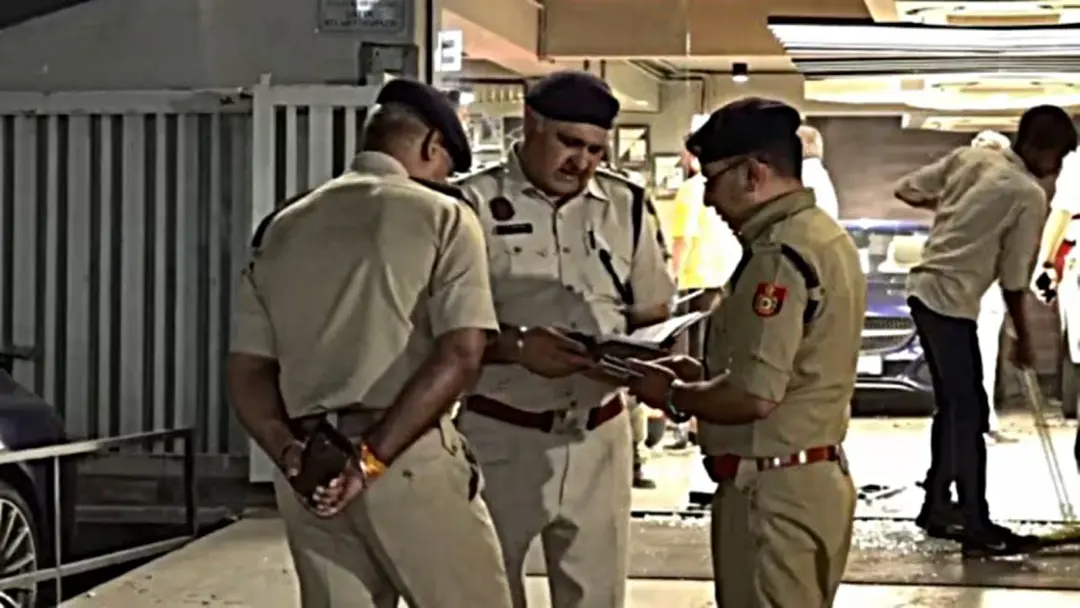
ZIPNET alert missed, unidentified body cremated in Gurugram
The body of Yuvraj Singh Manchanda, 31, an Adani Realty employee missing since September 6, was recovered from a drain in Gurugram's Sector 70 on September 10 and cremated on September 13 as unidentified, his family said. A senior Delhi Police officer said details and a clear photograph were uploaded on ZIPNET on September 12, and Gurugram Police could have identified him by checking it. Police allege former colleague Anya Vats and her husband Sanyam Sachdeva shot him.
Source
Indian Express — Cities · read the original report ↗
Desk check · some claims need care
What the desk checked (5)
- Delhi Police uploaded Yuvraj Singh Manchanda's details and a clear photograph on ZIPNET on September 12. — Attributed to an unnamed senior Delhi Police officer and to Delhi Police in the source.
- The body was recovered from a drain in Sector 70, Gurugram, on September 10 and cremated on September 13 as unidentified. — Dates appear in the source; cremation timeline stated as a family claim, with Gurugram Police confirming the body was categorised unidentified.
- Gurugram Police did not make adequate efforts to establish the deceased's identity. — Allegation by the family, not independently established in the source.
- Yuvraj was shot dead on September 6 by former colleague Anya Vats and her husband Sanyam Sachdeva over a financial dispute; both arrested at Kainchi Dham. — Presented as police allegations and accused's statements to investigators; untested in court.
- ZIPNET covers eight states and UTs including Delhi, Haryana, Rajasthan, UP, Punjab, Uttarakhand, Chandigarh and Himachal Pradesh. — Figure and list appear in the source, attributed to police.
Analysts’ view opinion
At its core this is not a failure of investigation but a failure of identification — and the rights casualty is the family's chance to receive the body and perform last rites. Gurugram Police say they followed the standard course: preserve an unidentified body for three days, conduct a postmortem, then cremate. The live legal question is whether checking an available interstate database like ZIPNET forms part of the "adequate effort" standard during those three days — meeting a minimum waiting period and exhausting available identification tools are not the same thing, and the story does not settle whether the latter happened.
- Indian courts have recognised a dignity-linked interest in a family being able to claim a body and perform funeral rites, which makes the quality of identification efforts more than a purely administrative matter.
- The two official positions are not actually contradictory — Gurugram Police say procedure was followed, while a Delhi Police officer says a ZIPNET check would have produced a match — which is precisely what makes the gap serious.
- The timeline does the heavy lifting: body recovered September 10, complaint September 11, ZIPNET upload September 12, cremation September 13, leaving at least a day in which a check was possible.
- Remedies in such situations are typically departmental inquiry, a state human rights commission complaint, or writ jurisdiction seeking accountability or compensation; the story records no such step being taken.
- With the body cremated, the strength of the murder prosecution leans more heavily on the postmortem report, preserved samples and forensic linkage.
What to watch — Watch for any departmental inquiry into the Gurugram handling, or clearer standing instructions making ZIPNET verification mandatory before cremating an unidentified body, and how well the forensic record holds up in the murder case.
The story does not establish whether Gurugram Police actually checked ZIPNET, whether any binding rule was breached, or that any individual has been held accountable — and the allegations against the accused remain untested in court.
Deep dive
Research brief · 8 facts · 6 dates · exam-readyThe brief
Context
Yuvraj Singh Manchanda, a 31-year-old Adani Realty employee from Sarita Vihar in Delhi, went missing on September 6 and was allegedly shot dead the same day by a former colleague, Anya Vats, and her husband, Sanyam Sachdeva, who police say dumped his body in a Gurugram drain. Gurugram Police recovered an unidentified body from a drain in Sector 70 on September 10 and cremated it on September 13 after the mandatory three-day mortuary period and a postmortem. Delhi Police had uploaded his details and photograph on ZIPNET — an interstate police database that matches missing persons with unidentified bodies — on September 12, but the match was never made, and the family lost the chance to claim the body and perform the last rites.
Key facts
- Yuvraj Singh Manchanda, 31, an Adani Realty employee and Sarita Vihar resident, had been missing since September 6.
- His body was recovered from a drain in Sector 70, Gurugram, on September 10 and was categorised as unidentified as nothing on it established identity.
- The family filed a missing person's complaint at Lajpat Nagar police station on September 11.
- Delhi Police uploaded his details with a clear photograph on ZIPNET on September 12, two days after the body was found.
- The body was cremated by police on September 13 as unidentified, after a postmortem examination.
- Procedure requires local police to preserve an unidentified body at the mortuary for three days before cremation with due procedure.
- Police allege Anya Vats and her husband Sanyam Sachdeva shot Yuvraj on September 6, dumped the body in a Gurugram drain and fled to Uttarakhand; they were arrested from Kainchi Dham.
- ZIPNET covers eight states and UTs: Delhi, Haryana, Rajasthan, Uttar Pradesh, Punjab, Uttarakhand, Chandigarh and Himachal Pradesh.
Timeline
- September 6Yuvraj Singh Manchanda goes missing; police allege he was shot dead by Anya Vats and Sanyam Sachdeva, who dumped his body in a Gurugram drain.
- September 10Gurugram Police recover the body from a drain in Sector 70; it is classified as unidentified and kept at the mortuary.
- September 11Family approaches Lajpat Nagar police station in Delhi with a missing person's complaint.
- September 12Delhi Police upload Yuvraj's details and a clear photograph on ZIPNET.
- September 13The unidentified body is cremated by police after postmortem examination.
- Later (date not stated in the source)The accused couple are arrested from Kainchi Dham, Uttarakhand; they tell investigators of a financial dispute with Yuvraj.
Who has a stake
- Yuvraj Singh Manchanda's family — Lost the chance to see the body and perform last rites; alleges Gurugram Police made inadequate efforts to establish identity.
- Gurugram Police — Faces the allegation of not checking ZIPNET before cremating the body as unidentified; says nothing on the body established identity.
- Delhi Police — Registered the missing person complaint and uploaded details with photograph on ZIPNET; a senior officer says the match could have been made.
- Accused Anya Vats and Sanyam Sachdeva — Arrested from Kainchi Dham; alleged to have shot Yuvraj over a financial dispute and dumped his body.
- ZIPNET and the eight participating states/UTs — Credibility of the interstate data-sharing platform for missing persons and unidentified bodies is in question.
- Families of missing persons generally — Depend on cross-jurisdiction database checks to trace relatives before unidentified bodies are disposed of.
Why it matters
The case shows how an existing interstate police database can fail not for lack of data but for lack of routine checking, with irreversible consequences — a family denied the body and last rites of a murder victim. It raises questions about mandatory cross-verification of unidentified bodies against missing-person entries before cremation, especially in the Delhi-NCR belt where crimes routinely cross state lines.
UPSC angle
Prelims pointers
- ZIPNET: interstate police software platform for sharing data on crime, criminals, missing persons and stolen property.
- ZIPNET covers eight states/UTs: Delhi, Haryana, Rajasthan, Uttar Pradesh, Punjab, Uttarakhand, Chandigarh, Himachal Pradesh.
- ZIPNET citizen services include databases on missing persons, unidentified bodies, unidentified persons found, stolen vehicles, unclaimed/seized vehicles and missing mobile phones.
- Procedure: an unidentified body is preserved at the mortuary for three days, after which it may be cremated following due procedure including postmortem.
- Body recovered from a drain in Sector 70, Gurugram, on September 10; cremated September 13; ZIPNET upload by Delhi Police on September 12.
- Accused in the case were arrested from Kainchi Dham in Uttarakhand.
Mains framing
The Gurugram case illustrates a governance gap in interstate policing: ZIPNET was created precisely to match missing-person reports in one jurisdiction with unidentified bodies in another across eight northern states and UTs, yet the platform's value collapsed because, as a senior Delhi Police officer put it, the database was not checked before an unidentified body was cremated on the fourth day. Contributing causes include the sequencing problem — the body was recovered on September 10 while the missing complaint was filed on September 11 and uploaded on September 12, meaning identification required a reverse check by the recovering police rather than a one-time search; the absence of identifying material on the body; and the short statutory three-day preservation window that creates an irreversible outcome. The implications are both humanitarian, since the family lost the right to claim the body and perform last rites, and evidentiary, as cremation of a murder victim's body before identification can complicate prosecution. A way forward, consistent with the systems described in the source, would be to make ZIPNET verification of both missing-persons and unidentified-body databases a documented, mandatory step before any cremation of an unidentified body, with repeat checks during the preservation period and better use of ZIPNET's citizen-facing databases so families can search across jurisdictions themselves.
Key terms
- ZIPNET
- An interstate police software platform for sharing data on crime, criminals, missing persons and stolen property across eight states and UTs.
- Unidentified body
- A body recovered with nothing on it to establish identity; preserved at the mortuary for three days before cremation with due procedure.
- Postmortem examination
- Medico-legal autopsy conducted before an unidentified body is cremated, as done in this case.
- Missing person's complaint
- Report filed by a family at a police station, here Lajpat Nagar on September 11, whose details are then uploaded to databases like ZIPNET.
- Kainchi Dham
- Place in Uttarakhand from where the two accused, Anya Vats and Sanyam Sachdeva, were arrested.
Practice questions
- Interstate databases like ZIPNET exist, yet identification failures persist. Examine the institutional and procedural reasons, using the Gurugram unidentified-body case.
- What safeguards should govern the disposal of unidentified bodies by police? Discuss with reference to the three-day mortuary rule and the rights of families of missing persons.
- Discuss how cross-jurisdictional crime in the Delhi-NCR region strains coordination between state police forces, and suggest reforms.
Grounded only in the source report — figures and dates are the source's, not inferred.