
Opposition questions ECI after report on commissioners' SIR objections
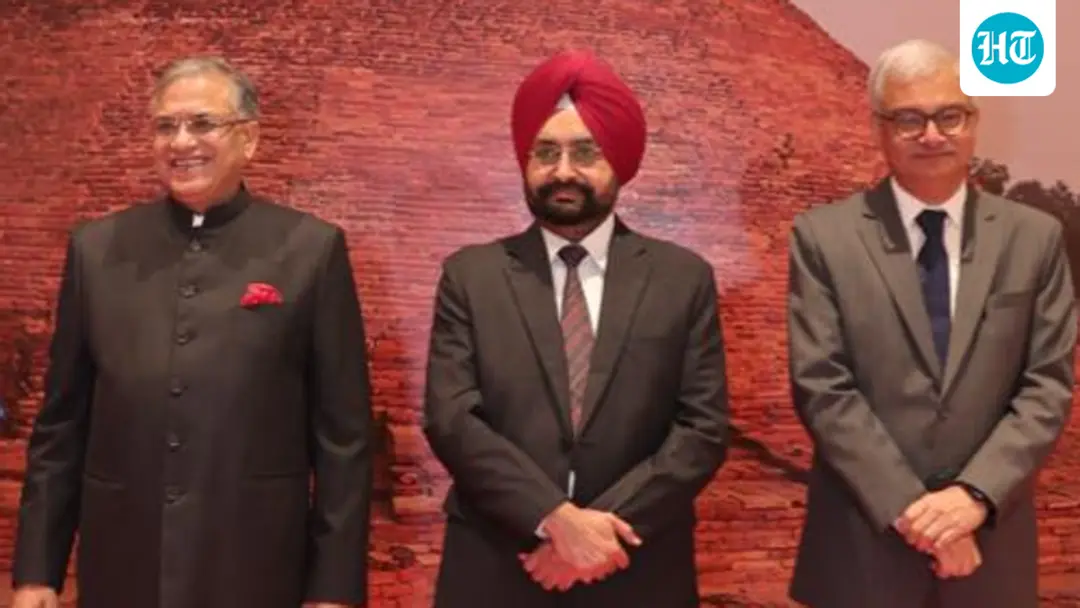
Opposition leaders on Wednesday questioned the Election Commission of India's functioning after an Indian Express investigation reported that two of three election commissioners, Sukhbir Singh Sandhu and Vivek Joshi, raised concerns over the electoral roll Special Intensive Revision. The report said they objected on record at least 14 times in 10 months to decisions taken in the ECI's name without their knowledge. Congress leader Manish Tewari said an 'invisible hand' appeared to be running the ECI.
Source
Hindustan Times — India · read the original report ↗
Desk check · some claims need care
What the desk checked (5)
- Election commissioners Sukhbir Singh Sandhu and Vivek Joshi objected on record at least 14 times over 10 months to decisions taken in the ECI's name without their knowledge. — Attributed in source to an Indian Express investigation; not confirmed by the ECI, which did not respond to queries before publication.
- Congress leader Manish Tewari said an 'invisible hand' appears to be running the ECI and called it a fit case for impeachment consideration. — Attributed to Tewari's post on X as reported in the source; conditional on the report's facts being correct.
- In April, the ECI announced deletion of nearly nine million names from the West Bengal electoral roll, about 2.7 million under 'logical discrepancy'. — Figures appear in the source and are attributed to the ECI announcement; no independent verification possible here.
- BJP won 207 of 294 seats in West Bengal and rejects the TMC's claim that SIR deletions helped it win. — Figure and denial appear in the source; positions attributed to the respective parties.
- In April, the Rajya Sabha Chairman and Lok Sabha Speaker rejected the Opposition notice seeking CEC Gyanesh Kumar's removal. — Stated in source without direct documentary citation; internally consistent with the rest of the account.
Analysts’ view opinion
Until now, criticism of the SIR was an opposition allegation from the outside; the Indian Express investigation, which reports that two of the three commissioners recorded objections internally, changes the nature of the dispute. Politically, this is the most useful turn the opposition has had — it lets the Congress, Shiv Sena (UBT), AAP and TMC converge on a single plank of institutional credibility rather than competing grievances. For the ruling side, the available counter is to frame this as an internal procedural disagreement rather than political interference; the BJP has already rejected any link between the deletions and its West Bengal win.
- The change that matters is the source of the charge: objections reportedly raised inside the Commission are far harder to dismiss as politically motivated than opposition claims.
- Manish Tewari's 'invisible hand' framing and his reference to impeachment signal an opposition strategy aimed at the legality of the process rather than at individuals alone.
- With the Rajya Sabha Chairman and Lok Sabha Speaker having rejected the CEC removal notice in April, the parliamentary route remains largely symbolic given the government's numbers.
- The West Bengal thread is the most explosive politically: the story notes the scale of deletions was comparable to the BJP-TMC vote gap, but causation is contested by the BJP and is not established by the report.
- AAP tying this to its 2025 Delhi allegations and Shiv Sena (UBT) framing it as credibility questioned from within suggests the electoral roll will be kept alive as a standing campaign issue.
What to watch — Watch whether the ECI or the two commissioners respond publicly, whether the letters reportedly sent to the Cabinet Secretary trigger any action, and whether the opposition converts this into a unified demand in Parliament.
This rests on a single newspaper investigation that itself says the ECI and both commissioners did not respond, and it does not establish that any deletions changed the outcome of any election.
Deep dive
Research brief · 8 facts · 5 dates · exam-readyThe brief
Context
The Election Commission of India (ECI) is a three-member body — the Chief Election Commissioner and two Election Commissioners — that has been running a Special Intensive Revision (SIR), an electoral roll cleansing drive, starting with Bihar in June last year. An Indian Express investigation reported that two of the three commissioners, Sukhbir Singh Sandhu and Vivek Joshi, repeatedly objected on record to decisions taken in the ECI's name without their knowledge. Opposition parties, which have long alleged the SIR is a targeted clean-up benefiting the BJP, seized on the report to question the Commission's internal functioning and credibility.
Key facts
- An Indian Express investigation reported that Election Commissioners Sukhbir Singh Sandhu and Vivek Joshi placed objections on record at least 14 times over 10 months, four of them on a single day.
- Objections were against decisions made in the ECI's name without the two commissioners' knowledge, per the report.
- One dispute concerned a change to Form 6 requiring new voters to declare whether they, a parent or grandparent appeared on the 'last SIR' roll; the commissioners called it unauthorised and said it amounted to harassment of first-time voters.
- The SIR began with Bihar in June last year to remove bogus, duplicate and ineligible voters, including deceased persons and 'illegal immigrants'.
- Other flagged issues: centralisation of ERONet access (said to threaten roll integrity), disputed authorisation of appeals in West Bengal seeking voter deletions, and a Goa case where 97 verified voters could not be added because the software did not allow the update.
- Sandhu and Joshi wrote separately to the Cabinet Secretary flagging the concerns; IE said its questions to the ECI and both commissioners went unanswered before publication.
- In April, the ECI announced deletion of nearly nine million names from the West Bengal electoral roll, of which around 2.7 million fell under the 'logical discrepancy' category.
- The BJP won West Bengal for the first time, winning 207 of 294 seats; the absolute vote difference between BJP and TMC was similar to the total SIR deletions.
Timeline
- June last yearSIR, the electoral roll cleansing drive, begins with Bihar.
- 2025 Delhi assembly electionAAP alleges deletion of genuine voters inclined to it and addition of fictional voters.
- AprilECI announces deletion of nearly nine million names from the West Bengal electoral roll; around 2.7 million under 'logical discrepancy'.
- AprilRajya Sabha Chairman CP Radhakrishnan and Lok Sabha Speaker Om Birla reject the Opposition's notice seeking CEC Gyanesh Kumar's removal.
- Wednesday (day of story)Opposition leaders question ECI functioning after the Indian Express investigation is published.
Who has a stake
- Election Commission of India — Institutional credibility and the legality of decisions taken in its name; did not respond to IE's questions.
- Election Commissioners Sukhbir Singh Sandhu and Vivek Joshi — Say they were bypassed in decision-making; wrote separately to the Cabinet Secretary flagging concerns.
- Chief Election Commissioner Gyanesh Kumar — Faced an Opposition removal notice in April listing charges of partisan conduct and mass disenfranchisement; notice was rejected.
- Congress (Manish Tewari) — Alleges an 'invisible hand' runs the ECI and calls it a fit case for considering impeachment proceedings.
- Shiv Sena (UBT) (Sanjay Raut) and AAP (Saurabh Bharadwaj) — Say credibility is questioned from within the Commission; link report to alleged voter deletions in the 2025 Delhi election.
- Trinamool Congress and BJP — TMC says West Bengal SIR deletions helped BJP win; BJP, which won 207 of 294 seats, rejects the link.
- Voters, especially first-time voters and migrants — Risk of wrongful deletion or inability to be added, as in the Goa case of 97 verified voters.
Why it matters
Electoral rolls are the foundation of a credible election, and the reported objections suggest that major decisions on roll revision may have been taken without the concurrence of a majority of the three-member Commission. If accurate, this raises questions about whether ECI decisions were validly made and whether large-scale deletions affected outcomes such as West Bengal, where deletions were comparable to the BJP-TMC vote gap. The controversy also tests the constitutional mechanism for holding election commissioners accountable.
UPSC angle
Prelims pointers
- ECI is a three-member body: the Chief Election Commissioner plus two Election Commissioners; present CEC is Gyanesh Kumar.
- SIR (Special Intensive Revision) is an electoral roll cleansing drive that began with Bihar in June last year.
- Form 6 is the form used for enrolment of new voters; the disputed change sought a declaration on the 'last SIR' roll.
- ERONet is the system that helps remove duplicate entries, including migrated electors; its centralisation was flagged as a risk to roll integrity.
- In April, the Rajya Sabha Chairman (CP Radhakrishnan) and Lok Sabha Speaker (Om Birla) rejected the Opposition notice seeking the CEC's removal.
- West Bengal SIR: nearly 9 million deletions announced in April, about 2.7 million under 'logical discrepancy'; BJP won 207 of 294 seats.
Mains framing
The controversy over the Special Intensive Revision turns a technical exercise in roll purification into a question of institutional design and collegiality. The ECI is a multi-member body, and the reported 14 recorded objections in 10 months by two of three commissioners — over an unauthorised change to Form 6, centralisation of ERONet access, unexplained authorisation of deletion appeals in West Bengal, and software that blocked the addition of 97 verified voters in Goa — suggests decisions issued in the Commission's name may not have reflected a unanimous or majority view, which the Opposition argues makes them arbitrary. The consequences are politically charged: nearly nine million deletions in West Bengal, of which about 2.7 million were 'logical discrepancy' cases, were comparable in scale to the BJP-TMC vote gap in a state the BJP won with 207 of 294 seats, and AAP has made similar claims about the 2025 Delhi election. Accountability routes are contested too — the April notice seeking the CEC's removal was rejected by the presiding officers of both Houses. A credible way forward would require the ECI to place on record how such decisions were taken, restore transparent collegial decision-making and auditable roll-revision processes, and ensure that enrolment requirements do not deter first-time voters or migrants, since the Commission's authority rests on perceived neutrality as much as legal power.
Key terms
- Special Intensive Revision (SIR)
- An electoral roll cleansing drive, begun in Bihar in June last year, to remove bogus, duplicate, deceased and ineligible voters including 'illegal immigrants'.
- Form 6
- The application form for new voter enrolment; the disputed change asked new voters to declare whether they or a parent/grandparent was on the 'last SIR' roll.
- ERONet
- ECI's electoral roll system that helps remove duplicate entries, including those of migrated electors; its centralisation was flagged by the two commissioners.
- Logical discrepancy
- A deletion category used in the West Bengal SIR, accounting for about 2.7 million of the nearly nine million names removed.
- Removal notice against CEC
- Opposition motion seeking CEC Gyanesh Kumar's removal, citing partisan conduct, obstruction of electoral fraud probes and mass disenfranchisement; rejected in April.
Practice questions
- The Election Commission of India is a multi-member body. Examine how the reported dissent of two election commissioners over the Special Intensive Revision tests the norms of collegial decision-making in constitutional bodies.
- Critically evaluate the argument that large-scale electoral roll deletions under the SIR can alter electoral outcomes, using the West Bengal case as an illustration.
- Discuss the adequacy of existing mechanisms for ensuring accountability of election commissioners in India, with reference to the rejection of the removal notice against the CEC in April.
Grounded only in the source report — figures and dates are the source's, not inferred.